In the heart of the Subramaniapuram area of Madurai, the film opens with a stark contrast between past and present. In 2008, a convict who has just been released after serving 28 years is stabbed right outside the prison gates by an unseen foe. The police are left puzzled: the man had never spoken to anyone inside, and visitors to the prison never received so much as a word. The motive seems buried in time, and the shock of the stabbing points to a long-standing grudge. A gripping flashback to 1980 then sweeps us into the events that set this tragedy in motion.
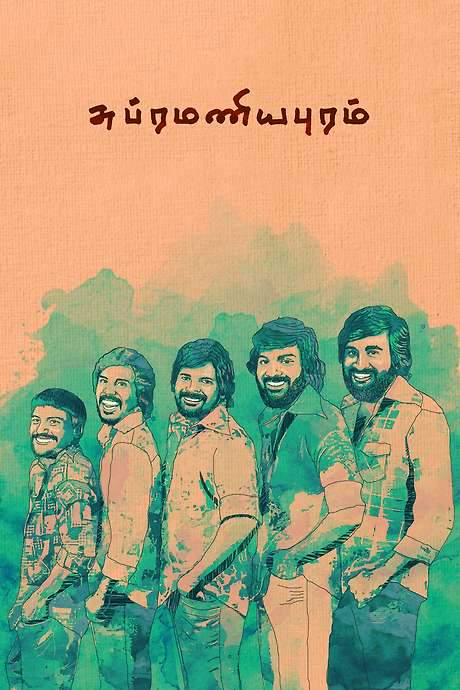
Five close friends—Jai Sampath as Azhagar, M. Sasikumar as Paraman, Ganja Karuppu as Kaasi, Vichithran as Dopa, and Maari as Dumka—live on the streets opposite the house of a former councillor Somu and his brother, Kanugu. The household also includes Somu’s wife and their three children, notably Thulasi, played by Swathi Reddy. The group’s days are spent in rough humor and small-time mischief, but their constant run-ins with the law keep bringing them back to the attention of the local police. Every time trouble bubbles up, Kanugu and Somu rush to bail them out, weaving a web of favors that binds the men to their benefactors. Amid this strain, Azhagar and Thulasi grow increasingly close, a budding romance that Kamaar Paraman—M. Sasikumar as Paraman—disapproves of, setting off a string of lighthearted debates and lively, funny scenes.
The heart of the story thickens when Somu’s political career hits a snag. A temple committee excludes Somu from a key function, a betrayal that undermines his standing. In a moment of desperation, Kanugu urges his friends to strike at the man chosen for their district party post, a plan that seems almost reckless in its ambition. Azhagar, Paraman, and Kaasi execute the murder, leaving behind a bicycle as a clue and vanishing into the night. The act is as much about power as it is about revenge, and the consequences begin to ripple through every layer of their lives.
In the aftermath, the pair—Azhagar and Paraman—surrender when the police trace the bicycle to their circle. They expect Kanugu to bail them out, but the reality is far harsher: Somu has been selected for the district chief position and is avoiding contact with them. Hope fades as they find themselves stuck in jail, where they befriend a fellow inmate who eventually helps them secure an escape. A complicated favor is now asked of them: to kill the brother-in-law of a man who has wronged his sister, a task they reluctantly carry out. With that burden lifted, their sights turn to Kanugu, the man who betrayed them all.
The violence intensifies as Kanugu’s henchmen target Azhagar, only for the five friends to strike back, killing the attackers. They also lash out at Thulasi’s uncle, hoping to neutralize Kanugu’s reach. In a chilling turn of fate, Kanugu lures Azhagar into a trap using Thulasi as bait and eliminates him with the help of his henchmen. Paraman, driven by a fierce sense of loyalty and vengeance, decapitates Kanugu and places his head at the site of his friend’s murder. In a dramatic moment, Paraman calls Kasi to recount his actions, but Kasi betrays him, leaving Paraman at the mercy of Somu’s henchmen, who finish him off.
Back in the present, Kasi lies in a hospital bed, the victim of the stabbing outside the prison walls. A routine doctor’s visit gives the room a grim hush, until Dumka reveals that it was Dopa who drove the knife, exposing a betrayal deeper than the original crime. Dumka then makes a brutal disclosure and enacts his own justice, removing the life support and making sure Kasi cannot tell his story again.
This is a tale marked by murky loyalties, love, and consequences that echo across decades. The narrative moves between the rough humor of friendships tested by crime, the uneasy moral calculus of revenge, and the brutal reality of a community where violence is both weapon and currency. The film maintains a grounded, almost documentary-like energy as it tracks how a single act in 1980 can cascade into a lifetime of consequences, culminating in a modern-day reckoning that asks who truly pays the price for the choices of a reckless youth, and whether any of the players can escape their past.
Note: If you revisit the cast, you’ll notice that the film’s core comes alive through the performances of the ensemble—Jai Sampath as Azhagar, M. Sasikumar as Paraman, Ganja Karuppu as Kaasi, Vichithran as Dopa, and Maari as Dumka—each bringing a distinct voice to a story built on friendship, pride, and the heavy costs of vengeance. The presence of special appearances, such as Kaajal Pasupathi in the theme song, adds a layered texture to the film’s textured world, while the backing roles by Sithan Mohan as Siththan and Swathi Reddy as Thulasi help anchor the emotional undercurrents that propel the plot forward.