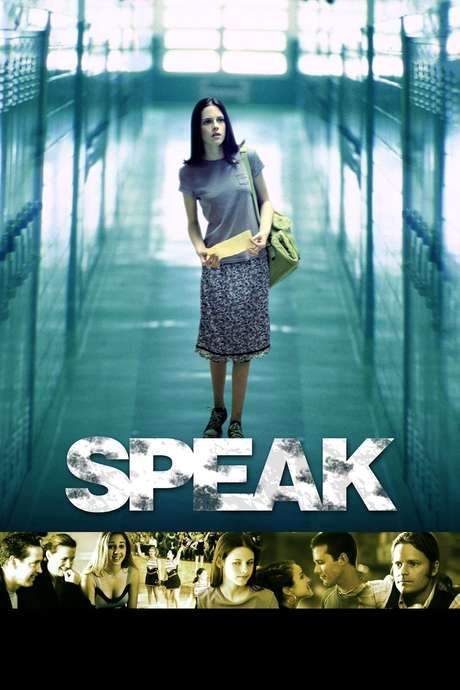





Year: 2004
Runtime: 93 mins
Language: English
Director: Jessica Sharzer
The truth that emerges upends everything. Freshman Melinda stops speaking after she reports a summer party to the police. Ostracized by friends and ignored by busy parents, she hides that popular senior Andy assaulted her at the party. She finds solace in an art class taught by Mr. Freeman, where creativity offers a path to healing.
Get a spoiler-free look at Speak (2004) with a clear plot overview that covers the setting, main characters, and story premise—without revealing key twists or the ending. Perfect for deciding if this film is your next watch.
In the muted corridors of a suburban high school, a shy freshman begins her first year cloaked in silence. Melinda arrives with a heavy secret that has left her mute, a quiet refusal that isolates her from the bustling chatter around lockers and hallways. The school feels both intimate and overwhelming, its bright lockers and echoing announcements contrasting with the darkness she carries inside. The tone is thoughtful and somber, a portrait of adolescence filtered through a fog of withheld truth.
Around her, the typical social currents swirl unabated. Heather drifts nearby, an eager participant in the cliques that Melinda watches from the margins, while Rachel hovers on the edge of a friendship that once seemed certain. The presence of Andy, the charismatic senior whose smile masks something ambiguous, adds an undercurrent of tension to the mundane school day. Teachers float in and out of the narrative: Mr. Neck offers academic assignments that unknowingly echo the struggle for a voice, and Dave provides a steady, low‑key companionship that hints at the possibility of genuine connection in an otherwise noisy environment.
Amidst the classroom buzz, an art room becomes a sanctuary. Mr. Freeman, the art teacher, encourages students to channel feeling into color, line, and form, offering Melinda a language beyond words. In this space, sketches and paints become a subtle dialogue, allowing her to explore the edges of her inner world without the pressure of spoken confession. The atmosphere in the studio is quietly hopeful, a place where the muted tones of her life begin to find texture and contrast.
The film watches Melinda navigate the uneasy balance between silence and expression, between the expectations of a bustling high school and the quiet resolve building within her. The mood remains introspective, inviting curiosity about how she may eventually find her voice amid the art, the friendships, and the hidden currents that shape her freshman year.
Last Updated: October 23, 2025 at 16:13
Discover curated groups of movies connected by mood, themes, and story style. Browse collections built around emotion, atmosphere, and narrative focus to easily find films that match what you feel like watching right now.
Stories of characters finding their voice after profound trauma.If you liked Speak, explore other movies about characters overcoming trauma and finding their voice. These films often share a heavy emotional weight, a slow, deliberate pace, and a tonal arc from darkness toward a hopeful, cathartic resolution, focusing on the internal journey of recovery.
These narratives typically begin with a protagonist shattered by a traumatic incident, leading to withdrawal and silence. The plot follows their internal struggle, often aided by a creative outlet or a mentor figure, building toward a pivotal moment of confrontation or confession that marks the beginning of healing and self-reclamation.
Movies in this thread are grouped by their shared focus on the psychological aftermath of trauma and the specific narrative arc of moving from silent suffering to empowered voice. They resonate with a similar emotional journey, pacing, and ultimately, a cathartic sense of hope.

Characters use creativity to process pain and find a way forward.Discover movies similar to Speak where a character uses art to cope with emotional turmoil. These films often explore themes of silence, isolation, and recovery, using a creative process as the central metaphor for a character's internal growth and journey toward catharsis.
The narrative pattern involves a protagonist who is unable or unwilling to communicate verbally due to emotional distress. They discover an artistic medium that becomes their primary outlet for expression. The story unfolds through their creative work, which parallels their internal state and gradually leads them toward understanding, connection, and resolution.
These films are connected by the central theme of art as a mechanism for survival and healing. They share a contemplative mood, a focus on internal transformation, and the use of visual or creative symbolism to convey deep emotional states, creating a uniquely introspective viewing experience.
Don't stop at just watching — explore Speak in full detail. From the complete plot summary and scene-by-scene timeline to character breakdowns, thematic analysis, and a deep dive into the ending — every page helps you truly understand what Speak is all about. Plus, discover what's next after the movie.
Read a complete plot summary of Speak, including all key story points, character arcs, and turning points. This in-depth recap is ideal for understanding the narrative structure or reviewing what happened in the movie.
Track the full timeline of Speak with every major event arranged chronologically. Perfect for decoding non-linear storytelling, flashbacks, or parallel narratives with a clear scene-by-scene breakdown.
Discover the characters, locations, and core themes that shape Speak. Get insights into symbolic elements, setting significance, and deeper narrative meaning — ideal for thematic analysis and movie breakdowns.
Visit What's After the Movie to explore more about Speak: box office results, cast and crew info, production details, post-credit scenes, and external links — all in one place for movie fans and researchers.