Plot Explained Spoilers guaranteed!
Plot Explained

Browse by genre

Silk Stockings (1957) movie poster

Plot Summary

Silk Stockings (1957) Plot Summary Explained

Release, runtime and language
1957 · 117 mins · English
Loading streaming availability…
Directed by
Rouben Mamoulian
Starring
Fred Astaire, Peter Lorre, Cyd Charisse, Jules Munshin, George Tobias, Lilyan Chauvin

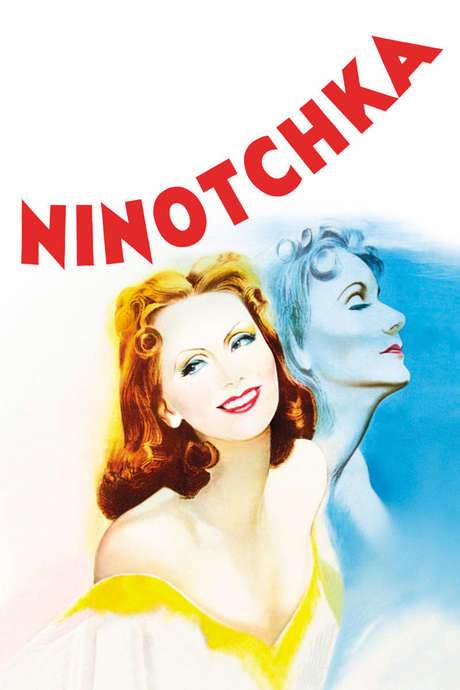
Sheer delight! After three clumsy Soviet agents fail to bring a wayward Soviet composer back from Paris, the impeccably serious Ninotchka is dispatched to finish the job and retrieve the agents. Initially denouncing the decadent West, she gradually succumbs to its allure, aided by an American film producer. This 1957 comedy remakes the 1939 film Ninotchka.

On this page (6)
  1. 1 Where to watch
  2. 2 What happens: full plot
  3. 3 Plot questions answered
  4. 4 Movie threads
  5. 5 Movies like Silk Stockings
  6. 6 Every angle
Loading streaming availability…

Full plot summary · contains spoilers

What Happens in Silk Stockings: Full Plot Summary

The whole story of Silk Stockings (1957) explained, from the opening scene to the final frame: every key event, every twist and what it all adds up to. Read it as a quick recap before the sequel, to check a scene you missed, or to finally understand what really happened.

In Paris, American producer Steve Canfield, Fred Astaire, wants Russian composer Peter Ilyitch Boroff to score his next picture. Three Soviet commissars Brankov, Peter Lorre, Bibinski, Jules Munshin, and Ivanov, Joseph Buloff, attempt to escort the composer back to Russia. To keep Boroff in Paris, Steve contests the composer's Russian citizenship by producing an affidavit disputing his parentage and insists it be resolved in court. Steve further convinces the commissars that Boroff's collaboration will earn them promotions in Moscow. Despite their initial resistance, the commissars consent to the collaboration.

Back in Moscow, Vassili Markovitch, George Tobias, becomes the new commissar of art. He sends Russian agent Ninotchka Yoschenko, Cyd Charisse, to retrieve Boroff from Paris. She meets the commissars in the hotel lobby. In their suite, Steve shows Ninotchka the affidavit and attempts to charm her with the locale, but Ninotchka insists that she will not be persuaded by the city's bourgeois.

Later that night, Hollywood actress Peggy Dayton, Janis Paige, arrives at the hotel, where several reporters interview her about her first serious role in an adaptation of War and Peace. The next morning, Steve escorts Ninotchka on a tour of Paris, alternating between boiler rooms and beauty salons. When they return to his hotel room, Steve sets a romantic mood with lower lights and music, but Ninotchka insists that romantic attraction is purely electro-chemical. > romantic attraction is purely "electro-chemical"

Steve and Ninotchka contrast their beliefs on romantic attraction, and after a waltz around the room, the two kiss.

Peggy walks into the room and insults Boroff, causing Ninotchka to leave. She tries to back out of the project because it's not a musical, to which Steve suggests she seduce Boroff into adapting his music to sound contemporary. At a costume fitting, Boroff, who is infatuated with Peggy, initially refuses to musicalize his compositions, but accepts the idea. Later that afternoon, Ninotchka locks herself in her room and dresses in Parisian lingerie. The same night, Ninotchka, dressed in a silky evening gown, joins Steve for a romantic evening. When Ninotchka returns to the commissars' room, they confess that Boroff's "Ode to a Tractor" is being rewritten into popular music for the film. Contrary to their suspicions, Ninotchka is delighted by the idea and dismisses them.

Alone with Steve, Ninotchka raves about Paris' beauty, convinced that love, not utilitarianism, leads to happiness. Months later, Boroff and the commissars, who have been saved from punishment by Ninotchka's report, visit her at her apartment. Ninotchka attempts to read Steve's letter, which has been so heavily censored that only the salutation remains. Soon after, Boroff, now fascinated with Western music, plays his new composition on the piano, prompting Ninotchka, the commissars, and the tenants to dance. Shortly after, Markovitch sends Ninotchka back to Paris to retrieve the commissars, who have been sent there to sell Russian films. When she arrives, the commissars take Ninotchka to their new Russian café, where Steve performs a top hat routine.

Back at the hotel room, Ninotchka states she will return to Russia that night. Steve arrives in the room, revealing that he wrote the anonymous report in order to get her out of Russia. He also reminds her of the marriage proposal contained in his censored letter. In love, Ninotchka rips up her plane ticket and embraces him while the commissars celebrate.


Last updated: October 09, 2025 at 11:08

Was this helpful?

Plot questions answered

Silk Stockings Plot Explained: Your Questions Answered

The questions people ask most about Silk Stockings (1957): what happens in the confusing scenes, why the characters do what they do, the twists, hidden details and what the ending means. Each answer contains spoilers.

Q1

Why does Ninotchka decide to stay in Paris instead of returning to Russia?

Ninotchka falls in love with Steve and discovers that love and personal freedom bring happiness rather than Soviet utilitarianism. When Steve reveals he wrote the anonymous report that got her expelled from Russia and reminds her of his marriage proposal in his heavily censored letter, she tears up her plane ticket and chooses love over duty.

Foreshadowing: Earlier, Ninotchka insists romantic attraction is purely 'electro-chemical' but later admits that love leads to happiness.

  • Ninotchka
  • Steve
  • love
  • Russia
  • Paris
  • decision
Q2

What was the affidavit that Steve used to keep Boroff in Paris?

Steve produced an affidavit disputing Boroff's Russian parentage, claiming it would be resolved in court. This legal maneuver challenged Boroff's citizenship and stalled his deportation, keeping him in Paris. Later, Steve admits the affidavit was completely fake.

Foreshadowing: The affidavit is the initial plot device that prevents Boroff from being sent back to Russia.

  • affidavit
  • Boroff
  • citizenship
  • fake
  • court
  • Paris
Q3

Why do the Soviet commissars agree to let Boroff work with Hollywood?

Steve convinces the commissars that Boroff's collaboration with Hollywood will earn them promotions in Moscow. Initially resistant, they consent to the collaboration when promised career advancement.

Foreshadowing: The commissars' desire for promotions is established early as their primary motivation.

  • commissars
  • Boroff
  • Hollywood
  • promotions
  • Moscow
  • agreement
Q4

How does Ninotchka save the commissars from being punished?

Ninotchka reports to Markovitch that the commissars acted properly in Paris, which saves them from punishment. Months later, the commissars visit her thanking her for the report that protected their careers.

Foreshadowing: The commissars' fear of punishment is established when Markovitch replaces them as commissar.

  • Ninotchka
  • commissars
  • report
  • Markovitch
  • saved
  • punishment
Q5

What causes Ninotchka to change from a strict Soviet agent?

Ninotchka's transformation happens gradually through Steve's tour of Paris (alternating between boiler rooms and beauty salons), romantic evenings, and her own willingness to embrace the city's allure. She dresses in Parisian lingerie and an evening gown, marking her complete surrender to Western charm.

Foreshadowing: Ninotchka initially denounces the decadent West but warms to its comforts throughout the film.

  • Ninotchka
  • transformation
  • Paris
  • Steve
  • seduction
  • Western
Q6

Why does Peggy Dayton's arrival cause problems?

Peggy Dayton interrupts a romantic moment between Steve and Ninotchka when she insults Boroff, causing Ninotchka to leave. The interruption makes Ninotchka consider abandoning her mission entirely, though Steve persuades her to stay and continue the work.

Foreshadowing: Peggy's presence creates friction between the characters from her first appearance.

  • Peggy Dayton
  • Boroff
  • insult
  • interruption
  • Steve
  • Ninotchka
Q7

What does it mean to 'musicalize' Boroff's compositions?

Musicalizing means adapting Boroff's classical compositions into popular contemporary music for Steve's film. At a costume fitting, Boroff initially refuses because he's infatuated with Peggy, but eventually agrees to rewrite his 'Ode to a Tractor' into popular music.

Foreshadowing: The idea is first suggested when Steve tells Ninotchka to seduce Boroff into adapting his music.

  • Boroff
  • music
  • popular
  • musicalize
  • compositions
  • adaptation
Q8

How does Steve get Ninotchka sent back to Paris?

Steve writes an anonymous report criticizing the commissars' work in Paris, which Markovitch interprets as needing correction by sending Ninotchka back. This is actually Steve's plan to get her out of Russia so they can be together.

Foreshadowing: Earlier, Steve reveals he wrote the anonymous report when Ninotchka announces she will return to Russia.

  • Steve
  • anonymous report
  • Ninotchka
  • Markovitch
  • Paris
  • Russia
Q9

What is in Steve's censored letter to Ninotchka?

Steve's letter is so heavily censored by Soviet authorities that only the salutation 'My Dear Nina' remains. However, Steve reminds Ninotchka that his marriage proposal was in that letter, which becomes crucial to her decision to stay in Paris.

Foreshadowing: The letter's importance is revealed when Steve reminds her of its contents at the climax.

  • letter
  • censored
  • marriage proposal
  • Steve
  • Ninotchka
  • Moscow
Q10

Why does Ninotchka tear up her plane ticket at the end?

Ninotchka tears up her plane ticket after Steve reveals he wrote the anonymous report to free her from Russia and reminds her of his marriage proposal. Touched by his love and effort, she chooses to stay with him in Paris instead of returning to Moscow.

Foreshadowing: The scene directly follows Steve's revelation about the report and marriage proposal.

  • plane ticket
  • Ninotchka
  • Steve
  • tears
  • love
  • decision

Movie threads

More Movies Like Silk Stockings, by Mood & Story

Curated lists built around what makes Silk Stockings tick: the same mood, the same kind of story or the same emotional payoff. Each list explains why these movies belong together.

Movies about ideological opposites falling in love like Silk Stockings

Stories where love blossoms between characters from clashing worlds or belief systems. If you enjoyed the romantic tension between Ninotchka and Steve in Silk Stockings, you'll love these movies featuring couples from opposing worlds. Discover similar stories of love conquering cultural, political, or social divides in charming and lighthearted romantic comedies.

  • romantic
  • charming
  • uplifting
  • playful
  • sophisticated
  • whimsical
  • Tone: light, romantic, charming
  • Pacing: steady, character-driven
Why these movies?

The story pattern: The narrative follows a predictable but satisfying arc: initial antagonism based on clashing beliefs, a series of interactions that challenge preconceptions, a gradual softening and mutual attraction, and a finale where love triumphs over ideology. The conflict is externalized through the characters' differing perspectives, providing both comedic and dramatic tension.

Why they belong together: These movies are grouped together because they share the core premise of romance flourishing against the odds of ideological difference. They blend light comedy with genuine emotional connection, creating a feel-good experience where the joy comes from watching barriers break down.

Movies with glamorous transformations through romance like Silk Stockings

Character transformations set against a backdrop of luxury, music, and sophisticated charm. Fans of Ninotchka's stylish shift from Soviet austerity to Parisian glamour in Silk Stockings will appreciate these movies. Find similar films featuring charismatic leads, dazzling settings, and joyful personal reinventions driven by love and music for a sophisticated, uplifting watch.

  • glamorous
  • uplifting
  • charming
  • sophisticated
  • whimsical
  • romantic
  • Tone: light, whimsical, glamorous
  • Pacing: steady, celebratory
Why these movies?

The story pattern: The narrative centers on a protagonist, often initially rigid or repressed, who is introduced to a world of beauty, art, or luxury. Through a romantic connection and exposure to this new environment, they undergo a liberation of spirit, embracing joy, self-expression, and a more authentic life. The plot is a celebration of hedonism and personal freedom.

Why they belong together: These films are united by their focus on aesthetic pleasure and personal metamorphosis. They share a light tone, a steady pace that allows the transformation to unfold delightfully, and a core theme of finding joy and love in a visually stunning, often musical, context.

If you liked this

Movies Like Silk Stockings

Similar movies to Silk Stockings: the same genre, themes or kind of story. Each one comes with its own plot summary, timeline and ending explained.

Browse all movie summaries

Every angle

Silk Stockings (1957) Explained: Plot, Timeline & Characters

Everything about Silk Stockings in one place: what happens in the plot summary, the timeline in chronological order, the characters and meaning and a spoiler-free summary. What's After the Movie adds the cast, box office and post-credit scenes.

Coming soon on iOS and Android

The Plot Explained Movie Summary App

Plot summaries, endings explained and timelines on your phone. Catch up on any movie in minutes, save your favorites and never miss a twist again.

Be the first to know when we launch. Your email stays private, always.

Learn more about the app