







Plot Explained Spoilers guaranteed!
Plot Explained

Browse by genre

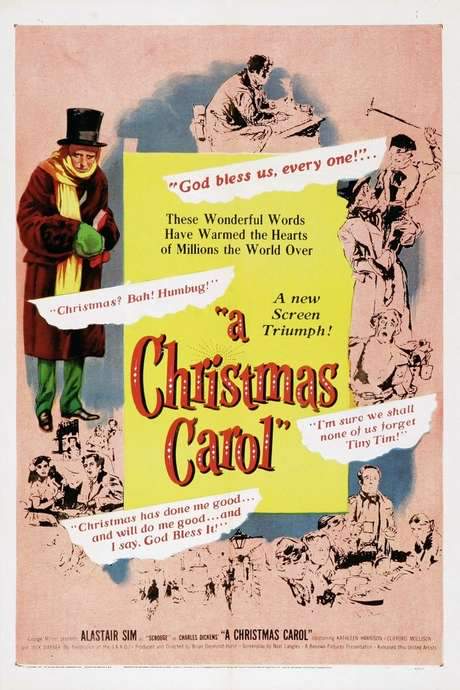
Scrooge (1951) movie poster

Timeline

Scrooge (1951) Timeline Explained – Every Event in Order

Release, runtime and language
1951 · 86 mins · English
JustWatch #8,540 13
Directed by
Brian Desmond Hurst
Starring
Peter Bull, Jack Warner, Kathleen Harrison, Tony Wager, Noel Howlett, Michael Hordern

Based on Charles Dickens’ beloved holiday classic, the film follows Ebenezer Scrooge, a bitter, miserly businessman who drifts through life. On Christmas Eve he is visited by three spirits—the Ghosts of Christmas Past, Present, and Yet to Come—who reveal how his troubled childhood and selfish actions have left him isolated, urging him toward redemption.

On this page (6)
  1. 1 Where to watch
  2. 2 Events in order (15)
  3. 3 Timeline questions answered
  4. 4 Movie threads
  5. 5 Movies like Scrooge
  6. 6 Every angle

Where to watch

Where to Watch Scrooge (1951)

Where can you watch Scrooge? Stream, rent or buy it in the US, including on Fawesome, Kanopy and Plex: current JustWatch availability with up-to-date prices.

Streaming availability powered by JustWatch

15 events in order · contains spoilers

Scrooge Timeline: Events in Chronological Order

Every key event of Scrooge (1951) in order, scene by scene, with when and where it takes place. Use it to untangle flashbacks, time jumps and parallel storylines, to refresh your memory before the sequel or to find the exact scene you are thinking of.

  1. Scrooge refuses donations and dismisses Fred

    On Christmas Eve in his counting-house, Scrooge refuses to donate to the poor and dismisses Fred's invitation to Christmas dinner. He reluctantly grants Bob Cratchit Christmas Day off, but expects him back early the next day. The scene establishes his stubborn miserliness and disdain for Christmas.

    When
    Christmas Eve
    Where
    Scrooge's counting-house
  2. Marley's warning and spirits foretold

    Marley's ghost appears and warns Scrooge that he must change his ways, or he will wander the earth in chains after death. He tells Scrooge that he will be visited by three spirits, the first arriving at one o'clock that night. Scrooge is frightened and retreats to his bed.

    When
    one o'clock that night
    Where
    Scrooge's home
  3. Ghost of Christmas Past arrives – youth and family

    The Ghost of Christmas Past arrives and takes Scrooge back to his youth, including his schooldays and his sister Fan's arrival to take him home. The journey reveals how family warmth once tempered his world view. The scenes unfold across different past places and times.

  4. Fezziwig's Christmas party

    The Spirit shows Fezziwig's generous Christmas party, highlighting how joyful leadership fosters communal goodwill. Young Scrooge witnesses the warmth and merriment of the staff and their manager. The scene contrasts with his later obsession with wealth.

    Where
    Fezziwig's ballroom
  5. Proposing to Alice and engagement breaks

    During the past scene, Scrooge's younger self proposes to his sweetheart Alice, who accepts. The engagement falters as Scrooge's dedication to money grows. This moment underscores how love competes with his becoming a miser.

    Where
    Alice's home
  6. Temptation to join Jorkin's firm and Fezziwig's sale

    The Spirit shows Scrooge being tempted to leave Fezziwig's to join Mr. Jorkin's business. Later, Jorkin's firm buys Fezziwig's business, foreshadowing how corporate greed reshapes Scrooge's path. The events deepen his preoccupation with wealth.

  7. Alice breaks the engagement

    Alice ends her engagement due to Scrooge's growing golden idol and fixation on money. The personal cost of his ambition becomes apparent as love is sacrificed. The past now bears the weight of lost happiness.

  8. Jorkin embezzlement and cover-up

    Jorkin is found to have embezzled funds from the now-bankrupt company, and Scrooge and Marley work to cover the missing money so they can take control. Their actions reveal the extent of their shared greed. The moment cements a morally compromised path.

  9. Scrooge ignores dying Marley

    One Christmas Eve, Scrooge refuses to leave work to visit a dying Marley. When Scrooge finally arrives, Marley, knowing his fate, tries to warn him against avarice. This missed chance underscores the stubbornness that history will later confront.

    When
    Christmas Eve
    Where
    Scrooge's counting-house
  10. Ghost of Christmas Present arrives

    The Ghost of Christmas Present takes Scrooge to see how people celebrate with goodwill. He witnesses miners joyfully singing and the Cratchits celebrating Christmas Day. The Spirit hints that Tiny Tim's life may depend on the future's changes, and they also visit Fred's party where Fred defends Scrooge.

    When
    Christmas Day
    Where
    Various locations
  11. Ignorance and Want; a harsher warning

    The Spirit reveals two emaciated children, Ignorance and Want, lurking beneath the surface of society. When Scrooge shows concern, the Spirit mocks him and chides him for ignoring the vulnerable. The moment reinforces the moral critique embedded in the tale.

    Where
    Future
  12. Yet to Come shows Tiny Tim's death and a grave

    The Ghost of Christmas Yet to Come shows Tiny Tim's death and the Cratchits' profound sorrow. Two businessmen casually discuss attending the dead man's funeral for luncheon, revealing social indifference. Scrooge then sees his own gravestone and begs for a second chance.

    Where
    Future
  13. Scrooge wakes on Christmas Day

    Scrooge awakens on Christmas Day with a new resolve and the gift of a second chance. He is elated by the prospect of mending his ways and vows to change his life immediately. The moment marks the turning of his moral compass.

    When
    Christmas Day morning
    Where
    Scrooge's bed
  14. First acts of generosity on Christmas Day

    He anonymously purchases a turkey for the Cratchits and attends Fred's Christmas dinner, eagerly seeking forgiveness from his family. He reassures Mrs. Dilber and signals a shift from greed to generosity. The day crystallizes his transformation.

    When
    Christmas Day
    Where
    Cratchit's home; Fred's home
  15. Cratchit's relief and Tiny Tim's recovery

    The next day, Scrooge publicly raises Bob Cratchit's salary and pledges support for the family. He becomes a second father to Tiny Tim, who soon shows signs of recovery. The new Scrooge embodies the true spirit of Christmas.

    When
    Following day
    Where
    Cratchit's home

Last updated: October 09, 2025 at 09:22

Was this helpful?

Timeline questions answered

Scrooge Timeline Explained: Your Questions Answered

When does it happen, and why in that order? The questions people ask about the chronology of Scrooge (1951): time jumps, flashbacks, cause and effect between scenes and the correct order of events, each answered with spoilers.

Q1

Why is Scrooge so bitter and miserly?

Scrooge's bitterness stems from his difficult childhood. After his mother died in childbirth, his father rejected him, leaving him alone at school. His beloved sister Fan eventually brought him home after their father had a change of heart, but the emotional abandonment shaped his worldview. The film shows how this early rejection drove him to pursue wealth as a substitute for love and belonging, ultimately sacrificing his relationship with Alice and his humanity in the process.

Foreshadowing: Marley's ghost later confirms this pattern, telling Scrooge that his chains are forged from his own selfish choices.

  • scrooge childhood
  • bitter character
  • miserly
  • rejected by father
  • backstory
Q2

Why does Marley visit Scrooge on Christmas Eve?

Marley appears to Scrooge as a warning because he is the one who must deliver the message about the three spirits. As Scrooge's business partner who died seven years earlier, Marley is bound to earth in chains as punishment for his own miserly life. He visits specifically to tell Scrooge that he will be visited by three ghosts, the Ghosts of Christmas Past, Present, and Yet to Come, who will give Scrooge one final chance at redemption.

Foreshadowing: Marley's warning about being 'visit(ed) by three spirits' establishes the structure of the entire night.

  • marley ghost
  • jacob marley
  • christmas eve visit
  • warning
  • three spirits
Q3

What do the chains Marley wears represent?

The chains Marley wears symbolize the heavy burden of his selfish lifetime decisions. Marley explains that he has been walking the earth bound in these chains ever since death because he lived only for greed and neglected opportunities for kindness. The chains are described as 'made of his own forging,' meaning each link represents a choice he made to prioritize money over human connection. Marley warns Scrooge that unless he changes, he will forge an even heavier chain.

Foreshadowing: This visual motif foreshadows Scrooge's own potential fate, which the Ghost of Christmas Yet to Come confirms with his gravestone.

  • marley chains
  • punishment
  • greed consequences
  • afterlife
  • chains symbolism
Q4

What does the Ghost of Christmas Past show Scrooge?

The Ghost of Christmas Past shows Scrooge several key moments from his past: his lonely schooldays when his father rejected him after his mother's death, his sister Fan coming to take him home, the joyful Christmas party at Fezziwig's where he was once a kind apprentice, his proposal to Alice who accepted, and his gradual temptation to leave Fezziwig for Mr. Jorkin's business. The spirit also reveals Alice breaking off their engagement because of his obsession with money, and the death of Fan after she gave birth to Fred.

Foreshadowing: The spirit shows Scrooge witnessing Fan's death and missing her final words asking him to care for her son, foreshadowing his later rejection of Fred.

  • ghost christmas past
  • scrooge memories
  • childhood
  • alice
  • fan death
  • fezziwig
Q5

Why does Alice break her engagement to Scrooge?

Alice breaks her engagement to Scrooge because his dedication to wealth becomes more important to him than their relationship. The film shows that as Scrooge becomes tempted to join Jorkin's business and pursue financial gain, he gradually prioritizes 'a golden idol' over love. Alice cannot compete with his obsession with money, so she ends the engagement. This moment represents the personal cost of Scrooge's transformation into a miser.

Foreshadowing: This directly parallels Scrooge's later rejection of his nephew Fred, showing the pattern of choosing money over family.

  • alice engagement broken
  • scrooge love
  • golden idol
  • money vs love
  • lost love
Q6

Why does Scrooge ignore Marley when he is dying?

Scrooge refuses to leave work on Christmas Eve to visit the dying Marley because he is too focused on business and money. When Scrooge finally arrives, Marley is already dead, and from beyond the grave, Marley tries to warn Scrooge about the consequences of his avarice. This moment shows how Scrooge's greed has made him abandon even his closest relationship, setting up the moral stakes for his redemption.

Foreshadowing: Marley'sghost references this moment when he reproaches Scrooge for taking his money and house, a direct consequence of that earlier neglect.

  • marley dies
  • scrooge neglect
  • dying friend
  • business over friendship
  • avarice
Q7

Does Tiny Tim die in the vision of the future?

Yes, the Ghost of Christmas Yet to Come shows Scrooge that Tiny Tim dies. The Ghost of Christmas Present had already hinted at this possibility, telling Scrooge that Tiny Tim's fate depends on whether the future changes. In the vision Scrooge sees, the Cratchit family mourns Tiny Tim's death, which occurs because Scrooge's miserly policies have kept Bob's wages so low that the family cannot afford proper medical care for their son.

Foreshadowing: The Ghost of Christmas Present earlier hints that Tiny Tim 'will not' survive unless something changes, directly foreshadowing this death.

  • tiny tim death
  • cratchit family
  • future vision
  • child death
  • scrooge responsibility
Q8

What does the gravestone with Scrooge's name mean?

The gravestone bearing Scrooge's own name represents his imminent death and the total isolation he will face in death. When the Ghost of Christmas Yet to Come shows him the grave, Scrooge sees how little his life has meant to others, businessmen joke they will only attend his funeral for free lunch, and his possessions are sold off by Mrs. Dilber and others. This vision of his meaningless death and legacy is what finally breaks Scrooge and drives him to beg for a second chance.

Foreshadowing: Marley's earlier warning about walking the earth in chains after death foreshadows this grim vision of Scrooge's fate.

  • scrooge gravestone
  • death isolation
  • future death
  • scrooge fate
  • funeral indifference
Q9

What do the children Ignorance and Want represent?

Ignorance and Want are two emaciated children shown beneath the Ghost of Christmas Present, representing the societal problems that arise from greed and indifference. These children personify the consequences of a society that ignores the poor. When Scrooge expresses concern for them, the Spirit uses his own earlier words against him, 'Are there no prisons? Are there no workhouses?', forcing him to confront how his miserly attitudes directly create suffering for the vulnerable.

Foreshadowing: This scene connects directly to Scrooge's earlier refusal to donate to the poor, showing the moral consequences of his actions.

  • ignorance want
  • poverty
  • social commentary
  • victorian society
  • child poverty
  • scrooge responsibility
Q10

Why does Scrooge change so dramatically after the ghosts visit him?

Scrooge transforms dramatically because the ghosts showed him the concrete consequences of his actions: his own death and isolation, the death of Tiny Tim due to his stinginess, and the missed opportunities to find happiness through family and kindness. Rather than simply feeling guilty, Scrooge is given a clear vision of what awaits him if he doesn't change, plus the hope that Tiny Tim can still be saved. This combination of fear, compassion, and hope creates genuine motivation for lasting transformation.

Foreshadowing: The entire structure of the night, past showing what was lost, present showing current suffering, future showing what will be, creates the emotional journey to his change.

  • scrooge transformation
  • redemption
  • character change
  • christmas spirit
  • second chance
Q11

Why does Fred defend Scrooge at his Christmas party?

Fred defends Scrooge at his Christmas party because he genuinely loves his uncle despite Scrooge's coldness toward him. Fred tells his guests that Scrooge has 'a right' to be disagreeable if he chooses, and that he will honor their invitation regardless. This generosity of spirit reflects Fred's hopeful belief that Scrooge might one day change. His kindness is contrasted with Scrooge's earlier rejection of him, highlighting the moral contrast between the two characters.

Foreshadowing: Fred's loyalty directly motivates Scrooge's transformation, he sees that family has always been available to him, which makes his earlier rejection of Fred even more regrettable.

  • fred defends scrooge
  • nephew
  • christmas party
  • family love
  • forgiveness
Q12

Why does Scrooge raise Bob Cratchit's salary?

Scrooge raises Bob Cratchit's salary because he now understands that his miserly policies have caused real suffering to innocent people, particularly Bob's family including the ailing Tiny Tim. After witnessing Tiny Tim's death in the future vision, Scrooge is determined to prevent that outcome by ensuring the Cratchits have enough financial security. This action represents the practical application of his transformation, changing not just his attitudes but his behavior toward those dependent on him.

Foreshadowing: This directly contradicts his earlier behavior of giving Cratchit Christmas Day off reluctantly and expecting him back early, the complete opposite of his earlier stinginess.

  • bob cratchit salary raise
  • generosity
  • cratchit family
  • tiny tim recovery
  • scrooge changes

Movie threads

More Movies Like Scrooge, by Mood & Story

Curated lists built around what makes Scrooge tick: the same mood, the same kind of story or the same emotional payoff. Each list explains why these movies belong together.

Supernatural redemption stories like Scrooge

Bitter characters given a second chance through supernatural intervention. If you liked Scrooge, you'll enjoy these movies where supernatural forces guide a flawed character toward redemption. These stories blend frightening spectral encounters with heartfelt emotional journeys, culminating in transformative and happy endings.

  • redemptive
  • ghostly
  • solemn
  • frightening
  • joyful
  • reflective
  • Tone: hopeful, frightening, solemn
  • Pacing: variable, episodic
Why these movies?

The story pattern: The narrative follows a clear moral fable structure, often linear and straightforward. A character's life of selfishness is disrupted by ghostly or divine messengers who reveal the consequences of their actions through visions of past, present, and future. This episodic journey builds to a climactic moment of fear and regret, which is immediately resolved by the character's voluntary change of heart, leading to a celebratory and happy conclusion.

Why they belong together: These films are grouped by their shared core device of supernatural intervention as a catalyst for change. They mix moments of genuine fright or solemn reflection with an overwhelmingly hopeful tone, creating a specific emotional rollercoaster that ends with cathartic joy and moral clarity.

Haunted holiday movies like Scrooge

Supernatural scares during a festive season lead to emotional warmth. Find more movies like Scrooge that combine Christmas spirits with heartfelt redemption. These films use the festive season as a setting for ghostly visits that are scary but ultimately lead to joyful transformations and a reinforcement of holiday cheer.

  • nostalgic
  • festive
  • frightening
  • joyful
  • ghostly
  • heartwarming
  • Tone: hopeful, nostalgic, frightening
  • Pacing: variable
Why these movies?

The story pattern: The narrative uses the expectations and emotional weight of a specific holiday as a powerful contrasting tool. The warmth and joy associated with the season are initially absent for the protagonist, creating a stark contrast. Supernatural elements, while frightening, are framed within a moral context, using flashbacks to tap into nostalgia and visions of the future to teach a lesson. The climax resolves this tension, with the protagonist embracing the true spirit of the holiday, making the celebration feel earned and deeply satisfying.

Why they belong together: This thread connects films that share the unique blend of a festive holiday setting with supernatural horror elements, all in service of a positive, life-affirming message. The experience is defined by the oscillation between spooky chills and sentimental warmth, culminating in a feel-good ending that feels intrinsically tied to the time of year.

If you liked this

Movies Like Scrooge

Similar movies to Scrooge: the same genre, themes or kind of story. Each one comes with its own plot summary, timeline and ending explained.

Browse all movie summaries

Every angle

Scrooge (1951) Explained: Plot, Timeline & Characters

Everything about Scrooge in one place: what happens in the plot summary, the timeline in chronological order, the characters and meaning and a spoiler-free summary. What's After the Movie adds the cast, box office and post-credit scenes.

Coming soon on iOS and Android

The Plot Explained Movie Summary App

Plot summaries, endings explained and timelines on your phone. Catch up on any movie in minutes, save your favorites and never miss a twist again.

Be the first to know when we launch. Your email stays private, always.

Learn more about the app