Year: 2025
Runtime: 2 h 40 m
Language: chinese
Director: Bi Gan
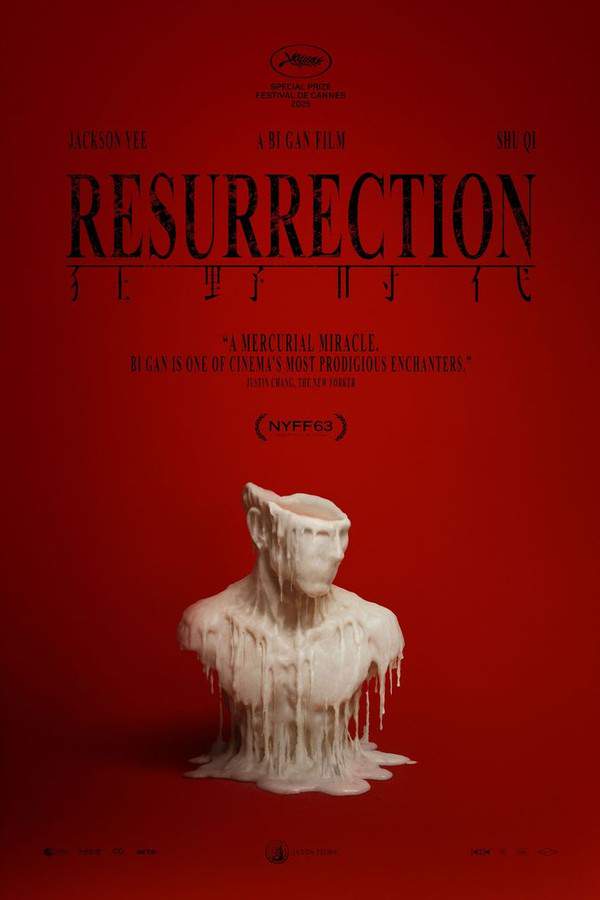
In a dystopian future humanity has traded the ability to dream for immortality. An outcast, portrayed by Jackson Yee, roams a hallucinatory realm, confronting nightmarish visions and fleeting beauty as he constructs an intoxicating world of his own making.
Warning: spoilers below!
Haven’t seen Resurrection yet? This summary contains major spoilers. Bookmark the page, watch the movie, and come back for the full breakdown. If you're ready, scroll on and relive the story!
Still thinking about how Resurrection (2025) ended? Here’s a full breakdown of the ending, key final moments, major twists, and the deeper meaning behind the film’s conclusion.
Margaret finally confronts David Moore after a series of unsettling clues – the tooth Abbie finds, his constant presence in public places, and the cryptic messages he leaves for her. She tracks him to a hotel and later to a restaurant where he proposes a “kindness” condition: she must walk barefoot to work every day. Refusing to be dominated any longer, Margaret decides to end his torment once and for all.
She returns to Moore’s apartment at night, armed with a hidden knife. After a tense exchange in which Moore tells her that the infant she believes she lost is still alive inside him, Margaret attacks, wounds him, and ties him to the bed. In a brutal, almost ritualistic act, she tears into his body and discovers a small, still‑breathing baby concealed beneath his organs. The infant is her son, Benjamin, the one she thought was consumed years ago. With Moore dead, Margaret cradles the child, finally achieving the rescue she has been haunted by for decades.
The film’s closing moments show Abbie coming home to find her mother holding the baby. The room is washed in an almost surreal light, and Abbie tenderly takes the infant into her own arms, thanking Margaret for saving them both. As the camera lingers on Margaret’s face, a low, unsettling score begins, hinting that the scene may be a hallucination or a desperate fantasy born from her fractured mind. Whether the rescue truly occurred or exists only in Margaret’s psyche is left ambiguous, leaving the audience to decide what part of the ending is real.
Last Updated: December 15, 2025 at 06:35
Discover curated groups of movies connected by mood, themes, and story style. Browse collections built around emotion, atmosphere, and narrative focus to easily find films that match what you feel like watching right now.
Philosophical futures where humanity's progress comes at a profound emotional cost.If you enjoyed the poetic sorrow and philosophical weight of Resurrection, explore more movies like it. This list features dystopian stories where the world-building serves a deeply melancholic and humanistic exploration of loss, memory, and the cost of immortality.
Narratives in this thread often follow isolated characters or outcasts navigating societies built on a foundational sacrifice. The central conflict is internal and philosophical, as characters grapple with the meaning of their existence in a world that has traded soul for survival, leading to journeys of profound introspection.
These films are grouped by their shared atmosphere of high-concept melancholy, using sci-fi premises to amplify deeply human emotions. They prioritize mood, philosophical inquiry, and a bittersweet tone over traditional plot mechanics, creating a cohesive, emotionally heavy viewing experience.
Films where reality blurs and characters confront their deepest selves through visions.Fans of Resurrection's hallucinatory exploration of identity and memory will find similar movies here. These films use dreamlike narratives and surreal visuals to delve into the psyche, offering complex, visually arresting stories about the construction of self.
The narrative pattern involves a protagonist navigating a landscape that blends memory, dream, and reality. The journey is internal, often fraught with symbolic obstacles and nightmarish visions, leading to a climax of self-realization or tragic dissolution. The structure is typically complex and requires interpretive engagement from the viewer.
These films are united by their commitment to a subjective, hallucinatory experience. They share a high level of narrative complexity, a dreamlike atmospheric mood, and a central theme of piecing together a fractured identity or consciousness, making them feel coherent and distinct.
Don't stop at just watching — explore Resurrection in full detail. From the complete plot summary and scene-by-scene timeline to character breakdowns, thematic analysis, and a deep dive into the ending — every page helps you truly understand what Resurrection is all about. Plus, discover what's next after the movie.
Read a complete plot summary of Resurrection, including all key story points, character arcs, and turning points. This in-depth recap is ideal for understanding the narrative structure or reviewing what happened in the movie.
Track the full timeline of Resurrection with every major event arranged chronologically. Perfect for decoding non-linear storytelling, flashbacks, or parallel narratives with a clear scene-by-scene breakdown.
Discover the characters, locations, and core themes that shape Resurrection. Get insights into symbolic elements, setting significance, and deeper narrative meaning — ideal for thematic analysis and movie breakdowns.
Get a quick, spoiler-free overview of Resurrection that covers the main plot points and key details without revealing any major twists or spoilers. Perfect for those who want to know what to expect before diving in.
Visit What's After the Movie to explore more about Resurrection: box office results, cast and crew info, production details, post-credit scenes, and external links — all in one place for movie fans and researchers.