Plot Explained Spoilers guaranteed!
Plot Explained

Browse by genre

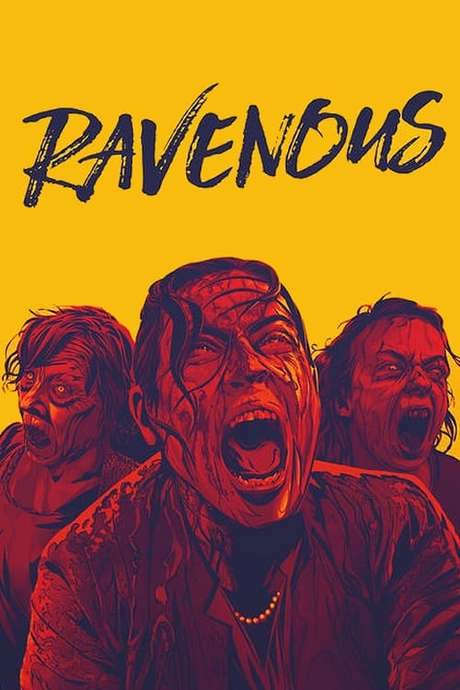
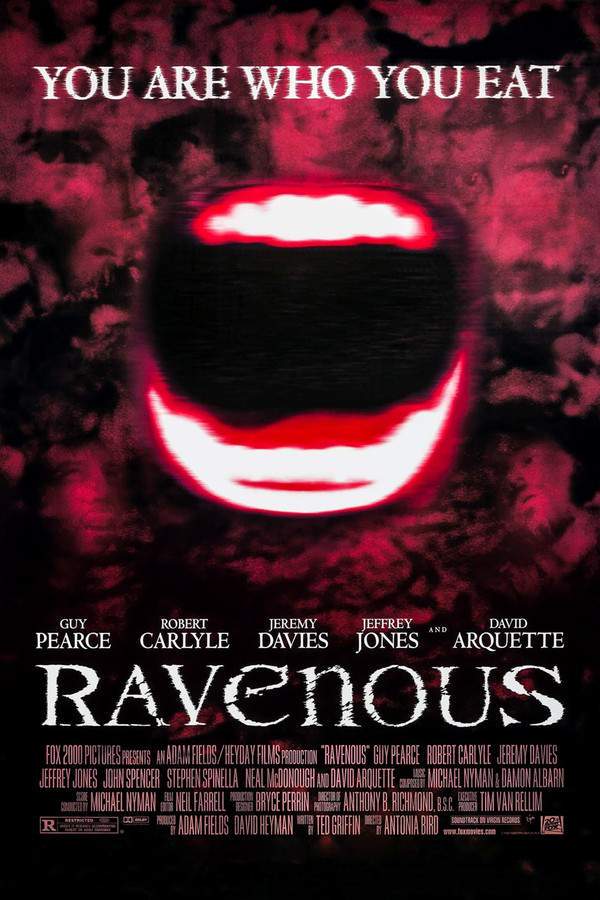
Ravenous (1999) movie poster

Plot Summary

Ravenous (1999) Plot Summary Explained

Release, runtime and language
1999 · 101 min · English
JustWatch #7,134 15
Directed by
Antonia Bird
Starring
Guy Pearce, Robert Carlyle
Budget
$12M

A seasoned captain is dispatched to Fort Spencer to investigate unsettling disappearances in the isolated territory. He meets a weary frontiersman, F.W. Colghoun, and together they delve into a disturbing account of a mass murder committed by a renegade U.S. Army colonel. Their investigation leads them deep into the unforgiving wilderness, where the captain’s initial doubts transform into chilling fear as the truth behind the horrifying events begins to surface.

On this page (6)
  1. 1 Where to watch
  2. 2 What happens: full plot
  3. 3 Plot questions answered
  4. 4 Movie threads
  5. 5 Movies like Ravenous
  6. 6 Every angle

Where to watch

Where to Watch Ravenous (1999)

Where can you watch Ravenous? Stream, rent or buy it in the US, including on Amazon Prime Video, Hoopla and Amazon Video: current JustWatch availability with up-to-date prices.

Streaming availability powered by JustWatch

Full plot summary · contains spoilers

What Happens in Ravenous: Full Plot Summary

The whole story of Ravenous (1999) explained, from the opening scene to the final frame: every key event, every twist and what it all adds up to. Read it as a quick recap before the sequel, to check a scene you missed, or to finally understand what really happened.

During the Mexican–American War, US Army second lieutenant Captain John Boyd Guy Pearce pretends to be dead as his unit is crushed by Mexican troops, a ruse that lands him on a cart of American corpses headed toward the Mexican headquarters. As the convoy moves, blood from the surrounding bodies drips into his mouth, a grim reprieve that gives him the strength to seize control of the destination and help capture the headquarters. His display of “bravery” earns him a promotion to captain, but the higher command, General Slauson, views his earlier supposed cowardice with doubt and ships him away to Fort Spencer, a remote outpost perched in the Sierra Nevada, as punishment.

At Fort Spencer, a seven‑man garrison holds the line under the austere command of Colonel Hart, a grizzled veteran who fends off isolation and rustling fears with quiet discipline. The quiet is shattered when a stranger named Colqhoun Robert Carlyle arrives after his wagon train loses its way in the mountains, guided by a colonel named Ives who has misrepresented his experience. The newcomers soon reveal the harsh realities of survival: the fort’s horses and pack animals are eaten, and the men are forced toward cannibalism to endure the winter ordeal. Colqhoun flees from Ives’ insatiable appetite, a sign that something far darker may be at work.

A rescue party is organized to search for the missing travelers, and the fort’s Indian scout, George, warns that some legends carry dangerous truths: the Wendigo myth—that consuming human flesh transfers strength but curses the eater with an unending hunger. The party discovers evidence in a cave that sheltered Colqhoun’s group: bones, clothing, and a chilling realization that Colqhoun is, in fact, Ives, who killed and ate five companions. The revelation fractures the rescued explorers; Colqhoun/Ives picks off the rescuers one by one, leaving Boyd as the lone survivor.

Boyd’s escape after a desperate jump from a cliff leaves him with a broken leg and a haunting hunger. He hides near Reich’s body, gnawing on Reich’s flesh to stay alive, while Colqhoun methodically slaughters the rest of the party. When Boyd staggers back to Fort Spencer, he is delirious and torn by cravings, and the other soldiers doubt his story about a cannibal at the cave. A second expedition to the cave turns up nothing—no bodies, no sign of Colqhoun—so the fort tries to carry on with uneasy normalcy.

A temporary commander arrives at the fort and, unsettlingly, proves to be Colqhoun, presenting himself as “Colonel Ives.” The troops refuse to believe that Ives could be the killer, particularly since he bears no wounds from the earlier confrontation. That evening, Ives confides in Boyd that his tuberculosis once plagued him, until a Wendigo‑tale-inspired decision changed him: he killed and ate the fort’s Indian scout, which cured his illness and granted him renewed vitality. Now, he intends to use Fort Spencer as a base of operations to cannibalize passing travelers moving west—pulling Boyd into his orbit just as he grapples with his own cannibal cravings.

Suspicion falls on Boyd after a private soldier dies under mysterious circumstances, and he is imprisoned as the mystery deepens. The real killer—Colonel Hart, whom everyone believed dead—then murders Major Knox, escalating fear and paranoia. Ives reveals that he once saved Hart by feeding him his own fallen comrades, and Hart has become addicted to flesh as well. In a brutal test of will, Ives wounds Boyd and forces him to choose: gorge on human flesh again or die. Boyd capitulates, consuming a stew made from human meat, a grim restoration of his wounded body.

Yet Boyd refuses to join Ives and Hart in their grisly plan to coerce General Slauson into accepting their cannibalistic crusade. He convinces Hart to free him so he can put an end to Ives. Hart, hollow and weary of his own hunger, agrees, but life and loyalty blur as Boyd and Ives exchange brutal blows that leave them both dangerously near death because of their regenerative powers. In the end, Boyd traps Ives in a bear‑trap set in an outhouse, pinning them together as Ives dies first. Boyd, unwilling to survive by feasting on Ives, dies on top of his adversary, choosing dignity over survival.

Martha, George’s sister, discovers the two corpses and quietly closes the door, moving away as the fort’s fate hangs in the balance. General Slauson finally arrives on the scene, while his aide surveys the ruined fort and samples the lingering, eerie stew on the fire—an ominous reminder of what began at Fort Spencer and what remains unresolved as the men’s stories end in haunting stillness.
Last updated: November 22, 2025 at 15:58

Was this helpful?

Plot questions answered

Ravenous Plot Explained: Your Questions Answered

The questions people ask most about Ravenous (1999): what happens in the confusing scenes, why the characters do what they do, the twists, hidden details and what the ending means. Each answer contains spoilers.

Q1

Why does Boyd pretend to be dead during the Mexican ambush?

Boyd pretends to be dead because his unit is being crushed by Mexican troops and he has no chance of survival in open combat. He lies still among the corpses on a cart heading to the Mexican headquarters, where blood from the dead soldiers drips into his mouth, giving him the strength to eventually turn the situation around and help capture the headquarters. This act of supposed cowardice is what General Slauson uses to send him to Fort Spencer as punishment.

Foreshadowing: Boyd's survival instinct through deception at the beginning sets up his moral compromises later in the film.

  • boyd
  • mexican american war
  • survival
  • deception
  • battle
Q2

Why is Boyd sent to Fort Spencer after being promoted to captain?

General Slauson promotes Boyd to captain for his actions at the Mexican headquarters but views his earlier supposed cowardice with suspicion. Rather than reward him with a desirable posting, Slauson ships him away to Fort Spencer as punishment, a remote, harsh outpost in the Sierra Nevada mountains. It's both a demotion disguised as a promotion and a way to remove Boyd from the main army.

Foreshadowing: This posting isolates Boyd in a place where the Wendigo curse can take hold without outside interference.

  • fort spencer
  • general slauson
  • punishment
  • posting
  • isolation
Q3

Who is Colqhoun really and why does he pretend to be Ives?

Colqhoun is actually Ives, the guide who led the wagon train through the mountains. When the group was stranded and starving, Ives killed and ate five of his companions. He created the persona of 'Colqhoun' as a fugitive identity to escape consequences for the murders, then disguised himself as 'Colonel Ives' when he arrives at Fort Spencer as a temporary commander. This elaborate deception allows him to get close to the fort's supplies and travelers.

Foreshadowing: Ives' misrepresentation of his experience to the wagon train at the beginning hints at his capacity for deception.

  • colqhoun
  • ives
  • identity
  • deception
  • cannibalism
  • wagon train
Q4

What is the Wendigo legend in Ravenous?

According to George, the Indian scout, the Wendigo is a mythological creature that curses anyone who consumes human flesh. The curse grants the eater supernatural strength and regenerative abilities, but condemns them to an insatiable hunger for human meat that can never be satisfied. This legend becomes the framework for understanding how Ives gained his power and why he continues to kill.

Foreshadowing: George's warning about the Wendigo early in the film foreshadows both Ives' transformation and Boyd's own struggle with cannibalism.

  • wendigo
  • legend
  • curse
  • mythology
  • supernatural
  • hunger
Q5

Why does Ives become a cannibal in Ravenous?

Ives reveals to Boyd that he once suffered from tuberculosis and was dying. After learning about the Wendigo legend from a tribe, he killed and ate the fort's Indian scout, a desperate act based on the myth that consuming human flesh would transfer strength and cure illness. The act worked: his tuberculosis was cured and he gained supernatural vitality. However, the curse bound him to an endless hunger for human flesh, which is why he now targets travelers passing through Fort Spencer.

Foreshadowing: Ives' initial deception about his experience as a guide suggests he was already willing to use others for survival.

  • ives
  • tuberculosis
  • illness
  • cure
  • wendigo
  • cannibalization
Q6

Why does Colonel Hart become a cannibal?

Colonel Hart was severely wounded and dying when Ives found him. To save Hart's life, Ives fed him the flesh of fallen comrades. This act saved Hart but also triggered the Wendigo curse in him, turning him into another cannibal driven by unending hunger. Hart then kills Major Knox to feed his addiction and pretends to be dead to avoid suspicion, working with Ives to use Fort Spencer as a base for their cannibalistic operations.

Foreshadowing: Colonel Hart's initial stern discipline masks the corruption that has already taken hold of him.

  • colonel hart
  • major knox
  • infection
  • wendigo
  • addiction
Q7

Why is Boyd imprisoned at Fort Spencer?

Boyd is imprisoned because a private dies under mysterious circumstances and suspicion falls on him. The soldiers already doubt his sanity after his delirious return from the cave, and his story about a cannibal named Colqhoun seems insane to them. However, the real killer is Colonel Hart, who has been secretly murdering soldiers while pretending to be dead. Boyd's imprisonment advances Ives' plan to manipulate him into joining the cannibal operation.

Foreshadowing: The doubt cast on Boyd's sanity after his return mirrors the paranoia that consumes the entire fort.

  • boyd
  • imprisonment
  • suspicion
  • murder
  • colonel hart
  • paranoia
Q8

What happens to the bodies at the cave during the second expedition?

When the second expedition returns to the cave, they find no bodies or any trace of Colqhoun. This is because Ives, having survived the attack, retrieved the bodies and cleaned up the cave to eliminate evidence of his crimes. The disappearance of the bodies reinforces the soldiers' belief that Boyd's story was a hallucination, making it easier for Ives to assume his disguise as Colonel Ives without suspicion.

Foreshadowing: Ives' careful cleanup demonstrates his intelligence and capacity for long-term deception.

  • cave
  • bodies
  • evidence
  • cleanup
  • expedition
  • ives
Q9

Why does Boyd choose to die rather than eat Ives at the end?

Boyd traps Ives in a bear trap in the outhouse, and Ives dies first from his wounds. Boyd is still alive and could survive by eating Ives's body, his regenerative abilities would heal him. However, Boyd refuses to give in to the Wendigo hunger that has already consumed two people. He chooses to die with dignity rather than become the monster Ives and Hart became. His death represents a moral victory even in defeat.

Foreshadowing: Boyd's earlier act of eating Reich's flesh to survive was a moment of weakness he spends the rest of the film grappling with.

  • boyd
  • death
  • choice
  • dignity
  • survival
  • wendigo
  • hunger
Q10

What does the ending with the stew mean in Ravenous?

At the end, General Slauson arrives at the ruined fort while his aide tastes the stew still simmering on the fire, the same human flesh stew that sustained the cannibals. This ominous moment suggests that Slauson and his army are now exposed to the same temptation, and the cycle of horror that began at Fort Spencer may continue spreading. Martha, George's sister, quietly closes the door, leaving the fate of the fort ambiguous but ominous.

Foreshadowing: The Wendigo curse was described as a transferable condition, those who taste human flesh become cursed themselves.

  • stew
  • ending
  • cycle
  • general slauson
  • continuation
  • curse

Movie threads

More Movies Like Ravenous, by Mood & Story

Curated lists built around what makes Ravenous tick: the same mood, the same kind of story or the same emotional payoff. Each list explains why these movies belong together.

Isolation horror movies with cannibalism like Ravenous

Stories where remote settings trap characters with a consuming evil. For viewers who liked the grim survival and cannibalistic terror of Ravenous, this thread gathers movies where characters are trapped in remote locations, facing starvation, madness, and the moral decay that comes with extreme isolation. If you enjoy tense, claustrophobic horror stories set in the wilderness or other confined spaces, these films deliver a similar desperate and grueling experience.

  • isolated
  • claustrophobic
  • gruesome
  • desperate
  • paranoid
  • unsettling
  • Tone: dark, grim, unsettling
  • Pacing: variable, with slow builds and brutal peaks
Why these movies?

The story pattern: Narratives in this thread typically begin with a group isolated from civilization, often in a wilderness outpost, at sea, or in an arctic station. An external threat—be it a person, a creature, or the environment itself—pushes the characters to their limits, forcing them to confront taboos like cannibalism and grapple with their own sanity. The plot revolves around survival at any cost and the psychological unraveling that ensues.

Why they belong together: These movies are grouped by their shared core elements: a remote, inescapable setting that creates a sense of claustrophobia, a central theme of survival that leads to moral transgression (often cannibalism), and a tone of grim, psychological dread. They share a high intensity and heavy emotional weight, focusing on the physical and moral decay of their characters.

Supernatural madness and Wendigo myth movies like Ravenous

Tales where a hidden evil corrupts characters from within. If you were fascinated by the Wendigo myth and the theme of supernatural hunger in Ravenous, this thread collects films where characters are consumed by an ancient evil or a primal curse. These stories explore the psychological and physical transformation caused by a dark force, often leading to a bleak ending. Fans of folk horror and mythological terror will find similar themes here.

  • unsettling
  • mythical
  • grim
  • tense
  • desperate
  • supernatural
  • Tone: dark, mythical, bleak
  • Pacing: slow burn, atmospheric
Why these movies?

The story pattern: The narrative pattern involves a character's exposure to a supernatural entity or myth (like a Wendigo, vampire, or curse). This exposure triggers an internal struggle as the character is slowly corrupted by a powerful hunger or madness. The story follows their descent, often blurring the lines between monster and victim, and culminates in a confrontation that highlights the inescapable nature of the evil.

Why they belong together: These films are united by their exploration of a supernatural corruption that mirrors addiction or moral decay. They share a dark tone, moderate complexity in the protagonist's internal conflict, and a variable pacing that builds atmosphere before erupting into violence. The ending feel is typically bleak, emphasizing the cyclical or triumphant nature of the ancient evil.

If you liked this

Movies Like Ravenous

Similar movies to Ravenous: the same genre, themes or kind of story. Each one comes with its own plot summary, timeline and ending explained.

Browse all movie summaries

Every angle

Ravenous (1999) Explained: Plot, Timeline & Characters

Everything about Ravenous in one place: what happens in the plot summary, the timeline in chronological order, the characters and meaning and a spoiler-free summary. What's After the Movie adds the cast, box office and post-credit scenes.

Coming soon on iOS and Android

The Plot Explained Movie Summary App

Plot summaries, endings explained and timelines on your phone. Catch up on any movie in minutes, save your favorites and never miss a twist again.

Be the first to know when we launch. Your email stays private, always.

Learn more about the app