Plot Explained Spoilers guaranteed!
Plot Explained

Browse by genre

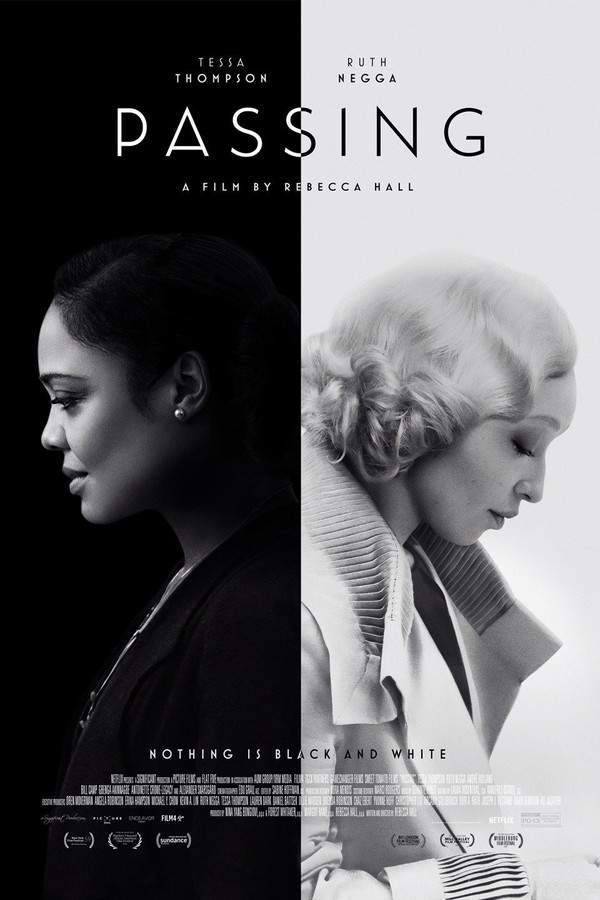
Passing (2021) movie poster

Plot Summary

Passing (2021) Plot Summary & Ending Explained

Release, runtime and language
2021 · 98 min · English
Echo score 79
JustWatch #34,366 3
Directed by
Rebecca Hall
Starring
Tessa Thompson, Bill Camp, Kerry Flanagan, Alexander Skarsgård, Andre Holland, Antoinette Crowe-Legacy

In 1920s New York, childhood friends Irene Redfield and Clare Kendry find their lives intertwined by the complexities of race and identity. Clare, who can pass as white, unexpectedly re-enters Irene’s life, creating a precarious situation built on secrets and deception. As Clare inserts herself into Irene's world, the blurred lines between their realities become increasingly dangerous, threatening to expose hidden truths and upend their carefully constructed lives. The consequences of passing become a matter of survival, testing the limits of their friendship and forcing them to confront uncomfortable truths about themselves and society.

On this page (8)
  1. 1 Where to watch
  2. 2 What happens: full plot
  3. 3 Plot questions answered
  4. 4 How it ends
  5. 5 The book behind the movie
  6. 6 Movie threads
  7. 7 Movies like Passing
  8. 8 Every angle

Where to watch

Where to Watch Passing (2021)

Where can you watch Passing? Stream, rent or buy it in the US, including on Netflix and Netflix Standard: current JustWatch availability with up-to-date prices.

Streaming availability powered by JustWatch

Full plot summary · contains spoilers

What Happens in Passing: Full Plot Summary

The whole story of Passing (2021) explained, from the opening scene to the final frame: every key event, every twist and what it all adds up to. Read it as a quick recap before the sequel, to check a scene you missed, or to finally understand what really happened.

Irene Redfield, a light-skinned black woman residing in Harlem, unexpectedly encounters her childhood friend, Clare, at a hotel. While Irene embraces her identity as African-American and is married to a black doctor, Clare has chosen to "pass" as white and is married to a wealthy white man, John. Inviting Irene to her hotel, Clare shares that after her father passed away, she was brought up by two white aunts and wed at an early age. Their reunion is interrupted by John, who shows a blatant disdain for African-Americans, completely oblivious to his wife’s real heritage and Irene's circumstances of "passing" for the day.

Despite this shaky first meeting, Clare rekindles the friendship by reaching out to Irene, who, after some contemplation, agrees to reconnect. As they dive deeper into each other's lives, insecurities surface, and Clare confesses her longing for the African-American culture she has had to suppress around John. Irene introduces Clare to a jazz club outing with her husband, Brian, and their friend Hugh. Although Hugh dismisses the bash, Irene can't overlook the undeniable chemistry brewing between Clare and Brian.

As they reminisce, Clare expresses her envy of Irene's steady, moral nature, while Irene admits to admiring Clare's lively and liberated spirit. Clare reveals her willingness to achieve her desires by any means necessary, even at the expense of others. Meanwhile, Irene and Brian find themselves clashing over how to address racial issues with their children. Irene grows increasingly concerned as Brian and Clare seem to cultivate a close bond, leaving her sons eager to see Clare.

After spending a day home with the children while Brian enjoys bridge with Clare, Irene's growing paranoia leads her to suspect an affair between them, resulting in a tense confrontation with Brian. Attempting to distance herself from Clare, Irene's plans are thwarted when Brian invites Clare to a tea gathering for Hugh. In an attempt to mask her anxiety, Irene drinks heavily and accidentally breaks an heirloom teapot upon witnessing Brian and Clare in an intimate moment, although Hugh quickly shields her from the guests' scrutiny.

Despite Irene's desire for Clare to return to John and leave the city, Clare remains present in Irene's life. While shopping with Felise, who does not pass as white, Irene runs into John and hurries away as he begins to suspect his wife’s true identity. Although Irene desperately tries to warn Clare, she ultimately relents. As the trio prepares for a party, Irene questions Clare on her plans if John discovers her background. Clare's response—a commitment to return permanently to Harlem—disturbs Irene, rendering her silent throughout the event.

When she opens a window to smoke, an irate John storms into the party, confronting Clare and accusing her of deception. As John lunges at Clare, Irene instinctively intervenes, but in the ensuing chaos, Clare tragically falls from the window to her demise. After a moment's hesitation, Irene descends to where the guests are conferring with the police. When questioned, she maintains that Clare's fall was an accident. In the midst of her sorrow, Brian appears to comprehend the underlying truths of the situation and consoles Irene as she weeps.
Last updated: November 16, 2024 at 11:44

Was this helpful?

Plot questions answered

Passing Plot Explained: Your Questions Answered

The questions people ask most about Passing (2021): what happens in the confusing scenes, why the characters do what they do, the twists, hidden details and what the ending means. Each answer contains spoilers.

Q1

Why does Clare choose to pass as white?

Clare passes as white because she was raised by two white aunts after her father's death. She married a wealthy white man named John, who is overtly racist and completely unaware of his wife's true racial identity. Passing allows Clare to access privileges and safety that would be denied to her as a Black woman in 1920s America, though it requires her to suppress her African-American heritage entirely.

Foreshadowing: Clare mentions early on that she was brought up by her white aunts and married at an early age, establishing why she chose this path.

  • clare kendry
  • passing
  • racial identity
  • segregation
  • white privilege
Q2

Why do Irene and Brian argue about teaching their children about race?

Brian wants to have honest conversations with their sons about racial issues and the dangers they face as Black men in America. Irene prefers to protect them from that harsh reality and maintain a more sheltered upbringing. This disagreement reflects their differing approaches to navigating racism, Brian advocates for arming their children with awareness, while Irene believes in preserving their innocence as long as possible.

Foreshadowing: Their argument early in the film sets up the growing distance between them as Brian becomes drawn to Clare's more liberated perspective.

  • brian redfield
  • irene redfield
  • parenting
  • racial education
  • black families
Q3

Why does Irene become suspicious of Brian and Clare's relationship?

Irene notices undeniable chemistry between Clare and Brian during their jazz club outing. After that, Brian and Clare spend increasing amounts of time together, including a day playing bridge while Irene watches the children. Irene's paranoia intensifies when her sons express excitement about seeing Clare, and she eventually confronts Brian directly, fearing an affair is developing.

Foreshadowing: The jazz club scene explicitly notes the chemistry between Clare and Brian, which Irene does not miss.

  • affair suspicion
  • jealousy
  • brian redfield
  • clare kendry
  • irene redfield
Q4

What happens when Clare falls from the window?

During John confronting Clare at the party, he lunges at her in anger. Irene instinctively tries to intervene, and in the ensuing chaos, Clare falls from the window to her death. The exact circumstances remain ambiguous, whether she fell while trying to escape, was pushed, or lost her balance is unclear. Irene tells the police it was an accident.

Foreshadowing: Clare's unsettling commitment to return permanently to Harlem if John discovered her identity foreshadows the deadly confrontation that follows.

  • clare death
  • window fall
  • john kendry
  • party confrontation
  • accident
Q5

Why does Irene lie about Clare's death being an accident?

Irene tells the police that Clare's fall was an accident because she was present during the confrontation and physically involved in the struggle. Admitting the truth would implicate her in whatever caused Clare's death, whether she pushed Clare, contributed to her falling, or failed to prevent it. Additionally, Irene must protect herself and her family from the scandal and potential legal consequences.

Foreshadowing: Irene's growing resentment toward Clare and her desire for Clare to leave the city suggest she may have had conflicted feelings about Clare's presence.

  • police statement
  • cover-up
  • irene redfield
  • truth
  • accident
Q6

Why does John confront Clare at the party?

John discovers Clare's true racial identity. While shopping with Felise, Irene encounters John, who begins to suspect his wife's real background. Irene attempts to warn Clare but relents. John then storms into the party where Clare is present, accusing her of deception about her racial identity and confronting her about the lie she has maintained throughout their marriage.

Foreshadowing: Irene's panic when running into John while shopping and her failed attempt to warn Clare establish that discovery was imminent.

  • john kendry
  • confrontation
  • racial identity exposed
  • discovery
  • party
Q7

Why does Irene want Clare to return to John and leave the city?

Irene becomes increasingly desperate for Clare to leave after witnessing the intimate moment between Clare and Brian at her home, combined with her paranoia about a potential affair. Additionally, Clare's presence threatens everyone, John's discovery of Clare's identity would put all of them at risk. Irene sees Clare's departure as the only way to restore order to her family and protect everyone's safety.

Foreshadowing: Irene's heavy drinking and the broken teapot incident mark a turning point in her desire to remove Clare from her life entirely.

  • jealousy
  • safety
  • departure
  • irene redfield
  • clare kendry
Q8

What motivates Clare to reconnect with Irene?

Clare reaches out to Irene because she longs for connection to the African-American culture and identity she has been forced to suppress in her white-passing life. She envies Irene's steady, moral nature and her ability to live authentically as a Black woman. Clare also admits she is willing to achieve her desires by any means necessary, even at the expense of others.

Foreshadowing: Clare's confession about longing for the culture she's had to suppress establishes her motivation for inserting herself back into Irene's world.

  • motivation
  • identity
  • african-american culture
  • envy
  • clare kendry
Q9

Why does Clare risk visiting Irene knowing John could find out?

Clare's desire to reconnect with her Black identity outweighs the danger of discovery. She tells Irene she is willing to return permanently to Harlem if John learns the truth. Clare seems almost reckless in her pursuit of the life she's been denied, possibly because living a lie has become unbearable. Her statement implies she may have wanted John to discover the truth as an escape from her suffocating marriage.

Foreshadowing: Clare's admission that she will do whatever is necessary to get what she wants hints at her willingness to risk everything.

  • risk
  • discovery
  • identity crisis
  • clare kendry
  • john kendry
Q10

Why does Brian console Irene after Clare's death?

Brian appears to understand the deeper truth of what happened during the confrontation. He realizes that Irene was involved in whatever caused Clare's fall, whether through action or failure to prevent it. Despite the strain in their marriage and his possible connection to Clare, Brian chooses to comfort Irene, suggesting he wants to maintain their family unit and move past the tragedy together.

Foreshadowing: Brian's earlier bond with Clare and his conversations with Irene about the situation suggest he has insight into the complex dynamics at play.

  • brian redfield
  • consoling
  • marriage
  • grief
  • understanding

Ending explained

What Happens at the End of Passing?

How Passing (2021) ends, in short: the final scene, the last twist and what it means for the characters. The full ending explained, with every spoiler, lives on its own page.

Read the full ending explained

Passing concludes with a tragic and ambiguous ending that highlights the toxic consequences of racial and social concealment. During a heated confrontation, Clare is pushed out of a window by Irene—either by accident or in a moment of panic—leading to her death. Throughout the film, Clare's desire to pass as white and live a carefree life clashes with her deep dissatisfaction and envy of Irene’s genuine confidence. Irene, overwhelmed by suspicions of Clare's relationship with her husband and her own fears of being exposed, acts impulsively during the confrontation. Her pushing Clare out of the window is a symbol of the destructive nature of trying to hide one's true identity and the destructive impact of societal pressures. As Clare falls, the scene is left open to interpretation: was it an accidental pushing, or was Irene driven by fear to act in a moment of desperation? The police quickly consider her death an accident, and the film closes with Irene’s haunted silence, reflecting on the tragic loss caused by the masks people wear and the societal prejudices that push individuals into dangerous corners. Ultimately, the ending underscores how the complex interplay of race, identity, and societal expectations can lead to irreversible consequences.**

Passing ending explained in full

Movie threads

More Movies Like Passing, by Mood & Story

Curated lists built around what makes Passing tick: the same mood, the same kind of story or the same emotional payoff. Each list explains why these movies belong together.

Claustrophobic period dramas of psychological unease like in Passing

Historical settings where internal tensions simmer into dangerous consequences. Explore movies like Passing that use a historical setting to create a tense, claustrophobic atmosphere. These films focus on internal psychological conflict, social constraints, and dangerous secrets, often leading to heavy emotional consequences. If you liked the oppressive mood and simmering tension of Passing, you'll find similar stories here.

  • claustrophobic
  • oppressive
  • unsettling
  • tense
  • melancholic
  • anxious
  • Tone: tense, melancholic, unsettling
  • Pacing: steady, slow burn
Why these movies?

The story pattern: Stories in this thread typically unfold within rigid social structures of the past, where characters are trapped by conventions or their own secrets. The central conflict is often psychological, building slowly as repressed desires, envy, or deception threaten to shatter a carefully maintained facade, culminating in a dramatic, often tragic, release of tension.

Why they belong together: These movies are grouped by their shared combination of a detailed period setting, a focus on internal psychological drama over external action, and a consistently tense, oppressive mood. They prioritize character psychology and social commentary, creating a specific, intense viewing experience.

Movies about toxic friendships and deception like Passing

Stories where a close relationship becomes a dangerous game of envy and lies. Find movies similar to Passing that explore the dangerous dynamics of friendship warped by obsession and deception. These character-driven dramas focus on how envy and secrets can fracture relationships, leading to intense psychological tension and heavy emotional consequences. If you were captivated by the fraught bond between Irene and Clare, discover more films here.

  • obsessive
  • unsettling
  • paranoid
  • jealousy
  • psychological
  • tense
  • Tone: tense, paranoid, melancholic
  • Pacing: steady, character-driven
Why these movies?

The story pattern: The narrative pattern involves a seemingly stable life disrupted by the arrival or re-emergence of a charismatic but manipulative figure. The central friendship becomes a battleground for power, identity, and desire, with the line between admiration and envy blurring. The story methodically builds psychological pressure until the deceptive foundation of the relationship collapses, often with devastating results.

Why they belong together: These films are united by their intense focus on a dual-character study where friendship is the primary vessel for themes of identity, jealousy, and moral ambiguity. They share a steady, deliberate pacing that allows psychological complexity to build, resulting in a tense, heavy, and ultimately tragic viewing experience.

If you liked this

Movies Like Passing

Similar movies to Passing: the same genre, themes or kind of story. Each one comes with its own plot summary, timeline and ending explained.

Browse all movie summaries

Every angle

Passing (2021) Explained: Plot, Ending, Timeline & Characters

Everything about Passing in one place: what happens in the plot summary, the timeline in chronological order, the characters and meaning, the ending explained and a spoiler-free summary. What's After the Movie adds the cast, box office and post-credit scenes.

Coming soon on iOS and Android

The Plot Explained Movie Summary App

Plot summaries, endings explained and timelines on your phone. Catch up on any movie in minutes, save your favorites and never miss a twist again.

Be the first to know when we launch. Your email stays private, always.

Learn more about the app