Miles Robert Ri'chard, a Black student at Martin Luther King Jr. Middle School who loves Hank Aaron, struggles with grades and faces the real possibility of repeating sixth grade unless he turns things around. His best friend, Randy Lucas Black, stands by his side as they navigate a world of growing curiosity and growing challenges. Their teacher, Mrs. Clark Susan Sarandon, warns Miles that his academic progress could determine his future, setting the stage for a journey that blends history with imagination.
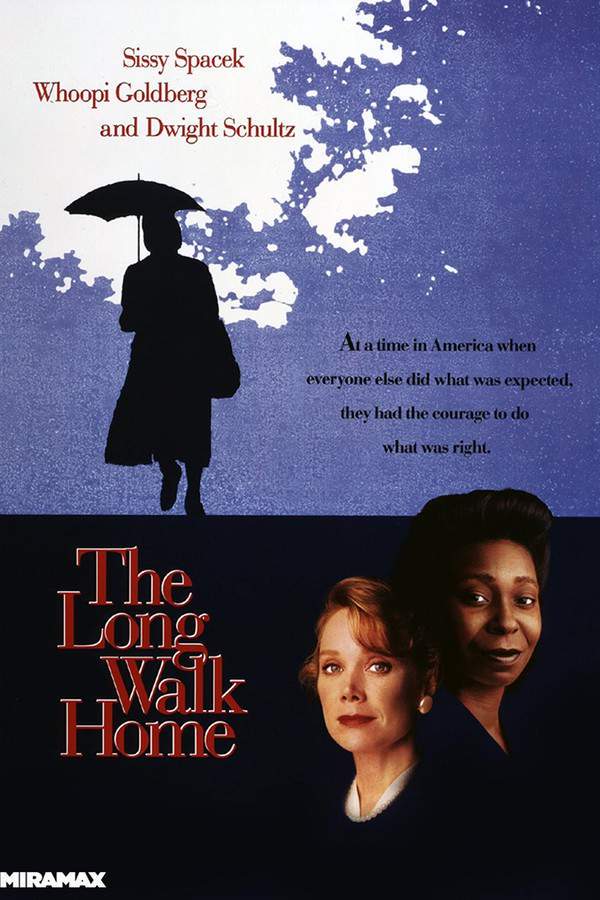
During a visit to Martin’s childhood house, now a museum dedicated to the civil rights icon, Miles and Randy stumble into a doorway to the past after touching Martin’s baseball glove. They are soon confronted by the museum’s curator, Mrs. Peck Whoopi Goldberg, who is winding an old watch as if guarding a doorway between times. Inside this ancient space, Miles and Randy are pulled into 1941, where they meet a 12-year-old Martin King playing with his white friends, Sam Dale Adam Wylie and Skip Dale, until their mother admonishes them for “integrating with coloreds.” Martin explains that fear of difference runs deep, yet violence would only deepen the wound.
The journey continues to 1944, where the pair encounter a 15-year-old Martin aboard a segregated train. Martin speaks of a society that insists blacks and whites must stay separate, offering Miles and Randy a harder truth about the barriers of the era. They are then taken to 1956, where Martin, now an adult and a minister, leads a church and wrestles with the mounting pressures surrounding the Montgomery Bus Boycott sparked by Rosa Parks’s act of defiance. When the King household is bombed, Martin’s wife and newborn daughter escape unharmed, and a tense moment unfolds as Turner proposes retaliation. Martin steadies the crowd, reminding them of Mahatma Gandhi’s belief in peaceful resistance and Jesus’s teaching to love one’s enemies.
Next, Miles and Randy witness the Birmingham riot of 1963, where firefighters and police under Bull Connor’s orders unleash hoses and police dogs on Black protesters, followed by mass arrests. The brutal scenes leave a lasting impact and further illuminate the moral stakes of the era.
Back in the present, Miles and Randy recount what they witnessed to Mrs. Clark, who then shares a videotape of Martin’s life and work. The duo’s classmates, Maria Ramirez Jessica Garcia and Kyle Langon Zachary Leigh, become curious and insist on seeing the museum for themselves. Mrs. Peck allows it, but she cautions that meddling with the past can ripple into the present. The group travels to the March on Washington for Jobs and Freedom, meeting Martin in his 30s alongside a young Mrs. Clark, and then returns with a troubling realization: Martin had been assassinated.
Determined to save him, the group travels back to 1941 to bring a 12-year-old Martin into the present. Yet only Miles and Martin return; the timeline shifts dramatically: the museum lies burned, Randy [Lucas Black] becomes estranged with Miles, and the town’s institutions grow hostile—Miles’s bus driver, Mr. Willis [Ed Asner], becomes racist, Miles’s school is renamed after Robert E. Lee, the principal Mr. Harris appears biased, and Maria Ramirez’s life changes as she becomes a maid who struggles with language barriers. The rearranged present reveals a reality where progress stalled and prejudice thrived.
Martin deduces that stepping away from his own time created an alternate timeline where his civil rights work never happened. Realizing what must be done, he gives Miles the watch and bids him farewell, even as he warns of his own assassination. The moment Martin is killed at a motel, the timeline snaps back to normal. Miles reunites with Randy, Maria, and Kyle, and Mrs. Peck comforts them by explaining that while they cannot alter the past directly, they can choose to shape a better future. Miles earns an A on his history project, advancing to seventh grade, and he and his friends pledge to continue Martin’s work. Through courage, reflection, and the power of education, they resolve to honor the legacy of those who fought for equality and to keep moving forward together.