Plot Explained Spoilers guaranteed!
Plot Explained

Browse by genre

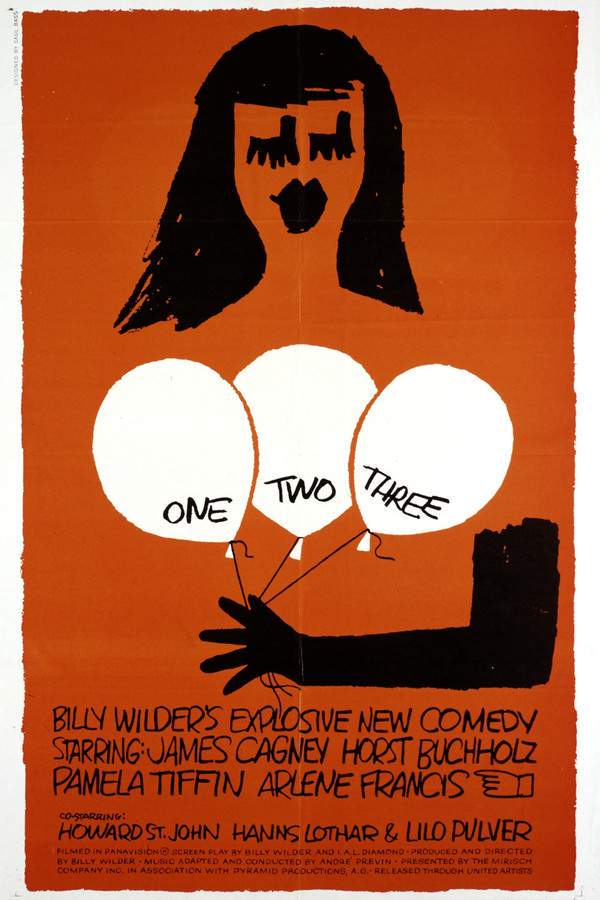
One, Two, Three (1961) movie poster

Characters & Themes

One, Two, Three (1961) Characters, Setting & Themes Explained

Release, runtime and language
1961 · 104 min · English
Loading streaming availability…
Directed by
Billy Wilder
Starring
Arlene Francis, Hanns Lothar, Horst Buchholz, Howard St. John, Hubert von Meyerinck, James Cagney

A Coca-Cola executive, C.R. MacNamara, hopes to secure a promotion and is tasked with babysitting his boss’s daughter, Scarlett, in Berlin. However, Scarlett harbors a secret: she’s married to Otto Piffl, a communist. This unexpected revelation throws C.R.’s ambitions into disarray and leads to a series of humorous complications as he tries to navigate the delicate situation and keep his career on track.

On this page (8)
  1. 1 Where to watch
  2. 2 Characters explained (4)
  3. 3 Where & when it takes place
  4. 4 Themes & meaning (2)
  5. 5 Character & meaning questions
  6. 6 Movie threads
  7. 7 Movies like One, Two, Three
  8. 8 Every angle
Loading streaming availability…

4 main characters · contains spoilers

One, Two, Three Characters Explained: Who Is Who

The main characters of One, Two, Three (1961), heroes and villains: what drives them, how they change over the course of the story and what each of them reveals about the film's bigger ideas.

  • C.R. MacNamara (James Cagney)

    C.R. MacNamara is a resourceful and ambitious Coca-Cola executive who epitomizes the struggles of balancing personal and professional life. His character develops as he is thrust into a chaotic situation involving his boss's daughter and a Communist son-in-law. MacNamara's quick wit and ability to think on his feet drives much of the comedic plot, showcasing both his charm and desperation.

    • 👔 Executive
    • 😂 Comedic Hero
  • Scarlett Hazeltine

    Scarlett is depicted as a carefree young woman whose impulsive decision to marry Otto Piffl complicates her father's ambitions. Her character embodies the youthful rebellion and complexity of family relationships typical of the era. As the plot unfolds, she represents both the flightiness of youth and the serious implications of love and responsibility.

    • 👰 Daughter
    • ❤️ Love
  • Otto Piffl

    Otto Piffl is introduced as the unsavory, Communist husband of Scarlett. His character serves as a foil to MacNamara's aspirations and symbolizes the ideological divide between East and West Berlin. Despite his questionable hygiene and demeanor, Otto's role is central to the comedic misunderstandings and tension that push the narrative forward.

    • 🔴 Communist
    • 😂 Antagonist
  • Ingeborg

    Ingeborg is portrayed as the alluring secretary who becomes entangled in MacNamara's personal affairs. Her character adds complexity to the narrative and introduces themes of temptation and distraction amidst the chaos of family issues. Ingeborg's charm and presence contribute to both the comedic flair and tension within MacNamara's marital challenges.

    • 💼 Secretary
    • 😍 Temptation

Last updated: October 22, 2024 at 19:33

Was this helpful?

Setting

Where and When Does One, Two, Three Take Place?

The setting of One, Two, Three (1961): the year and time period, the places and locations, and how they shape the characters, the mood and the tension of the story.

Time period

While the precise time period is not specified, the film captures the essence of the Cold War era when political tensions between the East and West were at their peak. This backdrop influences the comedic and satirical elements of the story, underlining societal divides and cultural clashes prevalent during the time.

Location

West Berlin, East Berlin

The movie takes place during a time of significant tension between West and East Berlin, reflecting the realities of the Cold War. West Berlin is portrayed as a bustling urban hub infused with the influence of Western capitalism, notably Coca-Cola. In contrast, East Berlin symbolizes the Communist regime, with stark differences in lifestyle and ideology.

  • 🗺️ Locations
  • 🌆 Urban

Last updated: October 22, 2024 at 19:33

Was this helpful?

2 major themes

One, Two, Three Meaning: Themes & Message Explained

What is One, Two, Three (1961) really about? The emotional, social and philosophical themes the film keeps returning to, its symbolism and the message beneath the surface.

  • Comedy

    The film utilizes humor as a tool to critique the absurdities of social norms and political tensions. Through the character of MacNamara and his frantic schemes, the comedic tone explores themes of family dynamics, unexpected consequences, and cultural clashes. This blend of satire and farce creates a unique viewing experience that engages with the audience while entertaining.

  • Political Satire

    Incorporating elements of Cold War politics, the film mirrors societal prejudices and consumerism, particularly through the lens of the Coca-Cola brand. It critiques the broader political landscape and the absurdity of bureaucratic decisions, highlighting the ridiculousness of navigating these challenges amidst personal turmoil. This satire positions the narrative within larger global issues while maintaining a lighthearted tone.

Last updated: October 22, 2024 at 19:33

Was this helpful?

Character & theme questions

One, Two, Three Characters & Meaning: Your Questions Answered

The questions people ask about One, Two, Three (1961): who the characters really are, their relationships, what the symbols mean, where it takes place and what the movie is really about. Each answer contains spoilers.

Q1

Where is the movie set?

The movie is set in Berlin, specifically contrasting West Berlin and East Berlin during the Cold War era. West Berlin is portrayed as a bustling hub of Western capitalism, notably featuring Coca-Cola, while East Berlin represents the Communist regime with its starkly different lifestyle and ideology.

  • berlin
  • west berlin
  • east berlin
  • cold war
  • setting
  • locations
Q2

What time period does the movie depict?

The movie takes place during the Cold War era, when political tensions between the East and West were at their peak. While no specific year is given, the film captures the essence of this period with its portrayal of the Berlin Wall divide and the ideological clash between capitalism and communism.

  • cold war
  • time period
  • 1960s
  • berlin wall
  • era
Q3

What political commentary does the movie make?

The film uses satire to critique Cold War politics and consumerism, particularly through the lens of the Coca-Cola brand. It highlights the absurdity of bureaucratic decisions and the ridiculousness of navigating ideological clashes amid personal turmoil, positioning a lighthearted comedy within serious global tensions.

  • political satire
  • cold war
  • capitalism
  • communism
  • coca-cola
  • critique
Q4

Who is C.R. MacNamara?

C.R. MacNamara is the protagonist, a resourceful and ambitious Coca-Cola executive in Berlin who epitomizes the struggle to balance personal and professional life. When his boss's daughter marries a communist, MacNamara must use his quick wit to navigate the chaotic situation while trying to secure his promotion.

  • c.r. macnamara
  • character
  • executive
  • coca-cola
  • protagonist
Q5

Who is Scarlett and what is her role?

Scarlett is the daughter of MacNamara's boss, depicted as a carefree young woman whose impulsive decision to marry Otto Piffl, a communist, complicates MacNamara's career ambitions. She represents youthful rebellion and the complexity of family relationships during this era.

  • scarlett hazeltine
  • character
  • daughter
  • marriage
Q6

Who is Otto Piffl and what does he represent?

Otto Piffl is Scarlett's husband, a communist from East Berlin portrayed as unsavory with questionable hygiene. He serves as a foil to MacNamara's Western ambitions and symbolizes the ideological divide between East and West Berlin, becoming central to the comedic misunderstandings.

  • otto piffl
  • character
  • communist
  • east berlin
  • ideology
Q7

Who is Ingeborg and what is her role?

Ingeborg is MacNamara's alluring secretary who becomes entangled in his personal affairs. Her character adds complexity to the narrative, introducing themes of temptation and distraction amidst the chaos of managing family issues and political tensions.

  • ingeborg
  • character
  • secretary
  • temptation
  • distraction
Q8

What style of comedy does the movie use?

The film employs screwball comedy combined with farce, using rapid-paced humor to explore themes of family dynamics, unexpected consequences, and cultural clashes. Its frantic, relentless pacing drives a series of escalating complications that entertain while commenting on serious social and political issues.

  • comedy
  • screwball
  • farce
  • satire
  • humor style
Q9

How does the movie portray the Berlin divide?

The film contrasts West Berlin as a vibrant, capitalist urban center influenced by Western consumerism with East Berlin as a symbol of the restrictive Communist regime. This divide drives much of the comedic tension and cultural clashes that define the story's world.

  • berlin wall
  • west berlin
  • east berlin
  • divide
  • contrast
Q10

What does the movie say about capitalism?

Through MacNamara's role as a Coca-Cola executive, the film critiques consumer culture and corporate ambition, using humor to examine how capitalism intersects with political ideologies. The absurdity of prioritizing business interests amid Cold War tensions becomes a focal point for satire.

  • capitalism
  • coca-cola
  • corporate culture
  • consumerism
  • business
Q11

What is the overall tone of the movie?

Despite its serious Cold War backdrop, the movie maintains a consistently light and humorous tone. The farcical treatment keeps the emotional weight light while delivering witty chaos, though the frantic pacing creates a sense of high-stakes drama that blends comedy with tension.

  • tone
  • comedy
  • farce
  • lighthearted
  • satirical

Movie threads

More Movies Like One, Two, Three, by Mood & Story

Curated lists built around what makes One, Two, Three tick: the same mood, the same kind of story or the same emotional payoff. Each list explains why these movies belong together.

Frantic race against time comedies like One, Two, Three

High-stakes, fast-paced comedies where characters spiral in a desperate scramble. If you loved the breakneck pace and chaotic energy of 'One, Two, Three', you'll enjoy these movies. This list features comedies with similar high-stakes plots, frantic pacing, and characters desperately trying to stay ahead of a spiraling situation, perfect for fans of witty, exhausting humor.

  • frantic
  • chaotic
  • witty
  • exhausting
  • fast-paced
  • high-energy
  • Tone: light, satirical
  • Pacing: fast, relentless
Why these movies?

The story pattern: The narrative follows a domino effect of misfortunes. A character's simple goal is immediately complicated by unexpected obstacles, leading to a series of increasingly ludicrous and desperate attempts to regain control. The plot structure is a continuous acceleration towards a climax where all the chaos must be resolved under intense pressure.

Why they belong together: Movies in this thread are united by their breakneck pacing and the core premise of a character in over their head. They share a light, farcical tone where the tension comes from the frantic execution rather than serious stakes, creating a uniquely exhilarating and witty viewing experience.
Political and corporate satires with the wit of One, Two, Three

Sharp-witted comedies that punch up at institutions and ideologies. For viewers who enjoyed the sharp political and corporate satire in 'One, Two, Three', this list gathers similar movies. These films use clever humor and farcical situations to critique serious topics like the Cold War, ambition, and cultural conflict, offering a blend of smart comedy and social commentary.

  • satirical
  • witty
  • sharp
  • absurd
  • ideological
  • clever
  • Tone: witty, satirical, light
  • Pacing: fast, steady
Why these movies?

The story pattern: The narrative typically places an ordinary or ambitious individual at the center of a clash between opposing ideologies or systems. Their personal goals become entangled with larger, often absurd, institutional conflicts, forcing them to navigate a world of rules and rivalries they don't fully control, leading to satirical revelations.

Why they belong together: These films are grouped by their shared purpose: using comedy as a tool for social and political commentary. They possess a specific, witty tone that mocks powerful entities, and often use a fast-paced, farcical structure to deliver their critiques, making serious topics accessible and hilarious.

If you liked this

Movies Like One, Two, Three

Similar movies to One, Two, Three: the same genre, themes or kind of story. Each one comes with its own plot summary, timeline and ending explained.

Browse all movie summaries

Every angle

One, Two, Three (1961) Explained: Plot, Timeline & Characters

Everything about One, Two, Three in one place: what happens in the plot summary, the timeline in chronological order, the characters and meaning and a spoiler-free summary. What's After the Movie adds the cast, box office and post-credit scenes.

Coming soon on iOS and Android

The Plot Explained Movie Summary App

Plot summaries, endings explained and timelines on your phone. Catch up on any movie in minutes, save your favorites and never miss a twist again.

Be the first to know when we launch. Your email stays private, always.

Learn more about the app