Plot Explained Spoilers guaranteed!
Plot Explained

Browse by genre

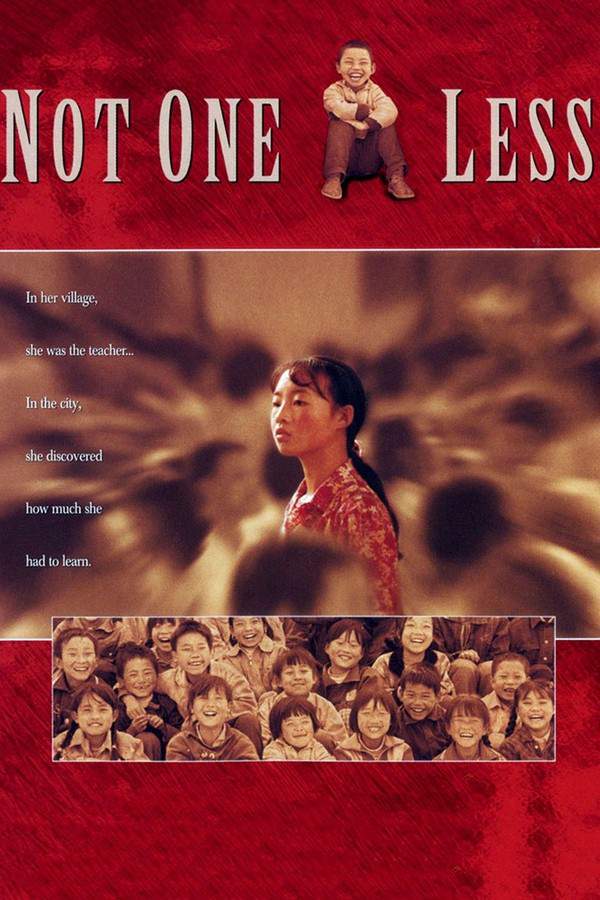
Not One Less (2000) movie poster

Plot Summary

Not One Less (2000) Plot Summary Explained

Release, runtime and language
2000 · 106 min · Chinese
Loading streaming availability…
Directed by
Yimou Zhang
Starring
Huike Zhang, Minzhi Wei, Zhenda Tian

In a remote, impoverished village, a young and inexperienced 14-year-old unexpectedly becomes the substitute teacher when the regular instructor leaves temporarily. The novice must quickly learn to balance the demands of educating the village children with the challenges of dealing with adult concerns and the harsh realities of rural life, all while facing the weight of responsibility far beyond his years.

On this page (6)
  1. 1 Where to watch
  2. 2 What happens: full plot
  3. 3 Plot questions answered
  4. 4 Movie threads
  5. 5 Movies like Not One Less
  6. 6 Every angle
Loading streaming availability…

Full plot summary · contains spoilers

What Happens in Not One Less: Full Plot Summary

The whole story of Not One Less (2000) explained, from the opening scene to the final frame: every key event, every twist and what it all adds up to. Read it as a quick recap before the sequel, to check a scene you missed, or to finally understand what really happened.

Set against the backdrop of 1990s China, this compelling film focuses on a 13-year-old substitute teacher, Wei Minzhi, who finds herself in the rural countryside. Tasked with covering for a village teacher for a month, she is given a significant responsibility: she must not allow any of her students to drop out. However, when one of her students bolts to the big city in search of work, she embarks on a determined quest to bring him back.

The narrative delves deeply into critical themes such as education reform in China, the stark economic divide between urban and rural communities, and the omnipresence of bureaucracy and authority figures in daily life. The film's style is distinctly neorealist, employing a documentary-like approach with a cast comprised of non-professional actors who portray characters sharing their real names and professions, effectively blurring the lines between drama and reality.

Upon its domestic release, Not One Less was supported by a campaign from the Chinese government aimed at promoting the film while also targeting film piracy. Internationally, the reception was mixed; some critics lauded its innovative style and bold critique of the Chinese education system, while others dismissed it as a pro-government propaganda piece masked as a public service announcement. Notably, when the film was omitted from the top competition at the 2000 Cannes Film Festival, director Huike Zhang withdrew it from the festival, expressing his disappointment in a letter critiquing Cannes for its politicization and alleged "discrimination" against Chinese cinema.

Despite the controversies, the film succeeded on the international stage, winning the coveted Golden Lion at the Venice Film Festival, along with several other accolades. Additionally, Huike Zhang received the award for Best Director at the Golden Rooster Awards, solidifying the film's impact and importance in discussions about Chinese cinema and society.

Last updated: November 04, 2024 at 02:00

Was this helpful?

Plot questions answered

Not One Less Plot Explained: Your Questions Answered

The questions people ask most about Not One Less (2000): what happens in the confusing scenes, why the characters do what they do, the twists, hidden details and what the ending means. Each answer contains spoilers.

Q1

Why does a 13-year-old girl become a substitute teacher in the village?

Wei Minzhi takes on the substitute teacher role when the regular teacher leaves for a month. Despite her young age and lack of experience, she is given this responsibility because there is no one else available in the remote village. The village needs someone to watch over the students, and she is the only option willing to take on the role, though she is still a child herself.

  • Wei Minzhi
  • substitute teacher
  • village
  • rural China
  • education
Q2

Why does one of Wei's students leave the village for the city?

The student leaves the village to find work in the city, driven by the severe economic hardship faced by rural families. In 1990s China, many young people from impoverished rural areas believed that moving to urban centers offered their only opportunity to escape poverty and contribute to their families' survival.

  • student leaves
  • city
  • work
  • economic hardship
  • rural poverty
Q3

Why does Wei Minzhi go to the big city to find the student?

Wei is determined to bring the student back because she has been explicitly tasked with ensuring no students drop out of school. This responsibility weighs heavily on her, and she views the student's departure as a personal failure. Her quest reflects both her sense of duty and the emotional bond she has developed with her students despite the short time she has known them.

  • Wei Minzhi
  • student
  • city
  • responsibility
  • quest
Q4

How does Wei manage to find the student in the huge city?

Wei undertakes a methodical and desperate search throughout the bustling city, going wherever she believes a young migrant worker might go. Her search is fueled by her unwavering determination and the weight of her promise to not let any student drop out, driving her to persist despite the overwhelming challenge of finding one person in a massive urban environment.

  • search
  • city
  • student
  • Wei Minzhi
  • migrant worker
Q5

What does the title Not One Less mean in context of the film?

The title refers to Wei's primary responsibility: she must ensure that not one student drops out of school, keeping the same number of students she started with. This 'not one less' mandate becomes the driving force behind her entire journey and represents the broader struggle to retain students in China's rural education system.

  • title
  • not one less
  • education
  • students
  • responsibility
Q6

How does the film portray education reform in rural China?

The film uses Wei's experience as a substitute teacher to expose the challenges facing rural education in 1990s China. Her struggles highlight the shortage of teachers, the difficulty of keeping students enrolled amid economic pressures, and the gap between urban and rural educational opportunities. The story illustrates how systemic issues affect children's access to education.

  • education reform
  • rural China
  • students
  • teaching
  • school system
Q7

How does the film show the economic divide between city and countryside?

The film contrasts the desperate poverty of the rural village with the opportunities (and challenges) of the big city. The student's decision to leave for urban areas stems from the belief that the city offers better prospects, while Wei's journey exposes her to the harsh realities faced by migrant workers. This divide drives much of the film's emotional tension.

  • economic divide
  • urban
  • rural
  • poverty
  • city
  • village
Q8

What role does bureaucracy play in Wei's journey?

Wei must navigate various authority figures and bureaucratic systems throughout her quest, from seeking permission to leave the village to finding help in the city. The film portrays how bureaucratic obstacles can hinder simple goals, emphasizing the clash between administrative requirements and the urgent human needs of education and child welfare.

  • bureaucracy
  • authority
  • obstacles
  • government
  • system
Q9

Why does the film use non-professional actors and a documentary style?

Director Zhang Yimou employs neorealist techniques, casting real villagers who use their actual names and professions to portray characters. This approach creates authenticity and blurs the line between fiction and documentary, making the story feel more genuine and highlighting the real socioeconomic issues facing rural China rather than presenting them through a fictional lens.

  • neorealism
  • documentary style
  • non-professional actors
  • filmmaking
  • authenticity

Movie threads

More Movies Like Not One Less, by Mood & Story

Curated lists built around what makes Not One Less tick: the same mood, the same kind of story or the same emotional payoff. Each list explains why these movies belong together.

Gritty social realism movies like Not One Less

Documentary-style stories that find resilience in the face of systemic hardship. If you liked the documentary-style realism and hopeful spirit of Not One Less, explore more movies that tackle serious social issues with an earnest, grounded approach. These films often feature non-professional actors and real-world settings, offering a powerful look at resilience.

  • socially conscious
  • gritty
  • determined
  • documentary style
  • earnest
  • hopeful
  • Tone: hopeful, earnest
  • Pacing: steady, methodical
Why these movies?

The story pattern: The narrative typically follows an ordinary individual, often from a marginalized community, facing a significant challenge rooted in social or economic systems. The journey is less about dramatic twists and more about the quiet, determined process of overcoming obstacles, leading to a resolution that affirms the value of the struggle.

Why they belong together: These films are grouped by their shared commitment to authenticity, their focus on socio-economic themes, and their balanced tone that acknowledges bleak realities without succumbing to despair. The steady pacing and medium emotional weight create a consistent, impactful vibe.

Movies about a determined quest like in Not One Less

Stories where an unprepared outsider takes on a weighty responsibility for a child. For viewers who enjoyed the determined search in Not One Less, this list features movies where an unlikely hero embarks on a steady, purposeful quest. These stories focus on responsibility, perseverance, and the transformative power of a mission driven by care for another.

  • determined
  • quest
  • responsibility
  • perseverance
  • earnest
  • gritty
  • Tone: determined, hopeful
  • Pacing: steady, quest-driven
Why these movies?

The story pattern: The plot is driven by a clear, urgent goal—often finding a missing person or protecting a vulnerable child. The protagonist, initially out of their depth, becomes increasingly resourceful and committed. The story's tension arises from the procedural challenges of the search, emphasizing perseverance over action.

Why they belong together: These movies share a specific character arc and plot structure: a methodical quest undertaken by an underdog. The emotional core is a blend of medium intensity from high stakes and a hopeful tone born from unwavering determination, creating a uniquely gripping and heartfelt experience.

If you liked this

Movies Like Not One Less

Similar movies to Not One Less: the same genre, themes or kind of story. Each one comes with its own plot summary, timeline and ending explained.

Browse all movie summaries

Every angle

Not One Less (2000) Explained: Plot, Timeline & Characters

Everything about Not One Less in one place: what happens in the plot summary, the timeline in chronological order, the characters and meaning and a spoiler-free summary. What's After the Movie adds the cast, box office and post-credit scenes.

Coming soon on iOS and Android

The Plot Explained Movie Summary App

Plot summaries, endings explained and timelines on your phone. Catch up on any movie in minutes, save your favorites and never miss a twist again.

Be the first to know when we launch. Your email stays private, always.

Learn more about the app