Plot Explained Spoilers guaranteed!
Plot Explained

Browse by genre

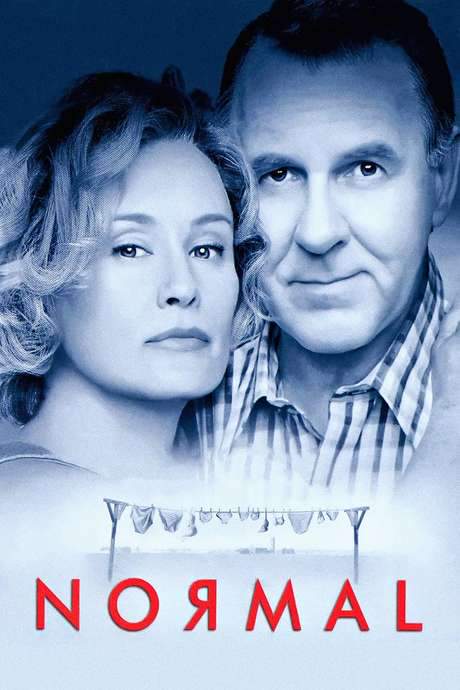
Normal (2003) movie poster

Characters & Themes

Normal (2003) Characters, Setting & Themes Explained

Release, runtime and language
2003 · 110 mins · English
Directed by
Jane Anderson
Starring
Clancy Brown, Tom Wilkinson, Jessica Lange, Dan Conway, Hayden Panettiere, Joseph Sikora

Love. Marriage. Acceptance. Sex change. A Midwestern husband and father announces his plan to have a sex change operation.

On this page (7)
  1. 1 Characters explained (7)
  2. 2 Where & when it takes place
  3. 3 Themes & meaning (3)
  4. 4 Character & meaning questions
  5. 5 Movie threads
  6. 6 Movies like Normal
  7. 7 Every angle

7 main characters · contains spoilers

Normal Characters Explained: Who Is Who

The main characters of Normal (2003), heroes and villains: what drives them, how they change over the course of the story and what each of them reveals about the film's bigger ideas.

  • Ruth Applewood (Jessica Lange)

    A trans woman who seeks to live as her true self. She begins by presenting as a woman—buying clothes, wearing earrings, and applying perfume—despite a world that resists change. The film follows her through moments of danger and doubt, including a gun-corner incident in a barn, and her eventual decision to undergo surgery with Irma’s unwavering support. Ruth embodies courage, resilience, and the ache of seeking belonging within a judgmental environment.

    • 🏳️‍⚧️ Transgender
    • 💪 Courage
    • 👗 Fashion
    • 👪 Family
  • Roy Applewood (Tom Wilkinson)

    A husband facing his own identity crisis, whose confession reveals plans to transition into Ruth. He experiences confusion, fear, and the strain of potential loss as his family confronts the news. The story tracks his struggle to adapt and support his spouse, even as the household wrestles with upheaval. His arc centers on vulnerability, loyalty, and the tension between personal truth and marital duty.

    • 🧭 Identity
    • 💔 Family Struggle
    • 🤝 Support
  • Irma Applewood (Jessica Lange)

    Roy's wife and Ruth's mother-in-law who must decide how to respond to the news. She initially struggles with the upheaval, but ultimately chooses to invite Ruth back and stand by her side, demonstrating a belief that love can transcend gender. Irma's journey reflects empathy, resilience, and the power of steadfast family bonds.

    • ❤️ Love
    • 💪 Support
    • 👪 Family
  • Patty Ann Applewood ( Hayden Panettiere )

    The teen daughter who shows initial acceptance but is navigating puberty, including the experience of getting her period and a struggle with being a girl. Her perspective adds a layer of youthful, evolving understanding to the family dynamics.

    • 🌸 Adolescence
    • 💖 Acceptance
  • Wayne Applewood (Joseph Sikora)

    The son who initially mocks Ruth and then experiences a moment of vulnerability, culminating in a fistfight at Thanksgiving. His arc captures the clash between rebellion, misunderstanding, and eventual emotional growth within the family.

    • 😠 Teenage Rebellion
    • 💔 Family
    • 🗣 Communication
  • Reverend Dale Muncie (Randall Arney)

    The church minister who does not support Ruth, representing the rigid stance of some religious authorities. His presence highlights the conflict between faith communities and individual identity, contributing to the broader theme of acceptance and exclusion.

    • ⛪ Religion
    • 🗣 Conflict
    • 🕊 Tradition
  • Frank (Clancy Brown)

    Ruth's boss who provides understanding and workplace support, offering a contrast to the minister's resistance. His empathy demonstrates a more modern, humane approach within the professional sphere.

    • 🏢 Workplace Support
    • 🤝 Empathy

Last updated: February 20, 2026 at 18:36

Was this helpful?

Setting

Where and When Does Normal Take Place?

The setting of Normal (2003): the year and time period, the places and locations, and how they shape the characters, the mood and the tension of the story.

Time period

Late 20th century

Set in a contemporary late-20th-century American town, the film portrays everyday life as it grapples with gender identity and family upheaval. Traditional social norms—especially around gender and religion—shape the conflicts Ruth faces both at home and in public spaces. The period's attitudes provide a backdrop for the characters' struggle to adapt, understand, and ultimately accept. Through it all, the pace and mood reflect a normalcy under strain as the family navigates change.

Location

Applewood Home, Church, Workplace, Barn, Thrift Store

Most of the story unfolds in a small-town domestic setting centered on the Applewood family home and its surroundings. The church, the workplace, a barn, and a thrift store anchor everyday life and highlight tensions between tradition and personal truth. These places become stages for love, rejection, and gradual acceptance as Ruth's journey unfolds. The setting emphasizes a close-knit community where private moments clash with public scrutiny.

  • 🏠 Domestic setting
  • ⛪ Church life
  • 🏢 Workplace
  • 🚜 Rustic barn backdrop

Last updated: February 20, 2026 at 18:36

Was this helpful?

3 major themes

Normal Meaning: Themes & Message Explained

What is Normal (2003) really about? The emotional, social and philosophical themes the film keeps returning to, its symbolism and the message beneath the surface.

  • Gender Identity

    Ruth's transition becomes the central thread around identity, authenticity, and the challenge of living openly in a judgmental environment. The story examines how gender identity intersects with love, family loyalties, and personal safety. It shows Ruth seeking to align external presentation with inner truth, facing both acceptance and hostility. The narrative depicts identity as a nuanced, evolving journey rather than a single moment.

  • Family Love

    The film centers on the bonds between Ruth, Roy, Irma, and their children as they navigate upheaval. It contrasts support with rejection, showing how patience and acceptance can mend fractures. Family becomes a shelter against societal prejudice, even when it hurts or confuses. The arc suggests that love can endure beyond rigid gender expectations.

  • Religion & Community

    Church life is a crucible in Ruth's story, with ostracism and judgment signaling the power of belief to exclude. The minister's stance contrasts with a more compassionate boss who offers understanding, highlighting varied responses within a faith-driven community. The narrative critiques how religious norms can harm individuals while also illustrating a path toward inclusion. Through hardship at church, the family learns that moral worth lies in acceptance, not conformity.

Last updated: February 20, 2026 at 18:36

Was this helpful?

Character & theme questions

Normal Characters & Meaning: Your Questions Answered

The questions people ask about Normal (2003): who the characters really are, their relationships, what the symbols mean, where it takes place and what the movie is really about. Each answer contains spoilers.

Q1

Where is the movie set?

The story takes place in a small-town Midwestern American setting, centered on the Applewood family home. Key locations include the church, workplace, barn, and thrift store, which anchor everyday life and highlight tensions between tradition and personal truth. The close-knit community environment emphasizes how private family matters become subject to public scrutiny.

Foreshadowing: The domestic setting recurs throughout, with the barn and thrift store serving as pivotal locations for key moments of conflict and connection.

  • setting
  • small town
  • midwest
  • applewood home
  • locations
Q2

When does the movie take place?

The film is set in the late 20th century, portraying a contemporary American town grappling with gender identity and family upheaval. Traditional social norms around gender and religion shape the conflicts Ruth faces, and the period's attitudes provide the backdrop for the family's struggle to adapt, understand, and ultimately accept.

  • time period
  • era
  • late 20th century
  • contemporary setting
Q3

What are the main themes of the movie?

The film explores three interconnected themes: Gender Identity, which follows Ruth's journey of living openly as her true self; Family Love, which shows how bonds between family members are tested and ultimately can transcend rigid expectations; and Religion and Community, which examines how faith-based communities respond to difference, with some offering rejection and others offering acceptance.

  • themes
  • gender identity
  • family love
  • religion
  • community
  • acceptance
Q4

What does the movie say about gender identity?

Ruth's transition becomes the central thread exploring identity, authenticity, and the challenge of living openly in a judgmental environment. The story examines how gender identity intersects with love, family loyalties, and personal safety. It portrays identity as a nuanced, evolving journey rather than a single moment, showing Ruth seeking to align her external presentation with her inner truth.

  • gender identity
  • transition
  • authenticity
  • self-truth
  • LGBTQ
Q5

How does the movie portray family love?

The film centers on the bonds between Ruth, Irma, and their children as they navigate upheaval. It contrasts support with rejection, showing how patience and acceptance can mend fractures. Family becomes a shelter against societal prejudice, even when it hurts or confuses. The arc suggests that love can endure beyond rigid gender expectations, with Irma ultimately choosing to stand by Ruth.

  • family
  • love
  • acceptance
  • marriage
  • bonds
  • Irma
Q6

What role does religion play in the story?

Church life serves as a crucible in Ruth's story, with ostracism and judgment demonstrating the power of belief to exclude. The minister's rigid stance contrasts with Ruth's more compassionate boss who offers understanding, highlighting varied responses within a faith-driven community. The narrative critiques how religious norms can harm individuals while also illustrating a path toward inclusion, suggesting moral worth lies in acceptance rather than conformity.

  • church
  • religion
  • minister
  • community
  • faith
  • Reverend Muncie
  • ostracism
Q7

Who is Ruth Applewood?

Ruth Applewood is a trans woman who seeks to live as her true self. She begins by presenting as a woman, buying clothes, wearing earrings, and applying perfume, in a world that resists change. The film follows her through moments of danger and doubt, including a threatening incident in a barn, and her eventual decision to undergo surgery with her mother-in-law Irma's unwavering support. She embodies courage, resilience, and the ache of seeking belonging.

  • Ruth Applewood
  • trans woman
  • main character
  • transition
Q8

Who is Irma Applewood?

Irma Applewood is Ruth's mother-in-law and the wife of Roy (now Ruth). She must decide how to respond when her husband reveals plans to transition. Initially struggling with the upheaval, she ultimately chooses to invite Ruth back and stand by her side, demonstrating a belief that love can transcend gender. Her journey reflects empathy, resilience, and the power of steadfast family bonds.

  • Irma Applewood
  • mother-in-law
  • wife
  • support
  • acceptance
Q9

Who are the other key family members?

The Applewood family includes Patty Ann, a teenage daughter navigating puberty who shows initial acceptance amid her own struggles with being a girl; and Wayne, the son who initially mocks Ruth but experiences a moment of vulnerability, culminating in a fistfight at Thanksgiving. Their arcs capture the clash between rebellion, misunderstanding, and eventual emotional growth within the family unit.

  • Patty Ann
  • Wayne
  • children
  • family dynamic
  • daughter
  • son
Q10

Who is Reverend Dale Muncie?

Reverend Dale Muncie is the church minister who does not support Ruth's transition, representing the rigid stance of some religious authorities. His presence highlights the conflict between faith communities and individual identity, contributing to the broader theme of acceptance and exclusion within religious contexts.

  • Reverend Muncie
  • minister
  • church
  • religious authority
  • opposition

Movie threads

More Movies Like Normal, by Mood & Story

Curated lists built around what makes Normal tick: the same mood, the same kind of story or the same emotional payoff. Each list explains why these movies belong together.

Movies about family crisis like Normal

Stories of families tested by life-altering revelations and personal transformation. If you were moved by how Normal portrays a family grappling with a parent's transition, explore these other films. This section features movies like Normal that focus on family dynamics tested by life-altering change, intimate drama, and the slow road to acceptance.

  • emotional
  • strained
  • intimate
  • hopeful
  • cathartic
  • tense
  • Tone: bittersweet, intimate, emotional
  • Pacing: steady, character-driven
Why these movies?

The story pattern: These stories typically begin with a catalyst—a secret revealed, an identity affirmed, or a traumatic event—that fractures the family's status quo. The narrative follows the unfolding reactions of each member, charting a path from initial shock and denial through conflict, pain, and eventual, hard-worn understanding or reconciliation.

Why they belong together: Movies are grouped here because they share a focus on the domestic sphere as a crucible for change. They prioritize emotional realism over plot, feature MEDIUM to HEAVY emotional weight, and use a STEADY, deliberate pacing to explore complex interpersonal dynamics, often culminating in a bittersweet or hopeful resolution.

Movies about identity journeys like Normal

Intimate portraits of individuals embracing their true selves against all odds. If you appreciated the journey of self-acceptance in Normal, you'll find similar themes here. Discover movies like Normal that chronicle personal transformation, the search for identity, and the emotional cost and reward of living one's truth.

  • hopeful
  • cathartic
  • personal
  • emotional
  • strained
  • intimate
  • Tone: bittersweet, tender, cathartic
  • Pacing: steady, reflective
Why these movies?

The story pattern: The narrative follows a protagonist grappling with a fundamental aspect of their identity that conflicts with societal or family expectations. The story charts their journey from confusion or repression through a crisis point, leading to a decisive step towards authenticity. The climax is often not about external victory, but internal acceptance and the hard-won respect or understanding of loved ones.

Why they belong together: These films are united by their central focus on a protagonist's identity arc. They typically share a BITTERSWEET tone, balancing the pain of rejection with the hope of self-discovery. The pacing is often STEADY to allow for deep character exploration, and the emotional weight is HEAVY, dealing with themes of ostracism, courage, and love.

If you liked this

Movies Like Normal

Similar movies to Normal: the same genre, themes or kind of story. Each one comes with its own plot summary, timeline and ending explained.

Browse all movie summaries

Every angle

Normal (2003) Explained: Plot, Timeline & Characters

Everything about Normal in one place: what happens in the plot summary, the timeline in chronological order, the characters and meaning and a spoiler-free summary. What's After the Movie adds the cast, box office and post-credit scenes.

Coming soon on iOS and Android

The Plot Explained Movie Summary App

Plot summaries, endings explained and timelines on your phone. Catch up on any movie in minutes, save your favorites and never miss a twist again.

Be the first to know when we launch. Your email stays private, always.

Learn more about the app