Plot Explained Spoilers guaranteed!
Plot Explained

Browse by genre

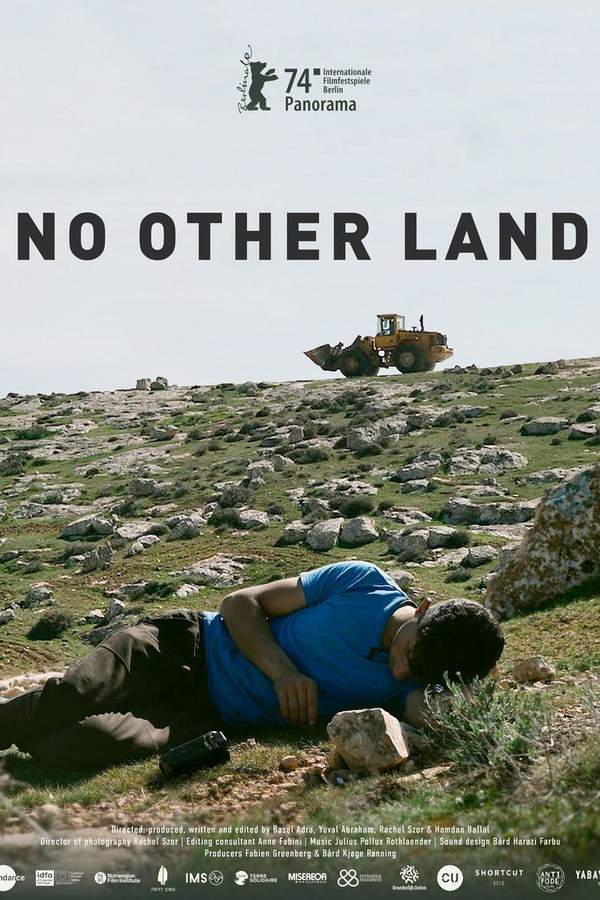
No Other Land (2024) movie poster

Timeline

No Other Land (2024) Timeline Explained – Every Event in Order

Release, runtime and language
2024 · 1 h 32 m · English
Echo score 85
Loading streaming availability…

Basel Adra, a young Palestinian activist from Masafer Yatta in the West Bank, has dedicated his life to fighting the forced displacement of his community. He chronicles the ongoing demolitions of homes and villages in his region, carried out by Israeli government forces, documenting the slow and devastating impact on the lives of the residents.

On this page (6)
  1. 1 Where to watch
  2. 2 Events in order (14)
  3. 3 Timeline questions answered
  4. 4 Movie threads
  5. 5 Movies like No Other Land
  6. 6 Every angle
Loading streaming availability…

14 events in order · contains spoilers

No Other Land Timeline: Events in Chronological Order

Every key event of No Other Land (2024) in order, scene by scene, with when and where it takes place. Use it to untangle flashbacks, time jumps and parallel storylines, to refresh your memory before the sequel or to find the exact scene you are thinking of.

  1. Growing Up Under Occupation

    Basel Adra, a young Palestinian activist, spends his childhood in Masafer Yatta, a region in the occupied West Bank. From an early age, he resists the forced displacement of his people by Israel's military. His experiences growing up shape him into a lifelong documentarian of his community's struggle.

    Where
    Masafer Yatta, occupied West Bank
  2. Firing Zone Designation Upheld

    An Israeli court order maintains that Masafer Yatta's designation as an Israeli military firing zone is legal under Israeli law. This ruling gives Israeli authorities legal grounds to demolish homes and evict the Palestinian residents. The decision threatens the very existence of the entire community.

    Where
    Masafer Yatta, occupied West Bank
  3. Documenting the Destruction

    Israeli soldiers tear down homes and evict their inhabitants throughout Masafer Yatta. Basel Adra records the gradual destruction of his homeland on camera, capturing the demolitions and forced evictions. His footage becomes a vital testament to his people's suffering.

    Where
    Masafer Yatta, occupied West Bank
  4. An Unexpected Friendship

    Basel Adra befriends Yuval Abraham, a Jewish Israeli journalist who helps him in his struggle. Despite coming from opposite sides of the conflict, they form a deep bond. Together, they begin collaborating to expose what is happening in Masafer Yatta to the world.

    Where
    Masafer Yatta, occupied West Bank
  5. The Gap Between Two Lives

    Their friendship is challenged by the huge gap between their living conditions. Adra faces constant oppression and violence under the occupation, while Abraham enjoys freedom and security as an Israeli citizen. This inequality becomes a recurring and painful tension in their relationship.

  6. Confronting the Demolitions

    Adra and the residents of Masafer Yatta repeatedly confront Israeli forces carrying out demolition orders. The community stands in the way of troops and machinery, trying to protect their homes from destruction. With each confrontation, the tension and danger escalates.

    Where
    Masafer Yatta, occupied West Bank
  7. Harun Abu Aram Is Shot

    During one confrontation, Israeli soldiers attempt to take resident Harun Abu Aram's electric generator. As he tries to prevent them from stealing it, an Israeli soldier shoots him. He is gravely wounded in the incident, leaving the community in shock.

    Where
    Masafer Yatta, occupied West Bank
  8. Paralyzed and Displaced

    Abu Aram is left paralyzed from the neck down as a result of the shooting. Because his home was destroyed, which was ruled illegal under Israeli law, he is forced to live in a cave. His condition leaves him entirely dependent on others for even the most basic care.

    Where
    Masafer Yatta, occupied West Bank
  9. The Death of Harun Abu Aram

    Harun Abu Aram eventually dies as a result of his injuries. His inability to receive proper medical care in the occupied territory contributes to his death. His passing becomes one of the most devastating losses in the community's ongoing struggle.

    Where
    Masafer Yatta, occupied West Bank
  10. Raising Awareness, With Little Effect

    Yuval Abraham attempts to raise awareness of the situation in Masafer Yatta, publicizing the footage and stories they have gathered. Despite his efforts, the results are limited and the demolitions continue. The lack of tangible change becomes a growing source of frustration for both men.

  11. A Lesson in Patience

    Adra chides Abraham for wanting results too quickly and tells him to be patient. Having lived under occupation his entire life, Adra knows that change comes slowly, if at all. The exchange highlights the different perspectives shaped by their vastly different lived experiences.

  12. Questioning the Power of Images

    Adra ponders the limits of raising awareness, rhetorically asking Abraham what will happen after people see the footage they have captured. He doubts whether mere visibility can stop the destruction of his homeland. This haunting question hangs over their entire documentary project.

  13. The October 7 Attacks

    The October 7 attacks mark a dramatic escalation, plunging the entire region into deeper violence. In the days that follow, tensions between Israeli settlers and Palestinian residents intensify sharply. The situation in the West Bank grows even more dangerous for communities like Masafer Yatta.

    When
    October 7
  14. Zakaria al-Adra Is Shot — The Film Ends

    In the days following the October 7 attacks, Adra's cousin Zakaria al-Adra is shot by an Israeli settler while completely unarmed. The shooting underscores the escalating violence facing the community. On this grim note, the film ends, with the people of Masafer Yatta's struggle unresolved.

    When
    Days after October 7
    Where
    Masafer Yatta, occupied West Bank

Last updated: October 18, 2026 at 17:32

Was this helpful?

Timeline questions answered

No Other Land Timeline Explained: Your Questions Answered

When does it happen, and why in that order? The questions people ask about the chronology of No Other Land (2024): time jumps, flashbacks, cause and effect between scenes and the correct order of events, each answered with spoilers.

Q1

What is the firing zone designation that threatens Masafer Yatta?

An Israeli court ruled that Masafer Yatta's designation as an Israeli military firing zone is legal under Israeli law. This classification gives the Israeli authorities legal grounds to demolish Palestinian homes and evict residents, which is why the community faces ongoing forced displacement throughout No Other Land.

  • masafer yatta
  • firing zone
  • israeli military
  • demolition
  • court order
  • west bank
Q2

Why was Harun Abu Aram shot by an Israeli soldier?

During a confrontation in which Israeli soldiers attempted to seize his electric generator, Harun Abu Aram tried to stop them from taking it. An Israeli soldier then shot him, leaving him paralyzed from the neck down. The incident becomes one of the most devastating turning points in No Other Land, underscoring the lethal consequences of resisting even small acts of seizure.

  • harun abu aram
  • shooting
  • generator
  • israeli soldier
  • confrontation
  • paralyzed
Q3

Why was Harun Abu Aram living in a cave?

After Harun Abu Aram was shot and paralyzed, his home was declared illegal under Israeli law and subsequently demolished. With nowhere else to go and no alternative housing available, he was forced to spend his final days living in a cave in Masafer Yatta, highlighting the cruel reality that even life-threatening injuries could not protect residents from displacement.

  • harun abu aram
  • cave
  • home demolition
  • displacement
  • illegal home
Q4

How did Harun Abu Aram die?

Harun Abu Aram eventually died as a direct result of the injuries he sustained when he was shot. Living in a cave with no proper medical care available in the occupied territory, his paralysis became fatal. His death is presented as both a personal tragedy and a symbol of the systemic neglect facing the residents of Masafer Yatta.

  • harun abu aram
  • death
  • medical care
  • paralysis
  • masafer yatta
Q5

What is the relationship between Basel Adra and Yuval Abraham?

Basel Adra is a young Palestinian activist from Masafer Yatta, while Yuval Abraham is a Jewish Israeli journalist. Despite coming from opposing sides of the conflict, they form a deep bond and collaborate to document the demolitions and human rights abuses happening in the West Bank. Their friendship becomes the emotional backbone of No Other Land, even as it is tested by the dramatic gap between their lives.

  • basel adra
  • yuval abraham
  • friendship
  • journalist
  • palestinian
  • israeli
Q6

What causes the tension between Basel Adra and Yuval Abraham?

Their friendship is constantly strained by the stark disparity in their daily lives. Abraham moves freely with the privileges and security of an Israeli citizen, while Basel lives under constant military surveillance, the threat of demolitions, and the violence of the occupation. This unequal reality fuels recurring conflict between the two men and shapes the moral complexity at the heart of No Other Land.

  • basel adra
  • yuval abraham
  • tension
  • inequality
  • privilege
  • occupation
Q7

Why does Basel question whether raising awareness actually works?

Even after Yuval Abraham publicizes the footage and stories from Masafer Yatta, the demolitions continue and the world's response remains limited. Basel, who has lived under occupation his entire life, doubts whether visibility alone can stop the destruction. His rhetorical question, asking what will actually happen after people see the footage, expresses a deeper frustration with the perceived futility of documentation.

  • basel adra
  • raising awareness
  • documentation
  • footage
  • frustration
Q8

What happens to Masafer Yatta after the October 7 attacks?

Following the October 7 attacks, tensions between Israeli settlers and Palestinian residents in the West Bank escalate sharply. The already-dangerous situation in Masafer Yatta grows even more violent, and the documentary captures this heightened climate directly through the death of Basel Adra's cousin, Zakaria al-Adra, in the days afterward.

  • october 7
  • west bank
  • escalation
  • settler violence
  • masafer yatta
Q9

Why does No Other Land end with the death of Zakaria al-Adra?

The film closes with the killing of Basel Adra's cousin, Zakaria al-Adra, who was shot by an Israeli settler while completely unarmed in the days following October 7. By ending on this unresolved tragedy, the documentary refuses to offer catharsis and instead emphasizes that the displacement and violence in Masafer Yatta continue unabated, regardless of how much awareness is raised.

  • zakaria al-adra
  • ending
  • killing
  • settler
  • october 7
  • unresolved
Q10

Why can't the residents of Masafer Yatta stop the home demolitions?

Although residents physically stand in front of bulldozers and troops to defend their homes, the demolitions are backed by a legal court ruling that declares the area a military firing zone. This legal designation removes any meaningful avenue of resistance, which is why the community's confrontations in No Other Land are portrayed as courageous but ultimately powerless to halt the destruction.

  • masafer yatta
  • demolitions
  • resistance
  • court ruling
  • firing zone
  • eviction
Q11

What does Basel mean when he asks what will happen after people see the footage?

Basel's question cuts to the central dilemma of the documentary: even if the world watches and understands the injustice in Masafer Yatta, will anything actually change? He challenges Yuval Abraham to consider whether documentation is a genuine path to justice or merely a record of suffering that the international community will observe and then forget.

  • basel adra
  • yuval abraham
  • footage
  • awareness
  • justice
  • rhetorical question
Q12

Why does Basel tell Yuval to be patient about achieving results?

Frustrated by how slowly international awareness translates into change, Yuval Abraham presses for quicker progress. Basel, who has lived under occupation his whole life, reminds him that justice in Masafer Yatta is a slow process, if it comes at all. The exchange highlights how their differing lived experiences shape their sense of urgency and expectations.

  • basel adra
  • yuval abraham
  • patience
  • frustration
  • awareness
  • occupation

Movie threads

More Movies Like No Other Land, by Mood & Story

Curated lists built around what makes No Other Land tick: the same mood, the same kind of story or the same emotional payoff. Each list explains why these movies belong together.

Unflinching human rights documentaries like No Other Land

Documentaries that hold the camera still while history repeats its cruelties. Looking for movies like No Other Land? This thread gathers unflinching human rights documentaries and observational films about occupation, forced displacement, and activist journalism. These slow paced, emotionally heavy films prioritize testimony over narration, building devastating portraits of communities under siege. Expect bleak endings, intense real world footage, and the haunting feeling that the camera's presence changes nothing.

  • oppressive
  • devastating
  • somber
  • urgent
  • heavy
  • bleak
  • Tone: bleak, somber, devastating
  • Pacing: slow, observational
Why these movies?

The story pattern: An activist or witness serves as both subject and guide, documenting ongoing injustice through a slow accumulation of events. The narrative is observational rather than dramatic, allowing the weight of each new harm to build upon the last. There is rarely a clear protagonist's arc toward victory; instead, the film functions as a record, often ending bleakly to underscore the unresolved nature of the suffering depicted.

Why they belong together: These films share an unflinching commitment to documenting real world harm, often from within the affected community. They share slow observational pacing that lets small moments carry enormous weight, heavy emotional impact through accumulated trauma, and endings that refuse easy comfort. The intensity comes not from action but from sustained proximity to violence, injustice, and grief.
Cross-cultural wartime friendships like No Other Land

Two people from opposing sides of a conflict find each other anyway. If you were moved by the Basel and Yuval friendship in No Other Land, this thread gathers films about unlikely bonds between people on opposing sides of war and occupation. These intimate studies explore how personal connection survives amid hostility, while reckoning with privilege and complicity. Expect morally complex relationships, steady pacing, and heavy reflections on what solidarity really costs.

  • intimate
  • unlikely bond
  • moral complexity
  • tested friendship
  • political divide
  • fragile trust
  • Tone: heavy, bittersweet, somber
  • Pacing: steady, character-driven
Why these movies?

The story pattern: A protagonist from an occupied or persecuted community forms a personal bond with someone from the occupying or dominant side. The relationship provides moments of warmth and intimacy, yet is constantly strained by the surrounding violence, the disparity in safety, and the limits of what personal connection can accomplish. The arc typically tests whether the friendship can endure and whether it changes anything beyond the two individuals.

Why they belong together: These stories share the central tension of personal connection existing within, but constrained by, larger political structures of violence. They pair intimate character moments with bleak depictions of systemic injustice, foreground moral complexity, and refuse to resolve the central political question through the friendship alone.

If you liked this

Movies Like No Other Land

Similar movies to No Other Land: the same genre, themes or kind of story. Each one comes with its own plot summary, timeline and ending explained.

Browse all movie summaries

Every angle

No Other Land (2024) Explained: Plot, Timeline & Characters

Everything about No Other Land in one place: what happens in the plot summary, the timeline in chronological order, the characters and meaning and a spoiler-free summary. What's After the Movie adds the cast, box office and post-credit scenes.

Coming soon on iOS and Android

The Plot Explained Movie Summary App

Plot summaries, endings explained and timelines on your phone. Catch up on any movie in minutes, save your favorites and never miss a twist again.

Be the first to know when we launch. Your email stays private, always.

Learn more about the app