







Plot Explained Spoilers guaranteed!
Plot Explained

Browse by genre

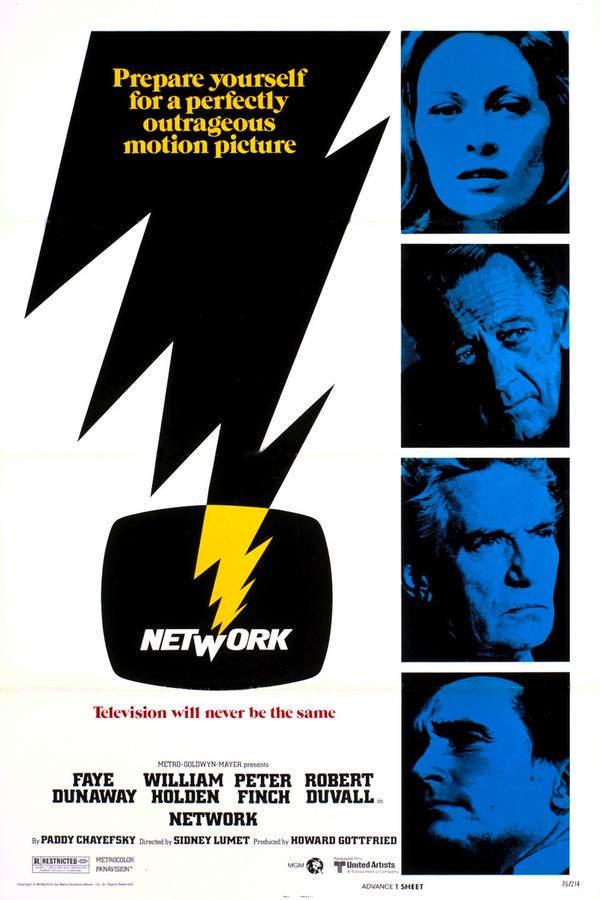
Network (1976) movie poster

Characters & Themes

Network (1976) Characters, Setting & Themes Explained

Release, runtime and language
1976 · 121 min · English
Directed by
Sidney Lumet
Starring
Faye Dunaway, Peter Finch, William Holden
Budget
$3.8M

This film offers a sharp critique of the television industry's relentless pursuit of higher ratings. Howard Beale, a news anchor facing disillusionment, publicly announces his intention to commit suicide on air. Instead of stopping him, the network decides to capitalize on the situation, recognizing the potential for increased viewership. Beale embraces the chaos, delivering increasingly outrageous and provocative broadcasts that resonate with a public feeling ignored and disenfranchised. His unconventional approach unexpectedly transforms him into an unlikely symbol of rebellion and a voice for the masses.

On this page (8)
  1. 1 Where to watch
  2. 2 Characters explained (3)
  3. 3 Where & when it takes place
  4. 4 Themes & meaning (2)
  5. 5 Character & meaning questions
  6. 6 Movie threads
  7. 7 Movies like Network
  8. 8 Every angle

Where to watch

Where to Watch Network (1976)

Where can you watch Network? Stream, rent or buy it in the US, including on YouTube Free, Amazon Video and Apple TV Store: current JustWatch availability with up-to-date prices.

Streaming availability powered by JustWatch

3 main characters · contains spoilers

Network Characters Explained: Who Is Who

The main characters of Network (1976), heroes and villains: what drives them, how they change over the course of the story and what each of them reveals about the film's bigger ideas.

  • Howard Beale (Peter Finch)

    Howard Beale is a longtime news anchor who spirals into despair after being fired. His emotional breakdown transforms him into a folk hero, as he becomes a voice of outrage against societal apathy. Beale's journey personifies the struggle between personal integrity and the demands of the media industry, ultimately leading to tragic consequences.

    • 📺 News Anchor
    • 😢 Tragic Figure
    • 🎤 Outspoken
  • Max Schumacher (William Holden)

    Max Schumacher is a seasoned news division president who's grappling with the pressures of network television and personal strife. His moral compass is tested as he tries to balance corporate interests with ethical journalism. Max's complicated dynamics with Beale and his own domestic issues provide depth to his character, making him a sympathetic figure amidst the chaos.

    • 📺 News Executive
    • 💔 Torn
    • 🎭 Mentor
  • Diana Christensen (Faye Dunaway)

    Diana Christensen is the ambitious programming chief who sees potential profitability in Beale's insanity. Her drive and ruthless ambition reflect the cutthroat nature of the media business. Though she is unafraid to challenge the norm and push boundaries, her tactics may jeopardize the very humanity she claims to uplift.

    • 📺 Programming Chief
    • 💼 Ambitious
    • 😈 Manipulative

Last updated: October 22, 2024 at 19:03

Was this helpful?

Setting

Where and When Does Network Take Place?

The setting of Network (1976): the year and time period, the places and locations, and how they shape the characters, the mood and the tension of the story.

Time period

1975

The events of the movie unfold in September 1975, a tumultuous year characterized by significant social and economic upheaval in the United States. This period saw rising unemployment and disillusionment with traditional media. The backdrop of the 70s contributes to the film's themes of despair and the quest for authenticity in a world dominated by sensationalism.

Location

New York City

The movie primarily takes place in New York City, a bustling metropolis known for its influence on media, finance, and culture. The city serves as a backdrop for the cutthroat world of television news, highlighting the immense pressures faced by broadcasters. NYC represents both the pinnacle of success and the harsh realities of the ruthless media landscape.

  • 🗽 City
  • 📺 Television
  • 🌆 Urban

Last updated: October 22, 2024 at 19:03

Was this helpful?

2 major themes

Network Meaning: Themes & Message Explained

What is Network (1976) really about? The emotional, social and philosophical themes the film keeps returning to, its symbolism and the message beneath the surface.

  • Media Manipulation

    The theme of media manipulation is central to 'Network,' illustrating how ratings and profit motives can overshadow journalistic integrity. Howard Beale's outrageous proclamations captivate viewers, showcasing the lengths networks will go to in order to boost viewership. The film critiques the transformation of news into entertainment, highlighting the ethical dilemmas inherent in the media industry.

  • Anger and Outrage

    Anger becomes a powerful theme as Howard Beale channels his frustration into a public outcry against societal issues. His famous phrase, 'I'm as mad as hell, and I'm not going to take this anymore!' resonates with an audience hungry for change. The film examines the way anger can galvanize people, sparking movements and challenging the status quo.

Last updated: October 22, 2024 at 19:03

Was this helpful?

Character & theme questions

Network Characters & Meaning: Your Questions Answered

The questions people ask about Network (1976): who the characters really are, their relationships, what the symbols mean, where it takes place and what the movie is really about. Each answer contains spoilers.

Q1

Where is Network primarily set?

The movie takes place in New York City, a bustling metropolis known for its influence on media, finance, and culture. The city serves as a backdrop for the cutthroat world of television news, highlighting the immense pressures faced by broadcasters. NYC represents both the pinnacle of success and the harsh realities of the ruthless media landscape.

  • new york city
  • setting
  • television news
  • media industry
Q2

When does Network take place?

The events unfold in September 1975, a tumultuous year characterized by significant social and economic upheaval in the United States. This period saw rising unemployment and disillusionment with traditional media. The backdrop of the 1970s contributes to the film's themes of despair and the quest for authenticity in a world dominated by sensationalism.

  • 1975
  • time period
  • 1970s
  • historical context
Q3

What is the main theme of Network about media?

Media manipulation is central to Network, illustrating how ratings and profit motives can overshadow journalistic integrity. Howard Beale's outrageous proclamations captivate viewers, showcasing the lengths networks will go to in order to boost viewership. The film critiques the transformation of news into entertainment, highlighting the ethical dilemmas inherent in the media industry.

  • media manipulation
  • ratings
  • television
  • journalism
  • profit
Q4

What does Network say about anger and outrage?

Anger becomes a powerful theme as Howard Beale channels his frustration into a public outcry against societal issues. His famous phrase, 'I'm as mad as hell, and I'm not going to take this anymore!' resonates with an audience hungry for change. The film examines the way anger can galvanize people, sparking movements and challenging the status quo.

  • anger
  • outrage
  • rebellion
  • public sentiment
  • social critique
Q5

Who is Howard Beale in Network?

Howard Beale is a longtime news anchor who spirals into despair after being fired. His emotional breakdown transforms him into a folk hero, as he becomes a voice of outrage against societal apathy. Beale's journey personifies the struggle between personal integrity and the demands of the media industry, ultimately leading to tragic consequences.

  • howard beale
  • news anchor
  • protagonist
  • media critique
Q6

Who is Diana Christensen and what is her role?

Diana Christensen is the ambitious programming chief who sees potential profitability in Beale's insanity. Her drive and ruthless ambition reflect the cutthroat nature of the media business. She is unafraid to challenge norms and push boundaries, though her tactics may jeopardize the very humanity she claims to uplift.

  • diana christensen
  • programming chief
  • ambition
  • network executive
Q7

Who is Max Schumacher in the movie?

Max Schumacher is a seasoned news division president grappling with the pressures of network television and personal strife. His moral compass is tested as he tries to balance corporate interests with ethical journalism. Max's complicated dynamics with Beale and his own domestic issues make him a sympathetic figure amidst the chaos.

  • max schumacher
  • news president
  • moral conflict
  • ethics
Q8

What does Network say about television news?

Network offers a sharp critique of the television industry's relentless pursuit of higher ratings. The film shows how the network capitalizes on a news anchor's public breakdown instead of helping him, recognizing the potential for increased viewership. It illustrates the transformation of news into entertainment where humanity is secondary to profit.

  • television news
  • ratings
  • entertainment
  • news industry critique
Q9

Why is the 1975 setting important to Network's story?

The 1975 setting reflects a period of rising unemployment and disillusionment with traditional media in the United States. This context makes Beale's message of frustration resonate with a public feeling ignored and disenfranchised. The era's social and economic upheaval provides the foundation for the film's exploration of authenticity versus sensationalism.

  • 1970s
  • economic crisis
  • media distrust
  • social unrest
Q10

Why does Howard Beale become a symbol of rebellion?

Howard Beale becomes an unlikely symbol of rebellion because he openly expresses the frustration that many viewers feel but cannot articulate. His willingness to speak truth to power on live television makes him a folk hero for a public that feels ignored and disenfranchised. He channels collective anger into a movement that challenges the status quo.

  • folk hero
  • rebellion
  • public anger
  • voice of masses
Q11

How does the network respond to Beale's breakdown?

Instead of stopping Howard Beale when he publicly announces his intention to commit suicide, the network decides to capitalize on the situation for higher ratings. Beale embraces the chaos, delivering increasingly outrageous broadcasts that the network happily exploits. This decision reflects the film's dark thesis that humanity is secondary to profit.

  • corporate exploitation
  • ratings
  • network decision
  • profit motives

Movie threads

More Movies Like Network, by Mood & Story

Curated lists built around what makes Network tick: the same mood, the same kind of story or the same emotional payoff. Each list explains why these movies belong together.

Scathing Media Satires like Network

Biting satires that expose the dark underbelly of the entertainment and news industries. Explore movies like Network that offer a cynical and critical look at the media industry. These films share a darkly satirical tone, exploring themes of corporate greed, sensationalism, and the erosion of ethics for entertainment and profit.

  • satirical
  • cynical
  • prophetic
  • unsettling
  • angry
  • disillusioned
  • Tone: dark, satirical, cynical
  • Pacing: steady, escalating
Why these movies?

The story pattern: Stories in this thread often follow institutions or individuals within the media landscape as they abandon principle for popularity. The narrative typically involves a descent into moral bankruptcy, where success is measured by shock value and audience engagement, regardless of the human cost.

Why they belong together: These films are grouped by their shared focus on critiquing the media apparatus. They possess a dark, satirical tone, a steady pacing that builds to a revelation of systemic rot, and a heavy emotional weight derived from witnessing integrity being traded for influence.


Bleak Corporate Critiques like Network

Stories where institutions prioritize profit over humanity, leading to bleak conclusions. If you liked Network's takedown of corporate America, you'll find similar themes here. These movies depict worlds where business interests crush human spirit, often leading to tense, heavy dramas with cynical or bleak endings about systemic failure.

  • cynical
  • unsettling
  • prophetic
  • disillusioned
  • angry
  • moral decay
  • Tone: dark, bleak, tense
  • Pacing: steady, methodical
Why these movies?

The story pattern: The narrative pattern involves a character or group confronting a powerful, amoral institution. The conflict highlights the institution's cold logic, which ultimately overwhelms individual humanity. The journey is often one of disillusionment, ending with the system's victory or a stark revelation of its pervasive power.

Why they belong together: They share a dominant theme of institutional critique, a consistently dark tone, and a high-intensity atmosphere fueled by the tension between human values and corporate imperatives. The endings are frequently bleak, reinforcing the seemingly insurmountable nature of the system.

If you liked this

Movies Like Network

Similar movies to Network: the same genre, themes or kind of story. Each one comes with its own plot summary, timeline and ending explained.

Browse all movie summaries

Every angle

Network (1976) Explained: Plot, Timeline & Characters

Everything about Network in one place: what happens in the plot summary, the timeline in chronological order, the characters and meaning and a spoiler-free summary. What's After the Movie adds the cast, box office and post-credit scenes.

Coming soon on iOS and Android

The Plot Explained Movie Summary App

Plot summaries, endings explained and timelines on your phone. Catch up on any movie in minutes, save your favorites and never miss a twist again.

Be the first to know when we launch. Your email stays private, always.

Learn more about the app