













Plot Explained Spoilers guaranteed!
Plot Explained

Browse by genre

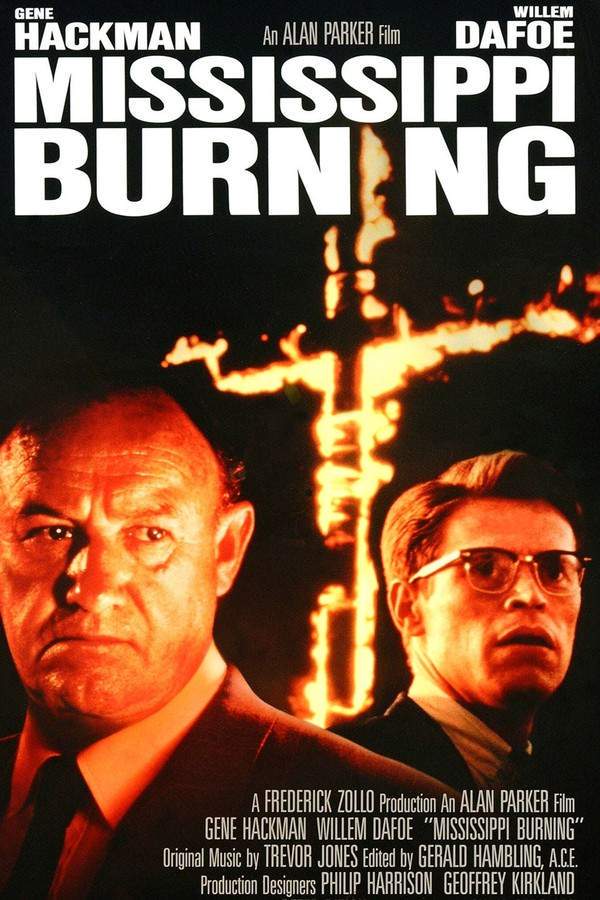
Mississippi Burning (1989) movie poster

Timeline

Mississippi Burning (1989) Timeline Explained – Every Event in Order

Release, runtime and language
1989 · 128 min · English
JustWatch #1,564 18
Directed by
Alan Parker
Starring
Willem Dafoe, Gene Hackman

In 1964 Mississippi, two FBI agents, Alan Ward and Rupert Anderson, are dispatched to investigate the disappearance of three civil rights workers. Their investigation quickly reveals a community deeply entrenched in racial prejudice and resistance to federal intervention. As the agents navigate a hostile environment and encounter obstruction from local law enforcement, their contrasting methods and personal beliefs lead to conflict, ultimately pushing them to take increasingly risky actions in their pursuit of justice and the truth behind the disappearances.

On this page (6)
  1. 1 Where to watch
  2. 2 Events in order (15)
  3. 3 Timeline questions answered
  4. 4 Movie threads
  5. 5 Movies like Mississippi Burning
  6. 6 Every angle

Where to watch

Where to Watch Mississippi Burning (1989)

Where can you watch Mississippi Burning? Stream, rent or buy it in the US, including on fuboTV, MGM Plus and Philo: current JustWatch availability with up-to-date prices.

Streaming availability powered by JustWatch

15 events in order · contains spoilers

Mississippi Burning Timeline: Events in Chronological Order

Every key event of Mississippi Burning (1989) in order, scene by scene, with when and where it takes place. Use it to untangle flashbacks, time jumps and parallel storylines, to refresh your memory before the sequel or to find the exact scene you are thinking of.

  1. Summer of 1964 Begins

    The sweltering summer of 1964 sets the stage for a tense atmosphere in Jessup County, Mississippi. As the season unfolds, it becomes clear that the struggle for civil rights is fraught with turmoil and chaos.

    When
    1964
    Where
    Jessup County, Mississippi
  2. Activists Disappear

    Three brave activists, two Jewish and one African American, mysteriously vanish while working to empower black voters. Their disappearance marks a significant point in the civil rights movement as it raises alarms within the community and the country.

    Where
    Jessup County, Mississippi
  3. FBI Investigation Begins

    The Federal Bureau of Investigation deploys investigators Alan Ward and Rupert Anderson to uncover the truth behind the activists' disappearance. Their contrasting methods highlight the complexities of the case and the local resistance to outside intervention.

    Where
    Jessup County, Mississippi
  4. Opposition from Local Authorities

    The investigation faces significant pushback from Sheriff Ray Stuckey and his deputies, who are linked to the Ku Klux Klan. This resistance showcases the deep-rooted complications the FBI faces in seeking justice for the missing activists.

    Where
    Jessup County, Mississippi
  5. Courageous Testimony

    A breakthrough occurs when the son of a local pastor bravely comes forward to recount his haunting experience of witnessing Klansmen committing arson. This testimony leads to the arrest of three white men but justice remains elusive.

    Where
    Jessup County, Mississippi
  6. Injustice Served

    Despite the arrests, a local judge delivers a lenient sentence to the convicted men, dismissing the FBI's involvement as meddling. This decision enrages the community and solidifies the Klan's influence in the area.

    Where
    Jessup County, Mississippi
  7. Violence Against Witness

    After the court ruling, the three convicted men retaliate violently against the young witness and his father. This escalates the situation and highlights the dangers faced by those who dare to speak out against the Klan.

    Where
    Jessup County, Mississippi
  8. Confession from Deputy's Wife

    Anderson develops a crucial connection with Deputy Sheriff Pell's wife, who discloses the horrifying truth: her husband and Klan members have murdered the missing activists and hidden their bodies. This shocking revelation deepens the investigation's urgency.

    Where
    Jessup County, Mississippi
  9. Clash Between Investigators

    Tensions boil over between Ward and Anderson, resulting in a physical confrontation. The altercation forces Ward to confront the limitations of his methodical approach and inspires Anderson to innovate their strategy.

    Where
    Jessup County, Mississippi
  10. Coercion for Information

    In a bold move, the FBI abducts Mayor Tilman and confronts him with threats to extract information about the Klan. This desperate tactic yields crucial breakthroughs in the ongoing investigation.

    Where
    Jessup County, Mississippi
  11. Failed Indictment Attempt

    Anderson and Ward devise a plan to capture identified Klan members but quickly realize they have been outmaneuvered. Forced to reevaluate their approach, they focus their efforts on Lester Cowens, a distressed Klan member.

    Where
    Jessup County, Mississippi
  12. Cowens' Difficult Choice

    Under immense pressure, Lester Cowens decides to cooperate with the FBI, turning against his fellow Klansmen. His courageous testimony marks a shift from state to federal prosecution for the other Klan members.

    Where
    Jessup County, Mississippi
  13. Tragic Discovery

    The FBI discovers the body of Mayor Tilman hanging from a tree, deepening suspicions about the Klan's reach. This horrific finding raises alarms within the Bureau about the risks taken by those seeking justice.

    Where
    Jessup County, Mississippi
  14. Resilience Amidst Destruction

    Mrs. Pell, now free from her husband's shadow, returns to her vandalized home determined to rebuild her life. Her resilience symbolizes the fight against the oppressive forces of hate and violence.

    Where
    Jessup County, Mississippi
  15. Honoring the Fallen

    As the investigation reaches its conclusion, Anderson and Ward visit a grieving congregation at an African American cemetery. Their heartfelt visit symbolizes a collective hope for justice and remembrance for those lost to hatred.

    Where
    African American cemetery, Jessup County, Mississippi

Last updated: November 22, 2024 at 14:14

Was this helpful?

Timeline questions answered

Mississippi Burning Timeline Explained: Your Questions Answered

When does it happen, and why in that order? The questions people ask about the chronology of Mississippi Burning (1989): time jumps, flashbacks, cause and effect between scenes and the correct order of events, each answered with spoilers.

Q1

Why were the three civil rights workers killed?

The three activists, two Jewish men and one African American, were murdered because they were working to register black voters in Jessup County, Mississippi. Their efforts threatened the existing power structure and racial hierarchy. Deputy Sheriff Clinton Pell and his Ku Klux Klan associates abducted, beat, and killed the three workers, then buried their bodies in an earthen dam to silence their activism and send a warning to other civil rights workers.

  • civil rights workers
  • kkk murders
  • mississippi 1964
  • voter registration
Q2

How did Deputy Pell's wife find out about the murders?

Mrs. Pell learned about the murders from her husband Clinton Pell, who was directly involved in the killings. As his wife, she had access to information he inadvertently shared. When FBI agent Rupert Anderson befriended her, she felt compelled to confess what she knew, revealing that her husband and other Klan members had murdered the activists and hidden their bodies in an earthen dam.

  • deputy pell
  • wife confession
  • fbi investigation
  • body location
Q3

Why did the FBI pursue civil rights violations instead of murder charges?

The FBI switched to civil rights violation charges because state courts in Mississippi were biased and unlikely to convict anyone for murder. A local judge had already shown this bias by giving suspended sentences to KKK members convicted of arson. Federal civil rights charges allowed the FBI to bypass the corrupt local justice system and secure convictions under federal law, where the evidence was strong enough to convict.

  • federal charges
  • civil rights violations
  • state vs federal prosecution
  • kkk conviction
Q4

What happened to Mayor Tilman in the movie?

Mayor Tilman was abducted by the FBI and taken to an isolated location where he was confronted by a black man threatening harm unless he talked. This coerced tactic led Tilman to confess and provide crucial information about the Klan. Later, his body was discovered hanging from a tree, revealing he had been murdered, likely by the Klan themselves for talking to the FBI.

  • mayor tilman
  • coerced confession
  • death
  • klk retaliation
Q5

Why did Lester Cowens turn against the Klan?

Lester Cowens decided to cooperate with the FBI after being targeted by fellow Klansmen who suspected he might be sharing information. The FBI staged a fake attack on Cowens' home, disguising themselves in Klan attire to save him at the last moment, this manipulation, combined with threats from his own comrades, convinced Cowens that his life was in danger and that turning state's witness was his only safe option.

  • lester cowens
  • fbi informant
  • klk threats
  • turning witness
Q6

Why was Sheriff Stuckey never convicted?

Sheriff Ray Stuckey, who was secretly connected to the Ku Klux Klan and obstructed the FBI investigation, never faced consequences because the corrupt local justice system protected him. While other Klan members were successfully indicted on federal civil rights violations, Stuckey's position of authority and local influence allowed him to escape prosecution, highlighting the systemic racism that pervaded the region.

  • sheriff stuckey
  • no conviction
  • corrupt law enforcement
  • impunity
Q7

Why did the Klan attack the witness and his father?

The three men previously convicted of arson, who had received lenient suspended sentences, retaliated against the young witness and his father because the boy had testified against them in court. Their attack was meant to punish anyone who dared to cooperate with law enforcement and to discourage future witnesses from coming forward.

  • witness retaliation
  • arson conviction
  • intimidation
  • violence
Q8

Why did Ward and Anderson have a physical confrontation?

The conflict between the two FBI agents stemmed from their fundamentally different approaches, Ward relied on strict protocol and bureaucratic procedures while Anderson used more aggressive, locally-adapted tactics. Their tensions escalated until they physically fought, after which Ward reluctantly admitted his by-the-book methods were failing. This confrontation prompted Anderson to devise the innovative strategy of pursuing federal civil rights charges.

  • agent ward
  • agent anderson
  • fbi conflict
  • methodology clash
Q9

What was the significance of the 'Not Forgotten' gravestone?

The gravestone bearing 'Not Forgotten' in the African American cemetery served as a somber reminder that despite the failure to secure murder convictions for all perpetrators, the victims' sacrifices and suffering would not be erased. The desecrated yet readable monument symbolized the enduring memory of those who died fighting for civil rights and the lasting impact of hate crimes on the community.

  • not forgotten
  • cemetery
  • memorial
  • civil rights victims
Q10

How did the FBI respond to the attack on the witness family?

After the witness and his father were brutally attacked by the three convicted men, the FBI immediately evacuated the family to protect them from further violence. However, this move also demonstrated the FBI's limitations, they could protect individuals but were still fighting against a deeply entrenched system of racial oppression and local corruption.

  • witness protection
  • fbi evacuation
  • safety
  • family relocation

Movie threads

More Movies Like Mississippi Burning, by Mood & Story

Curated lists built around what makes Mississippi Burning tick: the same mood, the same kind of story or the same emotional payoff. Each list explains why these movies belong together.

Grim Real-World Justice Thrillers like Mississippi Burning

Investigations into systemic crime where the fight for truth is an uphill battle. This collection features movies like Mississippi Burning, where the central investigation uncovers deep-rooted corruption and societal prejudice. If you liked the tense, methodical fight for justice against a hostile system, you'll find similar impactful crime dramas and thrillers here.

  • gritty
  • tense
  • frustrating
  • urgent
  • oppressive
  • somber
  • Tone: dark, tense, morally complex
  • Pacing: steady, investigative
Why these movies?

The story pattern: Stories typically center on a procedural investigation into a heinous crime, often one that exposes wider societal ills like racism or corruption. The protagonists face constant obstruction from powerful, embedded antagonists, forcing them to use unconventional or risky methods. The narrative arc is less about a simple victory and more about the costly, incremental progress toward a form of justice.

Why they belong together: Movies in this thread are united by their bleak, unflinching portrayal of real-world injustice and the grueling effort required to challenge it. They share a high-stakes, tense atmosphere, a methodical pacing that builds urgency, and a heavy emotional weight derived from their disturbing but relevant themes.
Movies with Clashing Partner Duos like in Mississippi Burning

Partners with opposing methods unite against a common, overwhelming enemy. Discover films similar to Mississippi Burning that feature a central duo with conflicting approaches, united by a dangerous investigation. If you enjoyed the dynamic between the by-the-book and pragmatic FBI agents navigating a hostile town, explore these character-driven thrillers and dramas.

  • tense
  • gritty
  • frustrating
  • urgent
  • clashing ideologies
  • unlikely alliance
  • Tone: tense, gritty, dramatic
  • Pacing: steady, character-driven
Why these movies?

The story pattern: The narrative is driven by the friction and eventual synergy between two central characters. One is often idealistic and rule-bound, while the other is pragmatic and willing to bend the rules. Their conflict initially hinders the investigation but ultimately becomes their greatest strength as they learn from each other to overcome a powerful antagonist or system.

Why they belong together: These films are grouped by their focus on a compelling character duo as the engine of the plot. They share a tense, high-intensity atmosphere created by the external threat and the internal conflict between the partners. The steady pacing allows for deep exploration of their relationship amidst the central crisis.

If you liked this

Movies Like Mississippi Burning

Similar movies to Mississippi Burning: the same genre, themes or kind of story. Each one comes with its own plot summary, timeline and ending explained.

Browse all movie summaries

Every angle

Mississippi Burning (1989) Explained: Plot, Timeline & Characters

Everything about Mississippi Burning in one place: what happens in the plot summary, the timeline in chronological order, the characters and meaning and a spoiler-free summary. What's After the Movie adds the cast, box office and post-credit scenes.

Coming soon on iOS and Android

The Plot Explained Movie Summary App

Plot summaries, endings explained and timelines on your phone. Catch up on any movie in minutes, save your favorites and never miss a twist again.

Be the first to know when we launch. Your email stays private, always.

Learn more about the app