Plot Explained Spoilers guaranteed!
Plot Explained

Browse by genre

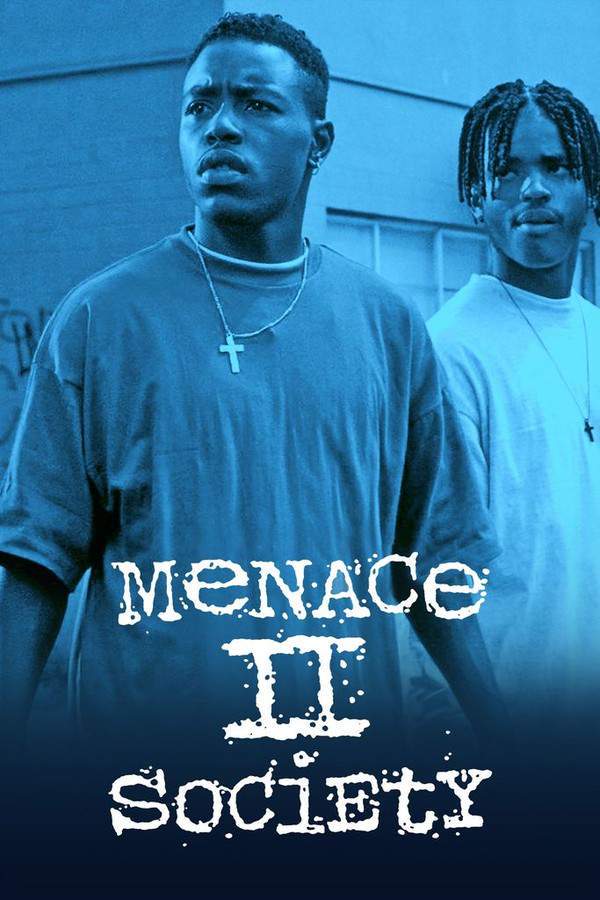
Menace II Society (1993) movie poster

Plot Summary

Menace II Society (1993) Plot Summary Explained

Release, runtime and language
1993 · 97 min · English
Loading streaming availability…
Directed by
Allen Hughes, Albert Hughes
Starring
Larenz Tate, Tyrin Turner

Living in a violent Los Angeles neighborhood, 18-year-old Caine Lawson struggles to escape a life consumed by gang activity. With the encouragement of a teacher and the support of his girlfriend, he hopes to find a different path. However, a series of tragic events forces him to confront the harsh realities of his environment and challenges his desire for a way out, revealing just how difficult true redemption can be.

On this page (6)
  1. 1 Where to watch
  2. 2 What happens: full plot
  3. 3 Plot questions answered
  4. 4 Movie threads
  5. 5 Movies like Menace II Society
  6. 6 Every angle
Loading streaming availability…

Full plot summary · contains spoilers

What Happens in Menace II Society: Full Plot Summary

The whole story of Menace II Society (1993) explained, from the opening scene to the final frame: every key event, every twist and what it all adds up to. Read it as a quick recap before the sequel, to check a scene you missed, or to finally understand what really happened.

Caine is a young black teenager navigating the harsh realities of life in the Watts neighborhood of Los Angeles. Just as he is on the brink of graduating from high school, he enters a liquor store with his friend O-Dog to buy beer. The Korean store owners grow suspicious of the two, keeping a wary eye on them as O-Dog begins to escalate tensions. When they are told to choose their items and leave, the situation takes a deadly turn; after a parting comment from the male owner, O-Dog pulls out a gun and fatally shoots him. Shocked, Caine drops the beer he was holding, as O-Dog forces the terrified woman behind the counter to surrender the security tape before robbing the cash register. Caine is initially horrified, but O-Dog's brazen actions become a dark testament to their surroundings.

Caine, who has learned the ropes of street survival from Pernell, his deceased father's former associate, struggles with his identity as a low-level drug dealer. He reflects on the grim futures that many of his peers face, understanding that many young black men in his neighborhood are not expected to reach their twenties. While living with his grandparents, Caine’s violent lifestyle begins to encroach upon their lives, leading to inevitable tensions as they worry about the influence of his surroundings. Burdened with memories of childhood trauma, including witnessing a fatal shooting by his father and his mother's battle with addiction, Caine is trapped in a cycle of destruction.

Close to O-Dog and friends like Stacy, a young father, and Sharif, who has embraced Islam, Caine's world becomes increasingly chaotic. After successfully graduating high school, Caine’s life takes another tragic turn when he and Harold, his cousin, become victims of a carjacking. Harold is mortally wounded while trying to defend himself, and Caine is injured as well. Following their hospitalization, Caine learns about the value of life and friendship, especially after losing Harold.

Back in the neighborhood, Caine grapples with the aftermath of O-Dog's violent tendencies as he witnesses O-Dog displaying gruesome footage of the earlier liquor store shooting, which O-Dog boasts about without remorse. The rift deepens when their friend group embarks on a mission of revenge against the carjackers, leading to chilling consequences that haunt Caine despite his lingering numbness. Notably, feelings of remorse begin to surface as he realizes the depth of their choices.

As Caine’s actions spiral into further criminality, he gets embroiled in a reckless car theft that puts him at odds with law enforcement. A chance encounter with Sharif and Stacy reveals their aspirations for a better life away from Los Angeles, but Caine is reluctant to escape his current situation. Still mired in a dangerous lifestyle, Caine's involvement with drugs and street crime continues to overshadow hints of a hopeful future as he also fumbles in various relationships, notably with Ronnie, who shares a son with Pernell.

With the community’s expectations and responsibilities weighing on him, Caine faces a pivotal junction when he discovers Ilena, a girl he had brief romantic encounters with, is pregnant. Caine’s further alienation grows as he rejects any notion of responsibility, pushing away anyone who might offer a glimpse of hope. Ronnie’s impending departure pushes him closer to confrontation with Chauncy, who retaliates after Caine defends Ronnie, leading to devastating consequences.

The film culminates in tragedy as, on the day Caine and Ronnie plan to leave for a new life, a violent attack occurs. Caine throws himself to protect Anthony, Ronnie's son, and is mortally wounded. In his final moments, Caine reflects on the violence that has shaped his life. He dies with lingering thoughts of inevitability, feeling it is too late to change his path, as his voiceover poignantly reveals the grim reality of his existence and the lives lost along the way.
Last updated: October 27, 2024 at 21:40

Was this helpful?

Plot questions answered

Menace II Society Plot Explained: Your Questions Answered

The questions people ask most about Menace II Society (1993): what happens in the confusing scenes, why the characters do what they do, the twists, hidden details and what the ending means. Each answer contains spoilers.

Q1

Why did O-Dog kill the Korean store owner over such a minor confrontation?

O-Dog's murder of the store owner wasn't really about the parting comment itself. The film portrays O-Dog as someone who has already been desensitized to violence and views killing as a demonstration of power. The owner's suspicious watching and confrontational remark simply provided the trigger for O-Dog to act on his violent impulses. The scene illustrates how quickly a routine situation can escalate into fatal violence in this environment, reflecting the characters' conditioned response to perceived disrespect.

  • o-dog
  • liquor store shooting
  • Korean owner
  • violence
  • watts
Q2

Why does Caine remain friends with O-Dog after witnessing him commit murder?

Caine's continued association with O-Dog stems from several factors: their long-standing friendship, Caine's own involvement in crime that makes him complicit, and the cultural code of loyalty in their neighborhood. Additionally, Caine has been mentored by Pernell (his deceased father's associate) in street survival, normalizing these relationships. Though initially horrified, Caine's desensitization to violence and lack of viable alternatives keep him entangled in O-Dog's orbit.

  • caine
  • o-dog
  • friendship
  • loyalty
  • crime
Q3

Why can't Caine escape Watts despite wanting to change his life?

Caine's inability to escape represents the film's central tragedy about systemic barriers. Multiple factors trap him: his criminal record and reputation make legitimate opportunities scarce, his emotional trauma creates psychological paralysis, and the neighborhood's gravitational pull is relentless. When Sharif and Stacy try to convince him to leave, Caine's reluctance reveals his internalized belief that he doesn't deserve or can't achieve a different life. The film shows how environmental forces systematically undermine attempts at redemption.

  • caine
  • watts
  • escape
  • opportunity
  • systemic oppression
Q4

What happened to Harold during the carjacking?

Harold, Caine's cousin, was brutally murdered during a carjacking attempt. When Caine and Harold were ambushed by carjackers, Harold tried to defend himself but was mortally wounded. Caine was also injured in the attack. Harold's death occurs shortly after Caine's high school graduation, representing another tragic loss that deeply impacts Caine and forces him to confront the fragility of life, though it doesn't ultimately change his trajectory.

  • harold
  • carjacking
  • cousin
  • death
  • violence
Q5

Why does Caine reject responsibility when he learns Ilena is pregnant?

Caine's rejection of Ilena's pregnancy reflects his emotional paralysis and fear of perpetuating the cycle of fatherless families in his community. Having witnessed his father's violence and his mother's addiction, Caine feels incapable of being a positive father figure. Rather than face this responsibility, he chooses alienation, pushing away anyone who might offer hope. This rejection symbolizes his belief that he's already doomed and that bringing a child into his world would be irresponsible.

  • ilena
  • pregnancy
  • caine
  • responsibility
  • fatherhood
Q6

Why does Caine sacrifice himself to protect Anthony on the day they're supposed to escape?

In his final act, Caine chooses to shield Anthony, Ronnie's son, from the incoming attack, taking the bullets meant for the child. This moment represents Caine's first truly selfless action and suggests that despite his criminal path, he retained capacity for love and sacrifice. The tragedy is that this redemption comes too late; he dies moments after finally attempting to leave Watts with Ronnie. His voiceover reveals he sees his death as inevitable, suggesting he finally accepted responsibility even if he couldn't articulate it活着.

  • caine
  • anthony
  • sacrifice
  • death
  • redemption
Q7

What was the confrontation between Caine and Chauncy about?

The confrontation with Chauncy occurs after Caine defends Ronnie, who shares a son with Pernell. Chauncy retaliates against Caine for this intervention. The fight escalates because of the interconnected relationships in the neighborhood and the code of violence that governs conflicts. This confrontation pushes Caine closer to the tragic ending, as Chauncy's revenge becomes part of the chain of events leading to the attack on Caine and Ronnie.

  • chauncy
  • ronnie
  • confrontation
  • revenge
  • fight
Q8

What happened to Sharif and Stacy's plan to escape Los Angeles?

Sharif and Stacy represent the characters who do manage to pursue a better life. They express their desire to leave Los Angeles and pursue more promising futures. Unlike Caine, who remains trapped, they actually attempt to escape the neighborhood's violence. Their fate differs from Caine's, while the film doesn't explicitly detail what happens to them, their departure contrasts with Caine's inability to leave, highlighting the different choices available even within the same environment.

  • sharif
  • stacy
  • escape
  • los angeles
  • leaving
Q9

Why does Caine become a drug dealer despite having a teacher who encourages him?

Caine's descent into drug dealing reflects the limited options available in his environment. Though he has a teacher who encourages him and manages to graduate high school, the economic reality of Watts offers few legitimate paths. Caine was trained in street survival by Pernell, making drug dealing a familiar and accessible income source. The film illustrates how systemic factors, lack of opportunities, economic desperation, push otherwise hopeful young people toward criminal livelihoods despite their awareness of better possibilities.

  • caine
  • drug dealing
  • teacher
  • economy
  • watts
Q10

Why doesn't Harold's death change Caine's path toward violence?

Harold's death does cause Caine to reflect on life's fragility during his hospitalization, creating a brief window of reconsideration. However, the film shows how the cycle of revenge consumes him instead. When friends seek vengeance against the carjackers, Caine participates, pulling him back into violence. The neighborhood's expectation that honor demands retaliation, combined with Caine's own emotional numbness and trauma, makes genuine change nearly impossible despite his moments of clarity.

  • harold
  • death
  • revenge
  • caine
  • cycle of violence
Q11

What does Caine's final voiceover reveal about his understanding of his fate?

Caine's dying voiceover reveals his tragic acceptance that violence was always his predetermined path. He reflects on the lives lost, including his father, Harold, and countless others, understanding that his environment shaped his destiny. His final thought that it's too late to change represents both a self-fulfilling prophecy and commentary on how systemic conditions trap people. The voiceover frames his death not as surprise but as inevitable conclusion to a life where hope was systematically destroyed.

  • caine
  • voiceover
  • fate
  • death
  • reflection
Q12

Why is Ronnie's decision to leave Watts significant to the story?

Ronnie's departure represents one of Caine's last connections to hope. When Ronnie decides to leave with her son Anthony, she includes Caine in her plan for a fresh start. This offer momentarily restores Caine's belief that escape is possible. However, the attack that kills Caine occurs precisely on the day they're supposed to leave, making the timing devastating. Ronnie's presence throughout the film, sharing a child with Pernell, connects Caine to the older generation's cycle of violence and father absence.

  • ronnie
  • leaving
  • watts
  • anthony
  • fresh start

Movie threads

More Movies Like Menace II Society, by Mood & Story

Curated lists built around what makes Menace II Society tick: the same mood, the same kind of story or the same emotional payoff. Each list explains why these movies belong together.

Urban tragedies and systemic despair like in Menace II Society

Stories where the city itself becomes a trap, crushing individual hope with systemic violence. If you appreciated the grim realism of Menace II Society, this collection features movies like it that explore the devastating cycle of violence within marginalized communities. These similar crime dramas and social realist stories capture the feeling of being trapped by one's environment, where hope is fragile and the outcome is often bleak.

  • gritty
  • oppressive
  • hopeless
  • violent
  • grim
  • anxious
  • Tone: bleak, grim, cynical
  • Pacing: steady, deliberate
Why these movies?

The story pattern: The narrative pattern follows a protagonist, often young, who is caught in a destructive cycle of crime and violence within their community. Despite glimmers of hope or desire for change, the combined forces of peer pressure, systemic neglect, and explosive violence lead to an inevitable, tragic conclusion that reinforces the inescapable nature of their world.

Why they belong together: These films are grouped together because they share a potent mix of a gritty, oppressive mood, a steady pacing that builds towards an inevitable doom, and a heavy emotional weight derived from witnessing the systematic crushing of potential. They all portray worlds where the social fabric is broken, and individual agency is severely limited.

Bleak coming-of-age stories similar to Menace II Society

Coming-of-age stories where innocence is violently lost, not gently shed. For viewers who liked the harsh coming-of-age journey in Menace II Society, this section highlights movies with similar narratives of young protagonists navigating violent worlds. These films share a focus on the heavy cost of growing up too fast, featuring straightforward storytelling and emotionally heavy outcomes.

  • grim
  • melancholic
  • violent
  • hopeless
  • anxious
  • tragic
  • Tone: bleak, melancholic, cynical
  • Pacing: steady, chronological
Why these movies?

The story pattern: The narrative follows a young protagonist's linear descent into a world of violence and hard choices. The story charts the erosion of their innocence through a series of traumatic events, leading to a climax where any chance for a conventional, hopeful future is extinguished, resulting in a sobering and definitive endpoint.

Why they belong together: These films are connected by their shared focus on a young character's brutal education in a world devoid of safety nets. They possess a straightforward narrative complexity, a steady pacing that mirrors the inevitable progression of tragedy, and a uniformly bleak tone that offers no easy answers or sentimental escapes.

If you liked this

Movies Like Menace II Society

Similar movies to Menace II Society: the same genre, themes or kind of story. Each one comes with its own plot summary, timeline and ending explained.

Browse all movie summaries

Every angle

Menace II Society (1993) Explained: Plot, Timeline & Characters

Everything about Menace II Society in one place: what happens in the plot summary, the timeline in chronological order, the characters and meaning and a spoiler-free summary. What's After the Movie adds the cast, box office and post-credit scenes.

Coming soon on iOS and Android

The Plot Explained Movie Summary App

Plot summaries, endings explained and timelines on your phone. Catch up on any movie in minutes, save your favorites and never miss a twist again.

Be the first to know when we launch. Your email stays private, always.

Learn more about the app