Plot Explained Spoilers guaranteed!
Plot Explained

Browse by genre

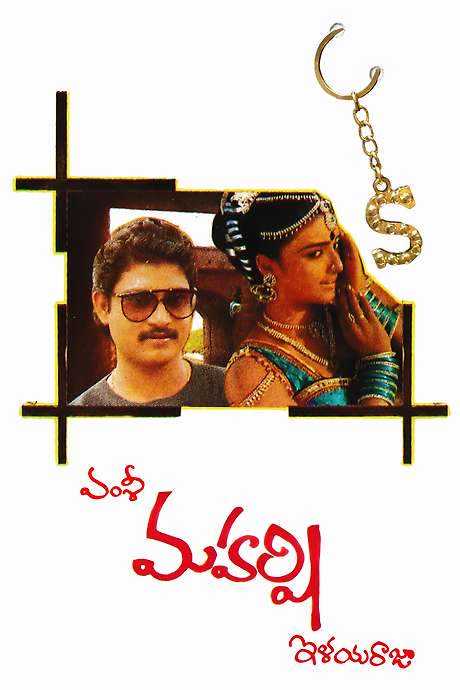
Maharshi (1987) movie poster

Plot Summary

Maharshi (1987) Plot Summary Explained

Release, runtime and language
1987 · 132 mins · Telugu
Directed by
Vamsy
Starring
Krishna Bhagavan, C. V. L. Narasimha Rao, Maharshi Raghava, Shanti Priya

After a college student becomes obsessed with a co-ed, she and her husband attempt to heal him, with dangerous consequences.

On this page (5)
  1. 1 What happens: full plot
  2. 2 Plot questions answered
  3. 3 Movie threads
  4. 4 Movies like Maharshi
  5. 5 Every angle

Full plot summary · contains spoilers

What Happens in Maharshi: Full Plot Summary

The whole story of Maharshi (1987) explained, from the opening scene to the final frame: every key event, every twist and what it all adds up to. Read it as a quick recap before the sequel, to check a scene you missed, or to finally understand what really happened.

Maharshi is a carefree college student from a wealthy family who stands out on campus for his arrogance, a loyal gang of friends, playful taunts of lecturers, and a habit of roughing up classmates. His world begins to shift when he encounters Suchitra in college. She loathes him because of his rude behavior and refuses to engage when he approaches her. Undeterred, he takes a liking to her and tries to win her over by approaching her parents and flaunting his wealth. Suchitra resists, even as her parents show polite interest, and Maharshi’s attempts to impress become more aggressive as he begins to scare away the prospective grooms who come to Suchitra’s home.

Suchitra then reconnects with her childhood friend Tilak, a police sub-inspector in the same town, which adds a new layer to the conflict. Soon after, she signals a desire to marry Tilak, driven more by a plan to rid herself of Maharshi than by romantic longing. When Maharshi learns of this, he makes a desperate bid to stop the wedding and ends up at odds with the authorities, ultimately being locked up in a police station at the insistence of his own father. He clings to a painful suspicion that Tilak used his power as a sub-inspector to keep him confined, fueling a feud that spills over into tense confrontations at home. A confrontation escalates to violence when Maharshi attempts to strike Tilak at their house, only to halt when Suchitra herself opens the door. The strain takes a toll on him, and he sinks into depression, eventually requiring hospital treatment.

The saga takes a darker turn when Maharshi’s love for Suchitra is dramatized through a troubling incident: his friend Ramana drugs Suchitra and brings her to Maharshi’s home, under the troubling notion that Maharshi wants to sleep with her. The moment is deflating and clarifying for Maharshi, who immediately rebukes Ramana, insisting that what he seeks is Suchitra’s affection and genuine love rather than her body. He and Suchitra are careful to return her to safety, underscoring a complex dynamic of possession, care, and consent that threads through the relationships around him.

Tilak remains a catalyst, trying to bridge the rift by befriending Maharshi and helping him mingle with Suchitra in a more constructive way. As Maharshi begins to recover, a future framed by marriage is proposed, but the idea drives him into a fresh panic, and he runs off screaming. He ends up hospitalized again, and this time he manages to escape. In a shocking turn of events, Suchitra and Tilak have a baby together, changing the stakes of everyone’s lives. Maharshi, overwhelmed and desperate, abducts Suchitra’s newborn and flees into the city, the police on his trail. The pursuit culminates in a dramatic final fall: as he plummets from a building with the baby, he dies, saving the child and, in doing so, earns Suchitra’s lasting affection and a sense of closure to a harrowing chapter.

Last updated: October 09, 2025 at 14:36

Was this helpful?

Plot questions answered

Maharshi Plot Explained: Your Questions Answered

The questions people ask most about Maharshi (1987): what happens in the confusing scenes, why the characters do what they do, the twists, hidden details and what the ending means. Each answer contains spoilers.

Q1

Why does Maharshi become obsessed with Suchitra when she clearly despises him?

Maharshi is accustomed to getting whatever he wants through wealth and dominance. Suchitra's outright refusal to engage with him triggers his possessiveness rather than detering him. Her resistance becomes a challenge he believes he can overcome with enough pressure, ignoring her feelings entirely.

Foreshadowing: Early scenes show Maharshi bullying classmates who don't comply with him, establishing that he equates resistance with something to be conquered.

  • obsession
  • suchitra
  • maharshi
  • motivation
  • romance
Q2

Why does Suchitra decide to marry Tilak?

Suchitra's decision to marry Tilak is primarily a strategic move to escape Maharshi's relentless pursuit. While Tilak is her childhood friend and a police sub-inspector, the marriage is less about romantic longing and more about finding safety and a practical solution to remove Maharshi from her life.

Foreshadowing: When Suchitra reconnects with Tilak, she signals a desire to marry him specifically to end Maharshi's harassment.

  • suchitra
  • tilak
  • marriage
  • escape
  • maharshi
Q3

Why does Maharshi's father have him locked in a police station?

Maharshi's father has him arrested because Maharshi attempts to physically obstruct Suchitra's wedding to Tilak. His disruptive behavior crosses legal boundaries, and his father uses his influence to have Maharshi confined at the police station as a last resort to control his son's increasingly dangerous actions.

Foreshadowing: The timeline shows Maharshi becoming more aggressive in his pursuit, from scaring away prospective grooms to attempting to stop the wedding by force.

  • father
  • arrest
  • police
  • marriage
  • control
Q4

What happens when Ramana drugs Suchitra and brings her to Maharshi?

Ramana, believing Maharshi wants to sleep with Suchitra, drugs her and brings her to his home. However, Maharshi is horrified and immediately rebukes Ramana, clarifying that he wants Suchitra's genuine love and affection, not her body. Together, Maharshi and Suchitra ensure she returns home safely, demonstrating that his obsession, while unhealthy, is rooted in emotional desire rather than physical lust.

Foreshadowing: This moment reveals Maharshi's true intentions despite his aggressive behavior, showing the complexity of his character.

  • ramana
  • drug
  • suchitra
  • consent
  • maharshi
Q5

Why does Maharshi react with panic when marriage is suggested?

When Tilak suggests marriage as a way to stabilize Maharshi's mental state, Maharshi screams in panic and runs away. This extreme reaction suggests that his obsession with Suchitra has become so twisted that the idea of a normal, accepted relationship feels impossible to him. His mental deterioration has made any formal commitment trigger overwhelming fear, possibly related to losing control or being trapped.

Foreshadowing: Earlier scenes show Maharshi's unstable mental state deteriorating under pressure, leading to hospitalization.

  • marriage
  • panic
  • mental-health
  • hospital
  • trauma
Q6

Why does Maharshi abduct Suchitra and Tilak's newborn baby?

After learning that Suchitra and Tilak have a baby together, Maharshi becomes overwhelmed by desperation and distorted love. His mental state has deteriorated beyond reason. He abducts the newborn, believing this act will somehow resolve his emotional turmoil or bring him closer to Suchitra. The abduction represents the final, tragic culmination of his obsession.

Foreshadowing: The baby is introduced as a symbol of the bond between Suchitra and Tilak, which intensifies Maharshi's sense of loss and desperation.

  • baby
  • abduction
  • desperation
  • obsession
  • tragedy
Q7

How should Maharshi's death be interpreted?

Maharshi falls from a building while holding the baby he abducted. In the moments before his death, he saves the child from falling, an act of self-sacrifice that transforms his destructive obsession into a final redeeming gesture. While he dies, his actions briefly earn Suchitra's lasting affection and provide closure to the harrowing narrative.

Foreshadowing: This tragic ending contrasts with Maharshi's earlier bullying behavior, suggesting a possible redemption arc through his final act.

  • death
  • sacrifice
  • redemption
  • baby
  • closure
Q8

Why does Suchitra develop affection for Maharshi after his death?

Maharshi's final act of saving her newborn child, even at the cost of his own life, fundamentally shifts Suchitra's perception of him. His death transforms his obsessive, harmful behavior into a seemingly self-sacrificial gesture. This moment of redemption, however brief, creates a sense of closure and leaves Suchitra with complicated feelings rather than just relief.

Foreshadowing: Throughout the story, Suchitra sees only Maharshi's aggressive pursuit, making his final sacrifice a shocking reversal of character.

  • suchitra
  • affection
  • death
  • sacrifice
  • closure
Q9

What is Tilak's role in the story?

Tilak serves as both a catalyst and a reconciling figure. As a childhood friend of Suchitra and a police sub-inspector, he becomes her practical choice for marriage to escape Maharshi. Later, he attempts to help Maharshi by befriending him and facilitating a connection with Suchitra. Despite Maharshi's hostility, Tilak's actions oscillate between protecting Suchitra and trying to help Maharshi, making him a morally complex character.

Foreshadowing: Tilak's position as both Suchitra's protector and someone who tries to help Maharshi creates internal conflict in the story.

  • tilak
  • police
  • friend
  • marriage
  • support
Q10

Is Maharshi's behavior meant to be romantic or disturbing?

Maharshi's behavior is deliberately disturbing rather than romantic. The film portrays his pursuit as aggressive, obsessive, and ultimately destructive. While his final sacrifice offers a sliver of redemption, the narrative frames his actions, including harassment, assault, and abduction, as harmful. The story uses romance as a destructive engine, not a positive theme.

Foreshadowing: Early scenes establish Maharshi as a bully who uses wealth and force to get what he wants, setting the tone for his problematic behavior.

  • behavior
  • romance
  • obsession
  • toxic
  • disturbing

Movie threads

More Movies Like Maharshi, by Mood & Story

Curated lists built around what makes Maharshi tick: the same mood, the same kind of story or the same emotional payoff. Each list explains why these movies belong together.

Movies about destructive obsession like Maharshi

Stories where a romantic fixation spirals into dangerous and tragic consequences. If you liked the intense, tragic spiral of obsession in Maharshi, explore these similar films. This collection features movies about unrequited love turning dangerous, characters grappling with psychological fixation, and high-stakes romantic dramas with heavy emotional weight and dark tones.

  • obsessive
  • tense
  • anxious
  • desperate
  • tragic
  • melancholic
  • Tone: dark, tense
  • Pacing: fast, escalating
Why these movies?

The story pattern: Movies in this thread typically follow a clear arc: a character becomes intensely fixated on another person, leading to escalating and morally questionable behavior. The narrative pace is often fast, accelerating the protagonist's psychological decline through conflicts, confrontations, and desperate acts that culminate in a profoundly sad or bleak resolution.

Why they belong together: These films are grouped together because they share a core focus on love as a destructive catalyst. They create a similar viewing experience defined by high tension, anxious moods, and a heavy emotional impact, driven by characters whose romantic desires lead them down a path of self-destruction.

High-stakes emotional thrillers similar to Maharshi

Intense character-driven dramas that feel as tense and consequential as thrillers. For viewers who appreciated the relentless tension and high emotional stakes of Maharshi, this section highlights similar movies. Discover character-driven dramas with thriller-like pacing, where psychological pressure and personal conflicts create an intensely anxious and tragic viewing experience.

  • tense
  • anxious
  • desperate
  • psychologically charged
  • high stakes
  • tragic
  • Tone: dark, anxious
  • Pacing: fast, urgent
Why these movies?

The story pattern: The defining pattern is a narrative propelled by internal, emotional conflict that manifests in external, high-consequence events. The pacing is swift, moving characters from one emotionally charged crisis to the next. The focus is less on physical danger and more on the psychological toll and tragic outcomes of desperate actions driven by love, fear, or obsession.

Why they belong together: These films are united by their ability to create a thriller-like experience through pure emotional intensity. They share a fast pace, a dark tone, and a heavy emotional weight, making them feel similarly gripping and psychologically taxing despite not necessarily belonging to the thriller genre.

If you liked this

Movies Like Maharshi

Similar movies to Maharshi: the same genre, themes or kind of story. Each one comes with its own plot summary, timeline and ending explained.

Browse all movie summaries

Every angle

Maharshi (1987) Explained: Plot, Timeline & Characters

Everything about Maharshi in one place: what happens in the plot summary, the timeline in chronological order, the characters and meaning and a spoiler-free summary. What's After the Movie adds the cast, box office and post-credit scenes.

Coming soon on iOS and Android

The Plot Explained Movie Summary App

Plot summaries, endings explained and timelines on your phone. Catch up on any movie in minutes, save your favorites and never miss a twist again.

Be the first to know when we launch. Your email stays private, always.

Learn more about the app