

Plot Explained Spoilers guaranteed!
Plot Explained

Browse by genre

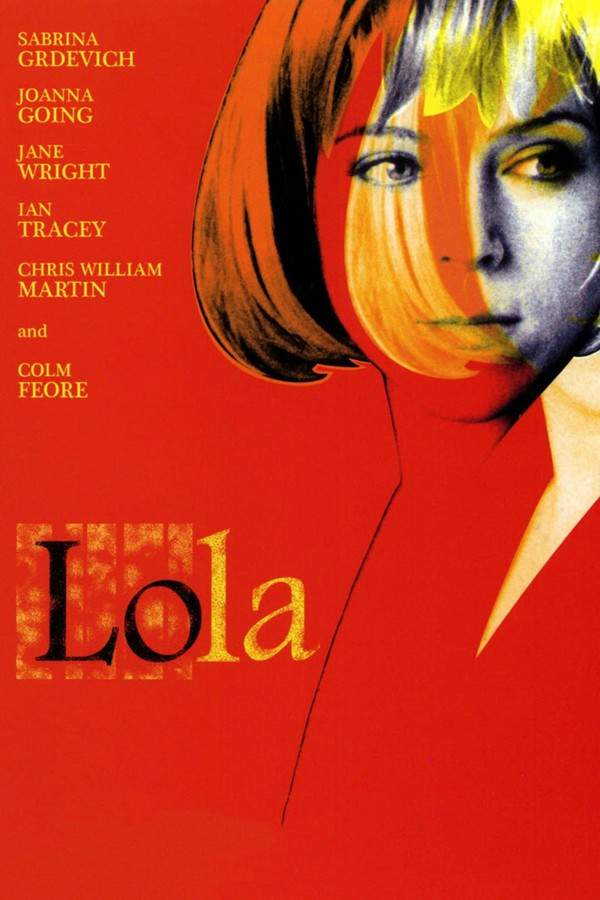
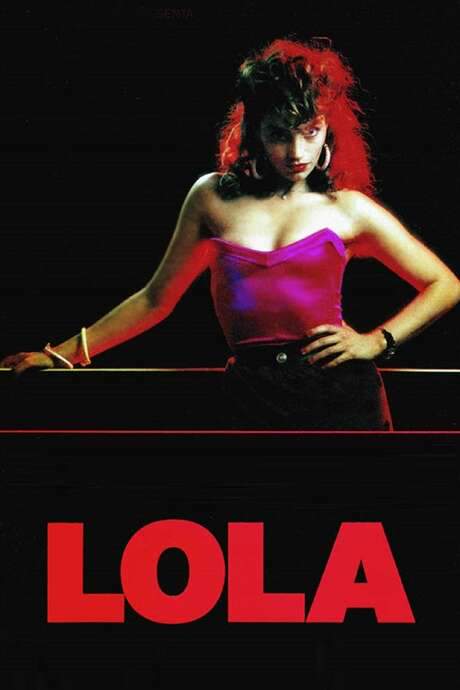
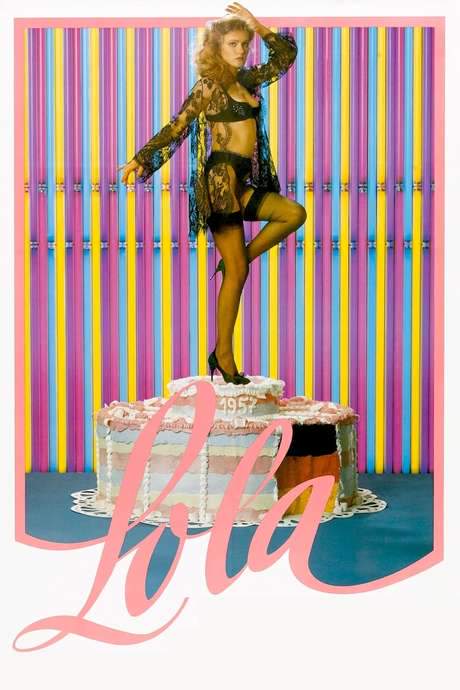
Lola (1981) movie poster

Timeline

Lola (1981) Timeline Explained – Every Event in Order

Release, runtime and language
1981 · 113 mins · German
JustWatch #32,572 2
Directed by
Rainer Werner Fassbinder
Starring
Udo Kier, Mario Adorf, Barbara Sukowa, Ivan Desny, Hark Bohm, Juliane Lorenz

In autumn 1957 West Germany, Lola is a cabaret singer‑prostitute who revels in her power over men yet longs for money, property and love. She pits a builder against an upright commissioner, devising a bold scheme to rise in a society where everything is for sale. Shot in candy‑colored hues, Fassbinder’s homage to The Blue Angel satirizes capitalism.

On this page (6)
  1. 1 Where to watch
  2. 2 Events in order (12)
  3. 3 Timeline questions answered
  4. 4 Movie threads
  5. 5 Movies like Lola
  6. 6 Every angle

Where to watch

Where to Watch Lola (1981)

Where can you watch Lola? Stream, rent or buy it in the US: current JustWatch availability with up-to-date prices.

Streaming availability powered by JustWatch

12 events in order · contains spoilers

Lola Timeline: Events in Chronological Order

Every key event of Lola (1981) in order, scene by scene, with when and where it takes place. Use it to untangle flashbacks, time jumps and parallel storylines, to refresh your memory before the sequel or to find the exact scene you are thinking of.

  1. Postwar reconstruction grips Coburg

    In 1957, Coburg and much of West Germany are in a phase of rebuilding. The town's elite—mayor, police chief, bank president, newspaper editor, and property developer Schuckert—enjoy the spoils of the new order. Lola, Schuckert's favored singer, embodies the prosperity and moral ambiguity of the era.

    When
    1957
    Where
    Coburg
  2. A new building commissioner arrives

    A high-minded, cultured refugee from East Prussia arrives as Coburg's building commissioner. He openly aims to reform the crooked practices that sustain the town's power structure. He begins organizing his household with a housekeeper and raises expectations for change.

    When
    early 1957
    Where
    Coburg
  3. The housekeeper and Lola enter his life

    The commissioner hires a woman with a young daughter as his housekeeper. The housekeeper's daughter is Lola, who will later be known by her stage name and real name, Marie-Luise, intersecting with his world. This introduces Lola into his personal sphere.

    When
    soon after arrival
    Where
    von Bohm's home
  4. Lola makes contact with the commissioner

    Lola, using her real name Marie-Luise, decides to get to know the intriguing new official and soon attracts his attention. Her approach reveals the start of a forbidden acquaintance that will shape the coming events. The meeting begins to blur the line between professional reform and personal desire.

    When
    soon after first encounter
    Where
    von Bohm's house
  5. A marriage proposal and Lola's warning

    Unaware of Lola's nights as a performer or that Schuckert is her daughter's father, von Bohm proposes marriage. Lola warns him off, sensing the danger of pursuing a relationship that defies the town's power dynamics. The proposal raises questions about truth, loyalty, and social risk.

    When
    shortly after first meeting
    Where
    Coburg
  6. The brothel visit reveals Lola's truth

    When von Bohm is finally taken to the brothel, he discovers the truth about Lola and her double life. He learns that she is more deeply connected to Coburg's secrets than he realized. The revelation deepens the conflict between his ideals and the town's corrupt underbelly.

    When
    after the proposal
    Where
    the brothel
  7. Investigating Coburg's corruption

    Meanwhile, von Bohm has been collecting evidence of Coburg's widespread corruption, including building permits masterminded by Schuckert. He decides to put a stop to the schemes, hoping to restore integrity to the town. His pursuit pits him against the entrenched interests that benefit from the status quo.

    When
    during tenure as building commissioner
    Where
    Coburg
  8. Reform efforts meet indifference

    Despite his findings, nobody is interested in his reform efforts and the corrupt network remains intact. The town's power structure resists change, leaving von Bohm isolated in his mission. The clash highlights the challenge of moral leadership in a system built on compromise.

    When
    after investigations
    Where
    Coburg
  9. A wedding against the odds

    Still in love with Lola, von Bohm marries her with Schuckert's blessing. The union ties the reform-minded official to a figure connected to the very power he seeks to overturn. The wedding marks a precarious alliance born from conflicting loyalties.

    When
    after decision to marry
    Where
    church in Coburg
  10. The deed to the brothel changes hands

    As a wedding gift, Schuckert passes the deed to the brothel to the couple. The deed effectively makes their home a stake in Coburg's crooked system. The gesture underscores the uncomfortable convergence of love, money, and power.

    When
    on the wedding day
    Where
    church vicinity
  11. Schuckert's betrayal after the ceremony

    Immediately after the church ceremony, Schuckert seduces Lola, taking the bride to bed. The scene exposes the fragility of the marriage and the depth of Schuckert's influence. It also signals the limits of von Bohm's ideals in a corrupt milieu.

    When
    immediately after the ceremony
    Where
    near the church
  12. An unresolved struggle amid entangled loyalties

    The newlyweds' fragile union and the ownership of the brothel illustrate how power, sex, and money intertwine in Coburg. The corruption that von Bohm hoped to eradicate remains entrenched, leaving outcomes uncertain. Lola's dual life continues to shape the town's future.

    When
    following the wedding
    Where
    Coburg

Last updated: February 18, 2026 at 23:45

Was this helpful?

Timeline questions answered

Lola Timeline Explained: Your Questions Answered

When does it happen, and why in that order? The questions people ask about the chronology of Lola (1981): time jumps, flashbacks, cause and effect between scenes and the correct order of events, each answered with spoilers.

Q1

Why does Lola warn von Bohm off when she actually wants to marry him?

Lola genuinely falls for von Bohm, but she knows their relationship is dangerous. She's aware that her connection to Schuckert and her double life as a prostitute could destroy his career and reputation in Coburg. Her warning is an attempt to protect him from the corruption that surrounds her, but her underlying ambition to escape her current circumstances ultimately drives her to pursue the marriage anyway.

  • lola
  • von bohm
  • marriage
  • warning
  • motivation
Q2

Why does von Bohm still marry Lola after discovering her real identity?

Despite learning that Lola is a prostitute and that Schuckert is the father of her child, von Bohm cannot let go of his love for her. His moral idealism has already been crushed by the town's resistance to reform, and marrying Lola becomes his way of holding onto something meaningful in a corrupt system. He chooses love over his principles, accepting her past as part of who she is.

  • von bohm
  • lola
  • marriage
  • corruption
  • love
Q3

What is the significance of Schuckert giving von Bohm and Lola the brothel deed as a wedding gift?

Schuckert's wedding gift is a calculated move that solidifies his control over the couple. By transferring the deed, he ties von Bohm directly to the corrupt system he vowed to fight, making the commissioner complicit in the very corruption he sought to eliminate. It also keeps Lola connected to Schuckert financially and ensures his influence over their lives continues.

  • schuckert
  • brothel deed
  • wedding gift
  • corruption
  • power
Q4

Why does Schuckert seduce Lola right after her wedding ceremony?

Schuckert's action demonstrates that his power over Lola remains unbroken despite her marriage to von Bohm. He cannot accept losing his control over her, even to another man. The scene shows the depth of corruption in Coburg, Schuckert treats Lola as his property and uses her sexually as a symbol of his continued dominance, regardless of social conventions or von Bohm's presence.

Foreshadowing: Earlier scenes establish Schuckert's ownership of Lola and his casual attitude toward using women for his pleasure.

  • schuckert
  • lola
  • wedding
  • betrayal
  • power
Q5

What happens to von Bohm's efforts to reform Coburg's corruption?

Von Bohm's reform efforts fail completely. Despite gathering evidence of Schuckert's illegal building permits and corrupt practices, nobody in Coburg's power structure supports his mission. The mayor, police chief, bank president, and newspaper editor all benefit from the status quo. His failure forces him to either leave or compromise, and he chooses compromise by marrying into the very system he opposed.

  • von bohm
  • reform
  • corruption
  • failure
  • coburg
Q6

What is the significance of Lola having a daughter fathered by Schuckert?

Lola's daughter serves as a constant reminder of her entanglement with Schuckert. It reveals that her relationship with him goes beyond employer-employee, it involves a real personal connection and dependency. This detail complicates her supposed choice between von Bohm and Schuckert, as she is already materially tied to the property developer through their child.

  • lola
  • daughter
  • schuckert
  • connection
  • dependency
Q7

Why does Lola introduce herself as Marie-Luise to von Bohm instead of her stage name?

Lola uses her real name Marie-Luise to create distance between herself and her prostitute identity when pursuing a respectable relationship. She wants von Bohm to see her as a potential wife, not as a cabaret singer. This deliberate deception shows her calculation, she is trying to transform her life by entering the world of proper citizens through marriage.

Foreshadowing: The housekeeper's arrival at von Bohm's home sets up the opportunity for Lola to present herself differently.

  • marie-luise
  • lola
  • deception
  • identity
  • stage name
Q8

What does the ending reveal about corruption in Coburg?

The ending shows that systemic corruption cannot be defeated by individual morality. Von Bohm arrives as a reformer but is absorbed into the very system he opposed. His marriage to Lola doesn't triumph over corruption, it co-opts him into it. Schuckert's continued control over Lola even after her wedding symbolizes how the powerful few maintain their dominance regardless of changes in social labels.

  • ending
  • corruption
  • coburg
  • von bohm
  • system
Q9

Why does von Bohm hire a housekeeper whose daughter is Lola?

This is coincidental rather than deliberate, von Bohm hires the housekeeper without knowing her daughter is the famous Lola. The coincidence is part of Fassbinder's design, bringing Lola into von Bohm's life through an ordinary domestic arrangement. This random connection sets the entire chain of events in motion.

  • von bohm
  • housekeeper
  • coincidence
  • lola
  • arrangement
Q10

How does the film critique capitalism in postwar West Germany?

The film portrays Coburg's elite, mayor, police chief, bank president, and Schuckert, as prospering from a system where everything, including people and morality, is transactional. Lola's ambition to marry for money and property mirrors the city's ethos. Von Bohm's failure shows that reform is impossible when all institutions are bought. The candy-colored visual style satirizes the cheerful surface掩盖ing moral decay.

  • capitalism
  • satire
  • postwar
  • corruption
  • fassbinder

Movie threads

More Movies Like Lola, by Mood & Story

Curated lists built around what makes Lola tick: the same mood, the same kind of story or the same emotional payoff. Each list explains why these movies belong together.

Colorful satires of societal decay like Lola

Vibrant visuals and sharp satire expose the moral decay beneath a polished surface. If you liked the candy-colored cynicism of Lola, explore more movies that use a vibrant aesthetic to deliver sharp social commentary. These films cleverly contrast beautiful visuals with themes of corruption and moral compromise.

  • satirical
  • colorful
  • cynical
  • melancholic
  • corrupt
  • yearning
  • Tone: satirical, bittersweet, cynical
  • Pacing: steady, observational
Why these movies?

The story pattern: These narratives often follow characters navigating a corrupt system, using wit and manipulation to survive or advance. The plot unfolds steadily, revealing the hypocrisy and transactional nature of relationships within a flawed society, leading to endings that are more pragmatic than purely happy.

Why they belong together: They are grouped by their shared approach of using aesthetic pleasure as a weapon for critique, creating a bittersweet and satirical tone. The mood balances a sense of yearning with a clear-eyed view of human frailty and systemic failure.

Movies about ambition and transactional love like Lola

Characters balance romantic desire with ruthless ambition in a morally compromised society. Find more films like Lola that explore the complex dance between ambition and affection. These stories focus on characters making difficult choices between rising in a corrupt world and holding onto authentic feelings.

  • yearning
  • erotic
  • pragmatic
  • deception
  • unrequited love
  • social climbing
  • Tone: bittersweet, melancholic, erotic
  • Pacing: steady, deliberate
Why these movies?

The story pattern: The plot typically follows a charismatic but morally ambiguous character as they execute a scheme to gain power or wealth, manipulating those around them. A key relationship—often romantic—becomes a battleground for their internal conflict between desire and calculation, culminating in a victory that feels hollow or compromised.

Why they belong together: They share a focus on the protagonist's internal struggle between material ambition and emotional vulnerability. The tone is consistently bittersweet, with a medium emotional weight stemming from the inevitable moral compromises made for success.

If you liked this

Movies Like Lola

Similar movies to Lola: the same genre, themes or kind of story. Each one comes with its own plot summary, timeline and ending explained.

Browse all movie summaries

Every angle

Lola (1981) Explained: Plot, Timeline & Characters

Everything about Lola in one place: what happens in the plot summary, the timeline in chronological order, the characters and meaning and a spoiler-free summary. What's After the Movie adds the cast, box office and post-credit scenes.

Coming soon on iOS and Android

The Plot Explained Movie Summary App

Plot summaries, endings explained and timelines on your phone. Catch up on any movie in minutes, save your favorites and never miss a twist again.

Be the first to know when we launch. Your email stays private, always.

Learn more about the app