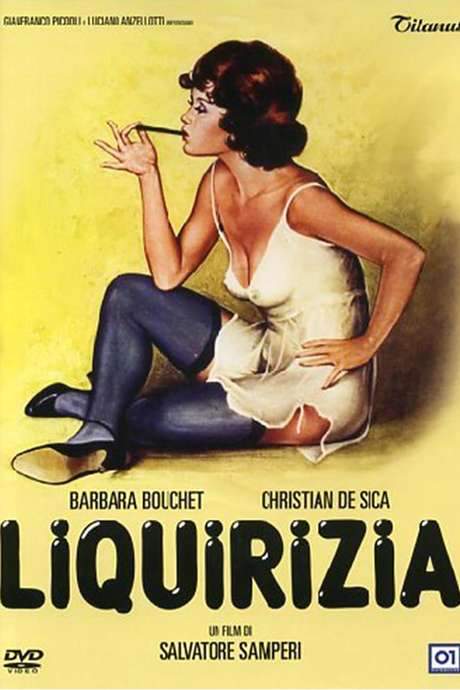
Year: 1979
Runtime: 103 mins
Language: Italian
Director: Salvatore Samperi
Two groups of students - the third-class high school students and the matured accountants - decide to perform a show to celebrate the last day of school.
Warning: spoilers below!
Haven’t seen Liquirizia yet? This summary contains major spoilers. Bookmark the page, watch the movie, and come back for the full breakdown. If you're ready, scroll on and relive the story!
Read the complete plot breakdown of Liquirizia (1979), including all key story events, major twists, and the ending explained in detail. Discover what really happened—and what it all means.
In 1959, Padua buzzes with the energy of two friends on the cusp of adulthood. Fulvio [Massimo Anzellotti] and Carletto [Stefano Ruzzante] are in their final year of school, each pulled by different worlds. Fulvio comes from a working‑class background and attends an accounting institute, chasing the hot new trends—sports, cars, rock music, and women. Carletto, by contrast, hails from a wealthy bourgeois family and studies at a classical high school, dreaming of relocating to Rome to become a theatrical director. Their paths cross as they hatch a plan to stage a grand end‑of‑year celebration that would unite their peers from both schools, raise some money, and give everyone a chance to have fun one last time before summer.
The plan is ambitious: Carletto will shape the show, while Fulvio pushes to bring in a marquee performer from Milan. Fulvio travels to meet a famous singer, aiming to secure participation from Adriano Celentano, but fate trips him up when he encounters a boastful rock singer named Flyn. The latter, portrayed by the lively and confident Teo Teocoli, agrees to perform, adding a spark of rock charisma to the lineup. The mix of acts promises variety, with each group preparing something different to captivate the audience.
A crucial ally arrives in bartered strength and goodwill: Mrs. Raffaella, played by Barbara Bouchet, is the mother of a younger student who lends them a family-owned theater free of charge. The theater is cared for by a Neapolitan custodian—an affable, affectionate watchman who worships Eduardo De Filippo and keeps a watchful eye on every rehearsal. This makes the venue feel both intimate and charged with possibility, the kind of place where a school show could become something bigger than anyone expected.
The cast within the theater reflects the tension and promise of youth. On the high school side, Gian Galeazzo Lo Cascio—a naïve, affluent heir—is engaged to Marina, a romance that threads through the back-and-forth of preparations. Giulia has a soft spot for Carletto, adding a hint of teenage longing to the backstage conversations. There’s also the playful energy of Baffi, and Bartolozzi, the redheaded daughter of a wealthy shoemaker, who is utterly infatuated with Fulvio. The high school performances range from ballet and opera to Shakespeare, a testament to the kids’ eagerness to shine in every possible guise.
The accounting students bring their own bold personalities to the mix. Two of them, Maiale and Coen, clash with the others, injecting a punch of rivalry and humor into the behind‑the‑scenes dynamics. The diverse lineup is meant to blend culture and rebellion, to show that students from different walks of life can come together around shared ambition and camaraderie.
As the big night arrives, the mood shifts from hopeful to chaotic. The audience boos several acts, the rock‑oriented performance by Flyn falls flat, and a group of former students storms the stage led by the infamous Tonazzi, known as “Be‑Bop‑A‑Lula,” turning the event into a riot. The celebration collapses into a violent brawl, underscoring the vulnerabilities and pressures the young organizers face when expectations collide with reality. Carletto sees the collapse as a personal failure and, in a poignant moment, asks Raffaella to accompany him to Rome—only to be gently declined, a reminder of the choices and limits that come with growing up.
In the aftermath of summer, a quiet scene settles the story. Carletto visits Fulvio at Bartolozzi’s shop, where Fulvio has found work, and hints that he has given in to the advances of the girl he’s been interested in. The moment is both practical and bittersweet: the elder Bartolozzi, portrayed with a knowing smile and a licorice stick, watches the exchange with a mix of humor and resigned wisdom. The film closes on a note that blends that sense of missed romance with the promise of new starts, reminding viewers that life moves on even after dreams collide with reality.
Throughout, the film paints a vivid tableau of youth and ambition in a provincial setting, balancing humor with sentiment, and showing how the impulse to create something together can illuminate both the strengths and the tensions of a community on the brink of adult life. The ensemble cast—featuring [Barbara Bouchet], [Massimo Anzellotti], [Stefano Ruzzante], [Jenny Tamburi], [Christian De Sica], [Simona Mariani], [Gigi Ballista], [Benedetta Fazzini], [Teo Teocoli], and [Ricky Gianco]—brings warmth, color, and a touch of chaos to this coming‑of‑age comedy that remains firmly anchored in its time and setting.
Last Updated: October 09, 2025 at 10:42
Discover curated groups of movies connected by mood, themes, and story style. Browse collections built around emotion, atmosphere, and narrative focus to easily find films that match what you feel like watching right now.
Stories where high hopes and youthful plans meet the sobering reality of growing up.If you enjoyed the bittersweet celebration in Liquirizia, you'll find similar stories here. These films capture the energetic chaos of youthful plans, often culminating in events or performances that don't go as expected, leaving characters with a nostalgic and affectionate, yet realistic, view of growing up.
Stories in this thread typically follow a group or individual as they build towards a significant, often celebratory, event fueled by youthful optimism. The climax often involves a degree of chaotic failure or underwhelming success, leading to a resolution that is not tragic but sobering, emphasizing personal growth over triumphant victory.
Movies are grouped here for their shared focus on the transition from adolescence to adulthood, portrayed through a specific ambitious project. They share a tonal balance of comedy and pathos, a medium emotional weight, and an ending that feels both affectionate and realistic about the compromises of life.
Films where a diverse group bands together for a single, memorable, and messy occasion.Fans of the chaotic school performance in Liquirizia will appreciate these movies. They feature lively ensemble casts where multiple character stories collide during the planning and execution of a single community event, blending comedy, friendship, and youthful energy into a cohesive, heartfelt narrative.
The narrative pattern involves introducing a varied group of characters whose individual arcs—romantic longings, personal ambitions, friendships—are all tested and developed through the shared experience of preparing for a significant event. The event itself often serves as a chaotic climax that brings these threads together, leading to a resolution for the group as a whole.
These films are grouped by their core structural element: an ensemble cast unified by a single, plot-driving event. They share an energetic, often chaotic mood, a steady pace that builds towards the event, and a tone that mixes light humor with genuine affection for the characters and their community.
Don't stop at just watching — explore Liquirizia in full detail. From the complete plot summary and scene-by-scene timeline to character breakdowns, thematic analysis, and a deep dive into the ending — every page helps you truly understand what Liquirizia is all about. Plus, discover what's next after the movie.
Track the full timeline of Liquirizia with every major event arranged chronologically. Perfect for decoding non-linear storytelling, flashbacks, or parallel narratives with a clear scene-by-scene breakdown.
Discover the characters, locations, and core themes that shape Liquirizia. Get insights into symbolic elements, setting significance, and deeper narrative meaning — ideal for thematic analysis and movie breakdowns.
Get a quick, spoiler-free overview of Liquirizia that covers the main plot points and key details without revealing any major twists or spoilers. Perfect for those who want to know what to expect before diving in.
Visit What's After the Movie to explore more about Liquirizia: box office results, cast and crew info, production details, post-credit scenes, and external links — all in one place for movie fans and researchers.
Discover movies like Liquirizia that share similar genres, themes, and storytelling elements. Whether you’re drawn to the atmosphere, character arcs, or plot structure, these curated recommendations will help you explore more films you’ll love.
Liquirizia (1979) Scene-by-Scene Movie Timeline
Liquirizia (1979) Movie Characters, Themes & Settings
Liquirizia (1979) Spoiler-Free Summary & Key Flow
Movies Like Liquirizia – Similar Titles You’ll Enjoy
College Girl on Vacation (1980) Plot Summary & Ending Explained
The Night Before the Exams (2006) Full Movie Breakdown
Desirable Teacher 2 (1982) Full Summary & Key Details
Delizia (1986) Plot Summary & Ending Explained
Compagni di scuola (1988) Full Movie Breakdown
La collegiale (1975) Detailed Story Recap
Italian Sex (1974) Ending Explained & Film Insights
L’orgia (1978) Full Movie Breakdown
School Teacher in College (1978) Detailed Story Recap
Luna e l’altra (1996) Full Summary & Key Details
School’s Out (2008) Complete Plot Breakdown
School Days (1976) Ending Explained & Film Insights
The Virgins (1963) Plot Summary & Ending Explained
The Schoolmate (1977) Spoiler-Packed Plot Recap
School Teacher in the House (1978) Plot Summary & Ending Explained