Plot Explained Spoilers guaranteed!
Plot Explained

Browse by genre

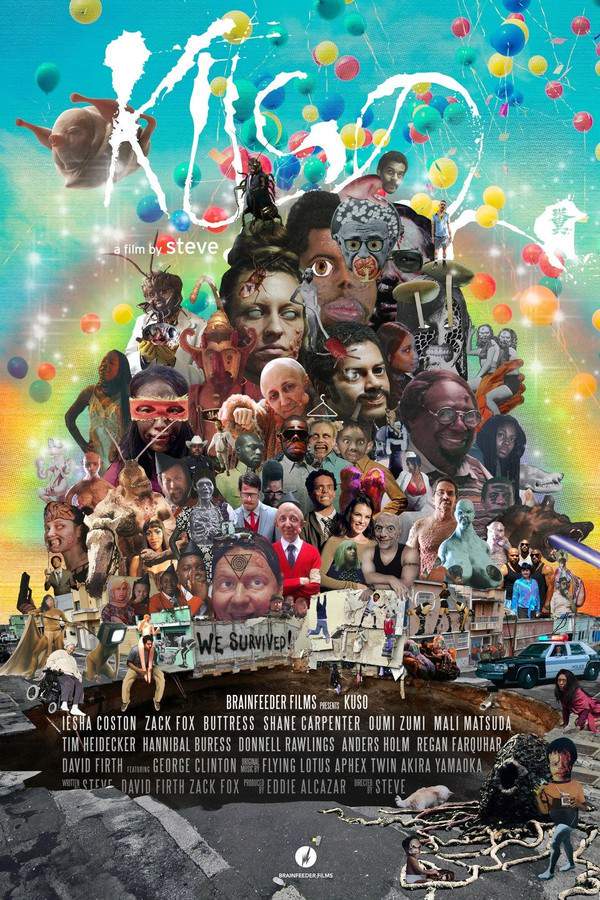
Kuso (2017) movie poster

Plot Summary

Kuso (2017) Plot Summary Explained

Release, runtime and language
2017 · 105 min · English
Echo score 43
Loading streaming availability…
Directed by
Flying Lotus
Starring
Byron Bowers, Hannibal Buress, Tim Heidecker, Regan Farquhar, George Clinton, Arden Banks
Budget
$400K

In a post-apocalyptic Los Angeles, fractured and devastated, a group of survivors shares their disturbing experiences through a collection of recovered televisions. These broadcasts depict a descent into madness as the survivors recount their harrowing tales, blurring the lines between reality and nightmare. The unsettling narrative blends elements of drama and horror, portraying a world irrevocably changed.

On this page (6)
  1. 1 Where to watch
  2. 2 What happens: full plot
  3. 3 Plot questions answered
  4. 4 Movie threads
  5. 5 Movies like Kuso
  6. 6 Every angle
Loading streaming availability…

Full plot summary · contains spoilers

What Happens in Kuso: Full Plot Summary

The whole story of Kuso (2017) explained, from the opening scene to the final frame: every key event, every twist and what it all adds up to. Read it as a quick recap before the sequel, to check a scene you missed, or to finally understand what really happened.

Kuso is a surreal and provocative cinematic experience that unfolds as a series of four grotesque vignettes. The narrative is set in a devastated version of Los Angeles, where survivors of a catastrophic earthquake have undergone bizarre mutations. These stories are fragmented and separated by interludes of television static, jarring animations, and news reports detailing the disaster. The film opens with a jazz-spoken word performance by Busdriver, who sets the tone by describing the seismic event that tore the city apart.

The first story introduces us to a couple, Missy and Kenneth, who reside in an apartment complex. Their relationship is marked by strange dynamics; in their first scene, Missy is seen choking Kenneth while he masturbates, later singing him a lullaby to put him to sleep. A mysterious tension exists because Missy constantly keeps her neck covered with a cloth and forbids Kenneth from performing any sexual acts on her. When Kenneth tries to accompany her singing on the piano, a second, alien voice joins the melody. Missy eventually reveals the secret beneath the cloth: a talking boil located on her neck. While Kenneth is initially repulsed, the boil manages to convince him to let it perform fellatio on him. Following this encounter, Kenneth finds a strange pleasure in the situation and decides to name the entity Royal.

The second vignette follows an aspiring rapper named B, who shares her living space with two interdimensional beings known as Kazo and Mazu. After a session of smoking from a bong and viewing a disturbing snuff film, B retreats to the bathroom to take a pregnancy test. Her privacy is interrupted when Phil, the man who raped her and caused the pregnancy, manifests through her toilet. Upon confirming she is pregnant, B seeks an abortion at a clinic run by George Clinton. While there, she encounters a man named Manuel, whose phobia of breasts is being treated by Mr. Quiggle, a massive insect residing within the anus of George Clinton. Disgusted by the clinic's primitive methods—specifically being offered a coat hanger for the procedure—B leaves. She later confronts Phil about the pregnancy, but he refuses to let her terminate it. In a surreal turn of events, Kazo and Mazu subdue Phil and trap him inside one of B's music videos. They then surgically remove the fetus from B's body, leading B to suggest that they simply smoke the fetus.

The third story focuses on Charlie, a student at an exclusive college situated deep within a forest. Charlie suffers from chronic digestive issues caused by the terrible food his mother feeds him, leading to frequent and uncontrollable defecation. After being humiliated and laughed out of his classroom for having an accident in his pants, Charlie flees into the woods. There, he discovers a bizarre creature that possesses nothing but an anus-like orifice and a worm-like tongue. Charlie begins feeding the creature his own feces, which triggers a rapid evolution, causing the creature to grow a face where its tongue once was. During a subsequent meeting, the creature emits a beam of green light into Charlie's head, granting him the mental strength to quit school and finally overcome his mother's control. However, when Charlie feeds the creature dog feces, the entity and its offspring abruptly vanish, leaving Charlie alone in the forest with a dog.

The final vignette centers on a woman named Angel, who is depicted crawling across the ground and consuming concrete. She is consumed by the belief that she must sacrifice her baby. The voice of God communicates with her, claiming the baby is missing and can be found by descending into a hole that Angel believes leads to Hell. As she crawls into the abyss, she slips and falls deep into the subterranean world. Along the way, she witnesses a man being devoured by a creature and is confronted by a resident of the hole named Jenny. Eventually, Angel is swallowed by another creature, leading her through a long, surreal tunnel. She eventually emerges from the ground inside a creature similar to the one seen in the previous segments, where she looks up to see a massive object floating over the ruins of Los Angeles.

The film concludes after the credits with another spoken-word piece by Busdriver, reflecting on the harrowing experience of surviving the earthquake.
Last updated: October 15, 2026 at 23:41

Was this helpful?

Plot questions answered

Kuso Plot Explained: Your Questions Answered

The questions people ask most about Kuso (2017): what happens in the confusing scenes, why the characters do what they do, the twists, hidden details and what the ending means. Each answer contains spoilers.

Q1

What is Royal, and why does Kenneth give it that name?

Royal is the name Kenneth gives to Missy's sentient boil after it performs fellatio on him and convinces him to accept its presence. Despite his initial revulsion when the boil is first revealed, Kenneth ultimately finds pleasure in the encounter and names the entity, integrating it into their relationship as a kind of third partner.

  • royal
  • talking boil
  • kenneth
  • missy
  • fellatio
  • naming
Q2

Why does Missy keep her neck covered and forbid intimacy?

Missy conceals a sentient, talking boil growing on her neck, which is why she keeps the area wrapped in cloth and forbids Kenneth from touching her sexually. The boil remains hidden until a mysterious second voice unexpectedly joins her singing, which forces her to remove the covering and reveal its presence.

Foreshadowing: When Kenneth tries to accompany Missy on the piano, a second voice joins their melody, silently hinting at the boil's sentience before Missy exposes it.

  • missy
  • kenneth
  • talking boil
  • neck cloth
  • intimacy
  • hidden
Q3

Who are Kazo and Mazu in B's apartment?

Kazo and Mazu are two interdimensional beings who share B's living space and act as her unconventional roommates and protectors. They intervene during her confrontation with Phil by subduing him and later performing the strange surgical removal of the fetus from her body.

  • kazo
  • mazu
  • interdimensional beings
  • b
  • roommates
  • rapper
Q4

Why does Phil refuse to let B get an abortion?

Phil is the man who raped B and caused the pregnancy, and his refusal to allow the abortion reflects his desire to maintain control over her body and her reproductive choices. His insistence triggers the confrontation that escalates until B's interdimensional roommates intervene on her behalf.

  • phil
  • b
  • abortion
  • rape
  • pregnancy
  • control
Q5

How do Kazo and Mazu trap Phil inside a music video?

After Phil refuses to allow B to terminate her pregnancy, Kazo and Mazu physically subdue him using their interdimensional abilities. They then pull him into one of B's existing music videos, effectively imprisoning him within a constructed visual reality where he can no longer interfere with her choices.

Foreshadowing: Phil first manifests through B's toilet during the pregnancy scene, hinting at the otherworldly nature of the entities who will eventually overpower him.

  • phil
  • kazo
  • mazu
  • music video
  • trap
  • pregnancy
  • abortion
Q6

How does feeding the creature feces cause it to evolve?

When Charlie feeds his own feces to the strange creature he finds in the forest, the act triggers a rapid biological transformation, causing the creature to grow a face where its worm-like tongue had been. Human biological material seems to function as an evolutionary catalyst for the entity, producing bizarre physical changes with each feeding.

Foreshadowing: Charlie's chronic digestive issues and frequent defecation, established early in his vignette, set up the strange bond he forms with the anus-like creature.

  • creature
  • feces
  • evolution
  • charlie
  • forest
  • mutation
  • anus
Q7

Why does the forest creature vanish after Charlie feeds it dog feces?

The creature responds in a completely different way to canine feces than to human waste, with the dog feces triggering an abrupt disappearance rather than further evolution. Both the original creature and its apparent offspring vanish entirely, leaving Charlie alone in the forest with the dog as the only remaining trace of the bond they had formed.

  • creature
  • dog feces
  • vanishes
  • charlie
  • forest
  • evolution
Q8

What happens when the forest creature shoots green light into Charlie's head?

During a second meeting, the forest creature emits a beam of green light directly into Charlie's head, granting him a sudden mental and emotional strength. This empowerment allows Charlie to quit school, stop submitting to his mother's control, and overcome the humiliation that had previously driven him into the woods.

  • charlie
  • green light
  • creature
  • empowerment
  • school
  • mother
Q9

Why does Angel believe she must sacrifice her baby?

Angel is consumed by the conviction that her baby must be sacrificed, a belief reinforced when the voice of God tells her the child is missing and can only be found by descending into a hole she believes leads to Hell. This divine instruction drives her to crawl into the abyss and endure the nightmarish journey through the subterranean world.

Foreshadowing: Angel's opening behavior, crawling along the ground and eating concrete, foreshadows the willingness to perform extreme, self-destructive acts demanded by her perceived mission.

  • angel
  • baby
  • sacrifice
  • hell
  • god
  • voice
  • descent
Q10

What is the massive object floating over Los Angeles at the end?

After Angel emerges from the hole inside a creature similar to those from earlier vignettes, she looks up to see a large, mysterious object hovering over the ruins of Los Angeles. Kuso leaves the nature of this object deliberately ambiguous, using the image as an ominous final beat that offers no clear explanation.

  • object
  • los angeles
  • floating
  • angel
  • ending
  • mysterious
Q11

What is the purpose of Busdriver's spoken-word performances in the film?

Busdriver's jazz-infused spoken-word performances bookend the movie, opening with a vivid description of the catastrophic earthquake and returning after the credits to reflect on surviving it. These interruptions function as surreal framing devices that anchor the otherwise disconnected vignettes to the disaster that destroyed Los Angeles.

  • busdriver
  • spoken word
  • performance
  • earthquake
  • framing
  • interludes

Movie threads

More Movies Like Kuso, by Mood & Story

Curated lists built around what makes Kuso tick: the same mood, the same kind of story or the same emotional payoff. Each list explains why these movies belong together.

Transgressive body horror anthologies like in Kuso

Fragmented stories where flesh becomes the final frontier of cinematic discomfort. Discover disturbing anthology horror movies like Kuso where multiple nightmarish stories collide. These films deliver grotesque body horror, transgressive themes, and fragmented storytelling that pushes the limits of cinematic discomfort. A perfect match for viewers who loved Kuso and want extreme horror anthologies that prioritize visceral shock and bodily violation over conventional narrative arcs.

  • grotesque
  • transgressive
  • body horror
  • fragmented
  • disturbing
  • surreal
  • Tone: dark, transgressive, bleak
  • Pacing: variable, episodic, jarring
Why these movies?

The story pattern: These films typically unfold as a series of thematically linked but narratively disconnected vignettes, each escalating the level of bodily transgression. Characters confront forced pregnancy, mutation, sexual violence, or ritualized self-destruction, with no single protagonist anchoring the experience. The fragmented structure denies viewer comfort, forcing engagement with each vignette's specific horror before cutting abruptly to the next, demanding that viewers find thematic links themselves.

Why they belong together: Grouped for their shared commitment to extreme bodily imagery and refusal to provide emotional shelter. They share episodic or fragmented construction, grotesque practical or analog effects, and themes centered on bodily autonomy under siege. The tone stays relentlessly dark with occasional absurdist flickers, and endings rarely offer catharsis or resolution, leaving audiences drained.

Post-apocalyptic nightmare movies like in Kuso

Wastelands where reality fractures, mutates, and devours those who remain. Explore nightmarish post-apocalyptic films like Kuso where shattered cities become stages for surreal horror and grotesque mutation. These movies blend dystopian worldbuilding with hallucinatory imagery and body horror, creating horror experiences where the end of the world feels like a descent into madness. Ideal for viewers seeking extreme horror in ruined worlds.

  • post-apocalyptic
  • surreal
  • nightmarish
  • mutated
  • oppressive
  • fractured
  • Tone: bleak, surreal, oppressive
  • Pacing: variable, disorienting, fragmented
Why these movies?

The story pattern: These films drop audiences into already-broken worlds, skipping traditional apocalyptic setup to focus on survival amid absurdity and mutation. Characters navigate landscapes filled with grotesque changes, surreal visions, and inexplicable phenomena, with the line between external devastation and internal collapse constantly blurring. Narratives often spiral rather than progress, emphasizing entrapment and psychological erosion over linear escape.

Why they belong together: Grouped for their shared setting in post-collapse landscapes paired with surreal, hallucinatory aesthetics. They share disorienting pacing that mirrors psychological instability, grotesque mutations or visionary imagery suggesting reality itself is broken, and a focus on the monstrous within survivors rather than grand adventure. The bleak endings reinforce that no rescue is coming.

If you liked this

Movies Like Kuso

Similar movies to Kuso: the same genre, themes or kind of story. Each one comes with its own plot summary, timeline and ending explained.

Browse all movie summaries

Every angle

Kuso (2017) Explained: Plot, Timeline & Characters

Everything about Kuso in one place: what happens in the plot summary, the timeline in chronological order, the characters and meaning and a spoiler-free summary. What's After the Movie adds the cast, box office and post-credit scenes.

Coming soon on iOS and Android

The Plot Explained Movie Summary App

Plot summaries, endings explained and timelines on your phone. Catch up on any movie in minutes, save your favorites and never miss a twist again.

Be the first to know when we launch. Your email stays private, always.

Learn more about the app