Plot Explained Spoilers guaranteed!
Plot Explained

Browse by genre

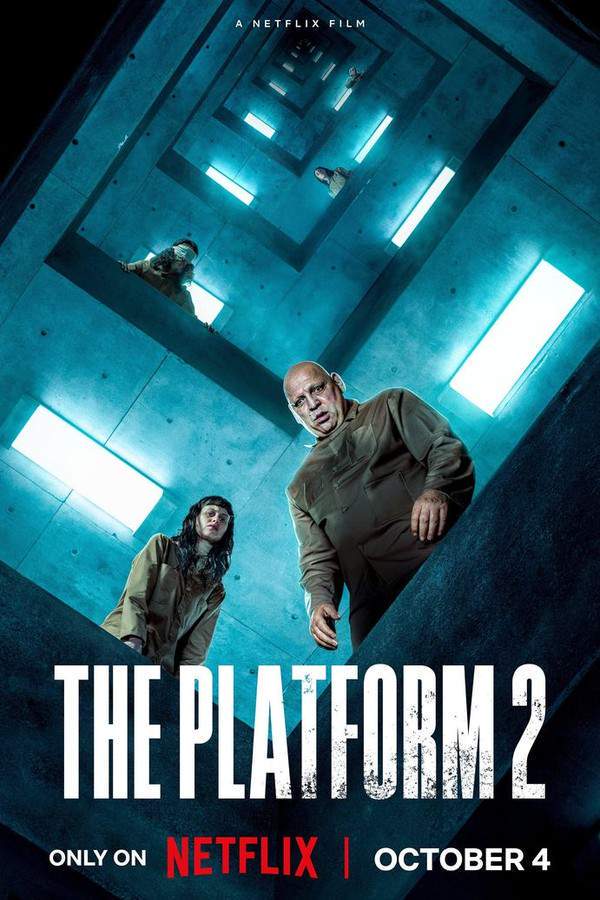
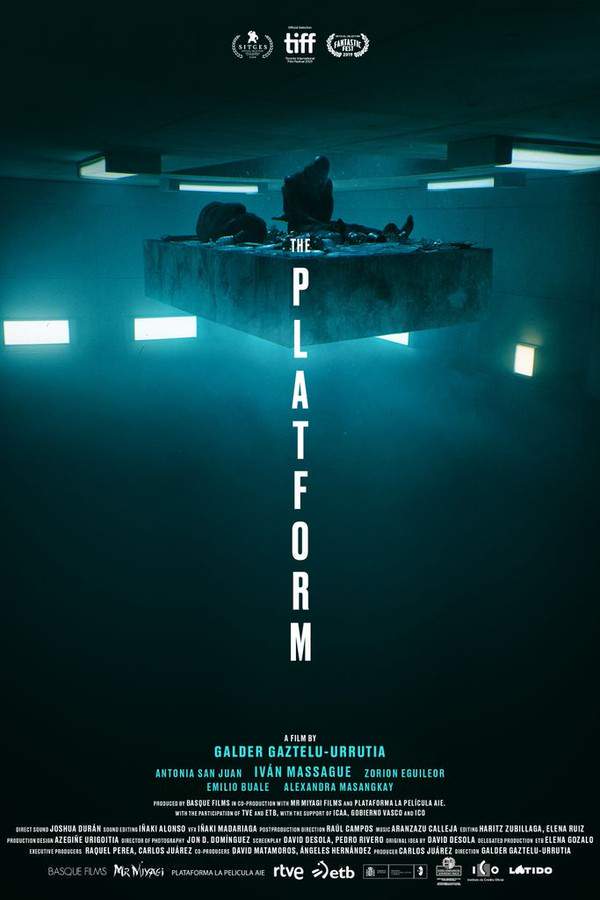
The Platform (2020) movie poster

Plot Summary

The Platform (2020) Plot Summary & Ending Explained

Release, runtime and language
2020 · 94 min · Spanish
Echo score 78
Directed by
Galder Gaztelu-Urrutia
Starring
Eric Goode, Alexandra Masangkay, Algis Arlauskas, Antonia San Juan, Emilio Buale, Ivan Massagué
Budget
$1.2M

In a bleak, dystopian world, a vertical prison houses inmates organized on levels, with food descending from above. Those on higher levels eat their fill, while those below struggle for the scraps. As desperation grows, a dangerous game of survival and rebellion unfolds, challenging the rigid social structure and sparking conflict among the prisoners. The film explores themes of inequality, morality, and the fight for basic human needs within a terrifyingly confined setting.

On this page (6)
  1. 1 What happens: full plot
  2. 2 Plot questions answered
  3. 3 How it ends
  4. 4 Movie threads
  5. 5 Movies like The Platform
  6. 6 Every angle

Full plot summary · contains spoilers

What Happens in The Platform: Full Plot Summary

The whole story of The Platform (2020) explained, from the opening scene to the final frame: every key event, every twist and what it all adds up to. Read it as a quick recap before the sequel, to check a scene you missed, or to finally understand what really happened.

The film opens with a captivating sequence showcasing the meticulous preparation of a gourmet meal, accompanied by a voiceover that introduces the concept of three types of people: those above, those below, and those who fall. The story follows a young man named Goreng as he wakes up in a stark concrete cell, where he meets an older inmate named Trimagasi. Trimagasi explains they are currently on level 48 of a mysterious structure known as "the pit." As they converse, Trimagasi reveals that their meals depend largely on what the floors above them leave behind. Peering through a rectangular aperture, Goreng sees the countless identical cells lined up above and below theirs.

When he inquires about how things work in this bizarre environment, Trimagasi answers simply that “they eat.” Goreng soon learns that their fate at level 48 can be construed as somewhat fortunate compared to even lower levels where food is scarce. He attempts to communicate with the prisoners below but is quickly advised against it. After a platform filled with food makes its descent, Trimagasi eats voraciously while Goreng is appalled by the idea of consuming scraps touched by so many others. He finds a flawless apple amid the leftovers, stowing it away with plans of saving it. However, the rising temperature in the room indicates a dire consequence should he refuse to return the food he hoarded. In a panic, Goreng relinquishes the apple, and the temperature stabilizes.

Seeking to bond, Goreng offers to share his story with Trimagasi in exchange for his. He reveals his motive for being in the pit: he gave up six months in exchange for an accredited diploma. Trimagasi, on the other hand, is serving a year, primarily out of resentment for not getting a degree. The next day, Trimagasi recounts his bizarre tale of spending money on a knife sharpener, leading to unintended fatal consequences when his old television impacted a passerby. This man’s death doesn’t seem to bother Trimagasi, who dismissively notes that he was an illegal immigrant.

As they navigate their grim existence, Goreng wishes to persuade higher-level prisoners to be more mindful of their rations, but Trimagasi warns him against such futile efforts. Chaos ensues when a body tumbles down into their cell, igniting a horrific realization in Goreng: he suspects that Trimagasi might have resorted to cannibalism. Shortly after, the platform brings down Miharu, a bloodied and battered woman. Trimagasi informs Goreng that she comes down every month looking for her son; her strategy involves eliminating her cellmate to boost her chances of reuniting with him. This grim revelation reveals the lengths individuals will go to survive and inflicts a sense of dread on Goreng.

After many harrowing experiences aboard the platform, Goreng and Trimagasi develop an unlikely friendship over shared stories, but it’s soon threatened when they discover that they have been reassigned to level 171. With hunger gnawing both of them, Trimagasi comes to a terrifying conclusion about Goreng’s value as a source of sustenance. Their brutal predicament prompts an eerie silence, punctuated only by the frantic screams of fellow prisoners as panic spreads through the levels above.

Through the rapid descent of days steeped in disillusionment and despair, the duo’s delicate friendship frays as they grapple with survival, culminating in intense confrontations that lead to shocking betrayals. Just as Goreng thinks he’s reached a breaking point, Miharu intervenes in a violent collision, complicating their entwined fates.

The cycle of dread continues as Goreng experiences a series of harrowing revelations about the system's inhumanity, accompanied by the tragic tales of their companions. Through each level's horrors and fleeting alliances, the tension builds until Goreng finally understands that the true purpose of this oppressive environment may extend far beyond mere survival.

As Goreng navigates this unending descent, he ultimately arrives at a harrowing truth about sustenance, the value of life, and the essence of what it means to share. With a finale that roundly provokes reflection, the film culminates in Goreng's compelling realization that perhaps the true message lies within the very act of caring for another, particularly echoing Miharu's efforts to find her child. He learns that the food mustn't merely be consumed but perhaps also preserved as a message about humanity and the system’s cruelties, propelling them towards an unanticipated conclusion that leaves both hope and despair lingering ominously in the air.
Last updated: November 15, 2024 at 16:34

Was this helpful?

Plot questions answered

The Platform Plot Explained: Your Questions Answered

The questions people ask most about The Platform (2020): what happens in the confusing scenes, why the characters do what they do, the twists, hidden details and what the ending means. Each answer contains spoilers.

Q1

Why did Goreng volunteer for the pit?

Goreng volunteered for the pit by trading six months of his life in exchange for an accredited diploma. This was his explicit reason for entering the vertical prison, though the system uses such incentives to lure people into its brutal cycle of survival.

  • goreng
  • volunteer
  • diploma
  • reason
  • pit entry
Q2

How does the food platform system work?

The platform descends from the top level to the bottom each day, carrying all the food for all prisoners. Those on higher levels eat first and consume most or all of the food, leaving only scraps for those below. The lower the level, the less food remains, creating a system of inevitable starvation for bottom-tier inmates.

  • food platform
  • meals
  • levels
  • descending
  • scraps
Q3

Why does the temperature rise when Goreng keeps the apple?

When Goreng hoards the apple instead of returning it to the platform, the cell's temperature begins to rise dramatically as punishment. This mechanism enforces the system's rules, if food isn't returned, the cell becomes unbearable, forcing compliance with the hierarchy that ensures upper levels get fed first.

  • temperature
  • apple
  • hoarding
  • p punishment
  • food return
Q4

Why does Miharu kill her cellmates every month?

Miharu is a woman who descends through the levels each month specifically searching for her lost child. Her strategy involves killing her cellmate before the platform arrives, which boosts her chances of staying on a level where she might find her son. This brutal method reflects the desperate lengths people will go to in order to survive and reunite with loved ones.

  • miharu
  • son
  • killing
  • cellmate
  • search
  • descend
Q5

What did Trimagasi do before entering the pit?

Trimagasi was convicted for killing a man with a knife sharpener. While attempting to sharpen a knife, his old television fell out the window and struck a passerby below, killing him instantly. Trimagasi showed no remorse, dismissing the victim as an illegal immigrant, revealing his already morally decrepit character before entering the pit.

  • trimagasi
  • crime
  • kill
  • television
  • knife sharpener
Q6

What do the three types of people mean in the film?

The opening voiceover describes three types of people: those above (the privileged at higher levels), those below (the starving at lower levels), and those who fall (those who drop from their level, either literally or morally). This sets up the film's exploration of class dynamics and moral degradation within the prison system.

  • three types
  • above
  • below
  • fall
  • voiceover
  • meaning
Q7

Do prisoners stay on the same level throughout their sentence?

No, prisoners are periodically reassigned to different levels randomly. This means a prisoner on level 48 could suddenly find themselves on level 171, where food is nearly nonexistent. This randomness prevents prisoners from forming stable communities or planning long-term survival strategies, keeping them isolated and desperate.

Foreshadowing: Earlier dialogue establishes that levels change periodically, creating uncertainty

  • levels
  • reassignment
  • change
  • random
  • 171
  • 48
Q8

What is the ending message of The Platform?

At the end, Goreng realizes that the food platform must carry a message of hope and humanity rather than simply being consumed. After witnessing Miharu's relentless search for her child and experiencing the system's cruelties, he understands that caring for others and preserving humanity is the only meaningful rebellion against the oppressive system, though whether this message can change anything remains ambiguous.

  • ending
  • message
  • realization
  • goreng
  • hope
  • humanity
Q9

Why don't the prisoners work together to survive?

The system's design prevents collective action. The random level reassignments mean prisoners cannot trust each other or plan together. Additionally, those on higher levels are already surviving by consuming everything, leaving them no incentive to share. When Goreng suggests portion control, Trimagasi immediately dismisses it as futile, the system's structure makes cooperation nearly impossible.

  • cooperation
  • unity
  • system
  • levels
  • share
  • portion control
Q10

What happens to prisoners on the lowest levels?

Prisoners on the lowest levels face near-total starvation because the food platform arrives almost completely empty by the time it reaches them. Those who survive do so by resorting to extreme measures, including cannibalism, as Trimagasi suggests when he begins viewing Goreng as a potential food source on level 171.

  • bottom
  • lowest level
  • starvation
  • cannibalism
  • 171
  • food scarcity

Ending explained

What Happens at the End of The Platform?

How The Platform (2020) ends, in short: the final scene, the last twist and what it means for the characters. The full ending explained, with every spoiler, lives on its own page.

Read the full ending explained

The ending of "The Platform" is a powerful reflection on hope, sacrifice, and the possibility of change. As Goreng and Baharat reach the lowest levels in their quest to deliver a message of compassion—sending the panna cotta preserved for the upper levels back down—they encounter Miharu’s daughter at level 333, symbolizing innocence and untainted by the cruelty of the system. This child represents the potential for purity and hope amidst the chaos. Goreng, exhausted and morally broken, recognizes that he cannot impose himself on this cycle any longer. He accepts that he is too damaged, too corrupted by the horrors he has endured, to continue the fight. With Trimagasi’s voice—and his own battered conscience—by his side, he chooses to walk into the darkness. This act of surrender is not one of giving up but of understanding that true change might come through sacrifice rather than dominance. The child’s presence suggests that innocence can survive beyond the brutality, offering a glimmer of hope that the system can be challenged—not with violence or force, but through compassion and self-awareness. The film leaves us with a haunting sense that even in the depths of hell, humanity’s purity remains, waiting for someone brave enough to carry the message forward.

The Platform ending explained in full

Movie threads

More Movies Like The Platform, by Mood & Story

Curated lists built around what makes The Platform tick: the same mood, the same kind of story or the same emotional payoff. Each list explains why these movies belong together.

Dystopian Survival Horror about Social Hierarchy like The Platform

Stories where abstract social systems become literal, deadly mazes. Discover movies like The Platform that use terrifying scenarios to explore themes of social inequality. If you enjoyed the brutal allegory of the vertical prison, you'll find similar films where survival hinges on a character's place within a grotesque system, blending sci-fi, horror, and sharp social commentary.

  • dystopian
  • claustrophobic
  • desperate
  • brutal
  • anxious
  • grim
  • Tone: dark, bleak, tense
  • Pacing: steady, cyclical dread
Why these movies?

The story pattern: Narratives in this thread often begin with a character entering or being trapped within a meticulously designed system that physically manifests a social problem. The plot revolves around their struggle to survive and understand the rules, often leading to rebellion or a desperate attempt to send a message, with endings that are frequently bleak or ambiguous about the possibility of change.

Why they belong together: These movies are grouped by their shared core mechanic: a physical, often confined, setting that operates as a direct allegory for a societal ill. They combine high-intensity thriller pacing with heavy emotional weight, a dark tone, and a focus on the breakdown of humanity under systemic pressure.

Claustrophobic Thrillers about Moral Descent like The Platform

Confined settings that strip away civilization, revealing the brutality beneath. If you liked the oppressive tension and moral dilemmas in The Platform, explore these similar movies. This list features intense, confined thrillers and horrors where characters face a brutal descent into chaos, challenging their humanity in the fight for survival against a bleak and unforgiving backdrop.

  • claustrophobic
  • bleak
  • disturbing
  • desperate
  • anxious
  • brutal
  • Tone: bleak, oppressive, disturbing
  • Pacing: steady, building dread
Why these movies?

The story pattern: Stories typically follow a protagonist who initially holds onto their moral compass while trapped in a closed ecosystem. As the situation deteriorates, the narrative charts their psychological unraveling and the group's descent into tribalism, violence, or madness. The journey is less about escaping the physical space and more about surviving the psychological corrosion it inflicts.

Why they belong together: These films share a potent mix of a claustrophobic setting, a steady pacing that builds unbearable tension, and a central focus on the fragility of morality under duress. They create a heavy, anxious mood through oppressive atmospheres and deeply unsettling explorations of what people become when pushed to the absolute limit.

If you liked this

Movies Like The Platform

Similar movies to The Platform: the same genre, themes or kind of story. Each one comes with its own plot summary, timeline and ending explained.

Browse all movie summaries

Every angle

The Platform (2020) Explained: Plot, Ending, Timeline & Characters

Everything about The Platform in one place: what happens in the plot summary, the timeline in chronological order, the characters and meaning, the ending explained and a spoiler-free summary. What's After the Movie adds the cast, box office and post-credit scenes.

Coming soon on iOS and Android

The Plot Explained Movie Summary App

Plot summaries, endings explained and timelines on your phone. Catch up on any movie in minutes, save your favorites and never miss a twist again.

Be the first to know when we launch. Your email stays private, always.

Learn more about the app