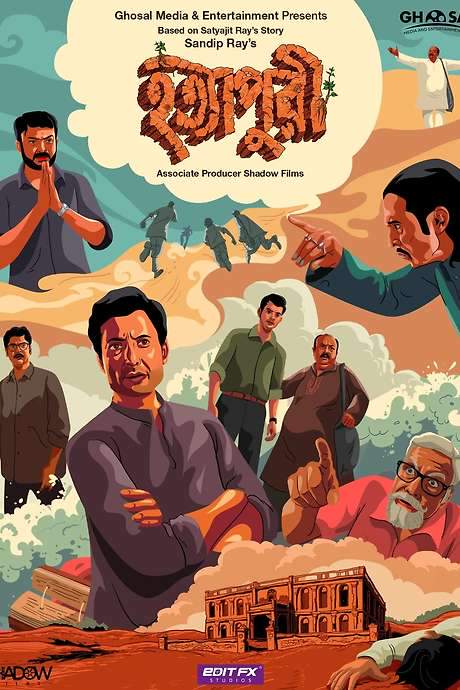
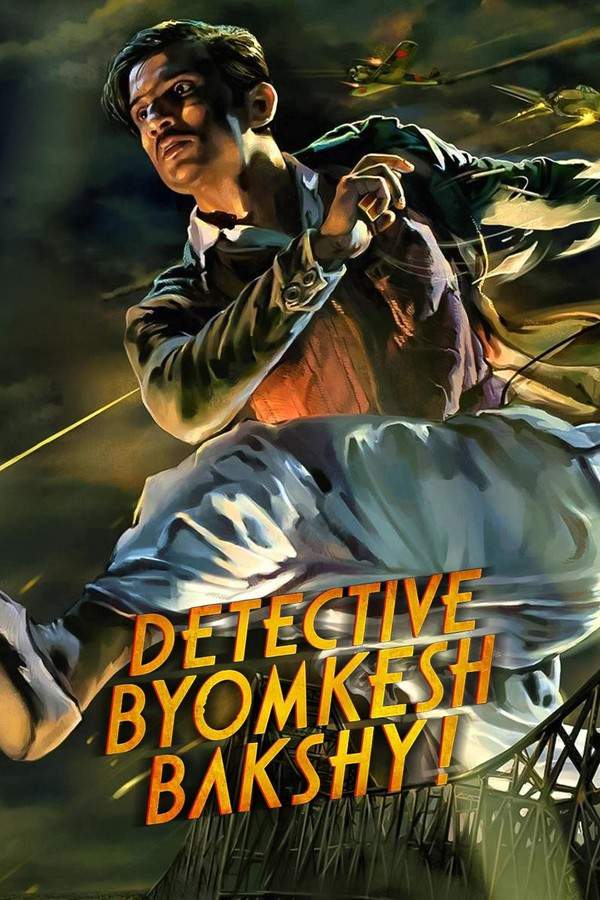
In the sweltering heat and unreliable power of Calcutta during June, the famous trio—the “Three Musketeers”: Feluda, Topshe, and Lalmohan Ganguly (Jatayu)—set off for a much-needed vacation in Puri.
They check into the Neelachal Hotel, a seaside place run by Shyamlal Barik, a classmate of Lalmohan Babu, and soon begin to drift through a shoreline that seems charged with quiet mystery. On the beach that first evening, the trio notices odd footprints in the sand, hinting that this holiday might unfold far more intriguing than sun and surf. The plot thickens when Lalmohan Babu visits an astrologer, Laxman Bhattacharya, who lives in a building called “Sagarika” owned by the enigmatic D. G. Sen, a man known more for his passion for manuscripts than for accessibility. The identity of Sen becomes a thread that ties together the hotel, the beach, and a series of conversations about rare texts.
The calm is shattered the next morning when Topshe and Lalmohan Babu stumble upon a dead man on the beach—the Nepal-born Rupchand Singh. They alert Feluda, who wastes no time in involving the police and arranging a meeting with D. G. Sen. Their path leads them to Nisith Bose, the secretary who works for Sen, and through Nisith they learn about the vast collection of ancient manuscripts, among them the celebrated Ashtadashasahasrika Pragya Paramita and the Kalpasutra. Feluda’s instinct tells him that these documents matter as much as any crime scene, and that Sen’s refusal to part with the manuscripts could hide a deeper motive.
A parallel thread unspools through Bilas Majumdar, a renowned wildlife photographer who introduces himself to the group with a tale that arcs back eight months to Nepal. Bilas describes a forest accident that he cannot fully recall, a memory blocked by trauma, and a suggestion to consult Laxman Bhattacharya about what happened. The narrative expands when Bilas reveals that Sen’s reluctance to part with the manuscripts intersects with Bilas’s own Nepalese past, hinting at a dangerous link between artful theft and deadly secrets. The next day, the team crosses paths with Inspector Mahapatra, a police officer they already know from a prior case, and a tense exchange about the missing manuscript and the possibility that Bilas is somehow involved.
As clues pile up, Feluda, Topshe, and Lalmohan Babu split their attention between the hotel, Sagarika, and nearby Bhujanga Niwas, where Nisith Bose’s body is discovered—beaten with a blunt instrument. Feluda urges vigilance at night in front of Sagarika, convinced that the truth will surface only after darkness yields to inspection. A climactic sequence unfolds when Bilas Majumdar and Laxman Bhattacharya are exposed as the culprits behind the larger plot. Through a sharp unraveling of alibis, Feluda reveals that Bilas Majumdar is actually Mr. A. Sarkar, a smuggler by profession, and that the real Bilas Majumdar had died weeks earlier in Nepal. Sarkar had attempted to murder Mr. Sen in Nepal, and Rupchand Singh’s murder and subsequent blackmail pushed him to target Sen again in Puri. Nisith’s discovery of the theft and his pursuit of Laxman led to Nisith’s death at the hands of the same conspirators, with the blood-soaked manuscript serving as a weapon in the struggle.
The web tightens as Feluda retrieves the Pragya Paramita from the sea, returning it to Mr. Sen, and Inspector Mahapatra orders the arrest of the culprits. The final pieces of the puzzle fall into place, revealing a conspiracy that linked treasure-like manuscripts to a smuggling ring and a calculated attempt to seize priceless texts. In the aftermath, the trio returns to Sagarika, where Mr. Sen finally confesses a hidden truth: the footprints on the beach were not a result of gout or wandering injury but came from Durga Gati Sen himself, who reveals a wooden leg tucked beneath a walking stick. This revelation closes the circle on a case built on illusion, deceit, and the perilous lure of rare manuscripts, leaving the tourists to reflect on how even a seaside holiday can become a dangerous mantle of mystery.