Plot Explained Spoilers guaranteed!
Plot Explained

Browse by genre

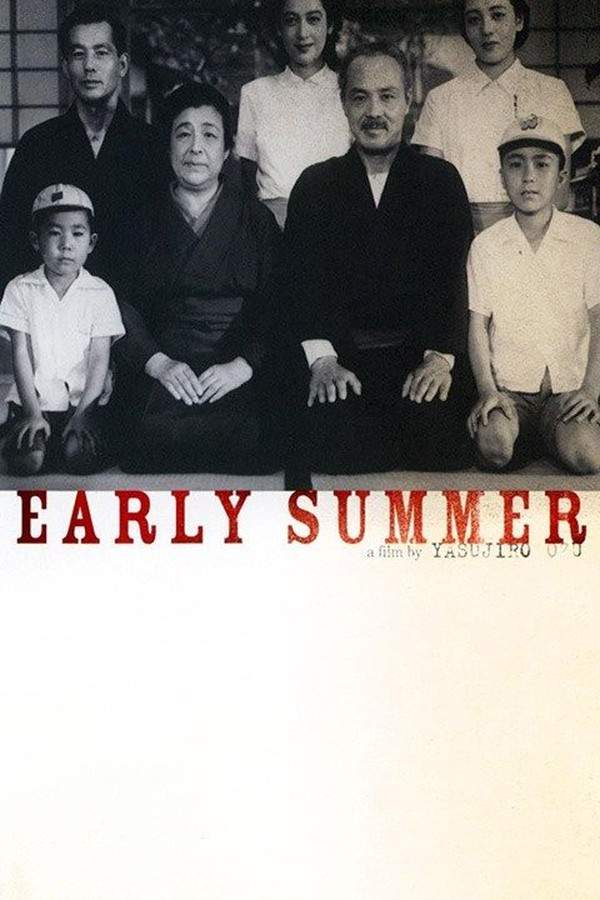
Early Summer (1972) movie poster

Spoiler-Free Summary

Early Summer (1972) Spoiler-Free Summary – What It's About

Release, runtime and language
1972 · 125 min · Japanese
Directed by
Yasujiro Ozu
Starring
Chieko Higashiyama, Chishû Ryû, Haruko Sugimura, Kuniko Miyake, Setsuko Hara, Chikage Awashima

In postwar Tokyo, Noriko, a 28-year-old woman, finds herself at a pivotal moment, balancing her desire for independence with the expectations of her family and society. Faced with pressure to marry, she grapples with two very different possibilities: the stability offered by a match with Takako, and the resurfacing of a childhood connection with Kenkichi, whose return stirs up buried feelings and complicates her choices.

On this page (5)
  1. 1 What it is about
  2. 2 Is it worth watching?
  3. 3 After you watch
  4. 4 Movie threads
  5. 5 Every angle

Spoiler-free summary · safe to read

What Is Early Summer About? (No Spoilers)

The plot of Early Summer (1972) without spoilers: what it is about, who it follows and where it takes place, told without the twists or the ending. Enough to decide whether it is your next watch, not enough to ruin it.

In post‑war Japan, the quiet seaside town of Kamakura serves as a gentle backdrop for a family still stitching its lives together after the turmoil. Noriko, a 28‑year‑old secretary, lives under one roof with her parents, Shūkichi and Shige, her older brother Kōichi, his wife Fumiko, and their two young sons. The arrival of an elderly uncle stirs old routines, reminding everyone that the house, like the nation, is still searching for a new equilibrium. The everyday sounds of traffic, the rustle of newspaper headlines, and the soft hum of a lingering traditional household create a world where modern aspirations quietly clash with lingering customs.

Within this close‑knit household, Noriko feels the weight of expectation pressing against her own yearning for autonomy. She watches the subtle divide form among her friends: some have settled into marriage, while others, like her confidante Aya Tamura, linger in the single‑life, exchanging teasing remarks that mask deeper uncertainties. The tender humor of their conversations and the lingering scent of tea offer a respite from the pressing question of what a woman her age should choose, setting a tone that is both introspective and lightly buoyant.

At work, her superior Satake gently proposes a conventional match with Mr. Manabe, a polished businessman and avid golfer whose stability seems to promise a smooth continuation of societal expectations. Simultaneously, a childhood connection resurfaces when Kenkichi Yabe, a widowed doctor, reappears with a simple, meaningful token—a sheaf of wheat that once belonged to a lost brother—evoking memories of a past that never quite faded. These two divergent possibilities hint at the film’s central tension: the pull between a secure, predictable future and the alluring, if uncertain, path of rekindled affection.

The atmosphere is one of quiet contemplation, rendered in soft, natural lighting that captures the rhythm of everyday life while underscoring the subtle currents of change. Through measured pacing and nuanced performances, the story invites viewers to linger on the delicate balance between duty and desire, tradition and personal growth, leaving the outcome of Noriko's choices tantalizingly open as the narrative gently unfolds.

Last updated: August 10, 2025 at 14:17

Was this helpful?

What to expect

Is Early Summer Worth Watching? What It Feels Like

Is it dark, sad, slow, intense or confusing? The mood of Early Summer (1972) in a few tags, without a word about how it ends. Each tag opens a list of movies that feel the same.

After you watch

Seen Early Summer? Now Read the Spoilers

Once you have watched Early Summer (1972), come back for the full story: the plot summary with spoilers, the timeline in chronological order, the characters and meaning.

Movie threads

More Movies Like Early Summer, by Mood & Story

Curated lists built around what makes Early Summer tick: the same mood, the same kind of story or the same emotional payoff. Each list explains why these movies belong together.

Movies about societal pressure like Early Summer

Stories where personal desires clash with the weight of family and tradition. If you liked the gentle conflict between personal freedom and family duty in Early Summer, you'll find similar themes here. This collection features movies about characters navigating societal expectations, marriage pressure, and generational differences, often with a reflective and melancholic tone.

  • reflective
  • melancholic
  • subtle
  • family drama
  • quiet
  • thoughtful
  • Tone: melancholic, reflective
  • Pacing: slow, deliberate
Why these movies?

The story pattern: The narrative typically follows a protagonist, often a woman, at a crossroads. They are presented with a choice that represents the 'correct' path according to tradition versus a riskier path of personal fulfillment. The story focuses on their introspection, the subtle pressures from those around them, and the eventual, often bittersweet, resolution of their dilemma.

Why they belong together: Movies are grouped here because they share a central theme of societal constraint and a quiet, character-driven approach to drama. They prioritize emotional authenticity and subtlety over melodrama, creating a deeply reflective and often poignant viewing experience.

Movies with bittersweet endings like Early Summer

Endings that are both a fulfillment and a loss, capturing the complexity of growing up. Fans of the poignant, realistic ending of Early Summer will appreciate this selection. These are movies that conclude on a bittersweet note, where a character's decisive choice leads to personal growth but also entails a sense of loss or separation, much like Noriko's journey.

  • bittersweet
  • poignant
  • nostalgic
  • melancholic
  • life transition
  • emotional
  • Tone: bittersweet, poignant
  • Pacing: slow to steady, character-focused
Why these movies?

The story pattern: The narrative arc leads to a climax that is a decision rather than an event. The protagonist chooses a path that secures their future or identity, but it inexorably severs a past connection—be it with family, a loved one, or a former way of life. The focus is on the emotional weight and acceptance of this necessary change.

Why they belong together: These movies are united by their emotional conclusion, which perfectly balances hope and regret. They offer a mature, nuanced perspective on life transitions, making them deeply moving and memorable without resorting to tragedy or unadulterated joy.

Every angle

Early Summer (1972) Explained: Plot, Timeline & Characters

Everything about Early Summer in one place: what happens in the plot summary, the timeline in chronological order, the characters and meaning and a spoiler-free summary. What's After the Movie adds the cast, box office and post-credit scenes.

Coming soon on iOS and Android

The Plot Explained Movie Summary App

Plot summaries, endings explained and timelines on your phone. Catch up on any movie in minutes, save your favorites and never miss a twist again.

Be the first to know when we launch. Your email stays private, always.

Learn more about the app