In 1928 in New York State, aspiring author Marjorie Kinnan Rawlings Mary Steenburgen tells her husband that her latest manuscript was rejected and that she has bought an orange grove in Florida, planning to move there alone. She drives to the nearest town, but her car dies just as she arrives. Local resident Norton Baskin Norton Baskin drives her the rest of the way to a dilapidated, overgrown cabin attached to an even more tangled grove, and against their doubts, she decides to stay and begin fixing the place up.
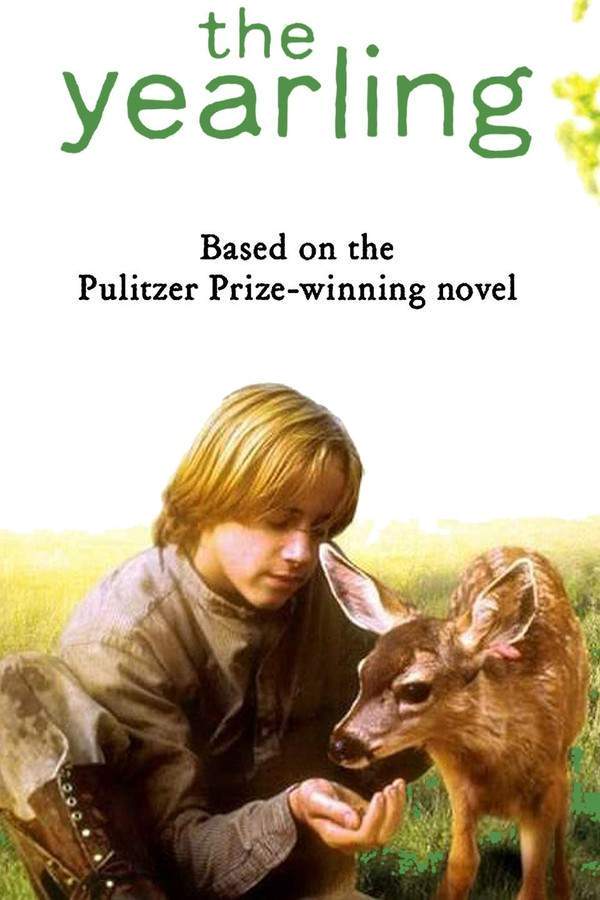
As she settles into Cross Creek, the community begins to circle around her. Marsh Turner Rip Torn comes by with his daughter Ellie Dana Hill, a teenage girl who keeps a pet deer named Flag. A black woman named Geechee Alfre Woodard arrives and offers to work for her, even though Rawlings can’t pay much. The grove lags behind her ambitions, so she writes another novel, hoping for a breakthrough. Max Perkins Malcolm McDowell, her editor, rejects it again but encourages her to write about the real people she describes in her letters instead of the English governess tales she’s been drafting. Inspired, she begins with the tale of the young married couple, which would eventually become Jacob's Ladder, published in Scribner's Magazine in 1931.
A visit to the Turners’ home on Ellie's 14th birthday brings more upheaval. Flag escapes his pen again, and Marsh is forced to shoot him after he eats the Turners’ vegetables. Ellie’s fury pours out, Marsh drinks to forget, and a town sheriff C.T. Wakefield confronts him when he appears with a shotgun across his lap. Marsh hands the gun to the sheriff, who shoots him on the street, and the event echoes as the basis for The Yearling.
At Marsh’s funeral, Ellie blames Rawlings for the deaths of both Marsh and Flag and tells her to leave. Rawlings soon departs by motorboat, drifting for more than a day in isolation, before returning to a partial victory: she is reunited with Geechee, who has stood by her. A late frost threatens the orange grove, and Rawlings and Geechee rally the neighbors to defend the land; Ellie and her younger siblings join in, and Ellie apologizes for her blowup at the funeral, saying that “good friends shouldn’t keep apart.”
Perkins finally comes to see the value in Rawlings’s stories, accepting Jacob’s Ladder after reading it. Baskin, too, surfaces with a proposal—he asks Rawlings to marry him, and after some hesitation about losing her independence, she accepts. In the end, Rawlings realizes a deep, enduring bond with the land at Cross Creek, where her life as a writer and her identity as a neighbor and friend become inseparable.
Throughout, the community dynamics—Rawlings’s stubborn care for the grove, Baskin’s steady support, Geechee’s steadfast loyalty, and Ellie’s evolving understanding—paint a portrait of a woman who finds purpose not only in publishing success but in tending to a place and the people who inhabit it. This is a story of resilience, connection, and the life that grows when art and land intertwine.