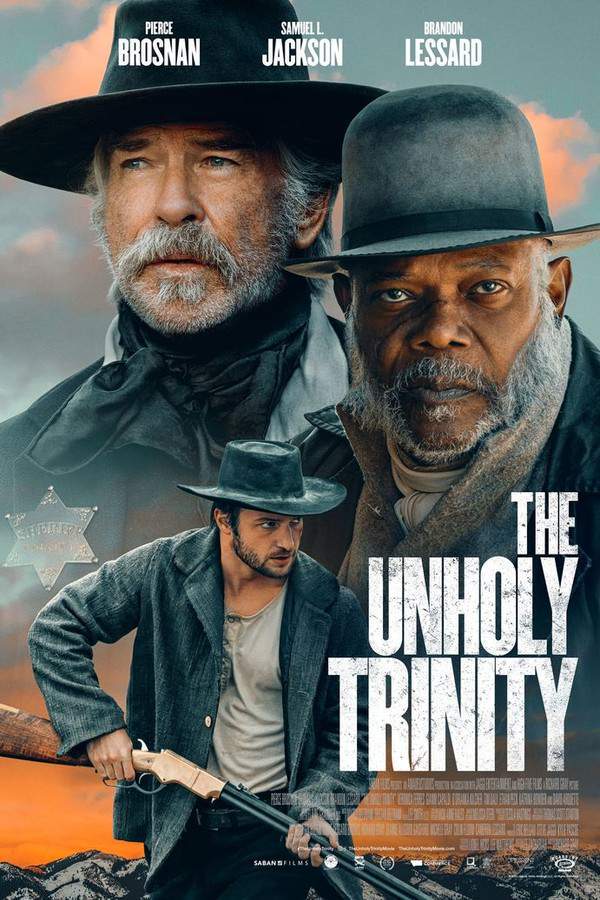
Former brawler and womanizer Luke Fargo returns from the American Civil War to his Southern hometown, a greatly changed man. Haunted by the carnage of the Battle of Vicksburg, he has become a minister, devoting himself to rebuilding the town’s burned church and restoring a sense of community. His transformation is met with mixed reactions: some friends, like Matty Miller, greet him with cautious hope, while many townspeople resist what they see as a betrayal of the old order that once kept them under a harsh, iron-fisted rule. The town’s grip on power remains tight under Yancey Huggins, a man who views Fargo as a threat to his control, and the tension escalates as Huggins schemes to provoke Fargo into a confrontation with his followers.
As Fargo works to lay a new foundation for the church, he encounters two figures from his past who illuminate the town’s divided loyalties. Georgina Descrais, a Southern belle scarred by hardship, attempts to rekindle a romance with him, yet Fargo remains outwardly uninterested, choosing his path of service over personal entanglements. In contrast, the local madam Selma, brought back into his orbit, greets his return with a pragmatic warmth and makes it clear she will engage with him on her own terms. Meanwhile, a teenage orphan girl named Lissy, who has been living in the parsonage, starts with a wary attitude toward him, but her feelings gradually soften as she observes the good he has begun to do in the community. This evolving dynamic at the parsonage becomes a quiet source of trouble for Fargo, drawing the attention and suspicion of townspeople stirred by Huggins into doubting whether the minister’s demonstrations of faith are genuine or merely a revival of his old life.
The conflict deepens when Fargo, at least in part to secure lumber for the church, reluctantly participates in a Sunday horse race with the prosperous businessman Albert Loomis. The wager and the ensuing aftermath push Fargo toward a public clash with Huggins’s faction, a moment that tests his resolve and his new vocation. The bishop is eventually called in to help deescalate the situation. He discovers that Fargo, though new to the sacred duties, has been quietly serving the town with a steadiness that warrants a formal ordination. After hearing how much good Fargo has already accomplished, the bishop confirms him as a real minister. The next step—marriage to Lissy—sparks its own hesitations, and in a decisive, symbolic moment, the exasperated Lissy hands the bishop her rifle to prod the hesitant (though not unwilling) groom toward the altar, signaling a trust in change and a faith in a future shaped by careful, communal choice.