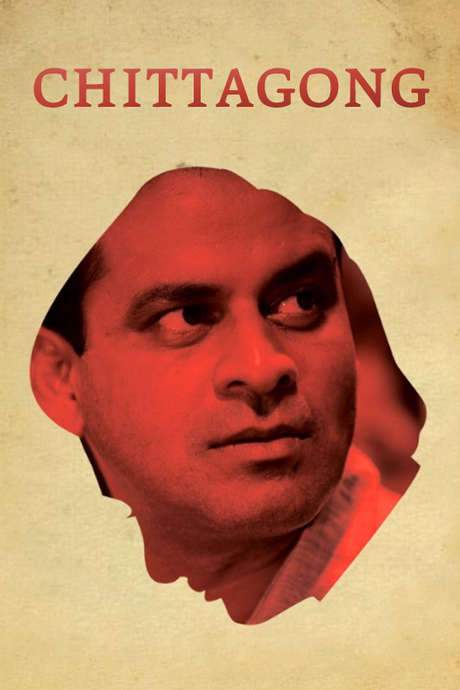
Set against the 1930s British colonial rule in East Bengal (now Bangladesh), the film Chittagong recounts a largely overlooked chapter of India's freedom struggle. At its heart is a coming-of-age tale braided with political courage, told through the eyes of a young boy who grows into a reluctant revolutionary.
Centered on a diffident 14-year-old boy, Delzad Hiwale as Jhunku, the story follows his initial brush with a daring plan that would test his loyalties and reshape his view of justice, duty, and fate. Years later, Jhunku, now a 23-year-old, Vijay Varma as Older Jhunku Roy, finds himself on the run from the Bengal police. He hides in a bunker with his childhood friend Aparna, Sauraseni Maitra portraying her, as a whirlwind of memories and choices swirls around him.
The narrative then flashes back to 1930, tracing the spark that set the rebellion in motion. Surya Sen, known to his followers as Masterda, is seen leading protests in response to the death of the revolutionary Jatin Das. Jhunku, torn between his father’s wish for him to study in England and his own dawning admiration for the charismatic Masterda, finds himself pulled toward a cause that promises more than personal advancement. His faith in the British system is further complicated by Wilkinson, a tutor who believes in a more measured form of justice; Wilkinson is portrayed by [Barry John], and his stance contrasts with the hardline approach of the police. The tension between Wilkinson’s humane impulses and the authorities’ brutal methods becomes a personal crucible for Jhunku, who hopes that education and patience might free his country.
As the movement grows, Masterda and his circle—Nirmal Sen, Lokenath Bal, Ambika Chakraborty, and Ananta Singh—train a core group of students and teachers, aiming to cripple British control by striking at the city of Chittagong on April 18, 1930. The plan involves seizing the armouries of the police and disrupting communications, a daring attempt that showcases both ingenuity and risk. The revolutionaries’ work is coordinated and bold: Ganesh Ghosh leads the raid on the police armoury, while Lokenath Bal’s faction takes over the Auxiliary Force armoury. In the aftermath of these actions, the town is briefly seized under a provisional revolutionary government, and the crowd rejoices as Surya Sen salutes the effort with a military bearing that signals a new chapter in the struggle for independence.
However, British reinforcements soon arrive, and the landscape shifts from triumph to attrition. The revolutionaries scatter into smaller groups and move toward the Jalalabad hill ranges, where battles erupt anew. Harish, also known as Tegra, the younger brother of Lokenath and a friend of Jhunku, falls in the ensuing confrontations. The chase tightens as CID officers like Anurag Arora’s character, Ahsanullah Khan, descend on the movement, leading to brutal interrogations and a narrowing of the circle around Masterda and his accomplices. Jhunku is captured and subjected to harsh beatings during interrogation; he refuses to betray his comrades and is sentenced to life in Kaala-Paani.
The crackdown is costly for both sides: Nirmal Sen dies in the struggle, and Pritilata Waddedar—an ardent admirer of Masterda—radically escalates the fight by attacking the Pahartali European Club, killing DIG Johnson in a bold strike before dying of injuries sustained in the act. Pritilata’s courage marks one of the most vivid chapters of the rebellion, and Vega Tamotia’s portrayal anchors this crucial moment in the film’s emotional core.
In time, Masterda Surya Sen is captured and hanged, signaling a brutal end to a key phase of the Chittagong uprising. Jhunku, however, does not fade from the frame; he is released in 1939 and returns to the struggle, this time alongside Aparna as an active participant in further uprisings. A pivotal moment unfolds when a plan to attack granaries—where taxes and grain are controlled by colonial authorities and landlords—pushes Jhunku to devise a long-term, underground network that would empower peasants across twenty villages. Roads to the granaries are blocked, but the underground movement forges ahead, culminating in a broader social transformation known as the Tebhaga movement of 1945, a moment many interpret as signaling the end of the British Raj in India.
Throughout this sweeping arc, the film carefully threads personal doubt, steadfast loyalty, and collective resolve. Jhunku’s journey from a hesitant teenager to a hardened participant in a broad-based uprising is framed by intimate moments—his relationship with Aparna, his faith in figures like Wilkinson, and his evolving sense of justice. The story honors the courage and sacrifice of those who risked everything in pursuit of freedom, while also showing how the struggle for independence was as much a fight over ideas and futures as it was over national borders.
The last scenes pull back to the larger picture: the Tebhaga movement’s momentum and its emblematic power as a turning point in rural resistance, with a crowd awakening and pressing toward a future that British rule could not contain. The film closes with a resonant sense of continuity—difficult choices, enduring hope, and the memory of a generation that dared to challenge a vast empire, leaving viewers with a quietly defiant note about what it means to fight for a country’s dignity.