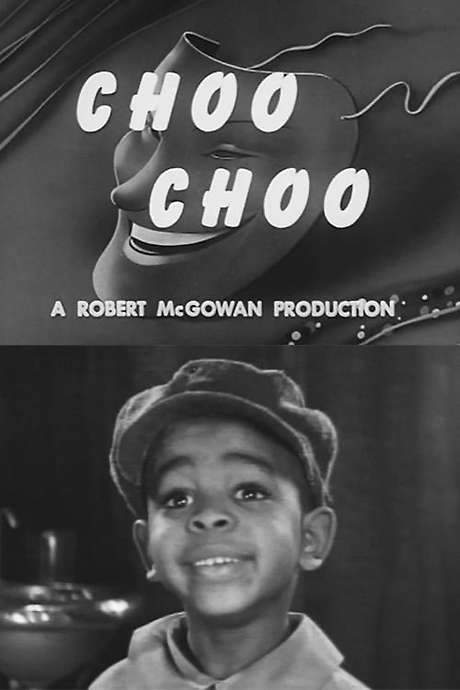
The Chattanooga Choo Choo Railroad has long been the lifeblood of its owner, Alonzo Dillard [Parley Baer], who is marking his 75th birthday in the company of his devoted family and staff. The celebration brings together his daughter Estelle [Bridget Hanley], his granddaughter Jennie Waters [Melissa Sue Anderson], Jennie’s fiancé Paul Cartwright [Christopher McDonald], and a lively crowd of railroad personnel led by chief porter Woodrow [Davis Roberts], who keeps the day running with practiced precision. The mood is festive, but it’s clear that family loyalties, business ambitions, and old romances are all tangled in the background as Alonzo rules with a brisk sternness that masks a softer affection for the relic of a golden era.
Into this world steps Bert Waters [George Kennedy], Estelle’s husband and Jennie’s father. Bert arrives late, a personal lapse that irks Alonzo and stirs a strain of amusement in the group. Bert is not merely late—he’s juggling a complicated personal life, including his ongoing romance with Maggie Jones [Barbara Eden], a woman he intends to marry once he dissolves his current marriage. Maggie’s arrival adds a spark of unpredictability to the proceedings, and her presence will soon test loyalties, plans, and the boundaries of timing that Alonzo prizes so highly.
When the will is read after Alonzo’s death, the reading lays out a stark set of incentives and penalties: a modest pension and cash for Woodrow, a staggering $5,000,000 for Jennie, and ownership of the property and company to Estelle. But the centerpiece is a challenge for Bert—he must prove he can be on time by restoring and operating the historic Chattanooga Choo Choo locomotive and its full train consist from Pennsylvania Station to Chattanooga Station, arriving precisely on schedule within 24 hours to secure the $1,000,000 Alonzo has left him. The test is a high-stakes race against the clock that blends personal resolve with public spectacle.
The plan soon spirals into a boisterous, public enterprise. Bert converts the journey into a publicity stunt for a football team he’s helped finance, with Newt Newton [Joe Namath] as coach, and a goal of winning the bid for a new city stadium against Paul Cartwright’s father, Sam Cartwright [Clu Gulager]. The spectacle includes a grand wedding ceremony for Jennie and the Duke of Chalfont—a bewitching prospect given the social ambitions at stake. But this train of events isn’t limited to the rails; it spills into every car and corridor, from the luggage mishaps to the dramatic confrontations that unfold as the locomotive leaps toward its timetable.
On board, the crew grapples with their own peculiar challenges. Norman Steadman [John Steadman], the fireman, and Pee Wee [Paul Brinegar], the engineer, discover that they’re a touch rusty since last driving the train—Norman’s partial hearing and Pee Wee’s sight issues slow their response and threaten to derail the schedule by fifteen minutes. The miscommunications ripple through the train, forcing Bert to improvise in real time. He orders a bold modification: skip the Philadelphia stop, an adjustment designed to claw back precious minutes. This decision upends expectations for Estelle, who hoped to board at Philadelphia, and for Sam, who hoped to board to bid with a counter-strategy of his own.
Meanwhile, romantic entanglements complicate matters further. Paul Cartwright has a moment alone with Jennie and sees the troubling possibility that the pictures of Paul sleeping beside two Twins from the team might be a fabrication crafted for wedding-day drama. The Twins themselves appear on the train as part of the cheer squad, confirming Jennie’s suspicions while simultaneously fueling the tension surrounding her engagement. A prank by Jim-Bob, a football player (uncredited in the cast), introduces a physical comedy beat when he agitates Bert with laxatives, forcing him to improvise a public appearance in Washington, D.C. station—wearing a skirt after losing his luggage in the scramble. The prank threads through the day, complicating Bert’s at-once calculated and desperate attempts to stay on schedule.
Maggie’s mischief becomes a central engine of the plot. She discovers Jim-Bob’s peephole into the cheerleaders’ compartment and engineers a clever ruse: using her mascara to apply super glue to the peephole and fanning the crowd’s attention with a staged reveal. The ensuing distraction aligns with an audacious plan to get Sam off the train and onto a waiting ultralight plane that can land on the moving locomotive and secure Bert’s bid by delivering it in time. In concert with this, Hashimoto [Professor Toru Tanaka], Bert’s loyal bodyguard, is drawn into the plan, only to find himself forced to navigate a moral and strategic tug-of-war when Newt Newton steps in to take Sam’s place.
As the day unfolds, relationships strain and then pivot. Estelle’s arrival on the scene inflames old loyalties, and even Bert’s confidants recognize that Maggie’s arrival complicates the dynamics at play. Hashimoto confronts a moment of pressure and the uncertain outcome of a plan that hinges on a split-second decision under intense scrutiny. The plot thickens as Sam, held by a few inside connections, sees his bid compromised and then reignited by the surprise leverage offered by the ultralight plane and Bert’s renewed confidence in a last-minute push.
The tension reaches a boiling point when Maggie reveals that the Duke is, in fact, a con artist from Memphis named Bob Shoemaker. The revelation catalyzes a confession in front of Jennie and the Trainspotters, clearing the air and forcing Jennie and Paul to reaffirm their commitment to one another. The mood shifts again as the train careens toward Chattanooga, arriving two minutes late after a sequence of daring stunts, misdirections, and street-level blockades by a biker gang seeking a replacement Harley. Bert’s attempt to clock back his watch proves futile against the executor’s iron will, and the wedding plans collapse into a different kind of arrangement when the wedding of Jennie to Paul is arranged, while Maggie reluctantly accepts a future with Newt.
In the denouement, Hashimoto’s loyalty is tested and the racial slur he endures is a rash blow that pushes him toward an exit from the tumult. Bert—after a long, chaotic, and hopeful ride—returns to retrieve his car from the roadblock, a task that tests his resolve and his willingness to push through the fallout of a plan that didn’t go as intended. The train arrives late, the wedding arrangements shift, and Sam’s bid has been lost to the clock. The ending implies a radical reordering of relationships: Jennie’s marriage to Paul proceeds in the wake of the misadventure, while Maggie’s future with Newt hints at a new chapter for both, and Bert—bereft of the grand prize—faces a world where he might chase money and romance anew, even as a cheerful, moneyed possibility appears to drift into his life via a new admirer of the car he loves.
Throughout this caper-laced journey, the film threads together themes of loyalty, pride, and the ever-present tug between duty and desire. It presents a portrait of a family and a city at a crossroads, where a historic railroad becomes both backdrop and battleground for ambition, romance, and the relentless march of time. The cast delivers a blend of humor, heart, and suspense, with each character contributing a piece of the larger puzzle as the scoreboard ticks away and the whistle of the Choo Choo echoes the unyielding pace of a town obsessed with progress, legacy, and the next big opportunity.