Plot Explained Spoilers guaranteed!
Plot Explained

Browse by genre

Champagne for Caesar (1950) movie poster

Timeline

Champagne for Caesar (1950) Timeline Explained – Every Event in Order

Release, runtime and language
1950 · 99 mins · English
Loading streaming availability…
Directed by
Richard Whorf
Starring
Vincent Price, Mel Blanc, Barbara Britton, Peter Brocco, Celeste Holm, George Meader

A comedy follows genius Beauregard Bottomley, snubbed by soap mogul Burnbridge Waters in a job interview. Seeking revenge, Bottomley joins a TV quiz show sponsored by Waters, determined to win until the businessman goes broke. As Bottomley dominates the competition and becomes a star, Waters hires Flame O’Neal to find a weakness and stop his streak.

On this page (6)
  1. 1 Where to watch
  2. 2 Events in order (11)
  3. 3 Timeline questions answered
  4. 4 Movie threads
  5. 5 Movies like Champagne for Caesar
  6. 6 Every angle
Loading streaming availability…

11 events in order · contains spoilers

Champagne for Caesar Timeline: Events in Chronological Order

Every key event of Champagne for Caesar (1950) in order, scene by scene, with when and where it takes place. Use it to untangle flashbacks, time jumps and parallel storylines, to refresh your memory before the sequel or to find the exact scene you are thinking of.

  1. Beauregard and Gwenn discover Masquerade for Money

    Beauregard and his sister Gwenn switch on a television quiz show, Masquerade for Money, and are drawn into the spectacle: contestants dress in costumes, the questions depend on the outfit, and the prize money doubles with each correct answer. Beauregard, though a polymath, is openly contemptuous of the gimmick and mocks the format. The show is hosted by Happy Hogan and sponsored by Milady soap, setting the stage for the rivalry to come.

    Where
    Hollywood, California
  2. Beauregard meets Burnbridge Waters and is rejected

    An employment bureau representative nudges Beauregard to interview with Milady. He meets Burnbridge Waters, the eccentric owner who disapproves of his humor and intellect. Waters rejects him, planting the seed for Beauregard's cunning revenge.

    Where
    Milady company offices
  3. Beauregard enters Masquerade as an encyclopedia

    To exact revenge, Beauregard returns as a contestant on Masquerade for Money, disguising himself as an encyclopedia so the host can ask him about any subject. He answers the questions with ease, earning $320 in that appearance. He declines the prize, signaling his plan to return next week.

    Where
    Masquerade for Money studio
  4. Waters launches a six-week publicity stunt

    Waters invites Beauregard back for a six-week run with one question per show as a publicity stunt. The format drives ratings for Masquerade and boosts Milady soap sales, making Beauregard the show's centerpiece. He agrees, knowing the questions will test his breadth of knowledge.

    Where
    Masquerade for Money studio
  5. End of six weeks: impossible question; Waters cancels

    At the end of the six weeks, Waters proposes an impossibly hard question. Beauregard answers it correctly, and Happy begins probing for a weakness. Gwenn hints that Beauregard intends to win a fortune, but Waters cancels the show and sends a $40,000 check that Beauregard refuses to accept.

    Where
    Masquerade for Money studio
  6. Milady sales plummet; Flame introduced to distract

    With Milady soap sales plummeting, Waters reinstitutes the show. As Beauregard nears the $10 million mark, Waters recruits Flame O'Neill to distract him. The added distraction shifts the show's dynamics and intensifies the performers' tension.

    Where
    Masquerade for Money studio
  7. Flame's nurse ruse; Beauregard falls for her

    Flame pretends to be a nurse sent to care for Beauregard after a cold, and he quickly falls for her. She uses manipulation to keep him off balance and hints at infidelity to test his resolve. The romance deepens as he ignores warning signs.

    Where
    Masquerade for Money studio
  8. Einstein spacetime twist; Flame's betrayal revealed

    On the night of the next big question about Einstein's spacetime theory, Beauregard admits he never mastered it. Flame betrays him by offering an answer she thinks is wrong, but Einstein phones the studio to confirm the answer is correct. Beauregard confronts Flame, and both realize their feelings have grown despite the deception.

    Where
    Masquerade for Money studio
  9. Hollywood Bowl final show planned; marriages suspected

    Waters books the Hollywood Bowl for the final show. Happy and Gwenn plan to marry, as do Beauregard and Flame, but both couples worry that their partners could be chasing money. They each phone their fiancés, only to be given vague excuses that fuel mutual suspicion.

    Where
    Hollywood Bowl, Los Angeles
  10. Final question and Waters' visit; Caesar the parrot

    For the final question, Happy asks Beauregard to name his Social Security number. He answers incorrectly, but Flame and Happy still want to marry the Bottomley siblings. Waters visits Beauregard's home bearing gifts, and is recognized by Beauregard and Gwenn's dipsomaniac parrot Caesar, whom he had lost in college.

    Where
    Beauregard's home
  11. Vegas wedding plan and Waters deal revealed

    As Beauregard and Flame drive toward Las Vegas to get married, he reveals that he and Waters made a deal: Beauregard would lose in exchange for his own radio show and stock. His main reason to accept the arrangement was to test Flame's feelings, and he admits that he really did not know his Social Security number.

    Where
    Las Vegas, Nevada

Last updated: October 05, 2025 at 12:34

Was this helpful?

Timeline questions answered

Champagne for Caesar Timeline Explained: Your Questions Answered

When does it happen, and why in that order? The questions people ask about the chronology of Champagne for Caesar (1950): time jumps, flashbacks, cause and effect between scenes and the correct order of events, each answered with spoilers.

Q1

Why did Beauregard decide to appear on Masquerade for Money after Waters rejected him?

Beauregard joined the quiz show specifically to get revenge against Burnbridge Waters. After Waters rejected him for a job at Milady Soap due to his humor and intellect, Beauregard returned to the show disguised as an encyclopedia and dominated the competition. His goal was to use his knowledge to drain Waters of money through the prize payouts while embarrassing him publicly.

  • revenge
  • burnbridge waters
  • job rejection
  • masquerade for money
  • quiz show
Q2

Why did Waters keep bringing Beauregard back to the show despite losing money?

Waters realized that Beauregard's appearances were excellent publicity. The ratings soared whenever Beauregard competed, driving Milady soap sales and boosting Waters' personal profile. He initially invited Beauregard back as a six-week publicity stunt, but when Beauregard kept winning, Waters kept the show running because the marketing value outweighed the mounting prize money.

Foreshadowing: Early scenes establish Waters as a businessman who values publicity over logic.

  • ratings
  • publicity
  • milady soap
  • burnbridge waters
  • advertising
Q3

Why did Waters hire Flame O'Neill to distract Beauregard?

When Beauregard approached the $10 million mark and Milady sales began to plummet, Waters recruited Flame O'Neill specifically to derail his concentration. Flame was tasked with using her charm and manipulation to break Beauregard's focus, potentially causing him to answer incorrectly and lose everything.

  • flame o'neill
  • distraction
  • seduction
  • waters plot
  • quiz show strategy
Q4

Why did Beauregard admit he didn't understand Einstein's spacetime theory before the big question?

Beauregard openly admitted he never mastered Einstein's spacetime theory, even though answering correctly would earn him millions. He did this because he had already fallen for Flame and wanted to test whether she would betray him by feeding him incorrect information. The moment was a test of their relationship trust.

Foreshadowing: The narrative sets up Beauregard's suspicion of Flame's motives early on.

  • einstein
  • spacetime theory
  • admission
  • flame betrayal
  • trust test
Q5

Why did Einstein call the studio to confirm Beauregard's answer?

Albert Einstein himself phoned the studio during the broadcast to confirm that Beauregard's answer to the spacetime question was correct. This dramatic twist validated Beauregard's honesty about his limitations while also saving him from losing the prize money. It was an extraordinary coincidence that became the climax of the show's dramatic tension.

  • albert einstein
  • phone call
  • correct answer
  • spacetime question
  • verification
Q6

What deal did Beauregard make with Waters before the final question?

Waters offered Beauregard a secret deal: Beauregard would intentionally lose the final question in exchange for his own radio show, stock in a company, and other incentives. This was Waters' attempt to finally end Beauregard's winning streak without paying out the massive prize money.

Foreshadowing: The buildup to the final Hollywood Bowl show hints at Waters' desperation.

  • deal
  • radio show
  • stock
  • bribury
  • final question
  • waters bargain
Q7

Why did Beauregard tell Flame about the Waters deal?

Beauregard revealed the deal he made with Waters specifically to test Flame's true feelings. By telling her he would intentionally lose in exchange for financial incentives, he wanted to see if she would still marry him for genuine love or if she was only interested in his potential wealth. The revelation was his ultimate test of romantic sincerity.

Foreshadowing: Throughout the film, Beauregard suspects Flame's affection may be tied to money.

  • confession
  • test love
  • flame feelings
  • marriage
  • sincerity
Q8

Why didn't Beauregard know his own Social Security number?

When asked to name his Social Security number for the final $50,000 question, Beauregard intentionally gave the wrong answer. The reveal that he didn't even know this basic piece of personal information reframed his entire run on the show, not as a money-making scheme but as a test of character and authenticity for both himself and those around him.

  • social security number
  • final question
  • mistake
  • character test
  • identity
Q9

Did Flame really love Beauregard or was she just working for Waters?

Flame's feelings for Beauregard were genuine despite her initial mission to distract him. She fell in love with him during their interactions, which is why she felt conflicted about betraying him. Even after learning about the deal with Waters, she and Happy still wanted to marry the Bottomley siblings, indicating her affection was real rather than an act.

Foreshadowing: The Einstein scene shows Flame's loyalty shifting despite her assignment.

  • flame love
  • genuine affection
  • motivation
  • relationship outcome
  • money vs love
Q10

What happens at the end of Champagne for Caesar?

The film ends with Beauregard and Flame driving to Las Vegas to get married. During the drive, Beauregard reveals the Waters deal and his Social Security number ignorance as tests of her sincerity. Despite these revelations, they proceed with wedding plans, and Beauregard reflects that understanding people matters more than numbers, suggesting a hopeful future together.

  • las vegas
  • wedding
  • ending
  • marriage
  • resolution
  • future

Movie threads

More Movies Like Champagne for Caesar, by Mood & Story

Curated lists built around what makes Champagne for Caesar tick: the same mood, the same kind of story or the same emotional payoff. Each list explains why these movies belong together.

Movies about witty intellectual revenge like Champagne for Caesar

Brilliant minds use their wits, not their fists, to settle a score. If you enjoyed the clever revenge plot in Champagne for Caesar, you'll love these movies where brilliant protagonists use their intellect to settle a score. Discover similar comedies and satires featuring smart characters who triumph through wit and strategy, perfect for fans of cerebral humor and satisfying comeuppance.

  • witty
  • clever
  • satirical
  • playful
  • satisfying
  • cerebral
  • Tone: witty, playful, satirical
  • Pacing: steady, building towards a climax
Why these movies?

The story pattern: The narrative typically follows a highly intelligent but initially underappreciated character who is provoked by an arrogant adversary. Instead of physical confrontation, they embark on a calculated campaign of intellectual one-upmanship, often using a public forum or game to systematically dismantle their opponent's pride and power, leading to a humiliating and humorous defeat.

Why they belong together: These films are grouped together by their shared focus on intellectual victory, a light and witty tone, and the thematic satisfaction of seeing brains triumph over brawn or wealth. They appeal to viewers who enjoy clever dialogue, strategic plotting, and the comedic downfall of pompous characters.
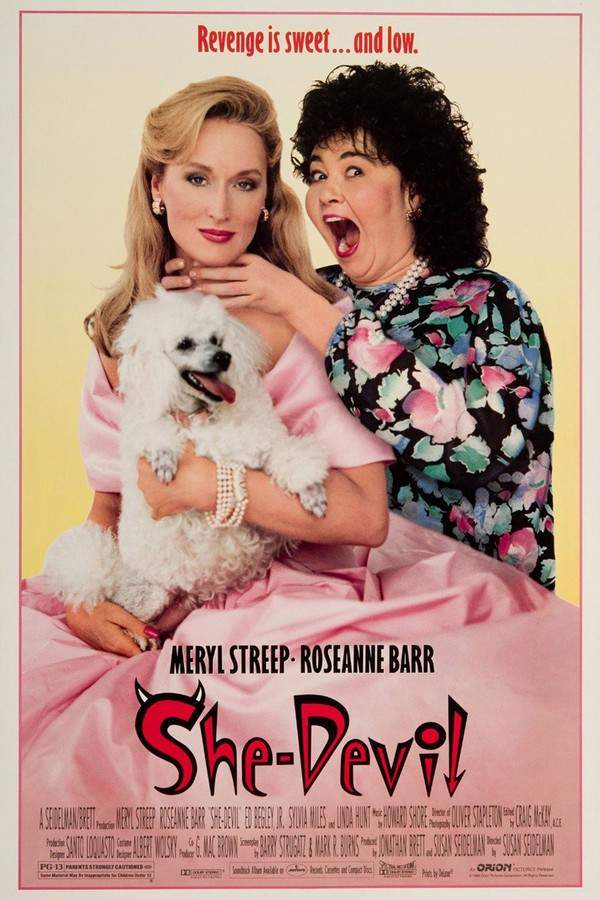
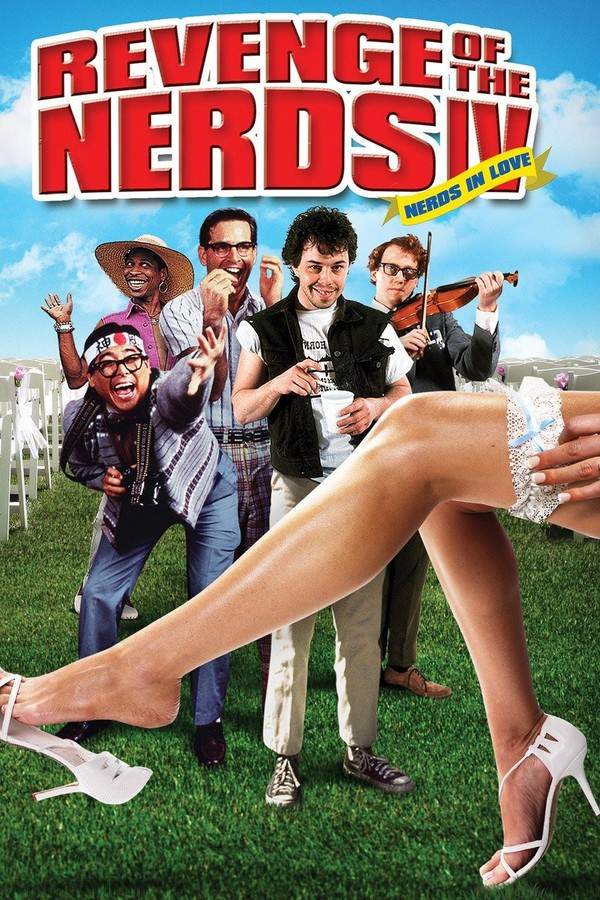
Golden age satirical comedies with a vibe like Champagne for Caesar

Charming mid-century comedies that gently poke fun at society's follies. Fans of the sophisticated, playful satire in Champagne for Caesar will enjoy this collection of similar golden age comedies. Explore movies from the 1940s-1960s that blend wit, romance, and clever social commentary, perfect for those who love vintage humor with a sharp, yet lighthearted, edge.

  • satirical
  • sophisticated
  • breezy
  • witty
  • playful
  • vintage
  • Tone: light, sophisticated, whimsical
  • Pacing: steady, conversational
Why these movies?

The story pattern: Stories in this thread often revolve around a charming, eccentric, or highly intelligent protagonist who challenges a powerful social institution—be it big business, the media, or high society. The plot unfolds through a series of witty encounters and romantic subplots, using humor to expose hypocrisy and pretension while maintaining an overall feel-good atmosphere.

Why they belong together: These films share a distinct period feel, a light and sophisticated tone, and a focus on satirizing the social mores of their time without being cynical. They are united by their witty dialogue, playful romantic plots, and a breezy pacing that makes the social commentary accessible and entertaining.

If you liked this

Movies Like Champagne for Caesar

Similar movies to Champagne for Caesar: the same genre, themes or kind of story. Each one comes with its own plot summary, timeline and ending explained.

Browse all movie summaries

Every angle

Champagne for Caesar (1950) Explained: Plot, Timeline & Characters

Everything about Champagne for Caesar in one place: what happens in the plot summary, the timeline in chronological order, the characters and meaning and a spoiler-free summary. What's After the Movie adds the cast, box office and post-credit scenes.

Coming soon on iOS and Android

The Plot Explained Movie Summary App

Plot summaries, endings explained and timelines on your phone. Catch up on any movie in minutes, save your favorites and never miss a twist again.

Be the first to know when we launch. Your email stays private, always.

Learn more about the app