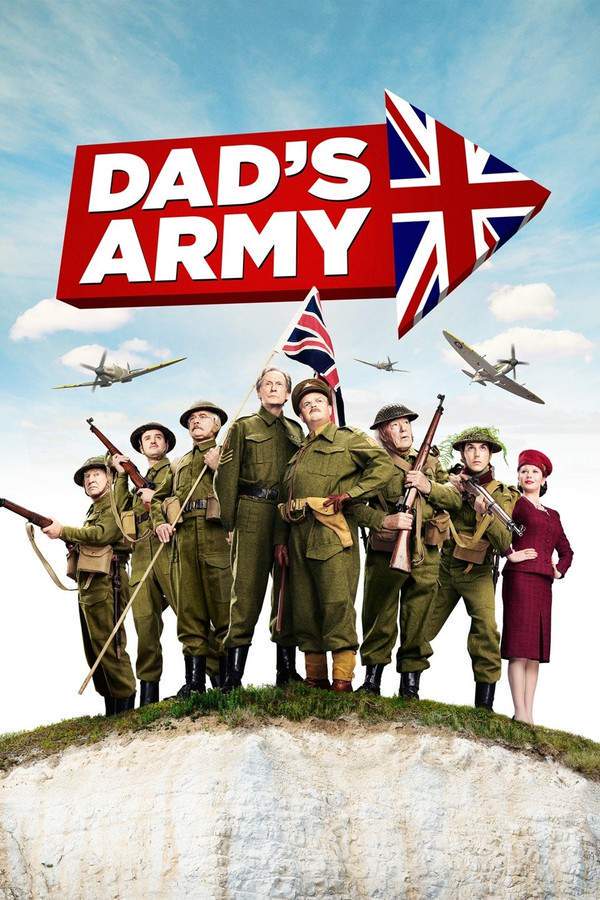
During the darkest days of the war, Captain S Melly [Kenneth Connor] is put in charge of the experimental 1313 Anti-Aircraft Battery, a unit that doubles as a social experiment as much as a defense line. He leads alongside the formidable Sergeant Major 'Tiger' Bloomer [Windsor Davies], a hard-edged figure whose booming presence and old-school discipline shape every march and drill.
Melly soon discovers the “experiment” is that half his men are women, led by the randy Bombardier Ready [Jack Douglas], the steely Sergeant Tilly Willing [Judy Geeson], and the sharp-tinned Sergeant Len Able [Patrick Mower]. The pairings and personalities clash in a way that tests not only battlefield readiness but the limits of tolerance and humor within a close-knit battery.
Tiger is unable to discipline properly as he is unable to swear around women and must avoid the libidinous advances of Private Ffoukes-Sharpe [Jeannie Collings]. The situation sparks a blend of frustration and unexpected camaraderie, as the soldiers navigate authority, attraction, and the uneasy balance of work and desire.
Meanwhile the battery seems content to spend the war in each other’s beds, turning the line between service and personal life into a living, breathing rumor mill. Melly reacts with a mix of outrage and resolve, deciding to shake things up with a fake air raid. But when the others dive for cover in their private bunker, the Snoggery, instead of loading the gun they retreat into their own hideaway, exposing a deeper problem: the anti-aircraft cannon is made of wood, and real guns are scarce in the chaos of war.
Determined to lift the battery to a true wartime standard, Melly and Tiger push the team through vigorous retraining, brutal exercise, and grueling 12-mile route marches. In retaliation and mischief, Ready, Willing and Able sabotage Melly’s uniform, leaving him red-faced and bare-cheeked in front of the unit—an embarrassment that highlights the chaotic humor at the heart of their battles, both on and off the firing range. The entire battery then finds themselves confined to camp as punishment, with Melly failing to realize that the closeness of men and women in near-constant contact can be its own, potent form of defense and morale.
Realizing his mistake, Melly attempts to physically separate the sexes by barbed wire around the sleeping quarters, around-the-clock battle drills, and strictly scheduled meals, hoping to restore order. Yet the soldiers, stubborn and resourceful, refuse to be kept apart for long. They dig secret tunnels beneath the barbed wire in a bid to stay connected with their loved ones, turning life in the camp into a balance of punishment and play, work and longing.
The next day brings a twist of fate: Melly finally takes delivery of an anti-aircraft cannon, only for the weapon to tumble into one of the tunnels. Forced to retrieve the gun, the battery sabotages an inspection by Melly’s Brigadier [Peter Jones], in a risky move intended to force a reassignment and reclaim some sense of control over their own fates.
When a real air raid finally arrives, the battery and the officers pull together to defend England, with their trained teamwork and stubborn resolve paying off as they shoot down all enemy planes. The operation results in only one casualty—a sprain to Captain Melly’s fingers—that goes on to inspire one of the most enduring symbols of victory from the war, a reminder that resilience, humor, and unity can turn a chaotic mix of people into a formidable force in the face of danger.