






Plot Explained Spoilers guaranteed!
Plot Explained

Browse by genre

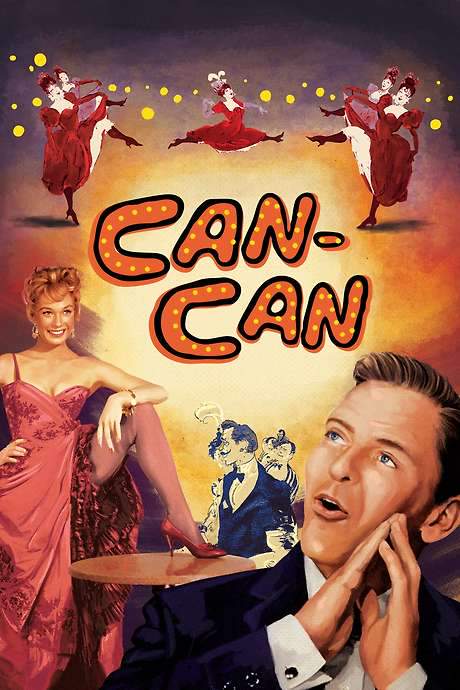
Can-Can (1960) movie poster

Timeline

Can-Can (1960) Timeline Explained – Every Event in Order

Release, runtime and language
1960 · 142 mins · English
Directed by
Walter Lang
Starring
Shirley MacLaine, Frank Sinatra, Marcel Dalio, Nestor Paiva, Maurice Chevalier, Laura Fraser

A flamboyant Parisian nightclub owner famous for daring can‑can shows draws the ire of a self‑righteous judge, who schemes to secretly photograph her performance. His plan backfires when he falls hopelessly in love with her, much to the annoyance of her devoted lawyer boyfriend. The resulting romantic entanglement complicates the lively Paris nightlife.

On this page (6)
  1. 1 Where to watch
  2. 2 Events in order (14)
  3. 3 Timeline questions answered
  4. 4 Movie threads
  5. 5 Movies like Can-Can
  6. 6 Every angle

Where to watch

Where to Watch Can-Can (1960)

Where can you watch Can-Can? Stream, rent or buy it in the US, including on YouTube TV, Amazon Video and Apple TV Store: current JustWatch availability with up-to-date prices.

Streaming availability powered by JustWatch

14 events in order · contains spoilers

Can-Can Timeline: Events in Chronological Order

Every key event of Can-Can (1960) in order, scene by scene, with when and where it takes place. Use it to untangle flashbacks, time jumps and parallel storylines, to refresh your memory before the sequel or to find the exact scene you are thinking of.

  1. Bal du Paradis and the nightly can-can

    In Montmartre, Simone Pistache runs Bal du Paradis where the can-can is performed nightly and draws crowds. The routine is treated by some as lewd, foreshadowing the moral scrutiny that will follow. The cabaret establishes the world of performers and ambitions that intersect with the law.

    When
    Nightly
    Where
    Bal du Paradis, Montmartre
  2. Police raid and arrests

    A police raid storms the Bal du Paradis, arresting Claudine and the other dancers on charges of public indecency. They are brought before the court, beginning a heated legal battle over morality, art, and punishment. The raid marks the start of a clash between the dancers and the authorities.

    When
    Night of raid
    Where
    Bal du Paradis, Montmartre
  3. Paul and Philippe clash over charges

    Paul Barrière wishes the charges to be dismissed, arguing for leniency. His younger colleague Philippe Forrestier insists that the laws against public indecency must be enforced. The disagreement sets the tone for the legal drama to come.

    When
    After the raid
    Where
    Courtroom / Legal offices
  4. Philippe goes undercover and meets Simone

    Undercover, Philippe visits the café, posing as a patron to gather evidence. He befriends Simone and is drawn to her, though Claudine warns him that he is a judge. The encounter complicates his sense of duty and desire.

    When
    During undercover investigation
    Where
    Bal du Paradis / Café
  5. Second raid; Simone arrested

    Despite his attraction, Philippe leads another raid on the café and Simone is arrested. The arrest raises the stakes as the case moves toward trial. The conflict tests the boundaries between love and professional obligations.

    When
    Later that night
    Where
    Bal du Paradis
  6. François blackmails Philippe

    François Durnais attempts to blackmail Philippe with a compromising photograph to drop the charges. Philippe, however, has already decided to stop the case, resisting the pressure from François and the powerful circles surrounding them. The threat heightens the personal stakes of the legal battle.

    When
    After arrest
    Where
    Philippe's office
  7. Philippe proposes to Simone

    In a startling twist, Philippe shocks Simone by proposing marriage, signaling his decision to end the case is tied to a personal pledge. Simone is wary of a life bound to a man whose career could be compromised. The moment shifts the dynamic from law to love.

    When
    Immediately after decision to stop the case
    Where
    Private setting
  8. Paul warns against marriage

    Paul tries to dissuade Philippe from marrying, fearing it could ruin his career. Philippe ignores the warning, choosing love over principle. The professional and personal loyalties collide once more.

    When
    After the engagement proposal
    Where
    Office
  9. Riverboat party and humiliation

    To sabotage the engagement, Paul arranges a party for the couple aboard a riverboat. François gets Simone drunk and encourages her to perform a bawdy routine before upper-class guests, humiliating her in public. The stunt tests Simone's resolve and pushes her toward a drastic choice.

    When
    During the party
    Where
    Riverboat
  10. Simone takes a loan to stage a ball

    Simone borrows money from François to stage a grand ball, offering the deed to the café as collateral. The loan gives her leverage and ties François more closely to the café’s fate. The arrangement foreshadows the reversal of fortunes that follows.

    When
    Between riverboat incident and ball
    Where
    François's office / Café
  11. Ball night raid; François arrested

    On the ball's night, Simone orchestrates a police raid that arrests François, who is now the legal proprietor of the café. The raid flips the power dynamics and revives the case in court. The scene culminates in renewed legal maneuvering and public interest.

    When
    Night of the ball
    Where
    Café Bal du Paradis
  12. Trial; Simone hesitates to testify

    At the trial, Simone is called to testify but cannot bring herself to condemn François. Her reluctance weakens the prosecution and keeps the charges hanging. The moral conflict remains unresolved as affection complicates justice.

    When
    During the trial
    Where
    Courtroom
  13. Moral league pressure and the can-can test

    The president of the local moral league presses for action, arguing the court should declare the performance indecent. Paul urges the court to view the dance to decide its indecency. A can-can is staged for inspection, and the court's verdict seems to soften the moral panic as the dance appears non-obscene.

    When
    During the trial
    Where
    Courtroom / Performance area
  14. Final twist: can-can vindicated; proposal on the way

    The can-can is deemed not obscene, and the tension culminates with Simone being escorted toward a jail wagon where she discovers François inside. He finally proposes, delivering a romantic twist as the couple’s fate is sealed by love and the law.

    When
    End of the trial
    Where
    Jail wagon / surrounding area

Last updated: October 09, 2025 at 09:33

Was this helpful?

Timeline questions answered

Can-Can Timeline Explained: Your Questions Answered

When does it happen, and why in that order? The questions people ask about the chronology of Can-Can (1960): time jumps, flashbacks, cause and effect between scenes and the correct order of events, each answered with spoilers.

Q1

Why does Judge Philippe quit the case and propose to Simone?

Philippe falls in love with Simone during his undercover investigation at the cabaret. Despite his initial duty to enforce the indecency laws, his personal feelings become overwhelming. When François attempts to blackmail him with a photograph, Philippe reveals he had already decided to drop the case and instead proposes marriage to Simone, choosing love over his judicial career.

Foreshadowing: Earlier, Philippe meets Simone undercover and is immediately drawn to her, despite learning she knows his true identity as a judge.

  • philippe
  • proposal
  • love
  • judge
  • case dropped
  • simone
Q2

Why does François blackmail Philippe with a photograph?

François, Simone's loyal lawyer boyfriend, resorts to blackmail to protect the Bal du Paradis and its dancers. After Simone is arrested during the second raid, François threatens to expose a compromising photograph that could damage Philippe's case and career. His motivation is to save the club and the women he cares about, though the plan ultimately fails when Philippe refuses to be swayed.

Foreshadowing: The earlier police raid and arrests set the stage for François's desperate attempt to intervene through blackmail.

  • francois
  • blackmail
  • photograph
  • simone
  • protection
Q3

Why does Paul arrange the riverboat party to humiliate Simone?

Paul Barrière orchestrates the lavish riverboat party specifically to sabotage Philippe's engagement to Simone. Worried that marrying a cabaret owner would ruin Philippe's judicial career, Paul hopes to expose Simone's true nature as a performer of 'lewd' entertainment before the upper-class guests. François also contributes by getting Simone drunk and encouraging her to perform a scandalous routine, which embarrasses her publicly and causes her to break off the engagement.

Foreshadowing: Paul previously warned Philippe that marrying Simone could destroy his career, showing his determination to prevent the union.

  • paul
  • riverboat
  • party
  • humiliation
  • simone
  • engagement
Q4

Why does Simone have François arrested at her own ball?

After being humiliated at the riverboat party, Simone orchestrates a calculated revenge. She borrows money from François to finance a grand ball, using the café deed as collateral. On the night of the ball, she triggers a police raid that arrests François, who has become the legal owner of the café through the loan arrangement. This dramatic reversal flips the power dynamics and puts François in the same position as the dancers he once tried to protect.

Foreshadowing: Simone's earlier vow to leave Philippe after the humiliation sets up her decisive action against François.

  • simone
  • francois
  • arrest
  • ball
  • revenge
  • cafe
Q5

Why is the can-can dance considered illegal?

The can-can is deemed lewd and illegal under public indecency laws because of its high-kicking movements and perceived provocative nature. The moral authorities in 1960s Paris view the dance as offensive to public decency, leading to police raids and courtroom battles over whether the performance constitutes obscene entertainment. The film's central conflict revolves around this legal and moral debate.

Foreshadowing: The opening scene establishes the can-can as 'daring' and 'lewd' in the eyes of conservative society, foreshadowing the legal scrutiny to come.

  • can-can
  • indecent
  • illegal
  • law
  • raids
  • obscene
Q6

Does the court declare the can-can obscene at the trial?

No, the court does not declare the can-can obscene. When the moral league president demands action against the dance, Paul suggests the court witness the performance firsthand to determine its indecency. The can-can is staged for the courtroom, and the judges witness its artistic and entertaining qualities, leading to a verdict that softens the moral panic and vindicates the dance.

Foreshadowing: The ongoing debate between Paul (lenient) and Philippe (initially strict) throughout the film sets up the court's eventual fair assessment.

  • court
  • trial
  • verdict
  • can-can
  • obscene
  • innocent
Q7

Why does François finally propose to Simone at the end?

After being arrested in the jail wagon alongside Simone, François has a change of heart. Throughout the film, he resisted marriage despite loving Simone, but the reversal of fortunes, being arrested himself after years of trying to protect her, makes him realize what truly matters. His proposal in the jail wagon represents his willingness to commit to a future with Simone, leaving the question of marriage open to possibility.

Foreshadowing: Earlier, François refuses marriage when Simone asks him to stay out of her arrangement with Philippe, setting up his eventual realization.

  • francois
  • proposal
  • jail wagon
  • marriage
  • finale
Q8

Why does Simone refuse to testify against François at the trial?

Simone cannot bring herself to condemn François because her feelings for him complicate her testimony. Although she orchestrates his arrest as revenge for the riverboat humiliation, she still cares for him deeply. Her reluctance to testify against him weakens the prosecution's case and keeps the charges unresolved, showing how personal affection conflicts with the pursuit of justice.

Foreshadowing: The love triangle between Simone, François, and Philippe creates ongoing emotional conflict throughout the legal proceedings.

  • simone
  • testify
  • francois
  • trial
  • hesitation
  • love
Q9

What happens to the charges against the dancers after the trial?

The charges against the dancers appear to lose momentum once the court witnesses the can-can performance firsthand and finds it not obscene. With the dance deemed acceptable and the case focused on the broader question of art versus morality, the original indecency charges against Claudine and the other performers seem to dissolve as the legal battle transforms into a debate about the can-can's artistic merit.

Foreshadowing: The opening raid and arrests establish the legal threat that hangs over the dancers throughout the story.

  • dancers
  • charges
  • trial
  • arrests
  • acquitted
  • claudine
Q10

Why does Judge Philippe go undercover at the cabaret?

Philippe goes undercover to gather evidence against the Bal du Paradis and its can-can performances. As a younger associate who believes the indecency laws must be enforced, he poses as a patron to observe the performances firsthand and build a case. However, his investigation takes an unexpected turn when he meets Simone and falls in love with her, ultimately abandoning his professional mission.

Foreshadowing: The early conflict between Paul (who wants leniency) and Philippe (who insists on enforcement) establishes Philippe's initial rigid stance on morality.

  • philippe
  • undercover
  • investigation
  • evidence
  • judge
  • simone

Movie threads

More Movies Like Can-Can, by Mood & Story

Curated lists built around what makes Can-Can tick: the same mood, the same kind of story or the same emotional payoff. Each list explains why these movies belong together.

Romantic musicals with showbiz scandal like Can-Can

Lively tales where love blooms amid dazzling performances and social controversy. If you enjoyed the romantic complications and dazzling performances in Can-Can, explore these movies. This list features similar stories of charismatic entertainers, lively nightlife, and love stories that play out against a backdrop of artistic freedom and social scandal.

  • romantic
  • lively
  • glamorous
  • playful
  • defiant
  • entertaining
  • Tone: light, playful, romantic
  • Pacing: steady, performance-driven
Why these movies?

The story pattern: Stories in this thread typically follow a charismatic performer or venue owner whose vibrant world is threatened by prudish authorities or social judgment. A romantic plot—often a love triangle—unfolds alongside this conflict, with the tension resolved through charm, performance, and a ultimately happy ending that celebrates joy over rigidity.

Why they belong together: These films are grouped by their shared mix of a light, romantic tone with the energetic spectacle of musical performance. They balance a playful, defiant mood against a threat to their colorful world, creating a feel-good experience centered on love, art, and entertainment.
Comedies about art versus authority like Can-Can

Whimsical conflicts where free-spirited artists outwit hypocritical moralists. Fans of Can-Can's spirited defense of the can-can against the judge will enjoy these movies. Discover similar stories where artists, performers, and free spirits cleverly challenge and expose the hypocrisy of pompous authorities, all wrapped in a lighthearted, comedic tone.

  • defiant
  • playful
  • whimsical
  • satirical
  • triumphant
  • entertaining
  • Tone: light, whimsical, defiant
  • Pacing: steady
Why these movies?

The story pattern: The narrative pattern involves an artistic or free-spirited individual or group whose lifestyle is targeted by a self-righteous antagonist. Through a series of humorous schemes, public performances, and romantic subplots, the protagonist exposes the antagonist's hypocrisy, often winning them over or defeating them in a way that affirms the value of art and pleasure.

Why they belong together: These movies share a core thematic focus on the conflict between creativity and conformity, handled with a light touch and a sense of fun. The grouping emphasizes a specific vibe: the delight of seeing joyful expression triumph over grim judgment without descending into heavy drama.

If you liked this

Movies Like Can-Can

Similar movies to Can-Can: the same genre, themes or kind of story. Each one comes with its own plot summary, timeline and ending explained.

Browse all movie summaries

Every angle

Can-Can (1960) Explained: Plot, Timeline & Characters

Everything about Can-Can in one place: what happens in the plot summary, the timeline in chronological order, the characters and meaning and a spoiler-free summary. What's After the Movie adds the cast, box office and post-credit scenes.

Coming soon on iOS and Android

The Plot Explained Movie Summary App

Plot summaries, endings explained and timelines on your phone. Catch up on any movie in minutes, save your favorites and never miss a twist again.

Be the first to know when we launch. Your email stays private, always.

Learn more about the app