






Plot Explained Spoilers guaranteed!
Plot Explained

Browse by genre

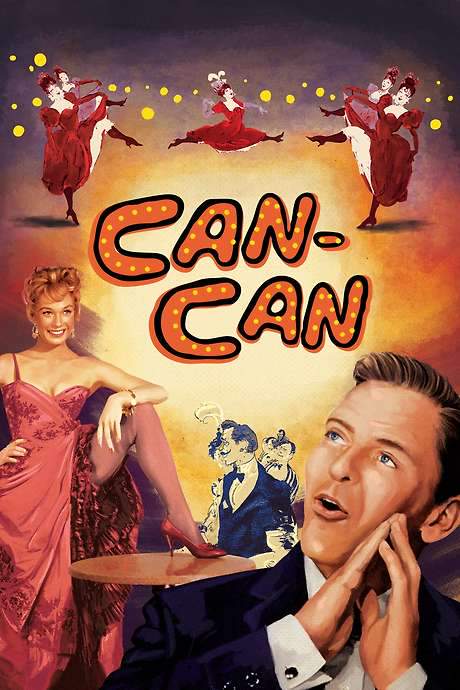
Can-Can (1960) movie poster

Characters & Themes

Can-Can (1960) Characters, Setting & Themes Explained

Release, runtime and language
1960 · 142 mins · English
Directed by
Walter Lang
Starring
Shirley MacLaine, Frank Sinatra, Marcel Dalio, Nestor Paiva, Maurice Chevalier, Laura Fraser

A flamboyant Parisian nightclub owner famous for daring can‑can shows draws the ire of a self‑righteous judge, who schemes to secretly photograph her performance. His plan backfires when he falls hopelessly in love with her, much to the annoyance of her devoted lawyer boyfriend. The resulting romantic entanglement complicates the lively Paris nightlife.

On this page (8)
  1. 1 Where to watch
  2. 2 Characters explained (5)
  3. 3 Where & when it takes place
  4. 4 Themes & meaning (3)
  5. 5 Character & meaning questions
  6. 6 Movie threads
  7. 7 Movies like Can-Can
  8. 8 Every angle

Where to watch

Where to Watch Can-Can (1960)

Where can you watch Can-Can? Stream, rent or buy it in the US, including on YouTube TV, Amazon Video and Apple TV Store: current JustWatch availability with up-to-date prices.

Streaming availability powered by JustWatch

5 main characters · contains spoilers

Can-Can Characters Explained: Who Is Who

The main characters of Can-Can (1960), heroes and villains: what drives them, how they change over the course of the story and what each of them reveals about the film's bigger ideas.

  • Simone Pistache (Shirley MacLaine)

    A confident dancer and the proprietor of Bal du Paradis, Simone embodies independence and flair. She expertly navigates romance, business, and the political machinations around her cabaret. Her wit and resilience drive the plot as she turns schemes against her in a bid to control her own fate.

    • 💃 Protagonist
    • 🗼 Dancer
    • 🎖️ Ambitious
  • François Durnais (Frank Sinatra)

    A lawyer and Simone's lover who moves through circles of power with charm and a willingness to manipulate when advantageous. He uses pressure and a compromising photograph to influence outcomes, but his feelings complicate his actions. Ultimately, he reveals a more personal stake in Simone's future by proposing a marriage.

    • 💼 Manipulator
    • ❤️ Lover
    • 🕊️ Complex
  • Paul Barrière (Maurice Chevalier)

    The chief magistrate whose goal is to enforce public decency, maintaining order in a town where art and appetite collide. He orchestrates events that test loyalties and exposes the tension between legal authority and personal interests. His schemes push the story toward its climactic resolution.

    • ⚖️ Authority
    • 🧭 Strategist
    • 🕵️ Gatekeeper
  • Philippe Forrestier (Louis Jourdan)

    A younger colleague who initially champions the decency laws, believing in a strict application of the rules. He is drawn to Simone, which complicates his decisions as the case evolves. He ultimately chooses a path that shifts the case away from punishment and toward reconciliation, culminating in a marriage proposal.

    • 👨‍⚖️ Judge
    • 💘 Romantic
    • 💡 Torn
  • Claudine (Juliet Prowse)

    A fellow dancer and confidante who acts as a wary ally to Simone. Claudine provides crucial warnings about risks and identities, helping to illuminate the moral ambiguities surrounding the lovers and the legal drama. She represents the ensemble of performers who push back against oppressive norms.

    • 🎀 Ally
    • 🗯️ confidant
    • 🎶 Dancer

Last updated: October 04, 2025 at 17:42

Was this helpful?

Setting

Where and When Does Can-Can Take Place?

The setting of Can-Can (1960): the year and time period, the places and locations, and how they shape the characters, the mood and the tension of the story.

Time period

Late 19th century (Belle Époque)

Set during the Belle Époque in Paris, the period is marked by artistic exploration, opulent social life, and rapid urban growth. The city thrives on theater, dance, and fashionable salons, even as strict public morality laws loom over performances. This clash between liberal entertainment and conservative social codes drives much of the plot.

Location

Montmartre, Paris, Bal du Paradis

The story unfolds in Montmartre, a bohemian neighborhood in Paris known for its cabarets and artist circles. Bal du Paradis is the centerpiece—a bustling cabaret where can-can dances light up the stage and spectators from all social classes mingle. The setting captures the mix of glittering nightlife and underlying social tensions that defined the era.

  • 🎪 Cabaret culture
  • 🏛️ Belle Époque Paris
  • 🎭 Nightlife

Last updated: October 04, 2025 at 17:42

Was this helpful?

3 major themes

Can-Can Meaning: Themes & Message Explained

What is Can-Can (1960) really about? The emotional, social and philosophical themes the film keeps returning to, its symbolism and the message beneath the surface.

  • Love vs. Norms

    A romance blooms across class and professional boundaries, testing personal desires against societal expectations. Simone's independence and charm draw in François and Philippe, forcing them to choose between duty and affection. The love triangle exposes how societal norms constrain genuine connection, yet also how passion can overturn them.

  • Law and Morality

    Public decency laws and moral leagues drive the conflict, with authorities debating what constitutes indecency on stage. The court becomes a battleground where rules are tested, rewritten, or ignored in the name of art. The climax hinges on the question: who defines morality—the law or the performer?

  • Artistic Expression

    Performance is both a livelihood and a form of resistance. The can-can, once deemed lewd, is challenged and ultimately affirmed as legitimate entertainment. The film uses dance as a lens to explore freedom of expression versus censorship and social control.

Last updated: October 04, 2025 at 17:42

Was this helpful?

Character & theme questions

Can-Can Characters & Meaning: Your Questions Answered

The questions people ask about Can-Can (1960): who the characters really are, their relationships, what the symbols mean, where it takes place and what the movie is really about. Each answer contains spoilers.

Q1

Where is Can-Can set?

Can-Can is set in Montmartre, the bohemian neighborhood of Paris famous for its cabarets and artist circles. The primary location is Bal du Paradis, a bustling cabaret where the iconic can-can dances are performed. The setting captures the glittering nightlife and underlying social tensions of Belle Époque Paris.

  • montmartre
  • paris
  • bal du paradis
  • cabaret
  • setting
Q2

What time period does Can-Can take place in?

Can-Can is set during the Belle Époque of late 19th century Paris. This era was marked by artistic exploration, opulent social life, and rapid urban growth. The period is characterized by a thriving theater and dance scene, contrasted with strict public morality laws that threatened performances like the can-can.

  • belle epoque
  • 19th century
  • paris
  • time period
  • era
Q3

What is Bal du Paradis?

Bal du Paradis is the central cabaret in the film, owned and operated by Simone Pistache. It serves as both a performance venue for can-can dances and a social hub where spectators from all social classes mingle. The cabaret represents the bohemian spirit of Montmartre and becomes the focal point of the legal and romantic conflicts in the story.

  • bal du paradis
  • cabaret
  • montmartre
  • nightclub
  • venue
Q4

What are the main themes of Can-Can?

Can-Can explores three primary themes: love versus societal norms through a romantic triangle across class boundaries; law and morality as decency laws clash with artistic expression; and artistic freedom as the can-can dance becomes a form of resistance against censorship. The film examines how these elements collide in Belle Époque Paris.

  • themes
  • love
  • morality
  • artistic expression
  • decency laws
  • censorship
Q5

How do decency laws factor into Can-Can?

Public decency laws and moral leagues drive much of the conflict in Can-Can. The authorities, led by magistrate Paul Barrière, attempt to regulate what constitutes indecency on stage. The courtroom becomes a battleground where rules are tested, and the story ultimately asks whether morality is defined by the law or by the performer.

  • decency laws
  • censorship
  • court
  • morality
  • legal conflict
Q6

What does the can-can represent in the film?

In Can-Can, the can-can dance represents both artistic expression and rebellion. Originally deemed lewd, the dance becomes a symbol of freedom versus social control. The film uses it to explore how performance can serve as resistance against censorship and how art challenges conservative social codes.

  • can-can dance
  • artistic expression
  • performance
  • resistance
  • censorship
Q7

Who is Simone Pistache?

Simone Pistache, played by Shirley MacLaine, is the confident owner of Bal du Paradis and a renowned can-can dancer. She embodies independence and flair, expertly navigating romance, business, and the political machinations threatening her cabaret. Her wit and resilience drive the plot as she fights to control her own fate.

  • simone pistache
  • shirley maclaine
  • main character
  • dancer
  • cabaret owner
Q8

Who is Paul Barrière in Can-Can?

Paul Barrière, played by Maurice Chevalier, is the chief magistrate who orchestrates the crackdown on Bal du Paradis in the name of public decency. His schemes to photograph Simone's performances and enforce morality laws drive much of the plot's conflict, though his motives become complicated as events unfold.

  • paul barrière
  • maurice chevalier
  • magistrate
  • judge
  • antagonist
  • authority
Q9

Who is Philippe Forrestier in Can-Can?

Philippe Forrestier, played by Louis Jourdan, is a younger magistrate who initially champions strict application of decency laws. He is drawn to Simone, which complicates his decisions as the case evolves. His character arc shifts from rigid enforcement toward reconciliation, ultimately proposing marriage to Simone.

  • philippe forrestier
  • louis jourdan
  • magistrate
  • lawyer
  • love interest
Q10

Who is François Durnais in Can-Can?

François Durnais, played by Frank Sinatra, is Simone's lawyer and lover. He moves through circles of power with charm and is willing to manipulate situations when advantageous, using pressure and compromising photographs to influence outcomes. His feelings for Simone complicate his actions, and he ultimately proposes marriage.

  • francois durnais
  • frank sinatra
  • lawyer
  • lover
  • romantic interest
Q11

What is the love triangle in Can-Can about?

Can-Can features a romantic entanglement involving Simone Pistache and two men: her lawyer boyfriend François Durnais and magistrate Philippe Forrestier. Both men fall in love with Simone, creating a love triangle that tests personal desires against societal expectations. The conflict forces characters to choose between duty and affection.

  • love triangle
  • romance
  • francis durnais
  • philippe forrestier
  • simone pistache
Q12

What kind of movie is Can-Can?

Can-Can is a musical comedy romance set in Belle Époque Paris. The film features dazzling vocal performances and dance numbers while delivering a light, whimsical tone. Despite dealing with themes of censorship and legal conflict, the movie maintains a playful energy and ultimately leads to a happy, hopeful resolution.

  • musical
  • comedy
  • romance
  • genre
  • tone
  • entertainment

Movie threads

More Movies Like Can-Can, by Mood & Story

Curated lists built around what makes Can-Can tick: the same mood, the same kind of story or the same emotional payoff. Each list explains why these movies belong together.

Romantic musicals with showbiz scandal like Can-Can

Lively tales where love blooms amid dazzling performances and social controversy. If you enjoyed the romantic complications and dazzling performances in Can-Can, explore these movies. This list features similar stories of charismatic entertainers, lively nightlife, and love stories that play out against a backdrop of artistic freedom and social scandal.

  • romantic
  • lively
  • glamorous
  • playful
  • defiant
  • entertaining
  • Tone: light, playful, romantic
  • Pacing: steady, performance-driven
Why these movies?

The story pattern: Stories in this thread typically follow a charismatic performer or venue owner whose vibrant world is threatened by prudish authorities or social judgment. A romantic plot—often a love triangle—unfolds alongside this conflict, with the tension resolved through charm, performance, and a ultimately happy ending that celebrates joy over rigidity.

Why they belong together: These films are grouped by their shared mix of a light, romantic tone with the energetic spectacle of musical performance. They balance a playful, defiant mood against a threat to their colorful world, creating a feel-good experience centered on love, art, and entertainment.
Comedies about art versus authority like Can-Can

Whimsical conflicts where free-spirited artists outwit hypocritical moralists. Fans of Can-Can's spirited defense of the can-can against the judge will enjoy these movies. Discover similar stories where artists, performers, and free spirits cleverly challenge and expose the hypocrisy of pompous authorities, all wrapped in a lighthearted, comedic tone.

  • defiant
  • playful
  • whimsical
  • satirical
  • triumphant
  • entertaining
  • Tone: light, whimsical, defiant
  • Pacing: steady
Why these movies?

The story pattern: The narrative pattern involves an artistic or free-spirited individual or group whose lifestyle is targeted by a self-righteous antagonist. Through a series of humorous schemes, public performances, and romantic subplots, the protagonist exposes the antagonist's hypocrisy, often winning them over or defeating them in a way that affirms the value of art and pleasure.

Why they belong together: These movies share a core thematic focus on the conflict between creativity and conformity, handled with a light touch and a sense of fun. The grouping emphasizes a specific vibe: the delight of seeing joyful expression triumph over grim judgment without descending into heavy drama.

If you liked this

Movies Like Can-Can

Similar movies to Can-Can: the same genre, themes or kind of story. Each one comes with its own plot summary, timeline and ending explained.

Browse all movie summaries

Every angle

Can-Can (1960) Explained: Plot, Timeline & Characters

Everything about Can-Can in one place: what happens in the plot summary, the timeline in chronological order, the characters and meaning and a spoiler-free summary. What's After the Movie adds the cast, box office and post-credit scenes.

Coming soon on iOS and Android

The Plot Explained Movie Summary App

Plot summaries, endings explained and timelines on your phone. Catch up on any movie in minutes, save your favorites and never miss a twist again.

Be the first to know when we launch. Your email stays private, always.

Learn more about the app