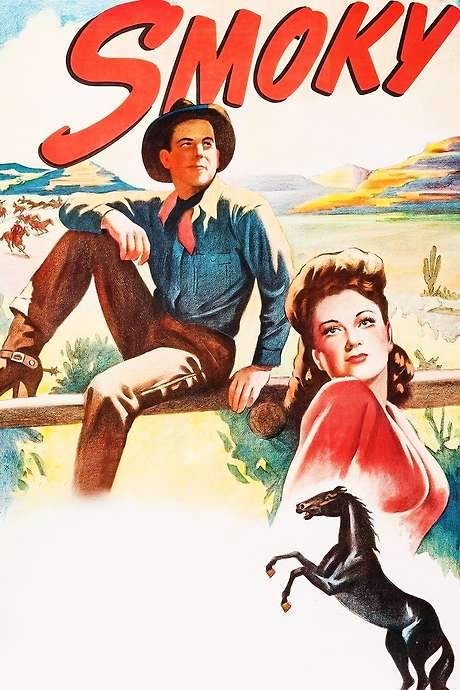
Mike Frye and Deborah Patterson, co-owners of an advertising firm, score a big hit by repurposing dusty old Westerns starring Smoky Callaway Howard Keel for a fresh television audience. The flirtation between business ambition and showbusiness ego kicks into high gear when their sponsor, Tom Lorrison Fay Roope, pushes to keep Smoky in the public eye, even though the legend hasn’t appeared on screen in a decade.
Desperate to find Smoky, Frye and Patterson receive a lead from a real cowboy: Stretch Barnes Howard Keel, who humorously laments the jokes his friends tell about resembling Smoky. One look at a photograph is enough for the producers to trek out to meet him. After a candid conversation, a reluctant Stretch is coaxed into posing as Smoky, with the plan pitched as though Smoky were dead and gone. The deception is quietly bold, and it isn’t long before the team moves toward a full-blown publicity push.
A pivotal dinner with Tom Lorrison and his wife Martha Lorrison Natalie Schafer, a devoted fan, seals the green light for a nationwide campaign. Patterson launches Stretch on the road for a publicity tour, and as they spend time together, Stretch falls for her. He even presents a ring, a symbol of affection that she keeps only as a potential sign of love, should she ever feel the same way about him.
Meanwhile the plot thickens when Markham, Smoky’s agent, locates the real Smoky in a Mexican bar. Smoky is just as self-serving and hard-edged as the legends suggest: a selfish, womanizing drunk who isn’t eager to return to the screen. Nevertheless, the plan to revive Smoky’s career persists, and Markham coerces him to come along on the boat ride back. Frye’s relief is tempered by the reality that Smoky’s presence will demand tough changes, and Smoky is eventually sent to a health farm to get back into shape. Even there, Smoky’s old habits surface—alcohol hides in bottles everywhere, undercutting any clean-up effort.
A pivotal turn comes when Stretch, moved by a street encounter with a woman accusing him of abandoning charitable causes, secretly hires a lawyer to establish a foundation that will receive Smoky’s earnings, while giving Stretch a modest allowance and a wife. The foundation plan becomes a political weapon, and a representative from the law firm, the west coast attorney, appears in person to push the necessary paperwork. Hugh Beaumont appears as the firm’s representative, though uncredited, underscoring the legal complexity of the scheme.
With Smoky still out of shape, Frye and Patterson engineer a high-stakes public appearance: Smoky will headline at the Los Angeles Coliseum as part of the campaign, and Stretch intends to sign the charity documents in front of a sea of fans and dignitaries. The plan spirals when Smoky objects to the scheme, and a physical confrontation erupts. A chaotic brawl ensues, with both Frye and Markham knocked aside as Smoky wakes to the unfolding drama. Smoky ultimately decides to retreat to Mexico—returning to a life of smaller paychecks and less grueling work—while Stretch presses forward with the plan, especially when he encounters Patterson again at the Coliseum, where she wears his ring—a tangible symbol of the complex, evolving relationship at the heart of this collaboration.
In the end, the film keeps its eye on consequences and decisions: the two men’ s professional rigging of Smoky’s legacy, Stretch’s attempt at a philanthropic future, and Patterson’s tightrope walk between business arrangements and genuine feeling. The story closes with a quiet but meaningful twist at the Coliseum, where the ring and the public spectacle intersect, leaving the audience to ponder the true cost of fame, generosity, and belonging.