Plot Explained Spoilers guaranteed!
Plot Explained

Browse by genre

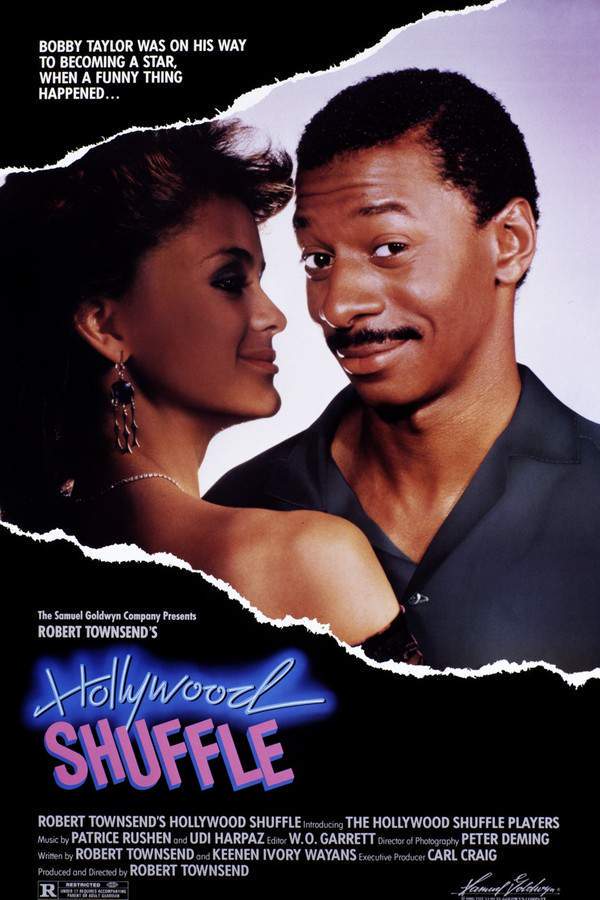
Hollywood Shuffle (1987) movie poster

Plot Summary

Hollywood Shuffle (1987) Plot Summary Explained

Release, runtime and language
1987 · 78 min · English
JustWatch #25,982 2
Directed by
Robert Townsend
Budget
$100K

Bobby Taylor, an aspiring actor working at a hot dog stand, finds his life complicated when he secures the lead role in "Jivetime Jimmy's Revenge." The film satirizes Hollywood's often stereotypical portrayals of African-Americans, forcing Taylor to balance his career aspirations with his responsibility to be a role model for his younger brother. He must navigate the challenges of the entertainment industry while striving to maintain his integrity and positively influence his family.

On this page (6)
  1. 1 Where to watch
  2. 2 What happens: full plot
  3. 3 Plot questions answered
  4. 4 Movie threads
  5. 5 Movies like Hollywood Shuffle
  6. 6 Every angle

Where to watch

Where to Watch Hollywood Shuffle (1987)

Where can you watch Hollywood Shuffle? Stream, rent or buy it in the US, including on Amazon Prime Video, ScreenPix Amazon Channel and Tubi TV: current JustWatch availability with up-to-date prices.

Streaming availability powered by JustWatch

Full plot summary · contains spoilers

What Happens in Hollywood Shuffle: Full Plot Summary

The whole story of Hollywood Shuffle (1987) explained, from the opening scene to the final frame: every key event, every twist and what it all adds up to. Read it as a quick recap before the sequel, to check a scene you missed, or to finally understand what really happened.

Aspiring actor Bobby Taylor (no relation) is fueled by an unrelenting passion to break into the entertainment industry, with unwavering support from his younger brother Stevie. However, he constantly faces challenges, including his grandmother's stern disapproval of his career choice and her insistence that he consider a more respectable job, like working at the post office. Yet, his mother stands firmly by him, encouraging him to pursue his dreams. Bobby believes that landing a role in Jivetime Jimmy's Revenge, a film filled with cliched depictions of street gangs, could change their family's fortunes forever.

After his audition, Bobby gets into a heartfelt discussion with Mr. Jones, the owner of Winky Dinky Dog, where he works part-time. Jones shares his concerns about Bobby's frequent absences due to auditions and how that affects his commitment to the job. Just when Bobby is contemplating his response, a sleek limousine pulls up, and out steps B. B. Sanders (Batty Boy), a famous actor best known for his role in the hit sitcom There's a Bat in My House. Thrilled to meet a role model, Bobby inquires about how to evaluate a script's worthiness. Sanders provides a pragmatic insight: acting is about making money, focusing on sequels and merchandising rather than pure artistic expression.

After hearing from his agent that his audition went well and he has been invited to a callback, Bobby feels relieved. However, the producers' demand for an "Eddie Murphy-type" performance plunges him into a nightmare, where he finds himself being pressured by the director, writer, and casting director to transform into Eddie Murphy. As he stands in line with lookalikes, he begins to morph into the very actor he's being coerced to resemble, only to awaken in shock.

The following day, his colleagues at Winky Dinky Dog, Donald and Tiny, belittle his aspirations, prompting Bobby to resign. That evening, he seeks advice from his uncle Ray, a once-promising singer who chose stability over pursuing fame. Ray's encouragement lifts Bobby's spirits, instilling confidence in his dream to succeed.

At the callback, the director, writer, and casting director laud Bobby's performance, leading to exhilarating news that he has secured the lead role. As he reflects on his journey so far, he understands that perseverance and risk-taking have paid off.

With his newfound success, Bobby grapples with the moral implications of his current role, depicted through vivid daydreams that manifest like surreal vignettes. In one imaginative sequence titled Black Acting School, he observes white coaches instructing black actors on how to connect with their supposed cultural heritage, resulting merely in a shallow imitation. Another dream, Sneaking Into the Movies, features two young black men who effortlessly sneak past ticket takers, delivering scathing critiques of poor cinematic choices like Amadeus Meets Salieri, Chicago Jones and the Temple of Doom, Dirty Larry, and Attack of the Street Pimps.

Back at home, Bobby's excitement is dampened by a visit from his grandmother and girlfriend Lydia. The three of them sit down to watch a classic film noir, which ignites Bobby's fantasies of crafting his own cinematic vision. In one daydream, he imagines himself as the lead in Death of a Breakdancer, a compelling fusion of neo-noir with the high-energy vibe of breakdancing culture.

That night, as he dreams, Bobby envisions himself in an array of iconic roles, such as a commanding Shakespearean king, a heroic black superhero using his powers for good, and a black rendition of Rambo, bravely battling against oppression.

In a climactic dream sequence, Bobby finds himself on stage, proudly holding his fifth Oscar statuette while the crowd erupts in applause. The next day, he begins filming Jivetime Jimmy's Revenge, with his family present to witness his achievement. But as the cameras roll, feelings of guilt arise over portraying a stereotypical character, leading him to make a courageous choice—he quits the film to maintain his artistic integrity.

In the wake of Bobby's departure, another cast member who had previously criticized the project for its racial stereotypes hastily accepts Bobby's role. Undeterred, Bobby and his family leave the set with pride in their decision to uphold their values.

The film concludes with Bobby preparing for an upcoming on-camera scene, echoing his grandmother's earlier wisdom. He finds himself filming a public service announcement for the US Postal Service, symbolizing that no matter how cutthroat Hollywood can be, there is always space for kindness and humility.
Last updated: November 18, 2024 at 20:43

Was this helpful?

Plot questions answered

Hollywood Shuffle Plot Explained: Your Questions Answered

The questions people ask most about Hollywood Shuffle (1987): what happens in the confusing scenes, why the characters do what they do, the twists, hidden details and what the ending means. Each answer contains spoilers.

Q1

Why does Bobby accept the lead role in Jivetime Jimmy's Revenge?

Bobby accepts the role because he believes it could finally change his family's fortunes. After struggling with auditions and facing his grandmother's disapproval of his career choice, Bobby sees this as his breakthrough opportunity, the kind of break that could validate his years of pursuing acting and prove to his family that his dreams are worthwhile.

  • Bobby Taylor
  • Jivetime Jimmy's Revenge
  • acting dreams
  • opportunity
  • family pressure
Q2

Why does Bobby quit Jivetime Jimmy's Revenge mid-filming?

Bobby quits the film because he feels guilty about portraying a stereotypical gang member character. As filming progresses, he realizes the role perpetuates the very racial stereotypes he's been struggling with throughout the movie. He chooses to maintain his artistic integrity over career success, walking away despite having his family there to witness his achievement.

Foreshadowing: Earlier in the film, Bobby daydreams about 'Black Acting School' where white coaches teach Black actors shallow imitations of culture, foreshadowing his discomfort with stereotypical roles.

  • Bobby quit
  • artistic integrity
  • stereotypes
  • racial representation
  • moral dilemma
Q3

What does the Eddie Murphy nightmare sequence mean?

The nightmare represents the intense pressure Bobby faces from Hollywood producers to conform to a specific typecast image. The director, writer, and casting director demand an 'Eddie Murphy-type' performance, and in the surreal sequence, Bobby physically transforms into Murphy while standing in line with other lookalikes. This illustrates how the industry forces Black actors to emulate existing stars rather than allowing them to develop their own identity.

  • Eddie Murphy
  • typecasting
  • Hollywood pressure
  • nightmare
  • Black actors
Q4

Why does Bobby quit his job at Winky Dinky Dog?

Bobby resigns after his colleagues Donald and Tiny mock his acting aspirations, belittling his dreams as unrealistic. While it's a difficult decision that leaves him without income, Bobby sees it as necessary to fully commit to pursuing acting. The job had already created tension with Mr. Jones, who expressed concerns about Bobby's frequent absences for auditions.

  • Winky Dinky Dog
  • Donald
  • Tiny
  • job resignation
  • commitment to acting
Q5

What is the purpose of the Black Acting School daydream?

The Black Acting School is a satirical daydream where white coaches instruct Black actors on how to connect with their supposed cultural heritage, resulting in shallow imitations. This vignette critiques Hollywood's tendency to reduce Black culture to superficial stereotypes and comments on how the industry profits from packaging Black identity for mainstream audiences without genuine understanding.

  • Black Acting School
  • satire
  • stereotypes
  • Hollywood
  • cultural appropriation
Q6

Why does Bobby dream of winning an Oscar and playing iconic roles?

Bobby's dream of winning an Oscar and playing diverse iconic roles, from a Shakespearean king to a superhero to Rambo, reflects his deep desire to prove that Black actors can inhabit any character, not just stereotyped roles. The climactic dream shows him holding his fifth Oscar statuette, symbolizing his aspiration for recognition and success on his own terms rather than through degrading stereotypes.

  • Oscar
  • dreams
  • iconic roles
  • Black representation
  • ambition
Q7

What advice does B. B. Sanders give Bobby about acting?

When Bobby asks how to evaluate a script's worthiness, B. B. Sanders, the famous actor from 'There's a Bat in My House,' tells him that acting is about making money, focusing on sequels and merchandising rather than pure artistic expression. This pragmatic insight reflects the commercial reality of Hollywood and contrasts with Bobby's idealistic passion for the craft.

  • B. B. Sanders
  • advice
  • Hollywood commerce
  • sequels
  • merchandising
Q8

Why does Bobby's grandmother disapprove of his acting dreams?

Bobby's grandmother strongly disapproves of his acting career, insisting he pursue more respectable employment like working at the post office. She represents traditional values that prioritize stability and social respectability over uncertain artistic pursuits. Her disapproval creates tension throughout the film, though she eventually supports his journey.

  • grandmother
  • family pressure
  • post office
  • traditional values
  • disapproval
Q9

What does the final scene with the US Postal Service PSA mean?

The final scene shows Bobby filming a public service announcement for the US Postal Service, which symbolizes his realization that kindness and humility hold value even in a cutthroat industry like Hollywood. This contrasts sharply with his earlier aspirations for fame and mirrors his grandmother's earlier wisdom about finding respectable work. It represents a hopeful resolution where Bobby chooses integrity and simple goodness over glamorous but compromising success.

  • postal service
  • ending
  • integrity
  • humility
  • resolution
Q10

What is Bobby's 'Death of a Breakdancer' daydream about?

After watching a classic film noir with his grandmother and girlfriend Lydia, Bobby envisions himself as the lead in 'Death of a Breakdancer', a creative fusion of neo-noir with breakdancing culture. This daydream represents his aspiration to create meaningful art that combines his cultural identity with sophisticated filmmaking genres, rather than accepting tokenized stereotypical roles.

  • Death of a Breakdancer
  • film noir
  • breakdancing
  • creative vision
  • neo-noir
Q11

Why does Bobby seek advice from his Uncle Ray?

After quitting Winky Dinky Dog and facing ridicule, Bobby visits his Uncle Ray, a once-promising singer who gave up his artistic aspirations for stability. Ray's encouragement helps Bobby regain confidence in his dreams, reinforcing the theme that pursuing one's passion, despite risks, is worthwhile. Ray's own regret about choosing security over fame adds emotional weight to Bobby's decision to keep pursuing acting.
  • Uncle Ray
  • advice
  • singer
  • stability
  • regret

Movie threads

More Movies Like Hollywood Shuffle, by Mood & Story

Curated lists built around what makes Hollywood Shuffle tick: the same mood, the same kind of story or the same emotional payoff. Each list explains why these movies belong together.

Sharp Industry Satires like Hollywood Shuffle

Sharp comedies that use humor to expose the hypocrisies of a professional world. If you enjoyed the satirical edge of Hollywood Shuffle, you'll appreciate these movies that similarly use comedy to critique the absurdities of a professional world. This collection features films like Hollywood Shuffle that follow characters trying to succeed while exposing systemic hypocrisy, offering a humorous yet thought-provoking look at various industries and institutions.

  • satirical
  • self-aware
  • comedic
  • absurd
  • surreal
  • thought-provoking
  • Tone: satirical, comedic, self-aware
  • Pacing: variable, blending narrative with skits
Why these movies?

The story pattern: These narratives typically center on a protagonist trying to make their mark within a flawed or absurd system. The conflict arises from the clash between their aspirations and the ridiculous realities of the industry, often leading to surreal sequences, sharp parodies, and a journey of self-discovery about whether to play by the rules or challenge them.

Why they belong together: Movies are grouped here for their shared approach of using comedy as a tool for social critique, focusing on institutional absurdity. They share a light-to-medium emotional weight, a self-aware tone, and a balance between a grounded protagonist's story and exaggerated, often surreal, commentary on the world around them.

Movies About Artistic Integrity like Hollywood Shuffle

Stories about creators choosing between personal values and the lure of fame. Fans of Hollywood Shuffle's theme of an actor balancing ambition with integrity will find similar journeys in these films. This list features movies like Hollywood Shuffle where protagonists in creative fields face moral choices, navigating the pressure to conform while striving to maintain their authentic voice and values.

  • aspirational
  • introspective
  • hopeful
  • self-aware
  • ethical dilemma
  • creative struggle
  • Tone: hopeful, introspective, aspirational
  • Pacing: steady, character-driven
Why these movies?

The story pattern: The narrative pattern involves a creative individual gaining an opportunity for success that requires some form of compromise, often related to stereotyping, selling out, or diluting their work. The central conflict is internal, as the protagonist wrestles with their conscience, leading to a climax where they must make a defining choice about their principles, typically resulting in a hopeful or bittersweet affirmation of self-worth.

Why they belong together: These movies share a strong thematic focus on the ethics of creation and performance. They feature similar character arcs of moral decision-making, a moderate complexity exploring internal conflict, and a generally hopeful or bittersweet resolution that prioritizes personal growth over material gain.

If you liked this

Movies Like Hollywood Shuffle

Similar movies to Hollywood Shuffle: the same genre, themes or kind of story. Each one comes with its own plot summary, timeline and ending explained.

Browse all movie summaries

Every angle

Hollywood Shuffle (1987) Explained: Plot, Timeline & Characters

Everything about Hollywood Shuffle in one place: what happens in the plot summary, the timeline in chronological order, the characters and meaning and a spoiler-free summary. What's After the Movie adds the cast, box office and post-credit scenes.

Coming soon on iOS and Android

The Plot Explained Movie Summary App

Plot summaries, endings explained and timelines on your phone. Catch up on any movie in minutes, save your favorites and never miss a twist again.

Be the first to know when we launch. Your email stays private, always.

Learn more about the app