Plot Explained Spoilers guaranteed!
Plot Explained

Browse by genre

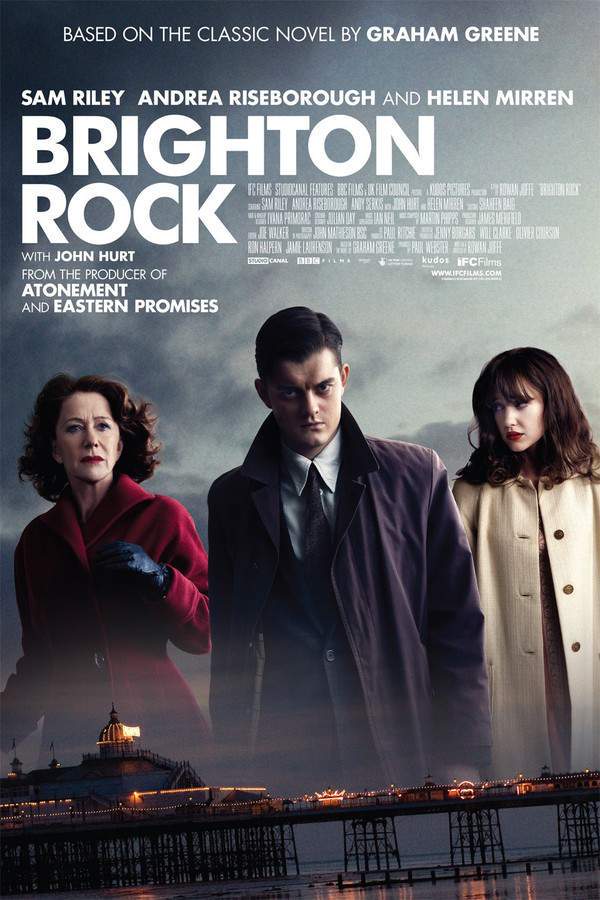
Brighton Rock (1948) movie poster

Plot Summary

Brighton Rock (1948) Plot Summary Explained

Release, runtime and language
1948 · 92 mins · English
Directed by
John Boulting
Starring
Richard Attenborough, Wylie Watson, William Hartnell, Hermione Baddeley, Harcourt Williams, Nigel Stock

Based on Graham Greene’s novel, the film follows a ruthless gang of assorted criminals in inter‑war Brighton, centring on their leader Pinkie, a vicious young hoodlum. It vividly portrays the razor‑gang culture and the city’s criminal underbelly, exploring the moral ambiguities of the era.

On this page (5)
  1. 1 What happens: full plot
  2. 2 Plot questions answered
  3. 3 Movie threads
  4. 4 Movies like Brighton Rock
  5. 5 Every angle

Full plot summary · contains spoilers

What Happens in Brighton Rock: Full Plot Summary

The whole story of Brighton Rock (1948) explained, from the opening scene to the final frame: every key event, every twist and what it all adds up to. Read it as a quick recap before the sequel, to check a scene you missed, or to finally understand what really happened.

In Brighton in 1935, a ruthless gangster Pinkie Brown, Richard Attenborough, unwinds the town’s uneasy balance of fear and spectacle after Kite’s murder—a crime tied to a newspaper exposé that had revealed local rackets and ongoing gang wars. The newsroom trembles as Pinkie’s old gang learns that the journalist who wrote the piece, Fred Hale, will be in town for a single day, bound to a promotional stunt where he plays the pseudo-celebrity “Kolley Kibber.” Fred Hale, Alan Wheatley, will scatter cards around Brighton that can be redeemed for money, with a much larger prize for the first person who publicly identifies him as Kolley Kibber. Pinkie’s gang holds Fred responsible for Kite’s death, and the city’s pulse quickens as they plot to snuff out the reporter before the stunt ends.

The confrontation erupts in a crowded pub, with Pinkie and his associates cornering Fred Hale, and threats turning to violence as Pinkie asserts control over the town’s narrative. The chase spills into the busy streets and the seaside promenade, culminating in a brutal murder aboard the ghost train, leaving Fred dead and the question of guilt hanging over Brighton’s holiday crowds. As Fred tries to outrun his pursuers, he meets Ida Arnold, a brassy, outgoing middle‑aged entertainer who is currently performing in a local show. Ida, Hermione Baddeley, senses that something is off about Fred’s death, noting that the man who looked afraid might not have died of natural causes or a simple accident.

To mask his crime and create a plausible alibi, Pinkie assigns Spicer, Wylie Watson, to distribute Fred Hale’s Kolley Kibber cards around town as if Fred were going about his ordinary life. But Spicer’s mistake—slipping a card beneath a restaurant tablecloth—risks exposing the gang. Pinkie tracks down the clue and discovers that a sweet, naive waitress named Rose Brown, Carol Marsh, found the card and can recall who left it, a memory that could break Pinkie’s carefully woven lies. Pinkie warns Rose to stay silent, and in a move to win her trust, he asks her out on a date, weaving a dangerous charm into the motive for staying out of sight.

The shadow of Colleoni, the older and more powerful rival boss who runs the Cosmopolitan Hotel, looms large over Brighton. Colleoni, Charles Goldner, presses Pinkie from one side while the police press him from the other, hoping to force him to leave town and stop the violence. Pinkie decides to cut Spicer loose, sending him toward the racetrack in hopes of drawing Colleoni’s men into a fatal trap. Yet Pinkie’s confidence is shaken when Colleoni’s people strike back and Pinkie sustains a long scar on his cheek, a visible reminder of the precarious balance between loyalty and fear. Pinkie later learns that Spicer survived the attack, and in a grim turn of fate, Pinkie finishes Spicer off himself, pushing him down a stairwell in front of several witnesses.

Still, Rose grows more attached to Pinkie, discovering that he is a Catholic; the two marry in a moment that Rose believes will shield her from ever testifying against him. After the wedding, Rose begs for a keepsake and Pinkie consents to record a message at a fairgrounds booth. Rose cherishes that recording, hoping for a confession of love, but the message she has captured is a cruel deception. Pinkie’s voice, captured on the damaged recording, later reveals a brutal truth she cannot fully grasp. Ida, convinced Pinkie is responsible for Fred’s and Spicer’s deaths, disguises herself as Rose’s mother and visits the young woman to warn her, but Rose remains loyal to Pinkie, and Ida departs with a heavy heart.

Meanwhile, Pinkie’s paranoia grows. He confides in his last loyal recruit, Dallow, William Hartnell, outlining a plan to lure Rose into a suicide pact to keep her from testifying or leaving him. Pinkie also makes a clumsy effort to destroy the voice recording so it cannot become evidence after Rose’s death, but only manages to scratch it. Colleoni, ever calculating, has already paid Pinkie and Dallow to leave town, and the two share one final drink with Rose before their departure.

Ida’s relentless instinct to protect the innocent prompts her to intervene as Pinkie takes Rose for a walk on the pier, pressing her to join him in a suicide so they can stay together forever. He offers her his gun and urges Rose to shoot herself first, a betrayal of every moral boundary. Rose wrestles with the Catholic prohibition against suicide and her love for Pinkie, while Dallow and Ida—both determined to shield Rose from Pinkie’s violence—signal the police, who rush onto the pier at Pinkie’s approach. When the authorities appear, Rose, torn between love and conscience, throws the gun into the water, and Pinkie, cornered, falls from the pier to his death.

In the aftermath, a heartbroken Rose returns to the damaged recording and plays it, the fragile machine catching Pinkie’s final words, “I love you,” while the rest of the tirade never fully plays out, leaving a haunting, unresolved echo of a life spent in manipulation and fear. The film closes on a note of quiet tragedy, with Rose bearing the weight of her choices and the truth she cannot fully voice, forever marked by the man she believed she could love—and by the recording that betrayed him just as surely as any testimony could.

Last updated: October 07, 2025 at 09:56

Was this helpful?

Plot questions answered

Brighton Rock Plot Explained: Your Questions Answered

The questions people ask most about Brighton Rock (1948): what happens in the confusing scenes, why the characters do what they do, the twists, hidden details and what the ending means. Each answer contains spoilers.

Q1

Why does Pinkie kill Fred Hale?

Pinkie kills Fred Hale because he blames the journalist for Kite's death. Fred wrote the newspaper exposé that revealed local rackets and gang wars, which directly led to Kite's murder. The gang views Fred as responsible for exposing their operations, making him a target for revenge. The murder also serves as a demonstration of Pinkie's power as he takes control of Brighton's criminal underworld.

Foreshadowing: The newspaper expose mentioned at the start establishes Fred as a marked man before he even arrives in Brighton.

  • pinkie brown
  • fred hale
  • murder
  • motive
  • gangster
  • kite death
Q2

How does the Kolley Kibber card scheme work?

The Kolley Kibber scheme is a publicity stunt where journalist Fred Hale poses as a fictional celebrity called Kolley Kibber. He hides cards around Brighton that can be redeemed for money, with a large prize for anyone who publicly identifies him. Pinkie exploits this by having Spicer distribute the cards after Fred's murder to create a false trail suggesting Fred was still alive and conducting his stunt, thus establishing a fake alibi for the gang.

Foreshadowing: The scheme's setup early in the film establishes the cards as crucial evidence that could expose the murder.

  • kolley kibber
  • cards
  • alibi
  • spicer
  • cover-up
Q3

Why does Pinkie marry Rose?

Pinkie marries Rose primarily to prevent her from testifying against him. After Spicer accidentally leaves a Kolley Kibber card at the restaurant where Rose works, she becomes a potential witness who could identify the perpetrators. By marrying her, Pinkie believes he can ensure her silence through both emotional manipulation and the sacred bond of marriage, which he knows carries weight given her Catholic background.

Foreshadowing: Pinkie's warning to Rose to stay quiet establishes early that he views her as a threat to contain.

  • pinkie
  • rose
  • marriage
  • witness
  • intimidation
Q4

What does the voice recording at the fairground say?

The recording that Rose treasured as a confession of love actually contains Pinkie's true feelings of hatred and contempt. When Rose plays the damaged recording at the end, it cuts off at the words "I love you," leaving her with a haunting, false impression of his affection. The rest of the tirade, which would reveal his disdain, never fully plays, creating a tragic moment where Rose dies still believing in his love.

Foreshadowing: Pinkie's reluctance to record the message and his cold demeanor during the recording hint that his words are not genuine.

  • recording
  • fairground
  • pinkie voice
  • rose
  • confession
Q5

Why does Rose stay loyal to Pinkie despite everything?

Rose remains loyal to Pinkie because she is genuinely in love with him and believes she can save him through her devotion. Her naivety and lack of experience with men make her vulnerable to his manipulation. Additionally, her Catholic faith gives her hope that their marriage creates a bond that transcends his crimes. Rose chooses to ignore the warnings from Ida and the obvious red flags because admitting the truth would shatter her idealized vision of their relationship.

Foreshadowing: Rose's discovery of Pinkie's Catholic faith early in their courtship creates a connection she interprets as spiritual compatibility.

  • rose brown
  • pinkie
  • loyalty
  • love
  • catholic
  • naivety
Q6

What happens on the pier at the end of Brighton Rock?

On the pier, Pinkie attempts to convince Rose to join him in a suicide pact so they can "be together forever" and to prevent her from ever testifying against him. He gives her a gun and asks her to shoot herself first. When Rose hesitates, torn between her love for Pinkie and Catholic prohibitions against suicide, she throws the gun into the sea. As Pinkie tries to flee from the arriving police, he falls from the pier to his death.

Foreshadowing: Pinkie's earlier plan with Dallow to lure Rose into a suicide pact foreshadows this final confrontation.

  • pier
  • pinkie death
  • suicide pact
  • rose
  • police final confrontation
Q7

Why does Pinkie kill Spicer?

Pinkie kills Spicer because he has become a liability to the gang. Spicer survived the attack by Colleoni's men that Pinkie expected would eliminate him. When Spicer recovers, Pinkie views him as a weak link who could potentially talk to police or Colleoni's gang. Pinkie pushes him down a stairwell in front of witnesses, making the murder look like an accident while eliminating someone who knows too much about their crimes.

Foreshadowing: Pinkie's earlier decision to send Spicer to the racetrack as bait for Colleoni's men shows he's willing to sacrifice his own people.

  • spicer
  • pinkie
  • murder
  • stairwell
  • gang betrayal
Q8

What is Ida Arnold's role in the story?

Ida Arnold is a middle-aged entertainer who becomes suspicious of Fred Hale's death after witnessing his fear during the chase. She witnesses Pinkie pursuing Fred and notices the terror on his face, leading her to suspect foul play rather than natural causes. Throughout the film, Ida conducts her own investigation to expose Pinkie, eventually disguised as Rose's mother to warn her. Her relentless pursuit of justice provides the moral counterpoint to Pinkie's corruption.

Foreshadowing: Ida's observation of Fred's fear during the ghost train chase establishes her as an investigator from the start.

  • ida arnold
  • investigation
  • fred hale death
  • warnings
  • justice
Q9

Why does Pinkie want Rose to commit suicide?

Pinkie wants Rose to commit suicide to prevent her from testifying against him and to ensure she never leaves him. With Colleoni paying him to leave town and the police closing in, Pinkie sees eliminating Rose as the only way to tie up loose ends. His plan is a final act of control, even in death, he wants Rose to be his and never reveal what she knows about his crimes.

Foreshadowing: Pinkie's conversation with Dallow about the suicide plan reveals his willingness to destroy anyone who threatens his freedom.

  • pinkie
  • rose
  • suicide pact
  • murder plan
  • control
Q10

How does Pinkie's Catholic faith affect his character?

Pinkie's Catholic faith creates an important layer of his character complexity. He is a remorseless killer who nevertheless observes Catholic rituals and expects Rose to follow the faith's moral teachings. This contradiction becomes crucial at the pier when Rose's Catholic beliefs about the sin of suicide prevent her from going through with the pact. Pinkie's faith appears more as a cultural identity than genuine morality, adding to his portrayal as a nihilistic character who uses religion when convenient.

Foreshadowing: Rose's discovery that Pinkie is Catholic early in their relationship creates an important connection that influences her later decisions.

  • pinkie
  • catholic faith
  • religion
  • morality
  • rose
Q11

What is Colleoni's role in the story?

Colleoni is the powerful rival gang leader who runs the Cosmopolitan Hotel and represents the established criminal order in Brighton. He pressures Pinkie to leave town and stop the violence, eventually hiring Pinkie and Dallow to leave. When Pinkie refuses to cooperate fully, Colleoni's men attack Pinkie, leaving him with a permanent scar on his cheek. Colleoni serves as a foil to Pinkie, older, more established, and more calculating in his approach to criminal enterprise.

Foreshadowing: Colleoni's presence looms over the film from early on, establishing him as a major threat Pinkie must navigate.

  • colleoni
  • rival gang
  • brighton
  • cosmopolitan hotel
  • scar
Q12

Why does Rose throw the gun into the water?

Rose throws the gun into the water because she is torn between her love for Pinkie and her Catholic beliefs that prohibit suicide. While she is willing to die for Pinkie out of love, the Catholic teaching against self-murder creates an insurmountable moral barrier for her. Her choice to reject the suicide pact, even at the cost of losing Pinkie, represents the one moment where her conscience overrides her devotion to him.

Foreshadowing: Rose's Catholic faith has been established as a core part of her identity throughout the film.

  • rose
  • gun
  • water
  • pier
  • catholic
  • suicide prohibition

Movie threads

More Movies Like Brighton Rock, by Mood & Story

Curated lists built around what makes Brighton Rock tick: the same mood, the same kind of story or the same emotional payoff. Each list explains why these movies belong together.

Grim anti-hero stories like Brighton Rock

Gripping stories of morally corrupt protagonists spiraling towards a tragic fate. If you liked the ruthless protagonist Pinkie in Brighton Rock, explore more movies like it that follow the dark descent of a doomed anti-hero. These films feature complex, morally ambiguous leads whose fatal flaws drive a tense and tragic narrative, perfect for fans of bleak character studies.

  • grim
  • menacing
  • tragic
  • fatalistic
  • ruthless
  • doomed
  • Tone: dark, fatalistic, grim
  • Pacing: fast, driven
Why these movies?

The story pattern: These narratives typically follow a central character—often a criminal, outsider, or sociopath—whose ruthless ambition or deep-seated flaws catalyze a chain of events leading to their inevitable downfall. The plot is driven by their escalating actions, the consequences of their manipulation, and the closing walls of their fate.

Why they belong together: Movies are grouped here for their shared focus on a compelling but morally bankrupt central character, a dark and fatalistic tone, and a narrative structure that builds tension towards a tragic, often morally bleak, conclusion. The emotional journey is one of grim fascination rather than catharsis.

Gritty noir thrillers like Brighton Rock

Fast-paced crime stories set in a menacing and morally bleak urban landscape. For viewers who enjoyed the grim atmosphere and criminal underworld of Brighton Rock, this list features similar movies with a fast-paced, dark noir vibe. Discover other tense thrillers about organized crime, moral ambiguity, and fatalistic journeys set in shadowy urban environments.

  • anxious
  • oppressive
  • menacing
  • noir
  • grim
  • tense
  • Tone: dark, anxious, oppressive
  • Pacing: fast, tense
Why these movies?

The story pattern: The narrative pattern involves a descent into a specific, often seedy, criminal milieu. The plot is propelled by a central crime or power struggle, featuring double-crosses, frantic investigations, and a pervasive sense of paranoia. The setting acts as a character itself, reflecting the moral decay of the story's inhabitants.

Why they belong together: These films share a cohesive vibe defined by a dark, oppressive mood, a fast-paced plot centered on crime, and a high-intensity viewing experience. The combination of a gritty setting, themes of moral corruption, and a tense, anxious atmosphere creates a distinct and immersive noir feeling.

If you liked this

Movies Like Brighton Rock

Similar movies to Brighton Rock: the same genre, themes or kind of story. Each one comes with its own plot summary, timeline and ending explained.

Browse all movie summaries

Every angle

Brighton Rock (1948) Explained: Plot, Timeline & Characters

Everything about Brighton Rock in one place: what happens in the plot summary, the timeline in chronological order, the characters and meaning and a spoiler-free summary. What's After the Movie adds the cast, box office and post-credit scenes.

Coming soon on iOS and Android

The Plot Explained Movie Summary App

Plot summaries, endings explained and timelines on your phone. Catch up on any movie in minutes, save your favorites and never miss a twist again.

Be the first to know when we launch. Your email stays private, always.

Learn more about the app