Plot Explained Spoilers guaranteed!
Plot Explained

Browse by genre

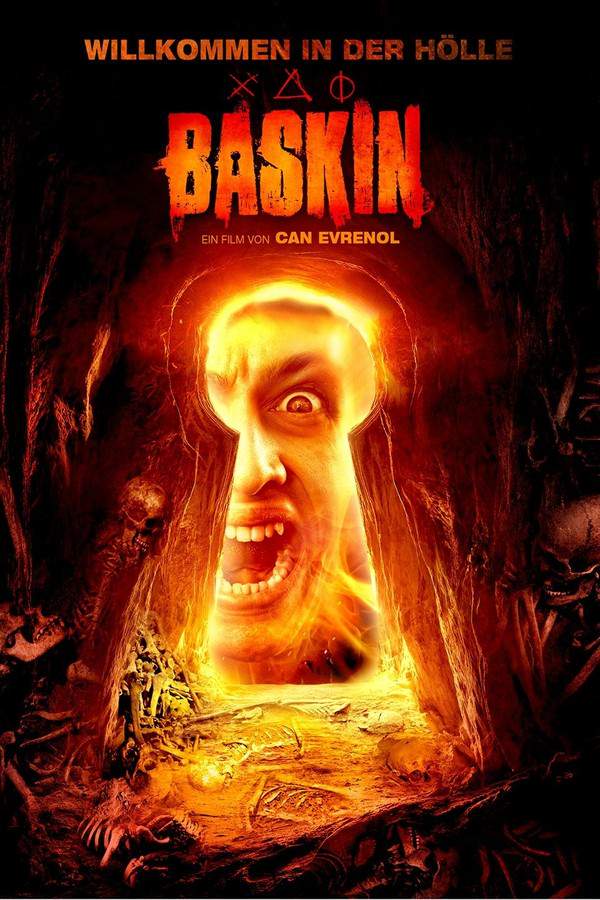
Baskin (2016) movie poster

Plot Summary

Baskin (2016) Plot Summary Explained

Release, runtime and language
2016 · 97 min · Turkish
Loading streaming availability…
Directed by
Can Evrenol

A seasoned police unit, including a rookie officer grappling with past trauma, investigates a disturbing scene in a remote town. They discover a decrepit building that leads them into a monstrous lair, and a split within the team only accelerates their descent into a nightmarish realm. As they confront gruesome horrors, the officers struggle to distinguish reality from madness, and their own fears threaten to consume them.

On this page (6)
  1. 1 Where to watch
  2. 2 What happens: full plot
  3. 3 Plot questions answered
  4. 4 Movie threads
  5. 5 Movies like Baskin
  6. 6 Every angle
Loading streaming availability…

Full plot summary · contains spoilers

What Happens in Baskin: Full Plot Summary

The whole story of Baskin (2016) explained, from the opening scene to the final frame: every key event, every twist and what it all adds up to. Read it as a quick recap before the sequel, to check a scene you missed, or to finally understand what really happened.

A tense, nocturnal prologue opens with a young boy waking to unsettling sounds emanating from his mother’s bedroom. The scene is punctuated by a television screen that flickers with static, and a sudden, frightening vision that disrupts his sleep. He screams and pounds on his locked mother’s door as a dark, intangible hand seems to reach out from the shadows, leaving him trembling and alone in the dark.

The narrative then shifts to a small restaurant where a hooded figure arrives bearing a bucket of raw meat. Five police officers—Remzi, Arda, Yavuz, Apo, and Seyfi—sit together, their conversation taking a charged turn toward themes of sex. The mood is uneasy, a mix of casual banter and underlying tension. Seyfi, feeling unwell, hurries to the restroom and notices a frog perched on the soap stand, a small, disturbing detail that threads through the creeping sense of unease. A confrontation erupts when Yavuz clashes with the restaurant owner’s son, prompting the group to leave, though Seyfi insists on remaining behind the wheel despite his sickness.

On the road, a dispatcher calls in for back-up from colleagues who have already traveled to Inceagac, a town whispered about for its strange rumors. A chilling vision grips Seyfi—a bloody figure emerges in his mind—causing him to lose control and drive their van off the road and into a lake. Stranded and scrambling for safety, the men press on to Inceagac, where locals offer warnings about danger and deceit lurking in the fog-shrouded streets. Their destination becomes an abandoned Ottoman-era police station, the very place connected to the distress call they received.

Inside the decaying building, they discover a fellow officer in a wildly catatonic state. Seyfi stays with the incapacitated man while the remaining four search ahead. In a hidden room, he stumbles upon a circle of cultists smeared with blood and viscera. Paralyzed with fear, he is overwhelmed as the cultists surge toward him, dragging him deeper into their violent ritual.

As the group navigates the labyrinth-like interior, they are subjected to a cascade of horrifying sights and increasingly surreal experiences. Through a collage of flashbacks and dreamlike sequences, the story gradually reveals that Remzi has acted as a father figure to Arda, who was the young boy from the opening scene. The emotional weight of this past connection deepens the sense of betrayal and vulnerability that threads through the present danger.

The men, now separated and perilously close to capture, find themselves bound in a dungeon encircled by the cultists. A hooded figure—the Father—emerges and orchestrates a brutal purge: the deaths of Apo, Yavuz, and Remzi. In a chilling moment of philosophy, the Father declares that hell is not a distant place but something one carries within. The line is underscored by a dying Remzi, who passes a key to Arda just before death, a tangible tool that becomes the last spark of resistance.

With the key in hand, Arda fights back, overpowering the Father and seizing the moment to escape the crumbling structure. He bolts from the village, sprinting along a desolate road with a sense of grim triumph, only to flag down an oncoming vehicle that fails to notice him. The car turns out to be the same police van that carried them through the earlier confrontation, and in a cruel echo of the earlier vision, Arda is struck by the vehicle. The scene folds back to the familiar lake where the group’s expedition began, and the five men crash once more into the water, their fates seemingly sealed in a loop of horror and revelation.
Last updated: October 09, 2025 at 16:17

Was this helpful?

Plot questions answered

Baskin Plot Explained: Your Questions Answered

The questions people ask most about Baskin (2016): what happens in the confusing scenes, why the characters do what they do, the twists, hidden details and what the ending means. Each answer contains spoilers.

Q1

Why does Seyfi crash the van into the lake?

Seyfi crashes the van after experiencing a terrifying vision of a bloody figure while driving. The vision triggers a panic attack, causing him to lose control of the vehicle and veer off the road into a lake. This moment establishes the supernatural elements of the film and connects directly to the vision Arda later experiences at the end.

Foreshadowing: Earlier, the dispatcher mentioned the dangerous reputation of Inceagac, hinting at the supernatural forces awaiting them.

  • seyfi crash
  • van lake
  • vision
  • inceagac
  • police unit
Q2

Who is the boy from the opening scene?

The boy from the opening scene is Arda, one of the five police officers. As a child, he experienced the terrifying vision of the shadowy hand reaching for him in his mother's locked bedroom. The film reveals through flashbacks that Remzi served as a father figure to Arda after his mother locked him out during that traumatic night.

Foreshadowing: The opening scene introduces the traumatic event that shaped Arda's relationship with Remzi, establishing the emotional core of their bond.

  • arda
  • young boy
  • opening scene
  • childhood trauma
  • remzi
Q3

What are the cultists doing in the abandoned police station?

The cultists have taken over the abandoned Ottoman-era police station and use it as their lair for violent rituals. They smear themselves with blood and viscera, perform brutal ceremonies, and capture anyone who enters. The Father leads this group, orchestrating executions of those they capture, including the police officers.

Foreshadowing: The strange warnings from Inceagac locals about danger and deceit foreshadowed the cult's presence in the village.

  • cult
  • cultists
  • police station
  • father
  • ottoman building
  • ritual
Q4

What does the Father mean when he says hell is inside us?

The Father delivers this chilling philosophy during the dungeon scene, declaring that hell is not a distant place but something people carry within themselves. This nihilistic statement encapsulates the film's thematic core, the officers' own fears, traumas, and moral failings are their personal hells. The comment also justifies the cult's brutal actions as a form of liberating people from their internal suffering.

Foreshadowing: The statement reflects the film's overall tone of psychological horror and the internal torment experienced by each character.

  • father
  • hell
  • philosophy
  • quote
  • nihilism
  • internal hell
Q5

How does Arda escape from the cult's dungeon?

As Remzi dies in the dungeon, he passes a key to Arda. Using this key, Arda is able to free himself from his bonds, overpower The Father, and flee the crumbling building. The key represents the final spark of resistance and hope amid the overwhelming horror.

Foreshadowing: The key's significance becomes clear only at the climax, though earlier moments hint at Remzi's protective instincts toward Arda.

  • arda escape
  • key
  • dungeon
  • father
  • prison
  • breakout
Q6

Is Baskin a time loop?

The ending strongly suggests a time loop or cyclical fate. After Arda escapes and runs down the road, he is struck by the same police van that carried the officers earlier, the same van Seyfi crashed into the lake. The scene then repeats the lake crash, implying the events will happen again. This ambiguous ending reinforces the film's themes of inescapable horror and cyclical trauma.

Foreshadowing: The repeated lake crash mirrors the earlier accident, and Seyfi's prophetic vision of the bloody figure hints at this cyclical fate.

  • time loop
  • ending
  • cycle
  • repeat
  • fate
  • ambiguous ending
Q7

What is the relationship between Remzi and Arda?

Remzi has acted as a father figure to Arda ever since Arda's traumatic childhood night, when his mother locked him out during the frightening encounter with the shadowy hand. This past connection adds emotional weight to Remzi's death in the dungeon and explains why Remzi hands Arda the key before dying, their bond transcends the immediate horror.

Foreshadowing: The opening scene establishes Arda's childhood trauma, which is later revealed to be connected to Remzi.

  • remzi
  • arda
  • father figure
  • relationship
  • adoptive father
Q8

What does Seyfi's vision show him?

Seyfi's vision depicts a bloody figure that appears to him while driving, causing immediate panic and loss of control. This vision proves prophetic, it essentially previews the brutal fate that awaits the officers at the hands of the cult. The vision is one of several supernatural elements that blur the line between reality and madness throughout the film.

Foreshadowing: The vision foreshadows the violence the group will encounter, and its repetition at the end confirms the cyclical nature of their fate.

  • seyfi vision
  • bloody figure
  • prophecy
  • supernatural
  • precognition
Q9

Who is the hooded figure who delivers the meat?

The hooded figure who delivers the bucket of raw meat to the restaurant is The Father, the leader of the cult that operates in Inceagac. His appearance at the restaurant early in the film establishes his presence in the village before the officers encounter him in the police station.

Foreshadowing: This early sighting of The Father marks him as a figure operating in the background, foreshadowing his later dominance over the plot.

  • hooded figure
  • meat
  • restaurant
  • father
  • cult leader
Q10

Why does Arda get hit by the van at the end?

After escaping the cult's lair, Arda runs onto the road and attempts to flag down an oncoming vehicle. However, the driver fails to see him, and the van strikes Arda. The cruel irony is that the vehicle is the same police van from earlier, and this accident echoes Seyfi's earlier crash, completing the loop. The moment emphasizes the inescapable, cyclical nature of the horror they face.

Foreshadowing: Seyfi's earlier vision of a bloody figure while driving directly parallels this moment, showing the prophecy fulfilled.

  • arda hit
  • van
  • accident
  • road
  • ending
  • struck by car
Q11

Why do the cultists kill Apo, Yavuz, and Remzi?

The Father orchestrates the killing of Apo, Yavuz, and Remzi as part of the cult's brutal purification ritual. The Father believes he is liberating them from their internal hells. This purge represents the cult's twisted philosophy in action, they view these murders as necessary sacrifices rather than senseless violence.

Foreshadowing: The Father's earlier statement about hell being internal establishes his justification for these killings.

  • apo
  • yavuz
  • remzi
  • killed
  • dungeon
  • father
  • cult murder

Movie threads

More Movies Like Baskin, by Mood & Story

Curated lists built around what makes Baskin tick: the same mood, the same kind of story or the same emotional payoff. Each list explains why these movies belong together.

Movies with a hellish descent like Baskin

Characters cross a threshold into a surreal and monstrous reality. If you liked the nightmarish journey in Baskin, these movies also feature a terrifying plunge into surreal and monstrous worlds. Explore similar horror films where characters cross a threshold into a reality warped by psychological terror and grotesque imagery, perfect for fans of extreme and unsettling cinema.

  • surreal
  • nightmarish
  • oppressive
  • gruesome
  • dread-filled
  • claustrophobic
  • Tone: dark, oppressive, nightmarish
  • Pacing: variable, starting slow then accelerating
Why these movies?

The story pattern: Stories in this thread typically follow a group or individual who investigates a strange occurrence, leading them to a specific location that acts as a portal to a nightmare. The narrative structure often abandons conventional logic, prioritizing sensory assault and the psychological unraveling of the characters as they confront incomprehensible evil.

Why they belong together: These movies are grouped by their core premise of a literal descent into a hellish dimension or a state of psychological madness. They share a high-intensity, oppressive atmosphere, a focus on body horror and surreal imagery, and a bleak outlook where escape is unlikely.

Movies with a tension explosion like Baskin

A creeping sense of dread erupts into an unstoppable onslaught of terror. Fans of Baskin's shift from eerie buildup to all-out terror will appreciate these movies. This collection features horror and thrillers that start with a slow-burn sense of dread before exploding into relentless, fast-paced action and horror, perfect for viewers who love a powerful payoff.

  • slow burn
  • unsettling
  • dread-filled
  • tense
  • chaotic
  • relentless
  • Tone: tense, dark, dreadful
  • Pacing: variable, slow burn to fast
Why these movies?

The story pattern: The narrative pattern is defined by a clear two-act structure. The first act establishes a normalcy that feels increasingly wrong, using subtle cues and character interactions to build tension. The second act is triggered by a specific event, shattering the calm and propelling the story into a high-stakes, violent struggle for survival where the initial dread is fully realized.

Why they belong together: These films are united by their masterful control of pacing and tension. They provide a similar viewing experience: the anxious satisfaction of a slow build followed by the visceral impact of a violent, chaotic release. The emotional journey is from apprehension to sheer terror.

If you liked this

Movies Like Baskin

Similar movies to Baskin: the same genre, themes or kind of story. Each one comes with its own plot summary, timeline and ending explained.

Browse all movie summaries

Every angle

Baskin (2016) Explained: Plot, Timeline & Characters

Everything about Baskin in one place: what happens in the plot summary, the timeline in chronological order, the characters and meaning and a spoiler-free summary. What's After the Movie adds the cast, box office and post-credit scenes.

Coming soon on iOS and Android

The Plot Explained Movie Summary App

Plot summaries, endings explained and timelines on your phone. Catch up on any movie in minutes, save your favorites and never miss a twist again.

Be the first to know when we launch. Your email stays private, always.

Learn more about the app