








Plot Explained Spoilers guaranteed!
Plot Explained

Browse by genre

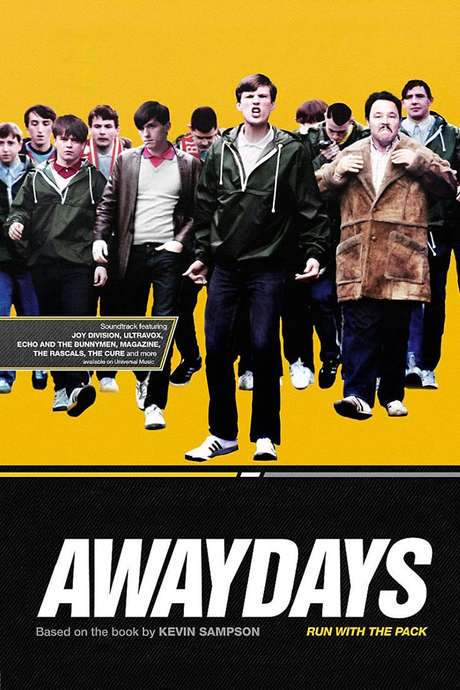
Awaydays (2009) movie poster

Characters & Themes

Awaydays (2009) Characters, Setting & Themes Explained

Release, runtime and language
2009 · 105 mins · English
Directed by
Pat Holden
Starring
Stephen Graham, Anthony Borrows, Sacha Parkinson, Holliday Grainger, Liam Boyle, Oliver Lee

Set on the Wirral during the bleak early years of Margaret Thatcher’s government, the film follows a group of restless young men who reject the monotony of nine‑to‑five work and chase thrills through sex, drugs, rock‑and‑roll, fashion, football and street fighting.

On this page (8)
  1. 1 Where to watch
  2. 2 Characters explained (8)
  3. 3 Where & when it takes place
  4. 4 Themes & meaning (4)
  5. 5 Character & meaning questions
  6. 6 Movie threads
  7. 7 Movies like Awaydays
  8. 8 Every angle

Where to watch

Where to Watch Awaydays (2009)

Where can you watch Awaydays? Stream, rent or buy it in the US, including on Fawesome, Hoopla and Cineverse: current JustWatch availability with up-to-date prices.

Streaming availability powered by JustWatch

8 main characters · contains spoilers

Awaydays Characters Explained: Who Is Who

The main characters of Awaydays (2009), heroes and villains: what drives them, how they change over the course of the story and what each of them reveals about the film's bigger ideas.

  • Paul Carty (Nicky Bell)

    A keenly observant teen who longs to belong to The Pack. He emulates the firm’s hard-edged culture, seeking status through bravado and danger. His push to join the group tests his loyalty to family and reveals how belonging can override concern for loved ones. He must navigate the pull between the Pack’s thrill and his duty to his sister and community.

    • 🎯 Belonging
    • ⚔️ Violence
    • 🧭 Identity
  • John Godden (Stephen Graham)

    Leader of The Pack and a former soldier, Godden embodies control and ruthlessness. He dictates the firm’s rules and expects unwavering loyalty, even as his authority is challenged by rivals and internal strife. His decisions drive the Pack’s violent dynamics, until a clash with Baby Millan alters the power balance.

    • ⚔️ Leadership
    • 🪖 Military background
    • 💥 Violence
  • Elvis (Liam Boyle)

    Charismatic and volatile, Elvis pulls Carty deeper into the Pack while wrestling with heroin addiction. He dreams of a life beyond Birkenhead and pushes Carty toward Berlin, yet his instability and drug use destabilize their bond. His arc culminates in a haunting moment that questions the price of loyalty and friendship.

    • 🧪 Addiction
    • 🎤 Charisma
    • ⚔️ Violence
  • Molly (Holliday Grainger)

    Paul’s sister, protective and perceptive about her brother’s fixation with The Pack. She embodies family bonds and serves as a touchstone of normalcy amid the town’s violence. Her presence highlights the cost of Paul’s involvement on those he loves.

    • 👪 Family
    • 💬 Support
    • 🫶 Care
  • Natasha (Sacha Parkinson)

    A love interest who becomes part of Paul’s personal life outside the Pack. Their romantic night contrasts with the group’s brutality, offering a glimpse of tenderness amid a culture of aggression. Natasha’s presence marks a potential path away from the Firm’s influence.

    • 💘 Love
    • 🕊️ Escape
    • 🫀 Vulnerability
  • Baby Millan (Oliver Lee)

    A loyal Pack member whose brutality underscores the firm’s discipline. He challenges rivals and leads aggressive actions, including a pivotal confrontation that ends with Godden’s death. His actions catalyze the Pack’s fragility and the surge of internal danger within the group.

    • 🗡️ Violence
    • 🧠 Ruthlessness
    • 💥 Power
  • Uncle Bob (Ian Puleston-Davies)

    Paul’s employer and a steady, grounded presence who represents ordinary life and responsibility. He encourages education and a life beyond street violence, providing a contrasting pull to Paul’s Pack-driven ambitions. His interactions anchor Paul’s personal conflict between duty and thrill-seeking.

    • 👔 Authority
    • 🧭 Guidance
    • 🏠 Family
  • Sonia (Rebecca Atkinson)

    A woman encountered by Paul and Elvis who becomes part of their social circle. She represents a life outside the Pack’s orbit and the complexities of relationships formed in the clubbing and bus scenes. Sonia’s presence adds a layer of vulnerability and humanity to the male-dominated world.

    • 💃 Social life
    • 💖 Desire
    • 🫂 Connection

Last updated: October 04, 2025 at 16:00

Was this helpful?

Setting

Where and When Does Awaydays Take Place?

The setting of Awaydays (2009): the year and time period, the places and locations, and how they shape the characters, the mood and the tension of the story.

Time period

1979

The film takes place in 1979, a year emblematic of late-70s Britain’s economic hardship and rising football hooliganism. The North West setting uses trains, pubs, and away-day rituals to portray the era’s intense club loyalties and street-level power struggles. Flashbacks illuminate how the period’s social climate fuels the characters’ desperate bids to escape their towns.

Location

Birkenhead, Tranmere, Chester, Wrexham

The story is anchored in a gritty North West English townscape, with Birkenhead and its environs forming the core setting. Away-days unfold on trains between local grounds (Tranmere, Wrexham) and collide with pub sanctuaries like The Pelican, the Pack's HQ. The landscape is shaped by industrial decline and working-class pride, where loyalties are forged through violence, camaraderie, and the lure of escape.

  • 🏭 Industrial town
  • 🚆 Train culture
  • 🏟️ Away-days
  • 🕰️ Post-industrial landscape

Last updated: October 04, 2025 at 16:00

Was this helpful?

4 major themes

Awaydays Meaning: Themes & Message Explained

What is Awaydays (2009) really about? The emotional, social and philosophical themes the film keeps returning to, its symbolism and the message beneath the surface.

  • Belonging

    Paul Carty is driven by a craving to belong to The Pack, seeking identity and acceptance through violence-driven camaraderie. The Pack’s rituals and the leadership’s approval offer a warped sense of worth, pulling him deeper into danger. The film shows how the need to belong can corrode personal morals and tether individuals to a perilous cycle.

  • Loyalty

    Loyalty within The Pack is a shifting currency, tested as leadership toggles between Godden and Elvis. The film examines the high cost of allegiance, including betrayals, rivalries, and the brutal enforcement of codes. What begins as loyalty to comrades evolves into a struggle for control that fuels violence and tragedy.

  • Escape

    A persistent urge to escape Birkenhead—and the symbolic Berlin fantasy—drives the characters’ choices. Berlin represents a world beyond the Pack’s grip, a beckoning of freedom that clashes with the pull of territory and reputation. The pursuit of escape creates tension between personal dreams and group demands.

  • Addiction

    Heroin use and the coercive atmosphere of the Firm generate a spiral of self-destruction that strains relationships and trust. Addiction amplifies volatility and moral compromise within the Pack, affecting decisions and intensifying the violence in pursuit of belonging and power.

Last updated: October 04, 2025 at 16:00

Was this helpful?

Character & theme questions

Awaydays Characters & Meaning: Your Questions Answered

The questions people ask about Awaydays (2009): who the characters really are, their relationships, what the symbols mean, where it takes place and what the movie is really about. Each answer contains spoilers.

Q1

Where is Awaydays set?

Awaydays is set in Birkenhead and surrounding areas of the North West of England, including Tranmere, Chester, and Wrexham. The film portrays a gritty post-industrial townscape shaped by industrial decline, where working-class identity is forged through football culture and street violence.

Foreshadowing: The opening scenes establish Birkenhead's bleak urban environment as a character itself, setting the tone for the film's exploration of limited opportunities.

  • birkenhead
  • tranmere
  • north west england
  • setting
  • location
Q2

What year does Awaydays take place?

The film is set in 1979, during the early years of Margaret Thatcher's government. This timing is significant as it captures the economic hardship, rising unemployment, and social tension that defined late-1970s Britain.

Foreshadowing: The 1979 setting coincides with the rise of football hooliganism as a cultural phenomenon, providing the backdrop for the gang dynamics.

  • 1979
  • thatcher era
  • 1970s
  • time period
  • historical context
Q3

What is Birkenhead like in the movie?

Birkenhead is depicted as a gritty post-industrial town characterized by economic decline and limited opportunities for young people. The film shows a world of pubs, trains, and street corners where working-class pride clashes with desperation. The landscape reflects a community caught between industrial past and an uncertain future.

Foreshadowing: The oppressive atmosphere of Birkenhead foreshadows the characters' desperate need to escape, both physically and emotionally.

  • birkenhead
  • industrial town
  • working class
  • social environment
Q4

What are the main themes of Awaydays?

The film explores several interconnected themes: the desperate need to belong and find identity through a group, the shifting and costly nature of loyalty, the persistent urge to escape one's circumstances, and the destructive spiral of addiction. These themes intertwine to portray a world where belonging often comes at a moral and personal cost.

Foreshadowing: From the opening, the film establishes belonging as a driving force, with Paul Carty's desire to join The Pack setting his moral compass on a dangerous trajectory.

  • belonging
  • loyalty
  • escape
  • addiction
  • themes
Q5

How does Awaydays explore belonging?

Belonging in Awaydays is portrayed as a double-edged sword. Paul Carty craves acceptance from The Pack, finding identity and worth through their violent rituals and camaraderie. However, the film shows how this need for belonging can corrode personal morals and trap individuals in dangerous cycles of loyalty and violence.

Foreshadowing: Paul's initial attraction to The Pack foreshadows how belonging can override concern for loved ones, including his sister Molly.

  • belonging
  • the pack
  • identity
  • peer pressure
  • paul carty
Q6

What does escape represent in Awaydays?

Escape in the film represents both a literal and metaphorical longing. The characters, particularly Elvis, dream of leaving Birkenhead for Berlin, which symbolizes freedom beyond the Pack's grip. However, the pursuit of escape creates tension between personal dreams and the demands of group loyalty, making true departure nearly impossible.

Foreshadowing: Elvis's Berlin fantasy hints at the impossibility of truly escaping one's roots and the consequences of trying to break away.

  • escape
  • berlin
  • freedom
  • dreams
  • leaving
Q7

Who is Paul Carty?

Paul Carty is the film's protagonist, a teenage boy who desperately wants to belong to The Pack, a local football hooligan firm. He emulates their hard-edged culture, seeking status and acceptance through bravado and danger. His journey tests his loyalty to family while exploring how the need for belonging can override concern for loved ones.

Foreshadowing: Paul's initial observations of The Pack establish his internal conflict between fitting in and maintaining his moral compass.

  • paul carty
  • protagonist
  • the pack
  • main character
Q8

Who is John Godden?

John Godden is the leader of The Pack, a former soldier who embodies control and ruthlessness. He dictates the firm's rules and demands unwavering loyalty from his members. His authority is challenged by rivals and internal strife, ultimately leading to a violent confrontation that alters the power balance within the group.

Foreshadowing: Godden's commanding presence from the start establishes the high stakes of loyalty and disobedience within The Pack.

  • john godden
  • leader
  • the pack
  • authority
  • violence
Q9

Who is Elvis in Awaydays?

Elvis is a charismatic but volatile member of The Pack who pulls Paul Carty deeper into the firm while wrestling with a heroin addiction. He dreams of escaping Birkenhead for Berlin and encourages Paul to pursue a life beyond the Pack. His instability and drug use destabilize their bond and contribute to the film's tragic arc.

Foreshadowing: Elvis's addiction and dreams of escape set the stage for the film's exploration of self-destruction and failed loyalty.

  • elvis
  • heroin
  • addiction
  • berlin
  • friendship
Q10

What is The Pack?

The Pack is a football hooligan firm based in Birkenhead, representing a violent subculture where young men find identity and purpose through club loyalty and street fighting. The group operates through strict codes of conduct, with leadership toggling between figures like Godden and Elvis. Membership offers belonging but demands absolute loyalty at a high personal cost.

Foreshadowing: The Pack's rituals and hierarchy are established early, showing how they shape the characters' choices and relationships.

  • the pack
  • football hooligans
  • gang
  • firm
  • violence
Q11

Why is the film set in 1979?

The 1979 setting captures a pivotal moment in British history when economic decline under Thatcher's early government created widespread hardship, particularly in post-industrial towns like Birkenhead. This era also saw the rise of football hooliganism as a cultural phenomenon, providing the perfect backdrop for a story about young men seeking identity and power in a world offering few opportunities.

Foreshadowing: The historical context establishes the desperation that drives characters toward the Pack's violent but compelling sense of purpose.

  • 1979
  • thatcher
  • economic decline
  • football hooliganism
  • 1970s britain
Q12

What role do trains play in Awaydays?

Trains are central to the film's culture and setting, used for away-days to matches at grounds like Tranmere and Wrexham. The train journeys represent both the mobility of football hooliganism and the confined, transitive space where identity is performed and conflicts erupt. Train culture embodies the movement between belonging to a place and the desire to escape it.

Foreshadowing: The opening train sequences establish the ritualistic nature of away-days and thePack's mobile territorial battles.

  • trains
  • away-days
  • football
  • travel
  • tranmere

Movie threads

More Movies Like Awaydays, by Mood & Story

Curated lists built around what makes Awaydays tick: the same mood, the same kind of story or the same emotional payoff. Each list explains why these movies belong together.

Movies about subculture identity like Awaydays

Stories of finding purpose in a tribe, followed by the pain of leaving it. If you were captivated by the hooligan culture and desperate search for belonging in Awaydays, you'll find similar stories here. This collection features films about characters drawn into intense subcultures—from gangs to music scenes—where the pursuit of identity comes with a heavy price, often culminating in a bittersweet or bleak awakening.

  • angsty
  • grim
  • restless
  • tense
  • oppressive
  • nostalgic
  • Tone: bleak, tense, angsty
  • Pacing: steady, immersive
Why these movies?

The story pattern: The narrative follows a protagonist seeking escape from a monotonous or oppressive life. They are initiated into a group that offers a powerful sense of identity through shared rituals, style, or conflict. The middle act deepens their involvement, often revealing the group's violence, toxicity, or hypocrisy. The climax involves a moral or physical crisis that forces the protagonist to choose between loyalty and self-preservation, leading to an ending marked by loss but also self-awareness.

Why they belong together: These movies are grouped by their shared focus on the intense, often destructive process of finding and losing a tribal identity. They consistently blend themes of rebellion, male bonding, and the grim realities of working-class life, all while maintaining a heavy emotional weight and a steady, immersive pacing that pulls you into the character's world.

Grim coming-of-age period dramas similar to Awaydays

Harsh portraits of youth navigating a bleak and oppressive era. For viewers who appreciated the gritty 1970s England setting and the heavy, bittersweet tone of Awaydays. This selection features movies like Awaydays that use a specific historical moment—often one of recession and social strife—as a backdrop for raw, unglamorous stories about the difficult transition from youth to adulthood.

  • grim
  • melancholic
  • nostalgic
  • oppressive
  • restless
  • angsty
  • Tone: bleak, melancholic, nostalgic
  • Pacing: steady, character-driven
Why these movies?

The story pattern: These narratives are grounded in a specific, grim historical period that directly impacts the characters' lives. The plot is a linear, character-driven arc following a young person's struggle for meaning. They experiment with rebellion, friendship, and self-destruction as outlets for their frustration. The story avoids sentimentalism, instead presenting a raw and often painful evolution where characters gain awareness of their circumstances at the cost of their innocence, leading to a sobering conclusion.

Why they belong together: The films share a potent combination of a bleak tone, a heavy emotional weight, and a meticulously recreated period setting that feels oppressive. The similarity comes from this specific mood—a mix of nostalgia for youth with the grim reality of the era—and the steady, unsentimental pacing that focuses on character development over plot contrivances.

If you liked this

Movies Like Awaydays

Similar movies to Awaydays: the same genre, themes or kind of story. Each one comes with its own plot summary, timeline and ending explained.

Browse all movie summaries

Every angle

Awaydays (2009) Explained: Plot, Timeline & Characters

Everything about Awaydays in one place: what happens in the plot summary, the timeline in chronological order, the characters and meaning and a spoiler-free summary. What's After the Movie adds the cast, box office and post-credit scenes.

Coming soon on iOS and Android

The Plot Explained Movie Summary App

Plot summaries, endings explained and timelines on your phone. Catch up on any movie in minutes, save your favorites and never miss a twist again.

Be the first to know when we launch. Your email stays private, always.

Learn more about the app