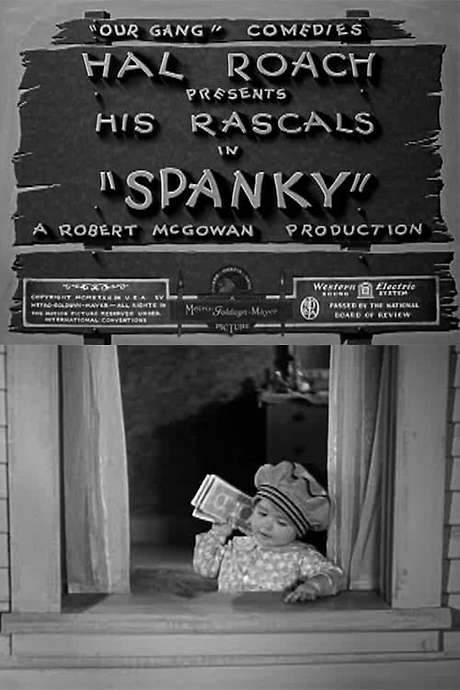
Spanky [George McFarland] is appointed treasurer of the Ancient and Honery Order of Woodchucks on the same day as his parents’ wedding anniversary. The scene opens with a small heap of household chaos and a father Johnny Arthur doing his best to be generous, tucking money into an envelope as a thoughtful anniversary gift for his wife. In a moment of distraction, he absentmindedly uses the envelope as a bookmark, setting off a chain of misunderstandings that will strain the family and test Spanky’s wits.
Spanky’s mother [Claudia Dell] notices something odd when she spots Spanky hiding the gang’s club money in a cookie jar, and her suspicions jump to the conclusion that Spanky has stolen the very envelope meant for the anniversary gift. The accusation sparks a rapid, spiraling misunderstanding: she confronts Spanky with the money, and she brings the scene to her husband, who also reads the situation incorrectly. The misread moment grows into a family puzzle where trust frays at the edges and the truth hides somewhere in the clutter of a busy home.
As the clock ticks, Spanky searches high and low for the missing money, but the coins and envelopes seem to vanish into thin air. Meanwhile, the other Woodchucks—a lively crew who count the “dough” as part of their clubhouse business—demand a return of the funds as their club has just dissolved its own informal operations. The tension builds quickly: Spanky wants to make things right, but he is blocked at every exit by the very group he is supposed to lead, and the sense of impending punishment hangs heavy in the air.
In a desperate bid to buy time, Spanky devises a risky escape plan. He tries to slip away by transforming himself, painting his face to appear in disguise and dressing as Buckwheat, the maid/nanny’s son. Buckwheat is brought to life by Billie Thomas, and this bold ruse is meant to throw the adults off the scent and buy Spanky a chance to recover the missing envelope. The plan is as comic as it is flawed: the disguise attracts attention, not sympathy, and it quickly falls apart, forcing Spanky back toward the heart of the growing storm as his parents return to the house, unwittingly closing the window on his subterfuge.
When the dust begins to settle, Spanky tries a more practical safeguard. He tucks the anniversary money into a book, hoping the concealment will shield him from a spanking and give him a chance to set things straight. It’s in this moment that the truth begins to surface in a more concrete way: Spanky’s father discovers the gift envelope tucked inside the book and finally realizes the mistake that started everything. The revelation is quiet at first, but it opens the door to the real conflict beneath the surface—the memory lapse that set off the entire chain of accusations.
To prevent his wife from ever learning the full truth, Spanky’s father engineers a curious compromise. He asks Spanky to pretend to administer a spanking to him, and Spanky, with theatrical groans, plays the part to keep up appearances while the true mistake remains hidden from the mother’s view. The scene plays out with a mix of humor and awkward tenderness, revealing the gap between memory and reality in a way that only a family comedy can: the comedy lightens the heaviness while the truth still waits to be spoken.
The moment of confession finally arrives when Spanky’s mother comes upon the staged punishment and realizes that the envelope—the very symbol of the anniversary gift—is still in question. What follows is a climactic, chaotic resolution that lands squarely on the issue of trust and memory: Spanky’s dad faces repercussions for his faulty memory, and the family begins to reckon with the miscommunications that nearly tore them apart. The film settles into a “wild and woolly” culmination that blends slapstick misadventure with a gentle reminder about family, responsibility, and the importance of looking twice before jumping to conclusions.