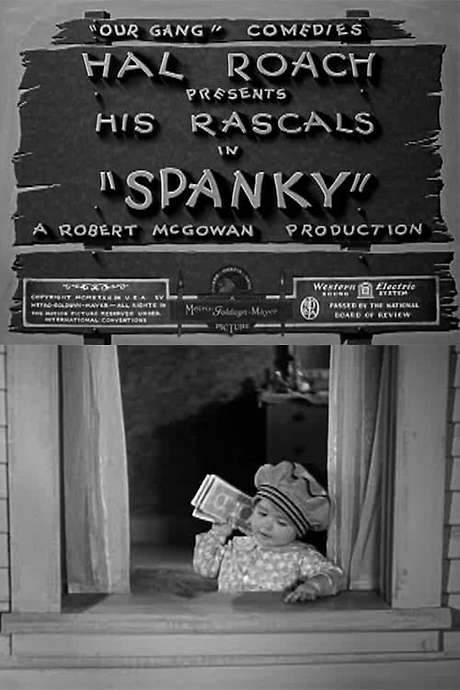
Although this film is a remake of a 1920s silent Our Gang episode titled Uncle Tom's Uncle, the spotlight is on Spanky as the central character, guiding a tale that blends mischief, family dynamics, and schoolyard humor with a playful sense of chaos.
Early scenes of this movie were part of Spanky's screen test taken during his first visit to Hal Roach Studios in April 1931, and those tests captured his bug hunting antics, teasing the lively energy he would bring to the rest of the story. The film sets this tone by situating a schoolyard crew in the midst of a homegrown production, where the gang’s enthusiasm sometimes collides with the practical limits of grown-up life.
Meanwhile, the gang’s older cousinly figure, [Breezy Brisbane], and the rest of the troupe stage a play of Uncle Tom's Cabin, a spectacle that is as much about showing off their talent as about staging a wide-eyed, earnest performance. At the same time, [Breezy Brisbane] is temporarily assigned to babysit [Spanky] while their mother, [Spanky's Mother], heads out for a quick shopping trip, creating a mini-crisis that threads through the afternoon’s events. The juxtaposition of a makeshift stage and a household routine gives the story its signature from-chaos-to-heart feel, inviting viewers to root for the kids even as their plans unravel.
Outside the theater, [Spanky's Father] engages in a stubborn, almost comical, resistance to spending money for housekeeping, even though a secret door in the wall guards a surprising vault of cash. This hidden stash becomes a quiet undercurrent to the day’s adventures, a reminder that money can complicate simple family life even in the happiest of homes. The tension between frugality and the creature comforts that make life brighter for mom and kids adds a subtle moral layer to the antics, without losing the light, breezy vibe that defines the Our Gang style.
The production itself runs into trouble as [Spanky] relentlessly disrupts the play, and what should be a cheerful performance promptly derails. The audience, a mix of young spectators, responds with a chorus of rotten tomatoes and garbage hurled toward the stage, turning the room into a miniature riot of color and noise. In the middle of the chaos, [Spanky] uncovers his dad’s money and nonchalantly starts tossing it out the window, turning a family feud into a wild scramble. The other kids dash in, hoping to grab their share of the windfall, while the improvisational chaos continues to mount.
When [Spanky]’s father finally arrives, he ejects the crowd and demands that the money be returned, restoring a sense of order and accountability to the scene. Yet the mischief lingers in the air, as the gang dusts themselves off and begins to pick up the scattered bills, showing a resilience and camaraderie that were central to the Our Gang spirit. The father, sensing both the mess and the potential, resolves to put the money in the bank and invest more in his wife and children, signaling a return to family stability even after a afternoon of uproarious pranks.
In the end, the film blends a remake’s reverence for a classic scenario with the irresistible energy of Spanky and his friends. It captures the moments when childhood imagination collides with everyday challenges, and it does so with a warm, despite-the-chaos humor that invites audiences to smile at the chaos while cherishing the bonds that bring everyone back home.