Year: 2004
Runtime: 109 min
Language: English
Director: Lone Scherfig
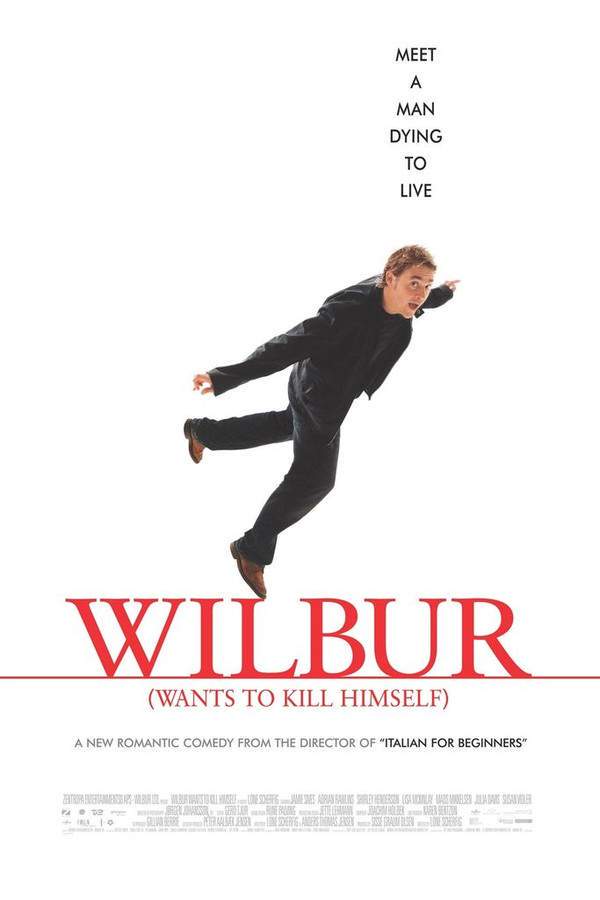
Following their mother's death, two brothers grapple with immense grief and uncertainty when their father unexpectedly leaves. One brother strives to maintain stability, while the other struggles with despair. They find unexpected comfort in a budding romance and a possibility for healing as they confront their shared loss and attempt to rebuild their lives.
Get a spoiler-free look at Wilbur Wants to Kill Himself (2004) with a clear plot overview that covers the setting, main characters, and story premise—without revealing key twists or the ending. Perfect for deciding if this film is your next watch.
In the quiet corners of a modest city, two brothers return to the home that still bears the echo of their mother’s passing. The apartment above a modest bookshop, left behind by a father who has drifted away, becomes both sanctuary and reminder of what has been lost. The house is steeped in the soft hum of everyday life—pages turning, street sounds filtering through thin walls—while the weight of grief settles like dust on every surface.
Harbour, the elder sibling, assumes the role of reluctant caretaker. He tries to keep the family’s small business alive, balancing responsibility with a yearning for normalcy that feels just beyond his grasp. Across the hallway, Wilbur drifts between moments of resignation and flickers of restless energy, caught in a lingering melancholy that makes each day feel like a rehearsal for something he cannot name. Their contrast creates a fragile rhythm: one brother’s steady pulse against the other’s wavering heartbeat.
Into this uneasy equilibrium steps Alice, a hospital cleaner whose quiet kindness and love of books begin to brighten the cramped space. She arrives with an unassuming grace, offering shared stories and simple gestures that hint at the possibility of new connections. As friendships deepen and tentative affection blossoms, the brothers find themselves navigating unfamiliar emotional terrain, discovering that love and companionship can be as restorative as they are unsettling.
The film’s tone sways between gentle dark humor and tender melancholy, painting a portrait of ordinary lives touched by extraordinary sorrow. Its visual style favors muted palettes and intimate framing, inviting the audience to feel the weight of each character’s inner world without needing grand gestures. Within this softly lit landscape, the brothers, Alice, and the lingering presence of their mother create a resonant tableau of loss, resilience, and the quiet hope that something healing may emerge from the cracks of their broken lives.
Last Updated: August 10, 2025 at 10:51
Discover curated groups of movies connected by mood, themes, and story style. Browse collections built around emotion, atmosphere, and narrative focus to easily find films that match what you feel like watching right now.
Stories that find humor and tenderness in the heavy landscape of loss.If you appreciated the unique tone of Wilbur Wants to Kill Himself, these movies also blend serious themes of death and depression with understated, dark humor. They are bittersweet stories about grief that feel authentic yet surprisingly hopeful, offering similar emotionally complex experiences.
These narratives typically center on characters grappling with a significant death or terminal illness. The plot is driven by their attempts to cope, often involving strained family dynamics or new, unexpected relationships. The journey is punctuated by darkly humorous moments that arise from the characters' despair or the awkwardness of mourning, leading to a conclusion that is rarely purely happy or sad, but realistically mixed.
They are grouped by their unique ability to blend a heavy emotional core with a specific type of humor. The shared tone—bittersweet and darkly comedic—creates a coherent viewing experience for those seeking stories about grief that are poignant without being overwhelming.
Where fractured individuals create new, unconventional families through shared pain.Fans of Wilbur Wants to Kill Himself will find similar themes in these films, which focus on characters building new, supportive relationships in the wake of tragedy. These stories explore how found families provide solace and strength, often leading to a bittersweet but hopeful conclusion.
The narrative pattern involves characters who are isolated by grief, mental illness, or circumstance being brought together. Through a series of tender and often challenging interactions, they learn to rely on each other, forming a bond that functions as a new family. The central conflict often revolves around accepting this new reality and learning to love again, despite the scars of the past.
They share a core focus on the theme of 'found family' as a response to loss. The emotional journey from isolation to connection, coupled with a bittersweet tone that acknowledges the pain that brought them together, creates a strong unifying thread.
Don't stop at just watching — explore Wilbur Wants to Kill Himself in full detail. From the complete plot summary and scene-by-scene timeline to character breakdowns, thematic analysis, and a deep dive into the ending — every page helps you truly understand what Wilbur Wants to Kill Himself is all about. Plus, discover what's next after the movie.
Read a complete plot summary of Wilbur Wants to Kill Himself, including all key story points, character arcs, and turning points. This in-depth recap is ideal for understanding the narrative structure or reviewing what happened in the movie.
Track the full timeline of Wilbur Wants to Kill Himself with every major event arranged chronologically. Perfect for decoding non-linear storytelling, flashbacks, or parallel narratives with a clear scene-by-scene breakdown.
Discover the characters, locations, and core themes that shape Wilbur Wants to Kill Himself. Get insights into symbolic elements, setting significance, and deeper narrative meaning — ideal for thematic analysis and movie breakdowns.
Visit What's After the Movie to explore more about Wilbur Wants to Kill Himself: box office results, cast and crew info, production details, post-credit scenes, and external links — all in one place for movie fans and researchers.
Discover movies like Wilbur Wants to Kill Himself that share similar genres, themes, and storytelling elements. Whether you’re drawn to the atmosphere, character arcs, or plot structure, these curated recommendations will help you explore more films you’ll love.
Wilbur Wants to Kill Himself (2004) Scene-by-Scene Movie Timeline
Wilbur Wants to Kill Himself (2004) Movie Characters, Themes & Settings
Wilbur Wants to Kill Himself (2004) Spoiler-Free Summary & Key Flow
Movies Like Wilbur Wants to Kill Himself – Similar Titles You’ll Enjoy
On the Count of Three (2022) Complete Plot Breakdown
Son frère (2004) Full Movie Breakdown
My Blind Brother (2016) Detailed Story Recap
Wristcutters: A Love Story (2007) Spoiler-Packed Plot Recap
Dead in a Week: Or Your Money Back (2018) Story Summary & Characters
Just Buried (2008) Spoiler-Packed Plot Recap
Dr. Brinks & Dr. Brinks (2018) Spoiler-Packed Plot Recap
The Suicide Theory (2015) Complete Plot Breakdown
The Brothers (2001) Movie Recap & Themes
His Brother (2003) Film Overview & Timeline
Willy (2006) Full Movie Breakdown
Killing Dad (Or How to Love Your Mother) (1989) Detailed Story Recap
Brotherly Love (1970) Spoiler-Packed Plot Recap
My Suicide (2009) Complete Plot Breakdown
The Suicide (1978) Detailed Story Recap