
















Plot Explained Spoilers guaranteed!
Plot Explained

Browse by genre

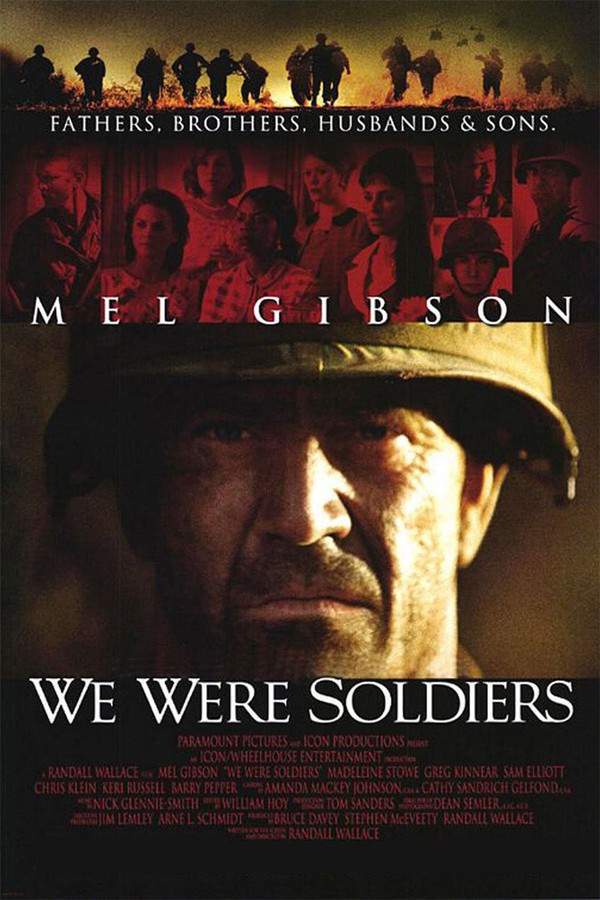
We Were Soldiers (2002) movie poster

Timeline

We Were Soldiers (2002) Timeline Explained – Every Event in Order

Release, runtime and language
2002 · 138 min · English
JustWatch #918 4
Directed by
Randall Wallace
Starring
Mel Gibson
Budget
$75M

During the opening days of the Vietnam War, a company of inexperienced American soldiers finds themselves facing a vastly superior North Vietnamese force in the Battle of Ia Drang. This intense war drama portrays the brutal realities of combat and the profound impact on the soldiers and their families. It depicts their courage, resilience, and the bonds forged amidst the chaos and devastation of this pivotal battle, based on a true story.

On this page (7)
  1. 1 Where to watch
  2. 2 Events in order (15)
  3. 3 Timeline questions answered
  4. 4 The book behind the movie
  5. 5 Movie threads
  6. 6 Movies like We Were Soldiers
  7. 7 Every angle

Where to watch

Where to Watch We Were Soldiers (2002)

Where can you watch We Were Soldiers? Stream, rent or buy it in the US, including on fuboTV, MGM Plus and Paramount Plus Essential: current JustWatch availability with up-to-date prices.

Streaming availability powered by JustWatch

15 events in order · contains spoilers

We Were Soldiers Timeline: Events in Chronological Order

Every key event of We Were Soldiers (2002) in order, scene by scene, with when and where it takes place. Use it to untangle flashbacks, time jumps and parallel storylines, to refresh your memory before the sequel or to find the exact scene you are thinking of.

  1. Ambush in Vietnam

    In 1954, during the closing phases of the First Indochina War, a French unit encounters an unexpected ambush from North Vietnamese Army forces. The assault leads to heavy casualties, including the deaths of many officers, forcing the veteran soldiers to fight for their survival.

    When
    1954
    Where
    Vietnam
  2. Grim Execution

    Following the ambush of the French unit, Nguyen Huu An orders the execution of all surviving French soldiers. This brutal decision is made to deter further French involvement in Vietnam and illustrate the resolve of the Viet Minh.

  3. Onset of Vietnam War

    Fast forward eleven years, the United States becomes heavily involved in the Vietnam War. The focus shifts to Lieutenant Colonel Hal Moore, who prepares his troops from the 7th Cavalry Regiment for imminent deployment while grappling with the war's political implications.

    When
    1965
    Where
    United States
  4. Haunting Legacy

    Hal Moore feels the weight of history as he leads his battalion, aware of the connections to General Custer's demise. He fears President Johnson's plan to conduct the war without a formal declaration will strip his unit of experienced soldiers just before their deployment.

  5. Arrival in Vietnam

    Upon arriving in Vietnam, Moore learns about a recent assault on an American base, prompting him to lead his 400 men into battle. Tasked with gathering intelligence, the urgency heightens as they prepare to confront a formidable enemy force.

    Where
    Vietnam
  6. Ia Drang Valley Battle

    Moore and his men make a landing in the treacherous Ia Drang Valley, where they capture a North Vietnamese lookout. The lookout reveals that the area is under the stronghold of over 4,000 North Vietnamese troops, heightening the tension for the American forces.

    Where
    Ia Drang Valley, Vietnam
  7. Ambush Encounter

    Tensions elevate when 2nd Lt. Herrick leads a group of soldiers into an ambush, resulting in several fatalities, including his own. The soldiers find themselves encircled and facing a relentless enemy, complicating their chances of survival.

  8. Defensive Strategy

    Sgt. Savage assumes command amid the chaos, utilizing artillery and the cover of night to fend off Vietnamese forces. Meanwhile, Moore coordinates with helicopters to reinforce their defenses as the battle rages on.

  9. Telegram Notifications

    Back at Fort Benning, the emotional aftermath begins as Lt. Col. Moore's wife Julie and other military families receive the grim task of delivering telegrams to the families of fallen soldiers. The haunting reality of war deeply impacts those waiting at home.

    Where
    Fort Benning, Georgia
  10. Continuous Onslaught

    As the battle intensifies, the American troops are heavily outnumbered, yet manage to hold their ground using a combination of artillery and helicopter support. Despite their efforts, Nguyen Huu An's forces launch an extensive attack to overpower their position.

  11. Calling for 'Broken Arrow'

    In a dire situation, Moore calls for a 'Broken Arrow,' indicating his troops are on the verge of being overrun and requesting air support. The resulting aerial bombardment of bombs and napalm devastates enemy troops but also causes tragic casualties among Moore's men.

  12. Regroup and Strategy

    Following the retreat of enemy forces, Moore's remaining troops, under Sgt. Savage's leadership, regroup and devise a strategy to target the Vietnamese division headquarters. This renewed plan ignites a final assault against the Americans.

  13. Helicopter Intervention

    As the American troops charge forward, Major Crandall and his helicopter gunships intervene decisively, resulting in significant enemy casualties. This pivotal moment turns the tide, allowing the beleaguered Americans to push back against their foes.

  14. Evacuation Promises

    After the battle subsides, Moore returns to the landing zone, fulfilling his promise to evacuate all of his men, including the fallen and wounded. These moments are filled with poignancy as the realities of war weigh heavily on the soldiers.

    Where
    Landing Zone, Vietnam
  15. Conclusion and Reflection

    In the aftermath, as the Americans retreat, the landing zone quickly falls back under North Vietnamese control. Moore's reflection on the battle reveals a sobering reality, indicating that the conflict will continue to unfold with significant human costs.

Last updated: November 03, 2024 at 15:22

Was this helpful?

Timeline questions answered

We Were Soldiers Timeline Explained: Your Questions Answered

When does it happen, and why in that order? The questions people ask about the chronology of We Were Soldiers (2002): time jumps, flashbacks, cause and effect between scenes and the correct order of events, each answered with spoilers.

Q1

Why does Nguyen Huu An order the execution of the surviving French soldiers in the opening scene?

Nguyen Huu An orders the execution of all surviving French soldiers to serve as a clear warning to deter further French military involvement in Vietnam. This brutal act demonstrates the Viet Minh's resolve and is meant to send a message that any foreign forces entering Vietnam will face total defeat. The scene establishes Nguyen Huu An as a ruthless but strategically minded commander who understands the psychological impact of such actions on enemy morale.

Foreshadowing: The opening execution scene foreshadows the brutal nature of the conflict and hints at Nguyen Huu An's ruthless leadership style that will later be directed against American forces.

  • nguyen huu an
  • execution
  • viet minh
  • french soldiers
  • deterrence
Q2

What is a Broken Arrow and why does Lieutenant Colonel Moore call for one?

A Broken Arrow is a desperate military code call signaling that American troops are on the brink of being overrun by enemy forces and requesting all available air support, including aircraft operating dangerously close to friendly positions. Moore calls for it when his outnumbered troops at the Ia Drang Valley face imminent defeat from the overwhelming North Vietnamese assault. The resulting aerial bombardment of bombs and napalm devastates the enemy forces but tragically also causes casualties among Moore's own men, a devastating but necessary choice to prevent total wipeout.

Foreshadowing: The buildup of enemy forces throughout the first day creates the desperate situation that makes the Broken Arrow necessary.

  • broken arrow
  • aerial support
  • air strike
  • moore
  • overrun troops
Q3

Why is Hal Moore anxious about leading the 7th Cavalry Regiment into battle?

Hal Moore is haunted by the historical connection between his unit's name and General George Custer's defeat at the Battle of the Little Bighorn. The 7th Cavalry was the unit Custer commanded that was annihilated by Native American forces. Additionally, Moore fears that President Johnson's plan to conduct the war without a formal declaration will strip his unit of around 25% of his most experienced soldiers just before deployment, leaving him with inexperienced troops facing a superior enemy force.

Foreshadowing: Moore's anxiety about his unit's history adds dramatic weight to the eventual battle outcome.

  • hal moore
  • 7th cavalry
  • custer
  • historical parallel
  • anxiety
Q4

What happens to the landing zone after the American evacuation?

Shortly after the American forces evacuate, the landing zone quickly falls back under North Vietnamese control. This means that although the Americans technically won the battle and inflicted heavy casualties on the enemy, they were unable to hold the territory. The victory is pyrrhic, the Americans suffer significant losses, and the strategic advantage is lost almost immediately.

Foreshadowing: The film's ending reveals this outcome directly through dialogue and visual storytelling.

  • landing zone
  • evacuation
  • vietnamese control
  • territory lost
  • bitter victory
Q5

How does Sgt. Savage become the leader during the ambush?

Sgt. Savage assumes command after 2nd Lt. Henry Herrick is killed during the ambush. When Herrick leads soldiers into the expertly crafted trap and dies along with much of his platoon, the surviving soldiers find themselves encircled with no escape. Savage steps up in the chaos, leveraging artillery support and using the cover of night to organize a defensive perimeter against the Vietnamese forces, while coordinating with Moore for helicopter reinforcements.

Foreshadowing: The chaos of the ambush creates the power vacuum that allows Savage to emerge as a leader.

  • sgt savage
  • herrick
  • ambush
  • leadership
  • command
Q6

What happens at Fort Benning with the telegrams?

Back at Fort Benning, Georgia, Lieutenant Colonel Moore's wife Julie and Barbara Geoghegan (wife of Lt. John Geoghegan) are tasked with delivering telegrams to families notifying them of their loved ones' deaths. This scene shifts focus to the home front, showing the devastating emotional impact of the battle on the soldiers' families who await news of their husbands, sons, and brothers.

Foreshadowing: The earlier battle casualties directly lead to this heart-wrenching home front scene.

  • telegrams
  • fort benning
  • families
  • julie moore
  • casualties notification
Q7

What promise does Lieutenant Colonel Moore make about evacuation?

Moore promises that he will evacuate all his men, including those who are fallen and wounded, before he himself leaves the landing zone. He returns to the landing zone specifically to ensure this promise is kept, personally overseeing the evacuation of every soldier regardless of their condition. This demonstrates his leadership principle of putting his men's welfare above his own safety.

Foreshadowing: Moore's earlier commitment to his men establishes his character throughout the battle.

  • moore
  • evacuation promise
  • fallen soldiers
  • wounded
  • leadership
Q8

How many enemy soldiers are killed in the Battle of Ia Drang?

According to the film's conclusion, Lieutenant Colonel Hal Moore is commended for having decisively killed over 1,800 enemy soldiers during the battle. This represents a significant victory in terms of body count, though it comes at a substantial cost to American forces as well.

Foreshadowing: The high enemy casualty count is built up through the intense fighting sequences and final battle moments.

  • enemy casualties
  • 1800 killed
  • battle victory
  • ia drang
Q9

What happens to Hal Moore after the Battle of Ia Drang?

After the Battle of Ia Drang, Hal Moore survives and continues to lead the fight from a different location in Vietnam. He eventually returns home safely after nearly a year of combat, receiving commendations for his leadership and the tactical victory at Ia Drang, despite the pyrrhic nature of the outcome.

Foreshadowing: The film hints at the continued conflict beyond this single battle.

  • hal moore
  • survives
  • returns home
  • continued fighting
  • vietnam
Q10

How do Major Crandall and helicopter gunships turn the tide of battle?

When the American troops charge forward toward the Vietnamese division headquarters and trigger a final assault, Major Bruce "Snakeshit" Crandall and his helicopter gunships intervene decisively. Their air support decimates the bulk of the hostile forces, creating a pivotal turning point that allows the beleaguered Americans to push back against the enemy and secure their position.

Foreshadowing: The buildup of the final assault creates the opportunity for Crandall's intervention.

  • major crandall
  • helicopter gunships
  • air support
  • final assault
  • tide turned

Movie threads

More Movies Like We Were Soldiers, by Mood & Story

Curated lists built around what makes We Were Soldiers tick: the same mood, the same kind of story or the same emotional payoff. Each list explains why these movies belong together.

Movies about military leadership and sacrifice like We Were Soldiers

Stories of officers facing impossible choices and heavy casualties. For viewers who appreciated the command perspective in We Were Soldiers. This thread gathers films that explore the heavy responsibility and moral dilemmas faced by officers in the heat of battle, focusing on leadership, strategy under fire, and the profound impact of command decisions on soldiers' lives in similar war dramas.

  • tense
  • somber
  • courageous
  • tragic
  • strategic
  • heavy
  • Tone: dark, somber, tense
  • Pacing: fast, action-driven
Why these movies?

The story pattern: The narrative pattern follows a leader, often a mid-level officer, thrust into a desperate situation. The story unfolds through their strategic perspective, showing the planning, execution, and brutal consequences of battle. The emotional journey revolves around the commander's resilience, the bonds with their unit, and the psychological toll of sending soldiers into harm's way.

Why they belong together: Movies are grouped here because they share a specific focus on the command experience in war. They feature a similar tone of grim responsibility, high-stakes tactical sequences, and a heavy emotional weight derived from the leader's perspective on loss and survival, creating a coherent and intense viewing experience.

War movies with bittersweet or costly victories like We Were Soldiers

War dramas where the cost of victory is as devastating as defeat. If you were struck by the bittersweet ending of We Were Soldiers, this thread is for you. It collects war films where a tactical success is overshadowed by profound loss, exploring the theme of pyrrhic victory. These stories are intense, emotionally heavy, and leave a lasting impression about the true cost of war.

  • bittersweet
  • tragic
  • somber
  • grim
  • heavy
  • reflective
  • Tone: bittersweet, dark, tragic
  • Pacing: fast, with a reflective ending
Why these movies?

The story pattern: Stories in this thread typically build towards a climactic battle that is technically won by the protagonists. However, the narrative emphasis shifts immediately to the devastating aftermath—the mass casualties, the personal grief, and the strategic inconclusiveness—challenging the very notion of 'winning' in war and resulting in a deeply bittersweet or melancholic conclusion.

Why they belong together: These films are grouped by their shared narrative structure and emotional payoff. They all deliver a powerful, bittersweet ending rooted in the theme of a pyrrhic victory. This creates a specific and resonant viewer experience focused on the tragic irony and heavy cost of warfare, beyond simple triumph or failure.

If you liked this

Movies Like We Were Soldiers

Similar movies to We Were Soldiers: the same genre, themes or kind of story. Each one comes with its own plot summary, timeline and ending explained.

Browse all movie summaries

Every angle

We Were Soldiers (2002) Explained: Plot, Timeline & Characters

Everything about We Were Soldiers in one place: what happens in the plot summary, the timeline in chronological order, the characters and meaning and a spoiler-free summary. What's After the Movie adds the cast, box office and post-credit scenes.

Coming soon on iOS and Android

The Plot Explained Movie Summary App

Plot summaries, endings explained and timelines on your phone. Catch up on any movie in minutes, save your favorites and never miss a twist again.

Be the first to know when we launch. Your email stays private, always.

Learn more about the app