











Plot Explained Spoilers guaranteed!
Plot Explained

Browse by genre

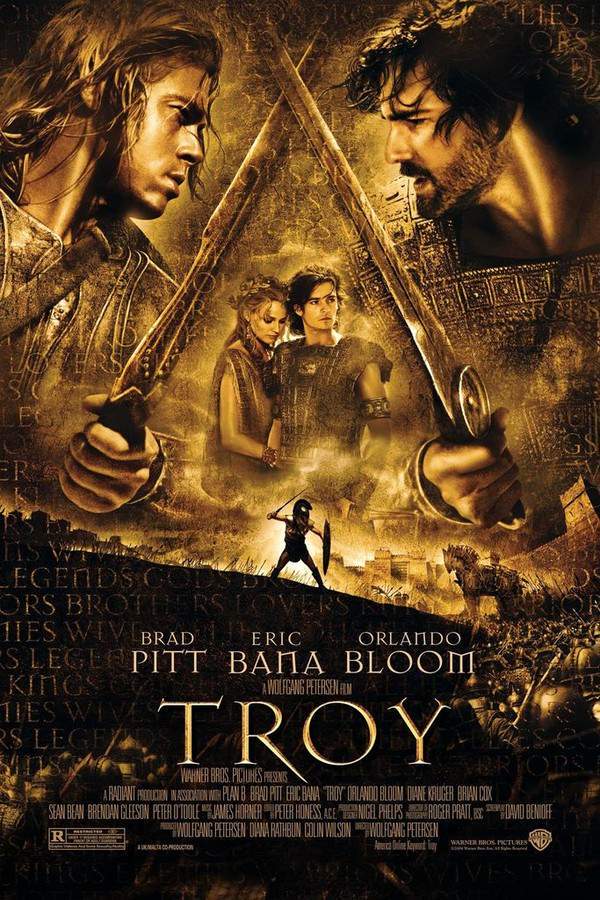
Troy (2004) movie poster

Timeline

Troy (2004) Timeline Explained – Every Event in Order

Release, runtime and language
2004 · 163 min · English
JustWatch #482 1
Directed by
Wolfgang Petersen
Starring
Brad Pitt, Eric Bana, Orlando Bloom
Budget
$175M

Inspired by Homer’s epic poem, the story follows the clash between ancient Troy and Sparta. When Trojan prince Paris takes Helen, the wife of Spartan King Menelaus, it ignites a devastating war. Driven by ambition, Menelaus’s brother Agamemnon rallies the Greek armies to conquer Troy and assert control over the Aegean Sea. The conflict escalates into a legendary battle with profound consequences for the kingdoms involved, testing the strength and courage of warriors on both sides.

On this page (7)
  1. 1 Where to watch
  2. 2 Events in order (15)
  3. 3 Timeline questions answered
  4. 4 The book behind the movie
  5. 5 Movie threads
  6. 6 Movies like Troy
  7. 7 Every angle

Where to watch

Where to Watch Troy (2004)

Where can you watch Troy? Stream, rent or buy it in the US, including on Apple TV, fuboTV and Paramount Plus Essential: current JustWatch availability with up-to-date prices.

Streaming availability powered by JustWatch

15 events in order · contains spoilers

Troy Timeline: Events in Chronological Order

Every key event of Troy (2004) in order, scene by scene, with when and where it takes place. Use it to untangle flashbacks, time jumps and parallel storylines, to refresh your memory before the sequel or to find the exact scene you are thinking of.

  1. Agamemnon's Alliance

    Agamemnon, the ruler of Mycenae, successfully unites numerous Greek kingdoms under his command, preparing for an aggressive campaign against Thessaly. His ambition is fueled by the desire for dominion over the region, signaling the start of impending conflict.

    Where
    Mycenae
  2. The Challenging Duel

    King Triopas proposes that a duel between their greatest warriors determine the outcome of the conflict, aiming to avoid a full-scale war. Agamemnon selects Achilles as his champion, while Triopas sends forth the formidable Boagrius to represent Thessaly.

    Where
    Thessaly
  3. Achilles' Reluctance

    Despite being a fierce warrior, Achilles hesitates to fight for Agamemnon. His desire to carve out his own legacy and achieve immortality clashes with the demands of loyalty to a king.

  4. Triumph in Battle

    Achilles ultimately defeats Boagrius in the duel, securing victory for Agamemnon and further establishing his dominance over Thessaly. This moment marks a significant turning point in the campaign.

    Where
    Thessaly
  5. The Abduction of Helen

    During a banquet in Sparta, Paris becomes enamored with Queen Helen and persuades her to escape with him back to Troy. This betrayal ignites the fury of Menelaus, setting off a chain reaction that leads to war.

    Where
    Sparta
  6. Menelaus' Vow

    Upon realizing Helen's disappearance, Menelaus vows to unleash destruction upon Troy, seeking Agamemnon's support for his revenge. Agamemnon readily agrees, motivated by his ambitions to raze the city.

    Where
    Sparta
  7. Odysseus' Plea to Achilles

    Odysseus encounters Achilles in training and implores him to join the war against Troy. Achilles, however, seeks guidance from his mother, Thetis, who presents him with a difficult choice between a life of peace or one of glory through battle.

    Where
    Ithaca
  8. Achilles' Decision

    After contemplating his options and the implications of war, Achilles decides to join Agamemnon, but insists on bringing his elite warriors, the Myrmidons. Their swift arrival in Troy shifts the balance of power on the battlefield.

    Where
    Troy
  9. The Seizure of Briseis

    After capturing the city beach, Achilles' forces take Briseis, a priestess and cousin of Hector. When Agamemnon seizes her from Achilles, it ignites a fierce anger in the warrior.

    Where
    Troy
  10. The Duel of Paris and Menelaus

    A council leads to Paris challenging Menelaus to a duel to avoid further bloodshed. The battle sees Paris wounded, leading to Menelaus's death at the hands of Hector, thus escalating the war further.

  11. Achilles' Vengeance

    Fueled by rage over the loss of Briseis and the death of Patroclus, Achilles confronts Hector on the battlefield. Their intense duel culminates in Hector's demise, marking a tragic revenge for Achilles’ fallen friend.

    Where
    Troy
  12. Priam's Plea

    That evening, Priam approaches Achilles disguised as a common man. He pleads for the return of Hector's body, sharing a heartfelt message about the shared sorrows of war, which ultimately sways Achilles.

    Where
    Troy
  13. The Wooden Horse Strategy

    After twelve days of mourning for Hector, the Greeks use this time to devise a strategy involving a deceptive wooden horse. The Trojans, believing it a peace offering, bring it within their walls, leading to their downfall.

    Where
    Troy
  14. Chaos in Troy

    Matters escalate as night falls and the Greeks emerge from the wooden horse, launching a surprise attack on the unsuspecting Trojans. Chaos ensues within the city, resulting in horror and destruction.

    Where
    Troy
  15. Achilles' Death and Legacy

    In the aftermath of the conflict, Achilles is fatally struck down by Paris. He is honored with a hero's funeral, cementing the legacy of both him and Hector in history as legends whose names will endure forever.

    Where
    Troy

Last updated: November 03, 2024 at 21:56

Was this helpful?

Timeline questions answered

Troy Timeline Explained: Your Questions Answered

When does it happen, and why in that order? The questions people ask about the chronology of Troy (2004): time jumps, flashbacks, cause and effect between scenes and the correct order of events, each answered with spoilers.

Q1

Why does Achilles initially refuse to fight for Agamemnon?

Achilles refuses because he wants to carve out his own legacy and achieve immortality rather than fight for someone else's ambition. His mother Thetis presents him with a choice: live a long, quiet, blessed life with family, or pursue glory and an immortal name through battle, knowing that path leads to death.

Foreshadowing: Thetis's warning about the cost of glory sets up Achilles' tragic fate later in the film.

  • achilles
  • agamemnon
  • glory
  • immortality
  • thetis
Q2

What motivates Paris to take Helen from Sparta?

During a peace banquet in Sparta, Paris becomes enamored with Queen Helen and persuades her to escape with him back to Troy. Hector is furious when he discovers the betrayal, but the opportunity to return to Sparta has already passed.

Foreshadowing: The abduction of Helen is directly shown at the banquet, making it clear this is the spark that ignites the war.

  • paris
  • helen
  • abduction
  • sparta
  • troy
Q3

Why does Achilles withdraw from battle after Briseis is taken?

When Agamemnon forcibly takes Briseis from Achilles, it is a direct insult to his honor as a warrior. Enraged and humiliated, Achilles refuses to fight for Agamemnon and stays in his camp, even as the Trojans push the Greeks back.

Foreshadowing: Achilles' anger at having Briseis seized foreshadows his later fury when Patroclus is killed wearing his armor.

  • achilles
  • briseis
  • agamemnon
  • honor
  • withdrawal
Q4

Why does Hector kill Menelaus during the duel with Paris?

During the duel between Paris and Menelaus, Paris is badly wounded and crawls back toward Hector. To protect his brother, Hector kills Menelaus, shattering the truce that was meant to end the war without further bloodshed.

Foreshadowing: The broken truce directly leads to the full-scale assault on Troy that follows.

  • hector
  • menelaus
  • paris
  • duel
  • truce
Q5

Why does Patroclus wear Achilles' armor into battle?

Patroclus wears Achilles' armor to rally the Greek troops who are failing against the Trojan offensive. The plan is to inspire the Greeks by making them think Achilles has returned, but Hector kills him, believing he has slain Achilles himself.

Foreshadowing: Achilles' earlier refusal to fight directly leads to Patroclus taking this fatal risk.

  • patroclus
  • achilles
  • armor
  • hector
  • death
Q6

Why does Achilles kill Hector after Patroclus dies?

Achilles is consumed by grief and rage over Patroclus's death. He kills Hector in their duel not only to avenge Patroclus but also to inflict maximum damage on the Trojans who have been fighting the Greeks.

Foreshadowing: The film earlier establishes the deep bond between Achilles and Patroclus, making Hector's killing of Patroclus the direct trigger for this confrontation.

  • achilles
  • hector
  • patroclus
  • revenge
  • death
Q7

Why does Achilles agree to return Hector's body to Priam?

King Priam approaches Achilles in disguise and pleads for Hector's body, invoking their shared grief as fathers who have lost sons to war. Moved by this appeal to their common humanity, Achilles agrees to release the body and grants a twelve-day truce for mourning.

Foreshadowing: Achilles' own mortality and the futility of war have been building throughout the film, making this moment of compassion feel earned.

  • achilles
  • priam
  • hector
  • truce
  • burial
Q8

Why do the Trojans bring the wooden horse inside their walls?

After the twelve days of mourning for Hector, the Greeks leave a large wooden horse as a supposed offering to the gods. Despite Paris's doubts, King Priam decides to bring it inside the city, believing it signals Greek surrender. Hidden Greek soldiers emerge at night and open the city gates for the invading army.

Foreshadowing: Odysseus specifically plans to use the mourning period to execute this deception, which has been foreshadowed since the truce began.

  • trojans
  • wooden horse
  • deception
  • troy
  • siege
Q9

How does Achilles die in the movie?

Achilles is killed by Paris, who shoots him with a poisoned arrow during the sack of Troy. Paris fires either deliberately or by chance as Achilles searches through the chaos for Briseis, fulfilling the prophecy that Achilles will die if he goes to Troy.

Foreshadowing: Thetis warned Achilles that choosing glory in battle would lead to his death, and the film has established this fate throughout.

  • achilles
  • paris
  • death
  • arrow
  • troy
Q10

Why does Briseis kill Agamemnon?

When Agamemnon attempts to claim Briseis as a prize during the sack of Troy, she kills him, either in self-defense or to prevent him from taking her again. This act completes her arc from captive to someone who takes vengeance on the man who Humiliated her.

Foreshadowing: Briseis has been seeking freedom from the beginning, and her earlier plea to Achilles showed her capacity for both vulnerability and resolve.

  • briseis
  • agamemnon
  • murder
  • revenge
  • capture
Q11

Why does Agamemnon want to conquer Troy so badly?

Agamemnon uses Helen's abduction as justification, but his true motivation is strategic: conquering Troy gives him control over the Aegean Sea and expands his empire across Greece. He readily agrees to support Menelaus because it serves his own ambitions for domination.

Foreshadowing: Agamemnon is shown uniting Greek kingdoms before the war even begins, establishing his hunger for power.

  • agamemnon
  • troy
  • conquest
  • power
  • aegean
Q12

How does Odysseus use the twelve-day mourning period?

Odysseus uses the twelve-day truce, during which both sides mourn Hector's death, to devise and execute the wooden horse strategy. While the Trojans grieve, the Greeks build the horse and hide their best warriors inside, turning a period of peace into their advantage.

Foreshadowing: The film shows Odysseus contemplating the mourning period with a strategic glint in his eye, hinting at his plan.

  • odysseus
  • twelve days
  • mourning
  • wooden horse
  • strategy
Q13

Does Hector know the Greeks are stronger?

Hector is aware the Greeks are stronger militarily and warns his father Priam against directly attacking their camp. He advocates for a defensive strategy within Troy's walls. However, Priam rejects this counsel and orders a pre-dawn offensive, leading to the tragic battle where Hector faces Achilles.

Foreshadowing: This moment highlights Hector's tragic flaw: he knows the risk but cannot refuse his father's command, setting up his doomed confrontation.

  • hector
  • priam
  • warning
  • greek army
  • battle
Q14

What happens to Briseis after Achilles dies?

Briseis survives the fall of Troy and is present at Achilles' funeral, where Odysseus delivers a monologue about the legends that will endure because of the heroes who died. Her fate is left ambiguous beyond this, but she is free from captivity.

Foreshadowing: Briseis was set free by Achilles after the truce, which explains her presence at his funeral.

  • briseis
  • achilles
  • funeral
  • survival
  • freedom

Movie threads

More Movies Like Troy, by Mood & Story

Curated lists built around what makes Troy tick: the same mood, the same kind of story or the same emotional payoff. Each list explains why these movies belong together.

Epic Historical War Tragedies like Troy

Sweeping tales of legendary conflicts that end in profound loss and ruin. If you enjoyed the grand-scale conflict and tragic downfall in Troy, you'll find similar experiences in these movies. This thread gathers epic war films where legendary battles lead to heavy emotional consequences and somber endings, appealing to fans of historical and mythological cinema.

  • epic
  • tragic
  • sweeping
  • grim
  • heroic
  • somber
  • Tone: dark, tragic, somber
  • Pacing: fast, driven by conflict
Why these movies?

The story pattern: These stories follow a classic tragic arc, where a conflict sparked by human failings like pride or love escalates into a devastating war. The narrative is linear and driven by external conflict, leading to an inevitable, somber conclusion where victory is pyrrhic and loss is overwhelming.

Why they belong together: Movies are grouped here for their shared focus on large-scale historical warfare, a dark and serious tone, fast-paced plotting centered on battles, and emotionally heavy endings that underscore the futility and destruction of war.

Mythic Stories of Prideful Downfall like Troy

Stories where legendary heroes are undone by their own hubris and ambition. For viewers who appreciated the theme of hubris leading to ruin in Troy, this thread collects movies with similar character arcs. These films focus on legendary figures whose pride precipitates a tragic chain of events, resulting in somber and fateful conclusions.

  • tragic
  • heroic
  • somber
  • fateful
  • dramatic
  • mythic
  • Tone: dark, heroic, tragic
  • Pacing: steady, character-focused
Why these movies?

The story pattern: The narrative pattern is a character-driven tragedy. A formidable individual, operating at the peak of their power, makes a critical error in judgment driven by arrogance or a personal code. This sets off an inescapable fate, culminating in their destruction and the collateral damage around them.

Why they belong together: These films share a core thematic focus on hubris as a destructive force. They combine a dark tone with high emotional stakes, focusing on the personal tragedy of a fall from grace within a larger, often epic, context.

If you liked this

Movies Like Troy

Similar movies to Troy: the same genre, themes or kind of story. Each one comes with its own plot summary, timeline and ending explained.

Browse all movie summaries

Every angle

Troy (2004) Explained: Plot, Timeline & Characters

Everything about Troy in one place: what happens in the plot summary, the timeline in chronological order, the characters and meaning and a spoiler-free summary. What's After the Movie adds the cast, box office and post-credit scenes.

Coming soon on iOS and Android

The Plot Explained Movie Summary App

Plot summaries, endings explained and timelines on your phone. Catch up on any movie in minutes, save your favorites and never miss a twist again.

Be the first to know when we launch. Your email stays private, always.

Learn more about the app