#3478 Year: 2024
Runtime: 1 h 56 m
Language: english
Director: Uberto Pasolini
Echo Score: 65Budget: $20M
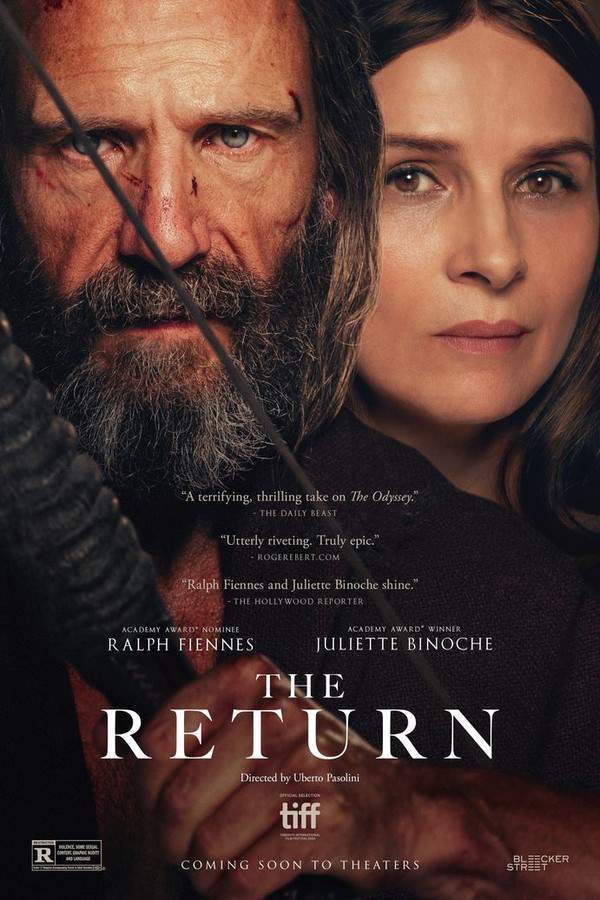
After twenty years away, Odysseus, played by Ralph Fiennes, washes ashore in Ithaca, weary and unrecognizable. Having returned from the Trojan War, he finds his kingdom vastly changed. His wife, Penelope, portrayed by Juliette Binoche, is besieged by suitors who seek to claim the throne and her hand in marriage. Their son, Telemachus, faces a perilous existence.
Find where to stream, rent, or buy The Return (2024) in the US with current JustWatch availability, up-to-date pricing, and platform listings for subscription, rental, and digital purchase options.
Warning: spoilers below!
Haven’t seen The Return yet? This summary contains major spoilers. Bookmark the page, watch the movie, and come back for the full breakdown. If you're ready, scroll on and relive the story!
Read the complete plot breakdown of The Return (2024), including all key story events, major twists, and the ending explained in detail. Discover what really happened, and what it all means.
After two decades of relentless warfare and countless hardships stemming from the Trojan War, Odysseus finds himself washed ashore on his beloved island of Ithaca, completely stripped of his former glory. The once formidable warrior-king, portrayed by Ralph Fiennes, is now a mere shadow of his former self, burdened by both psychological and physical scars that reflect the tremendous toll of his journey.
Meanwhile, back in Ithaca, his wife Penelope, played by Juliette Binoche, is trapped within the confines of her own palace, besieged by a horde of greedy suitors eager to claim her hand and the throne. Each day, she faces the pressure of choosing a new husband, a decision that weighs heavily on her heart. The machinations of those surrounding her put her son Telemachus, the offspring of Odysseus and Penelope, in peril as they covet the throne for themselves. Telemachus, portrayed by Charlie Plummer, is grappling with his identity while simultaneously defending against those who threaten his very existence.
As her father-in-law lies on his deathbed, Penelope occupies her hours weaving a burial shroud, telling her avaricious suitors she will not choose a new husband until it is finished. Each night, however, she secretly unravels what she has woven, a clever tactic to buy time. She struggles with the knowledge of her maids’ illicit liaisons with the suitors, which only adds to her distress.
Amidst this turmoil, Telemachus suffers at the hands of the suitors, who demean and torment him daily. In a cruel twist, the suitors discover a man stranded at sea and, believing he has outlived his usefulness, they unceremoniously cast him back. They later hear of a tragedy on land, where a girl is brutally raped and a boy is murdered, further illustrating the decay within the suitors’ ranks. The chief suitor, the polished Antinous, whose character is depicted by Marwan Kenzari, pressures Penelope relentlessly, yet she stands resolute in her refusal.
Upon his arrival ashore, Odysseus is discovered by Eumaeus, the loyal swineherd, who brings him back to the palace. Drained by sorrow and memories of war, he recounts the harrowing experiences of battle and loss. The passing of Odysseus’ father marks a pivotal moment, as the suitors take this opportunity to pester Penelope further, incorrectly asserting that her husband is dead. In her desperation, she offers the suitors an ultimatum, stating she will make the shroud her wedding gown—a cryptic message that leaves her pondering how much longer she can withstand this torment.
In a poignant reunion, Odysseus’ old dog recognizes him as Eumaeus leads him into the palace. Nevertheless, the majority of the suitors show him no compassion; he pleads for food while disguising his identity as a once-great warrior. During a test of strength among the suitors, Odysseus proves his prowess by defeating a giant, showcasing his enduring spirit despite the years of hardship.
A fortuitous encounter occurs when Odysseus speaks with Penelope, yet she ultimately dismisses him. It is only when Eurycleia, Odysseus’ trusted former nursemaid, bathes him and discovers the scar on his leg that the truth of his identity is revealed. He implores her to keep his whereabouts secret.
Telemachus experiences further danger upon his return, as the suitors employ dogs to hunt him down. When the two cross paths, Odysseus knocks his son out for safety before confronting their adversaries. This climactic moment leads to a heroic escape behind a swimming pool, demonstrating the bond between father and son as they navigate through the chaos. Faced with dwindling prospects on Ithaca, Telemachus grapples with emotions of resentment towards Odysseus for his prolonged absence.
As the tension escalates, Penelope is faced with an impending decision regarding the suitors. Antinous catches her unraveling the shroud, a moment that signifies her subversive resistance. She devises a clever challenge: the suitors will wield Odysseus’ legendary bow, attempting to shoot an arrow through a dozen axe heads, mirroring a feat accomplished by her husband. One by one, they fail, until Odysseus himself steps forward, stringing the bow with effortless ease and sending the arrow through the targets. The suitors, realizing their fate, succumb to panic as they face the wrath of a vengeful Odysseus.
An emotionally charged battle ensues, where Odysseus confronts the suitors directly, determined to reclaim his home and protect his family. Telemachus, resisting the instinct to flee, stands valiantly beside his father, defying the surging tide of male aggression that threatens their peace. As Antinous pleads for his life, Penelope’s cries for mercy reach her son’s ears, but he remains resolute, demonstrating the complexities of loyalty and justice.
In the final act of self-discovery, Telemachus opts to embark on a voyage of his own. Back in the palace, Odysseus uncovers that Penelope has been using a bed he has never witnessed before, which leads him to a hidden sanctuary containing their old bed. This revelation underscores the couple’s shared understanding of their tumultuous past. As they reflect on their experiences, they recognize the importance of confronting their past before they can truly begin anew. The story closes with stirring images of Telemachus’ ship meeting a tumultuous sea, symbolizing the relentless journey of memory and survival intertwined with love and loss.
Last updated: January 14, 2025 at 19:25
Explore frequently asked questions about The Return (2024) with spoiler-rich answers covering the full plot summary, major story beats, character motivations, hidden details, and ending meaning. This movie summary FAQ helps explain confusing scenes, plot twists, and narrative decisions in clear, searchable detail.
Penelope weaves a burial shroud for her dying father-in-law while telling the suitors she will not choose a new husband until it is finished. However, each night she secretly unravels what she has woven. This is a clever delaying tactic to resist the suitors' pressure without openly defiance, buying her time while waiting for Odysseus to return.
The shroud trick foreshadows Penelope's cleverness in later setting the impossible bow contest.
When Eurycleia, Odysseus' former nursemaid, bathes him, she notices a distinctive scar on his leg from an earlier hunting accident. This scar is a unique identifying mark that confirms his identity to her, though Odysseus urges her to keep his return secret.
This recognition scene mirrors the classic moment from Homer's epic where the scar reveals Odysseus' true identity.
Penelope announces that whichever suitor can string Odysseus' legendary bow and shoot an arrow through twelve axe heads will win her hand. This impossible challenge is designed to buy more time, as she knows none of the suitors possess Odysseus' strength and skill. Only Odysseus himself can complete this feat.
The test echoes Odysseus' earlier demonstration of prowess when he defeated a giant among the suitors.
After twenty years, Odysseus is physically and mentally transformed, scarred by war, aged, and disguised as a beggar. His own wife passes him by without recognition during their encounter. It is only later, when he reveals himself through action rather than words, that she begins to believe the truth.
The dog's recognition of Odysseus earlier hints that true loyalty transcends physical appearance.
Telemachus chooses to embark on his own voyage, seeking to understand his father's legacy and define his own identity apart from the turmoil of Ithaca. After witnessing the violent confrontation with the suitors and experiencing the complex reunion of his parents, he feels the need to forge his own path.
This mirrors Odysseus' own journey, suggesting the cycle of wandering and self-discovery continues.
Odysseus discovers that Penelope has been sleeping in a bed he crafted long ago, a bed he believed was hidden in a secret sanctuary. This bed, carved from the living olive tree, symbolizes their enduring bond and proves that Penelope has remained faithful, as only she would know its true location.
The bed represents the foundation of their marriage that has survived twenty years of separation.
The suitors have occupied his palace for years, consumed his wealth, threatened his son, and attempted to force his wife into marriage. They have also committed other atrocities including murder and assault. Odysseus reclaims his home through violent confrontation, supported by Telemachus, as this is the only way to restore order and protect his family.
The suitors' cruelty throughout the film, including their treatment of Telemachus and casting a stranded man back to sea, justifies their fate.
Twenty years of warfare and hardships have physically and psychologically scarred Odysseus. He returns as a shadow of his former self, weary, aged, and traumatized by the horrors he witnessed. His once-formidable presence is replaced by a broken man who must gradually reclaim his identity as a warrior and king.
His initial defeat of a giant among the suitors demonstrates that his warrior spirit remains despite his transformation.
When Eumaeus leads Odysseus into the palace, his old dog Argos is the first to recognize him after twenty years. This emotional moment demonstrates the loyalty and perceptiveness of animals, in contrast to the humans who fail to see through his disguise.
The dog's recognition contrasts sharply with Penelope's initial failure to identify her husband.
Throughout the film, Antinous has tormented Telemachus daily, treating him with contempt and threatening his position as heir to the throne. When the final battle with the suitors erupts, Telemachus chooses to kill Antinous despite his mother's pleas for mercy, acting on years of accumulated resentment and the need to secure his family's future.
Telemachus' resentment toward the suitors has been building since they first devalued and endangered him.
Still wondering what the ending of The Return (2024) really means? Here’s a spoiler-heavy breakdown of the final scene, major twists, and the deeper themes that shape the film’s conclusion.
In the film’s climax, Odysseus, disguised and barely recognizable, finally reveals himself to Penelope after a series of tests and a dramatic challenge. Throughout the story, Penelope has patiently waited for her husband’s return, unweaving her shroud each night to buy time from the impatient suitors. When Odysseus takes on the contest to string a bow and shoot through twelve axes—a task only he could accomplish—she recognizes him. Despite his battered, humble appearance, Odysseus’s skill proves his true identity. Penelope’s recognition is subtle but profound; she has always known in her heart that their bond would triumph over the years of separation and hardship.
As Odysseus reveals his identity, he begins to take revenge on the suitors who have overrun their home, killing them with his arrows. His actions are swift and ruthless, but they restore rightful order to Ithaca. Telemachus, Odysseus’s son, initially angry and skeptical, joins his father in the fight, leading to a brutal but cathartic end for the men who betrayed his family and caused their suffering. Throughout the slaughter, Penelope watches quietly, her love and patience underpinning her understanding that her husband has finally reclaimed his place.
In the aftermath, Odysseus and Penelope reconcile, reaffirming their fidelity and love. Odysseus, expressing remorse for his long absence and the pain it caused, pleads for forgiveness, which Penelope grants. She has waited two decades for him, and her unwavering loyalty culminates in their reunion, symbolizing hope, resilience, and the enduring strength of their bond. The film closes with the couple finally reuniting in their shared chamber, ready to move forward together, their story once again marked by love, loyalty, and the restoration of peace in Ithaca.
Last updated: June 25, 2025 at 09:03
Discover curated groups of movies connected by mood, themes, and story style. Browse collections built around emotion, atmosphere, and narrative focus to easily find films that match what you feel like watching right now.
Stories where an intimate space becomes a tense battleground for survival.If you liked the tense, besieged atmosphere of The Return, explore more movies where a home becomes a battleground. These films capture the psychological strain of defending a sanctuary, featuring high stakes, clever tactics, and oppressive tension in a confined setting.
Narratives in this thread center on a confined location under threat, where characters must use wit and resilience to withstand a prolonged siege. The story builds tension through the constant presence of danger outside the walls, leading to a climactic confrontation to reclaim safety and order.
These movies are grouped by their shared atmospheric pressure, where the setting itself becomes a character. They deliver a consistent mood of anxiety and claustrophobia, paired with themes of resilience, the defense of family, and the psychological erosion caused by sustained threat.
Emotional journeys of characters returning home forever changed by hardship.For viewers who enjoyed The Return's exploration of a war-scarred hero's difficult homecoming, this list features similar movies about traumatic returns. These stories deal with heavy themes of identity, fractured relationships, and the bittersweet reality of coming back to a changed world.
The narrative pattern follows a protagonist's return to a place or people they once knew, only to find everything and everyone altered. The journey involves confronting the past, navigating changed relationships, and a climax that often leads to a reunion tempered by loss and the irreversible impact of trauma.
These films share a core emotional journey: the profound disconnect between memory and reality, and the heavy cost of reclamation. They are united by a melancholic, thoughtful mood, a steady pacing that allows for reflection, and endings that acknowledge the scars of the past.
Don't stop at just watching - explore The Return in full detail. From the complete plot summary and scene-by-scene timeline to character breakdowns, thematic analysis, and a deep dive into the ending - every page helps you truly understand what The Return is all about. Plus, discover what's next after the movie.
Track the full timeline of The Return with every major event arranged chronologically. Perfect for decoding non-linear storytelling, flashbacks, or parallel narratives with a clear scene-by-scene breakdown.
Discover the characters, locations, and core themes that shape The Return. Get insights into symbolic elements, setting significance, and deeper narrative meaning - ideal for thematic analysis and movie breakdowns.
What really happened at the end of The Return? This detailed ending explained page breaks down final scenes, hidden clues, and alternate interpretations with expert analysis and viewer theories.
Discover movies like The Return that share similar genres, themes, and storytelling elements. Whether you’re drawn to the atmosphere, character arcs, or plot structure, these curated recommendations will help you explore more films you’ll love.
The Return (2024) Scene-by-Scene Movie Timeline
The Return (2024) Movie Characters, Themes & Settings
The Return (2024) Ending Explained & Theories
The Return (2024) Spoiler-Free Summary & Key Flow
Movies Like The Return – Similar Titles You’ll Enjoy
Troy (2004) Movie Recap & Themes
300: Rise of an Empire (2014) Detailed Story Recap
Tornare (2019) Plot Summary & Ending Explained
Troy the Odyssey (2017) Story Summary & Characters
The Return of Martin Guerre (1982) Full Movie Breakdown
Voyage to Cythera (1984) Spoiler-Packed Plot Recap
Nostos: The Return (1989) Ending Explained & Film Insights
Bringing Him Back (2021) Ending Explained & Film Insights
The Return of Casanova (1992) Plot Summary & Ending Explained
The Odyssey (1000) Story Summary & Characters
The Odyssey (1000) Movie Recap & Themes
The Trojan Women (1971) Ending Explained & Film Insights
Odysseus & the Isle of Mists (2008) Ending Explained & Film Insights
Iphigenia (1977) Spoiler-Packed Plot Recap
Ulysses’ Gaze (1995) Detailed Story Recap