Plot Explained Spoilers guaranteed!
Plot Explained

Browse by genre

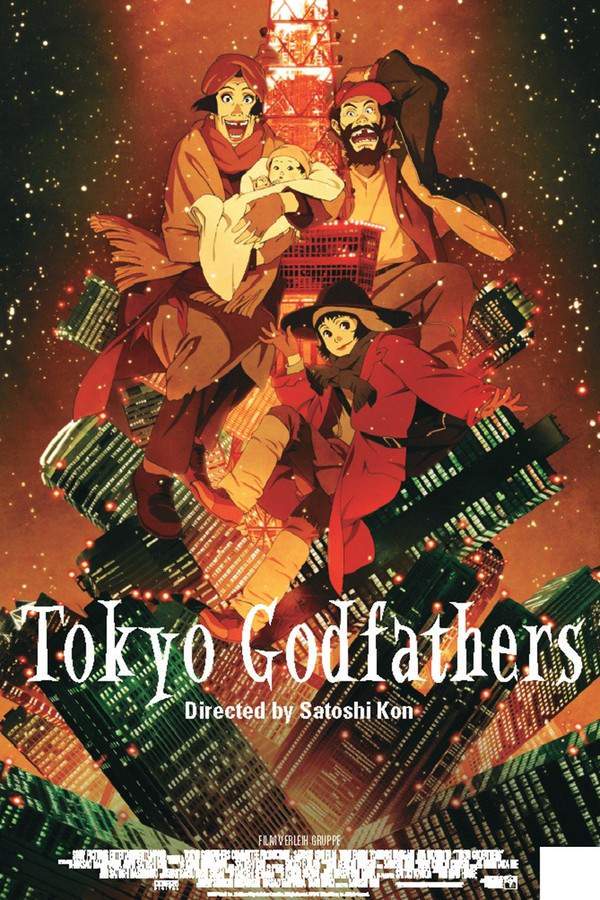
Tokyo Godfathers (2004) movie poster

Characters & Themes

Tokyo Godfathers (2004) Characters, Setting & Themes Explained

Release, runtime and language
2004 · 92 min · Japanese
Loading streaming availability…
Directed by
Satoshi Kon, Shôgo Furuya
Starring
Toru Emori, Aya Okamoto, Yoshiaki Umegaki

During a Christmas Eve search for valuables in a Tokyo garbage dump, three homeless men discover a newborn baby girl. As the new year approaches, they band together to discover the child's origins and locate her parents. Their journey through the city leads them to confront their own difficult histories and find unexpected connections with those they meet, ultimately offering a chance at redemption and a new sense of belonging.

On this page (8)
  1. 1 Where to watch
  2. 2 Characters explained (3)
  3. 3 Where & when it takes place
  4. 4 Themes & meaning (3)
  5. 5 Character & meaning questions
  6. 6 Movie threads
  7. 7 Movies like Tokyo Godfathers
  8. 8 Every angle
Loading streaming availability…

3 main characters · contains spoilers

Tokyo Godfathers Characters Explained: Who Is Who

The main characters of Tokyo Godfathers (2004), heroes and villains: what drives them, how they change over the course of the story and what each of them reveals about the film's bigger ideas.

  • Gin (Toru Emori)

    Gin is a middle-aged alcoholic whose life has unraveled due to his addictions. His character oscillates between moments of vulnerability and protectiveness, showcasing a deep-seated desire for redemption. Through his experiences with Kiyoko, he grapples with regret and yearning for familial connection.

    • 🥃 Alcoholism
    • 🤝 Redemption
    • 😞 Regret
  • Hana (Yoshiaki Umegaki)

    Hana is a vibrant transgender woman who embodies strength and compassion. She perceives Kiyoko as a divine gift, taking on the role of protector despite her own traumatic past. Her journey through the film reflects her resilience and desire to create a sense of family among the trio.

    • 🌟 Hope
    • 🔄 Resilience
    • 🌈 LGBTQ+
  • Miyuki (Aya Okamoto)

    Miyuki is a troubled teenage runaway who grapples with her own family trauma while seeking belonging. Her evolution throughout the narrative speaks to her desire for understanding and connection, as she learns to confront her past and embrace the bonds formed with her companions.

    • 🚶‍♀️ Runaway
    • 💬 Trauma
    • 💔 Family

Last updated: October 22, 2024 at 19:29

Was this helpful?

Setting

Where and When Does Tokyo Godfathers Take Place?

The setting of Tokyo Godfathers (2004): the year and time period, the places and locations, and how they shape the characters, the mood and the tension of the story.

Time period

Christmas Eve

Taking place on a festive Christmas Eve, the story captures the spirit of the holiday while also juxtaposing it with the harsh realities of life for the homeless. This time period brings hope and reflection, allowing characters to grapple with their pasts as they search for redemption and connection amid the chaos of the season.

Location

Tokyo, Cemetery, Club

The movie unfolds in the bustling metropolis of Tokyo, characterized by its vibrant streets, neon lights, and a myriad of social issues, such as homelessness. A cemetery serves as a temporary refuge for the trio, symbolizing the lost lives and opportunities that haunt them. The club becomes a pivotal setting, where the characters confront their pasts and futures amid loud celebrations and hidden dangers.

  • 🏙️ Tokyo
  • 🏰 Cemetery
  • 🎉 Club

Last updated: October 22, 2024 at 19:29

Was this helpful?

3 major themes

Tokyo Godfathers Meaning: Themes & Message Explained

What is Tokyo Godfathers (2004) really about? The emotional, social and philosophical themes the film keeps returning to, its symbolism and the message beneath the surface.

  • Family

    The theme of family is central to the storyline, encapsulated in the trio's quest to care for the abandoned baby, Kiyoko. As they navigate their struggles, what emerges is a non-traditional family dynamic bound by shared experiences and mutual support. Their journey illustrates that family can be formed beyond blood ties, through love, sacrifice, and the care we offer others.

  • Redemption

    Redemption is a prominent theme as each character seeks to reconcile their troubled pasts. Gin, Hana, and Miyuki battle their inner demons while striving to protect the innocent child. Their experiences during this one night lead them to confront their failures and ultimately prove that change and hope are possible, even in the direst of circumstances.

  • Trauma

    The characters bear deep emotional scars, each with histories of trauma that shape their actions and relationships. Miyuki's troubled past with her father, Hana's assault, and Gin's estrangement from his daughter all contribute to their respective struggles. The film poignantly explores how these traumas can be both isolating and a source of strength when faced together.

Last updated: October 22, 2024 at 19:29

Was this helpful?

Character & theme questions

Tokyo Godfathers Characters & Meaning: Your Questions Answered

The questions people ask about Tokyo Godfathers (2004): who the characters really are, their relationships, what the symbols mean, where it takes place and what the movie is really about. Each answer contains spoilers.

Q1

Where does Tokyo Godfathers take place?

The film is set in Tokyo, Japan, primarily in the city's bustling streets, garbage dumps, and various locations the homeless characters navigate. Key settings include a garbage dump where the trio finds the baby, a cemetery that serves as their temporary refuge, and a club where they confront people from their pasts.

  • tokyo setting
  • location
  • homeless
  • urban japan
Q2

What time period is Tokyo Godfathers set in?

The story takes place on Christmas Eve in modern-day Tokyo. This festive timing is significant as it contrasts the holiday spirit with the harsh realities of homelessness, creating a backdrop for themes of hope, reflection, and redemption.

  • christmas eve
  • time period
  • holiday setting
  • modern tokyo
Q3

What are the main themes in Tokyo Godfathers?

Tokyo Godfathers explores three major themes: family (the formation of a non-traditional found family), redemption (each character's journey toward reconciling their troubled pasts), and trauma (the emotional scars each character carries). The film emphasizes that family can be chosen rather than biological, and that hope remains possible even in difficult circumstances.

  • family
  • redemption
  • themes
  • trauma
  • found family
Q4

Who are the three main characters in Tokyo Godfathers?

The trio consists of Gin, a middle-aged alcoholic struggling with addiction and regret; Hana, a strong and compassionate transgender woman who sees the baby as a divine gift; and Miyuki, a teenage runaway dealing with family trauma. Together, they form an unlikely family unit bound by shared experiences and mutual support.

  • gin
  • hana
  • miyuki
  • main characters
  • homeless trio
Q5

What does the baby Kiyoko symbolize in the film?

The baby, Kiyoko, symbolizes hope, new beginnings, and the possibility of redemption for all three protagonists. She serves as the catalyst that forces Gin, Hana, and Miyuki to confront their pasts while simultaneously offering them a chance at forming a genuine family connection.

  • kiyoko
  • baby
  • hope
  • symbolism
  • new beginning
Q6

Why is Tokyo an important setting in Tokyo Godfathers?

Tokyo serves as both a vibrant backdrop and a character itself, representing both opportunity and isolation. The city's neon-lit streets, social services, and diverse populations create an environment where the homeless characters can remain invisible yet still search for connection and belonging.

  • tokyo city
  • urban setting
  • japan
  • homelessness
Q7

What does Tokyo Godfathers say about found family?

The film argues that family is defined not by blood ties but by love, sacrifice, and mutual support. The three homeless strangers who come together to care for Kiyoko demonstrate that genuine family bonds can form between people who share difficult experiences and choose to support each other through adversity.

  • found family
  • chosen family
  • bonds
  • community
Q8

What are the backstories of the three main characters?

Gin is estranged from his daughter due to his alcoholism; Hana carries the trauma of a past assault and embraces her identity with resilience; Miyuki ran away from home due to troubled relationships with her father. Each character has experienced significant loss and hardship that drives their search for redemption throughout the night.

  • gin backstory
  • hana backstory
  • miyuki backstory
  • alcoholism
  • transgender
  • runaway
Q9

What is the significance of the cemetery in Tokyo Godfathers?

The cemetery serves as a temporary refuge for the trio and symbolizes the lost lives and opportunities that haunt each character. It represents both death and the possibility of renewal, reinforcing the film's themes of redemption and new beginnings as the characters prepare to start the new year.

  • cemetery
  • refuge
  • symbolism
  • death and renewal
Q10

Why does the story take place on Christmas Eve?

Christmas Eve creates a powerful contrast between the holiday's themes of family, generosity, and hope against the harsh realities of homelessness. This timing forces the characters to reflect on what they lack while also inspiring them to seek connection and reconciliation as the year comes to a close.

  • christmas
  • holiday symbolism
  • family
  • hope
Q11

How does Tokyo Godfathers handle the theme of redemption?

Each character seeks redemption by confronting their past failures through their care for the baby. Gin's regret over his estrangement from his daughter, Hana's trauma from her past, and Miyuki's fleeing from family issues all surface as they journey through Tokyo, ultimately finding that change and hope are possible.

  • redemption
  • forgiveness
  • change
  • hope
  • personal growth
Q12

What is the tone of Tokyo Godfathers?

Tokyo Godfathers maintains a hopeful tone throughout, balancing heavy themes of trauma and homelessness with moments of humor and warmth. Despite the characters' difficult circumstances, the film remains optimistic about the possibility of redemption and the formation of genuine connections.

  • tone
  • hope
  • humor
  • optimism
  • emotional tone

Movie threads

More Movies Like Tokyo Godfathers, by Mood & Story

Curated lists built around what makes Tokyo Godfathers tick: the same mood, the same kind of story or the same emotional payoff. Each list explains why these movies belong together.

Serendipitous urban quests like in Tokyo Godfathers

Characters on a frantic city journey where chance encounters reveal life-changing connections. If you liked the frantic, hopeful search through Tokyo in 'Tokyo Godfathers', you'll enjoy these movies. These films feature characters on a city-wide journey where unexpected encounters and fortunate accidents lead to redemption and a new sense of belonging, often blending drama with comedic moments.

  • serendipitous
  • hopeful
  • urban adventure
  • heartwarming
  • whimsical
  • dramatic
  • Tone: hopeful, whimsical
  • Pacing: fast, chaotic
Why these movies?

The story pattern: These narratives are built around a central, often frantic, quest that propels characters through a city. The linear journey is punctuated by a series of seemingly random but meaningful encounters that gradually weave together the characters' pasts with their present mission, culminating in a cathartic and heartwarming resolution.

Why they belong together: Movies are grouped here for their shared core structure of an urban adventure driven by serendipity. They combine a fast pace with a hopeful, whimsical tone, using the city as a character itself to explore themes of connection, redemption, and the possibility of everyday miracles.

Found family stories with redemption like Tokyo Godfathers

Mismatched outcasts form an unbreakable bond while confronting their painful pasts together. For viewers who loved the heartwarming dynamic of the trio in 'Tokyo Godfathers', this section collects movies about found families. These films focus on groups of misfits and outcasts who find purpose and redemption by supporting each other through difficult journeys, balancing heavy themes with hope.

  • heartwarming
  • redemptive
  • found family
  • hopeful
  • dramatic
  • comedic relief
  • Tone: hopeful, heartwarming
  • Pacing: variable, character-driven
Why these movies?

The story pattern: The plot revolves around a disparate group of characters, often marginalized or broken, who are united by a shared goal or a symbolic figure (like a child). Their journey forces them to confront their individual demons, and through vulnerability and mutual support, they transform from a collection of individuals into a cohesive, loving unit.

Why they belong together: This thread groups movies based on the powerful emotional arc of forming a chosen family. They share a medium emotional weight, tackling serious issues like addiction and loss, but are ultimately defined by their hopeful tone and the redemptive power of human connection, leading to a happy or bittersweet resolution.

If you liked this

Movies Like Tokyo Godfathers

Similar movies to Tokyo Godfathers: the same genre, themes or kind of story. Each one comes with its own plot summary, timeline and ending explained.

Browse all movie summaries

Every angle

Tokyo Godfathers (2004) Explained: Plot, Timeline & Characters

Everything about Tokyo Godfathers in one place: what happens in the plot summary, the timeline in chronological order, the characters and meaning and a spoiler-free summary. What's After the Movie adds the cast, box office and post-credit scenes.

Coming soon on iOS and Android

The Plot Explained Movie Summary App

Plot summaries, endings explained and timelines on your phone. Catch up on any movie in minutes, save your favorites and never miss a twist again.

Be the first to know when we launch. Your email stays private, always.

Learn more about the app