Plot Explained Spoilers guaranteed!
Plot Explained

Browse by genre

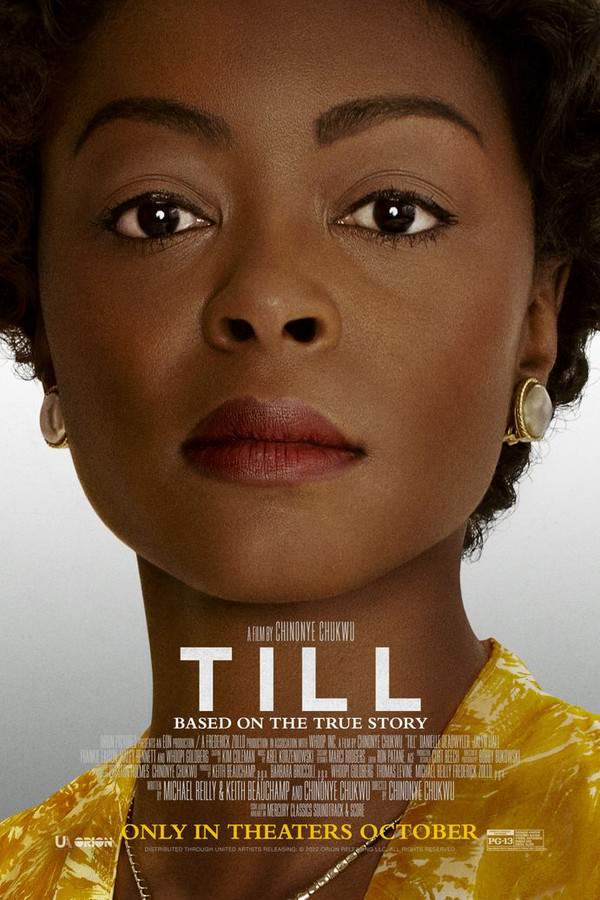
Till (2022) movie poster

Plot Summary

Till (2022) Plot Summary & Ending Explained

Release, runtime and language
2022 · 130 min · English
Echo score 69
Directed by
Chinonye Chukwu
Starring
Jayme Lawson, Tosin Cole, Sean Patrick Thomas, Frankie Faison, Jalyn Hall, Ed Amatrudo
Budget
$33M

In 1955 Mississippi, the brutal murder of 14-year-old Emmett Till shocks the nation. His mother, Mamie Till Mobley, embarks on a courageous search for justice, defying threats and prejudice. Her unwavering determination to expose the truth behind his death ignites a pivotal moment in the Civil Rights Movement, revealing the profound impact of a mother's resolve to confront injustice and fight for equality.

On this page (7)
  1. 1 Where to watch
  2. 2 What happens: full plot
  3. 3 Plot questions answered
  4. 4 How it ends
  5. 5 Movie threads
  6. 6 Movies like Till
  7. 7 Every angle

Where to watch

Where to Watch Till (2022)

Where can you watch Till? Stream, rent or buy it in the US, including on Amazon Video, Apple TV Store and Fandango At Home: current JustWatch availability with up-to-date prices.

Streaming availability powered by JustWatch

Full plot summary · contains spoilers

What Happens in Till: Full Plot Summary

The whole story of Till (2022) explained, from the opening scene to the final frame: every key event, every twist and what it all adds up to. Read it as a quick recap before the sequel, to check a scene you missed, or to finally understand what really happened.

In August 1955, the story unfolds around 14-year-old Emmett Till, who is living with his mother, Mamie Till-Mobley, in Chicago, Illinois. Prior to his journey to visit relatives in Money, Mississippi, Mamie imparts a cautionary lesson to her son about the precariousness of being a Black boy in the South, emphasizing the need for vigilance in the company of white individuals. The journey includes a stop at a train station where they meet Mamie's uncle, Moses Wright, and Emmett's cousin, Wheeler Parker. After working on a local cotton plantation, Emmett and his cousins venture into Bryant's Grocery and Meat Market for a sweet treat.

Upon reaching the register, Emmett innocently compliments Carolyn Bryant by stating she resembles a movie star, which leads him to show her a photo of a white girl from his wallet. This seemingly innocent interaction spirals into danger as Carolyn, feeling disrespected, confronts Emmett outside the store, where he bravely whistles at her. Provoked, Carolyn hurriedly retrieves a shotgun from her vehicle, and Emmett, along with his relatives, quickly flee the scene in fear.

The early hours of August 28 mark a turning point when Carolyn's husband, Roy Bryant, alongside his half-brother, John William "J.W." Milam, brutally invade the Wright household in search of Emmett. They find him in a bedroom and force him to dress before kidnapping him, despite Elizabeth, Emmett's great-aunt, offering them money in a desperate plea. The tense situation takes a horrific turn as Milam holds Moses at gunpoint, and Carolyn identifies Emmett as they make their escape into the night. Tragically, Emmett is subjected to a brutal beating, ultimately ending in his death as his body is discarded into the Tallahatchie River.

Back in Chicago, the atmosphere shifts as Mamie learns of her son's abduction. With the aid of her cousin, Rayfield Mooty, she meets with William Huff, the local NAACP counsel, to prepare for the storm ahead. In a chilling development, the police discover Emmett’s lifeless body in the river, and Mamie is left shattered upon receiving the news. Despite the grave reservations expressed by Mooty, Mamie insists on having Emmett's body returned to Chicago. When his coffin arrives by train, Mamie's overwhelming grief becomes palpable, particularly when she is faced with the horrifying reality of her son's mutilated corpse at the autopsy. In a defiant act of love and remembrance, she holds an open-casket funeral, hoping to reveal the harrowing truth of racial violence across America.

The legal aftermath is equally daunting as Milam and Bryant are charged in connection with Emmett's death. Desiring justice for her son, Mamie makes the journey with her father to Mound Bayou to support Emmett's representation during the trial. There, T. R. M. Howard encourages Mamie to ponder the broader implications of her activism, suggesting her actions could bolster federal support for voting rights among Black Americans. The trial ebbs and flows, with the defense requesting a recess upon discovering another witness, leading to tension in the courtroom.

As the prosecution manages to locate Willie Reed, who serves as a key eyewitness, the trial takes a dramatic turn. Reed and Moses testify, with Moses identifying Milam as the perpetrator, leading Mamie to take a stand and confirm her son's identity through a heart-wrenching testimony. The courtroom atmosphere grows charged as the defense cross-examines Mamie, questioning whether she warned Emmett about his behavior in Mississippi. The tension escalates further when Carolyn, in her testimony, provocatively claims that Emmett approached her, asserting he had prior interracial romantic experiences. This assertion provokes Mamie's exit from the courtroom, knowing deep down what the outcome would likely be.

In an unprecedented twist of fate, an all-white, all-male jury acquits both Milam and Bryant after merely an hour of deliberation. The subsequent fallout leads Mamie to an NAACP rally in Harlem, where she openly criticizes the Mississippi criminal justice system for its systemic failures and expresses her disappointment with the broader American promise of equal justice. Upon returning home, Mamie is enveloped in memories of Emmett as she imagines him in his room, a bittersweet reminder of the profound impact of her loss.

The post-credits reveal a powerful legacy as Mamie's resolute actions pave the way for the Civil Rights Act of 1957. She dedicates herself to educating children while tirelessly advocating for civil rights across America, transforming her grief into a beacon of hope and a call for justice.

Last updated: November 25, 2024 at 19:24

Was this helpful?

Plot questions answered

Till Plot Explained: Your Questions Answered

The questions people ask most about Till (2022): what happens in the confusing scenes, why the characters do what they do, the twists, hidden details and what the ending means. Each answer contains spoilers.

Q1

Why did Emmett Till whistle at Carolyn Bryant?

Emmett Till whistled at Carolyn Bryant as an innocent gesture after complimenting her and showing her a photo of a white girl from his wallet. In the racially charged atmosphere of 1955 Mississippi, this perceived act of disrespect provoked Carolyn to retrieve a shotgun, forcing Emmett and his cousins to flee in fear.

Foreshadowing: Mamie had warned Emmett about the dangers Black boys faced in the South, foreshadowing the tragic consequences of this interaction.

  • Emmett Till
  • Carolyn Bryant
  • whistle incident
  • Mississippi 1955
  • Bryant's Grocery
Q2

Why did Mamie Till allow Emmett to visit Mississippi?

Mamie allowed Emmett to visit relatives in Mississippi hoping the trip would be a joyful family experience. Before his departure, she instructed him to be cautious around white people, but she could not have anticipated the horrific consequences that would unfold.

Foreshadowing: Mamie's cautionary lesson about racial dangers directly foreshadows the tragedy that occurs in Mississippi.

  • Mamie Till
  • Emmett Till
  • Mississippi visit
  • family
  • racial danger
Q3

What happened to Emmett Till after he was kidnapped?

After Roy Bryant and J.W. Milam kidnapped Emmett from the Wright household, they brutally beat him, shot him, and disposed of his body in the Tallahatchie River. His corpse was later discovered by police and returned to Chicago for burial.

Foreshadowing: The kidnapping occurred in the early hours of August 28, 1955, following the confrontational incident at Bryant's Grocery.

  • kidnapping
  • Roy Bryant
  • J.W. Milam
  • Tallahatchie River
  • Emmett Till murder
Q4

Why was the jury able to acquit Roy Bryant and J.W. Milam?

The all-white, all-male jury acquitted both men after just one hour of deliberation, reflecting the deep-seated systemic racism in Mississippi's 1955 justice system. Despite witness testimony identifying Milam as the perpetrator, racial prejudice allowed the killers to escape justice.
Foreshadowing: Mamie expressed knowing deep down what the outcome would be, anticipating the injustice before the verdict.

  • jury verdict
  • Roy Bryant
  • J.W. Milam
  • acquittal
  • Mississippi justice system
  • racism
Q5

Why did Mamie Till choose to have an open-casket funeral?

Mamie insisted on an open-casket funeral to reveal the horrific brutality of her son's murder to the world. By showing Emmett's mutilated body, she aimed to expose the realities of racial violence and spark national outrage across America.

Foreshadowing: Mamie's decision was influenced by her earlier resolve to expose the truth, regardless of the personal cost.

  • open casket
  • funeral
  • Mamie Till
  • Emmett Till
  • civil rights
  • national attention
Q6

What did Carolyn Bryant testify about during the trial?

During the trial, Carolyn provocatively claimed that Emmett had approached her inside the store and asserted he had prior interracial romantic experiences. This fabricated testimony was designed to justify the murder and provoked Mamie's devastating exit from the courtroom.

Foreshadowing: The defense used this false narrative to inflame racial tensions during the trial.

  • Carolyn Bryant
  • testimony
  • trial
  • false claims
  • Emmett Till
Q7

How did Emmett Till's murder impact the Civil Rights Movement?

Emmett Till's brutal murder and subsequent trial galvanized national attention on racial violence. Mamie's courageous open-casket funeral and public activism became a catalyst for the Civil Rights Movement, directly contributing to the passage of the Civil Rights Act of 1957.

Foreshadowing: T.R.M. Howard had earlier suggested Mamie's actions could bolster federal support for voting rights among Black Americans.

  • Civil Rights Movement
  • Mamie Till
  • activism
  • legacy
  • Civil Rights Act 1957
Q8

What did Mamie Till do after the trial ended?

After the trial, Mamie addressed an NAACP rally in Harlem, publicly criticizing the Mississippi criminal justice system for its systemic failures and expressing disappointment with America's broken promise of equal justice. She later dedicated her life to educating children and advocating for civil rights across America.
Foreshadowing: Mamie's Harlem speech marked the beginning of her transformation from grieving mother to civil rights activist.

  • NAACP
  • Mamie Till
  • Harlem rally
  • activism
  • civil rights advocacy
Q9

Why did Mamie Till insist on bringing Emmett back to Chicago?

Despite grave reservations from her cousin Rayfield Mooty, Mamie insisted on having Emmett's body returned to Chicago because she wanted America to witness the truth of racial violence. Her decision led to the powerful open-casket funeral that changed the course of history.

Foreshadowing: Mooty warned her that bringing Emmett home would invite danger, but Mamie's determination overcame these fears.

  • Mamie Till
  • body returned to Chicago
  • funeral
  • justice
  • courage

Ending explained

What Happens at the End of Till?

How Till (2022) ends, in short: the final scene, the last twist and what it means for the characters. The full ending explained, with every spoiler, lives on its own page.

Read the full ending explained

The movie "Till" brings viewers to the moment when Mamie Till-Mobley, the mother of Emmett Till, continues her fight for justice after her son's brutal lynching in 1955. Throughout the film, Mamie’s unwavering strength and resilience are central as she testifies in the trial of Emmett's murderers, knowing full well that the verdict will likely not give her son the justice he deserves. The film highlights the brutal reality of Emmett’s death—though it deliberately avoids showing graphic violence, instead emphasizing the aftermath, including Mamie’s decision to publicly display Emmett’s mutilated body during his funeral to expose the brutality inflicted upon him and raise awareness about racial violence.

The story reveals how Emmett, often called "Bobo" as a term of endearment, was accused of whistling at a white woman, Carolyn Bryant, in a store. This act, rooted in racial tensions and misunderstandings, led to Emmett being kidnapped, tortured, and ultimately murdered by Roy Bryant and J.W. Milam. Elevated by the public outrage, Mamie refused to let her son’s death be silenced or forgotten. Her activism and determination helped propel the Civil Rights Movement, making her a symbol of resistance and hope.

Continue reading the ending (1 more paragraphs)

The film’s ending emphasizes Mamie’s ongoing fight and lifelong dedication to justice. While it does not depict the violence directly, it underscores the importance of her perseverance and the impact her advocacy had on social change. By focusing on Mamie’s perspective, the film underscores her growth from a grieving mother to a powerful advocate, ensuring that Emmett’s death remains a catalyst for justice and reform. Ultimately, the movie leaves viewers with a profound understanding of her strength and the enduring importance of confronting racial violence with courage and resilience.

Till ending explained in full

Movie threads

More Movies Like Till, by Mood & Story

Curated lists built around what makes Till tick: the same mood, the same kind of story or the same emotional payoff. Each list explains why these movies belong together.

Movies about mothers seeking justice like Till

Stories of mothers propelled by grief into acts of profound courage. Explore powerful dramas featuring mothers who fight for justice after a tragedy. If you were moved by Mamie Till Mobley's story in Till, these films capture similar journeys of maternal grief, defiance, and the relentless pursuit of truth against overwhelming odds.

  • heartbreaking
  • defiant
  • urgent
  • somber
  • gripping
  • emotional
  • Tone: dark, defiant, heavy
  • Pacing: steady, deliberate
Why these movies?

The story pattern: These narratives typically begin with a devastating personal loss that shatters a mother's world. The story then follows her as she navigates a hostile or indifferent system, channeling her pain into a public fight. The journey is emotionally grueling, often pitting a single individual against powerful institutions, with the focus on her personal transformation and resolve.

Why they belong together: Movies in this thread are united by a central character archetype: the grieving mother turned activist. They share a heavy emotional weight, a tone that balances profound darkness with defiant hope, and a thematic focus on justice, systemic failure, and the power of personal testimony.

Pivotal true story dramas like Till

Gripping historical dramas where a single tragedy sparks a national movement. Discover movies based on true events that sparked major social change, similar to Till. These films dramatize key moments in history, focusing on the personal stories behind the headlines and the heavy emotional impact of injustice, making them both gripping and important viewing.

  • urgent
  • gripping
  • somber
  • historical
  • important
  • heartbreaking
  • Tone: somber, urgent, gripping
  • Pacing: steady, methodical
Why these movies?

The story pattern: The narrative pattern follows a linear, straightforward recounting of a well-documented historical event. It often focuses on the victims and their families, building from a state of normalcy to a shocking incident, and then detailing the public and legal aftermath. The ending is often bittersweet, acknowledging a legal failure but highlighting a lasting legacy of change.

Why they belong together: These films are grouped by their basis in definitive true stories that had a measurable impact on society. They share a high intensity, a dark and somber tone, a straightforward narrative complexity, and a primary goal of bearing witness to history while exploring themes of justice and human rights.

If you liked this

Movies Like Till

Similar movies to Till: the same genre, themes or kind of story. Each one comes with its own plot summary, timeline and ending explained.

Browse all movie summaries

Every angle

Till (2022) Explained: Plot, Ending, Timeline & Characters

Everything about Till in one place: what happens in the plot summary, the timeline in chronological order, the characters and meaning, the ending explained and a spoiler-free summary. What's After the Movie adds the cast, box office and post-credit scenes.

Coming soon on iOS and Android

The Plot Explained Movie Summary App

Plot summaries, endings explained and timelines on your phone. Catch up on any movie in minutes, save your favorites and never miss a twist again.

Be the first to know when we launch. Your email stays private, always.

Learn more about the app