Jonathan Shale is introduced as a battle-worn Vietnam veteran who has carved a path as a mercenary. After a botched covert operation in Cuba that cost three of his fellow soldiers their lives, he returns to the sun-bleached streets and neon nights of Miami with a blade-sharp sense of survival and a heavy conscience. He reconnects with his girlfriend, Jane Hetzko, who teaches at inner-city Columbus High School, a place beset by gang trouble and tense community dynamics. Jane’s apartment becomes a brief haven, but the shadow of danger follows them, and it isn’t long before the threat materializes in the form of Juan Lacas, the volatile leader of the Kings of Destruction gang. The first hint that trouble has a larger plan arrives when Jane is attacked during a jog and left with a broken leg, a wound that both she and Shale interpret as a direct strike from the gang.
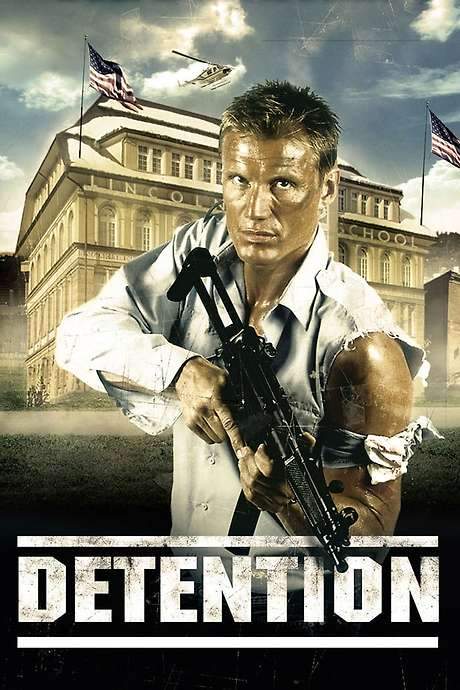
To root out the menace, Shale adopts a radical method: he goes undercover as an Ivy League–educated, government-affiliated substitute teacher, a disguise that clashes with his streetwise, battlefield instincts. He steps into Columbus High’s battered hallways with a keen eye for the undercurrents that the students navigate daily—gang rivalries, petty theft, and a pervasive sense of fear. The first days are rough, as he confronts a class that is unruly and undereducated, resisting the standard approach and even testing him with aggression. Yet Shale’s training in close-quarters combat and crisis management begins to turn the tide. He doesn’t rely on traditional authority alone; he leverages his own lived experience of danger to earn their respect, showing that the line between teacher and protector can blur in moments of need. He quickly bonds with students by drawing parallels between his own wars and their real-world battles, a connection that shifts the class from suspicion to loyalty.
As he builds trust, Shale forms a fragile coalition with the school’s staff and confronts the deeper rot beneath the surface. He befriends Darrell Sherman, another teacher who becomes a confidant and ally, and he becomes aware of a troubling pattern that goes far beyond classroom discipline. He spots Juan Lacas moving pieces of a larger scheme, and he uncovers a more disturbing link: the principal, Claude Rolle, is entangled with the gang and complicit in facilitating cocaine distribution as part of a major narcotics operation that uses the school grounds as a staging point. The tension escalates as Shale and his crew mount surveillance across the building, turning hallways into observatories where light and shadow reveal who is pulling the strings. The mounting evidence grows into a plan: a drug deal is raided, the cash used to buy music and sports equipment, and the event labeled as a “donation” to the school—a misleading shield behind which corruption hides.
The layers of deception begin to crumble, and the cost becomes painfully personal. Sherman is the first to grapple with the truth when he and a female student named Lisa witness the hidden trafficking and the stolen money’s true destination. Sherman’s initial defense of Rolle—an assertion that Shale is attempting to smear the principal—gives way to a courageous moment of self-sacrifice. He creates a distraction that buys crucial time for Lisa to relay the danger to Shale, an act that underlines the film’s theme: individuals who refuse to turn a blind eye can become the most important line of defense. The fallout from this confrontation ripples through the school, and the next day, while the class is briefly left in the hands of Jerome, a student who has started to respect Shale, Lisa again becomes a conduit of critical information. She guides a path that leads to Jane’s apartment, where Shale’s need to protect his partner collides with the gang’s relentless pursuit.
The rescue operation becomes a brutal test of Shale’s dual identities as protector and hunter. He reaches Jane only to be overwhelmed by gang members; one by one, he neutralizes the immediate threats, killing several assailants. A neighbor’s distraction creates a window for escape, but the fight culminates in a grim standoff: Jane is pinned behind a human shield as Shale fights to regain control. In a decisive turn, Jerome—who had been restrained earlier—shoots Juan from behind, ending the immediate danger and freeing Jane. The sequence tightens the narrative’s focus on loyalty, courage, and the consequences of living by a code forged in war. Lisa’s later revelation about the school’s true role as a distribution center exchanges the urgency of personal rescue for a broader, more dangerous mission: the school is a battleground in a citywide narcotics war, and protecting it means confronting powerful, entrenched interests.
With the conflict spilling into the heart of Columbus High, Shale and his four mercenary colleagues mobilize for a full-scale takedown. The plan targets the remaining factions tied to the drug ring: Johnny Glades, a Native American crime lord who demands repayment of his stolen money; a rival mercenary company of twelve led by a figure named Janus; and, crucially, Rolle himself, who sits at the nexus of power and profit. The encounter unfolds in a cascade of fire and precision as Shale and his team push onto school grounds to reclaim the space from the intertwined webs of violence that have corrupted it. The operation is brutal and methodical: one by one, the dealers and their mercenaries fall, the protective shell of fear around the students and teachers begins to crack, and the balance of power shifts. Only Shale and his trusted ally Joey Six survive the climactic engagements, the others falling in the line of duty or in the layered crossfire that is now Miami’s routine.
As the dust settles, the screen closes on a pair of weary but resolute survivors walking away from the school. The credits begin to roll, and Shale and Joey Six share a quiet, stubborn optimism about a future that involves continuing to operate as substitute teachers—this time with the knowledge that their classroom is a battlefield where courage can still shape outcomes. The film ends not with a clean triumph, but with a tempered recognition that justice in a city like this comes at a price, and that mentorship, loyalty, and a willingness to confront corruption can be every bit as vital as firepower.
In the end, the story remains focused on a man who refuses to abandon those he protects, whose experiences in war inform every classroom tactic, and whose personal ethics compel him to confront a corrupt system from the inside out. It’s a gritty, hard-edged meditation on the uneasy intersection between schooling and street life, a world where substitute teachers learn to fight for their students as fiercely as they ever fought for their country. The result is a movie that lingers in the memory not for flashy fireworks, but for its uncompromising portrait of resilience, strategy, and the stubborn hope that a single determined teacher—armed with more than a lesson plan—can alter the course of a community.