










Plot Explained Spoilers guaranteed!
Plot Explained

Browse by genre

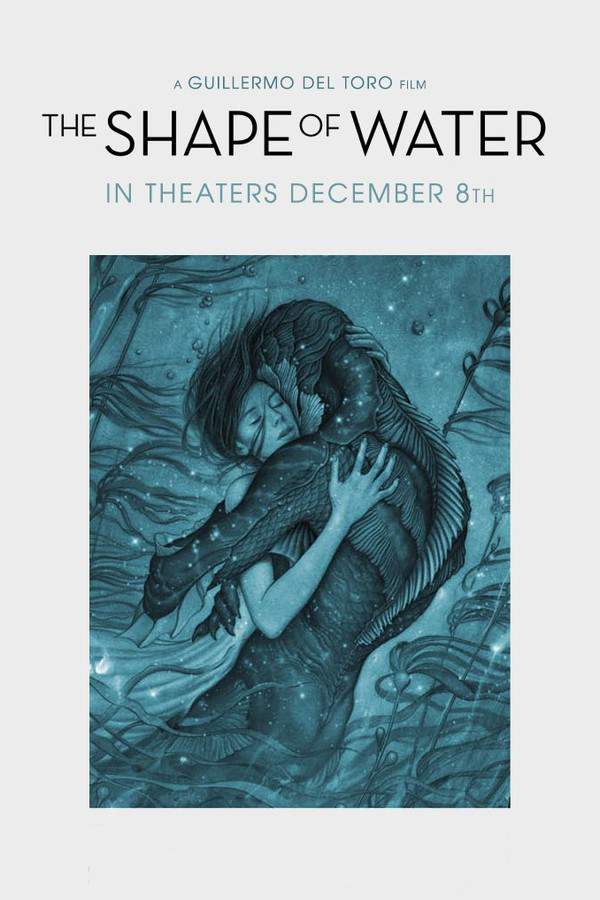
The Shape of Water (2017) movie poster

Ending Explained

The Shape of Water (2017) Ending Explained – Final Scene & Meaning

Release, runtime and language
2017 · 123 min · English
Echo score 85
JustWatch #6,527 8
Directed by
Guillermo del Toro
Starring
Octavia Spencer, Michael Stuhlbarg, Michael Shannon, Sally Hawkins, Doug Jones, Cyndy Day
Budget
$19.4M

In 1962 Baltimore, Elisa, a mute woman working as a cleaner, discovers a mysterious aquatic creature being held in a hidden government facility. Drawn to the creature, she forms an unusual bond with it, risking everything to help it escape. As she navigates her growing connection, she must confront a ruthless government agent and the Cold War tensions surrounding the creature’s existence, embarking on a dangerous journey fueled by compassion and an unexpected love.

On this page (7)
  1. 1 Where to watch
  2. 2 What happens at the end
  3. 3 Final events in order
  4. 4 Ending questions answered
  5. 5 Movie threads
  6. 6 Movies like The Shape of Water
  7. 7 Every angle

Where to watch

Where to Watch The Shape of Water (2017)

Where can you watch The Shape of Water? Stream, rent or buy it in the US, including on HBO Max, Amazon Video and Apple TV Store: current JustWatch availability with up-to-date prices.

Streaming availability powered by JustWatch

Ending explained · contains spoilers

What Happens at the End of The Shape of Water?

How The Shape of Water (2017) ends, what the final scene means, which earlier moments set it up and how to read the ending if the film leaves it open. The full ending explained, with every spoiler.

At the end of The Shape of Water, Elisa returns to her home after freeing the creature, and they share an emotional farewell. She releases him back into his natural habitat in the ocean, believing that this is where he belongs. In a deeply symbolic act, Elisa later joins the creature underwater, where he helps her heal her scars and enables her to breathe with gills. This transformation suggests that the creature has not only healed her physical wounds but also helped her reconnect with her true nature, possibly hinting at her own lost connection to her origins—whether human or aquatic.

Throughout the film, Elisa’s scars and muteness symbolize her sense of being an outsider in a society that devalues her. Her bond with the creature is rooted in their shared otherness and ability to communicate beyond words. The ending, with Elisa choosing to stay with the creature underwater, underscores her acceptance of her unique identity and her love for him. It’s a poetic affirmation that love transcends conventional boundaries, and that sometimes, true happiness lies in embracing one’s true self—no matter how different or misunderstood one might be. The film revises traditional fairy tale tropes, showing that love and connection aren’t about transforming the other into something “normal,” but about accepting and celebrating their authenticity.

The film also challenges ideas about good versus evil, especially through the character of Colonel Strickland, who resembles the mythic figure Samson—powerful but flawed. His fixation on dominance, religious hypocrisy, and brutality ultimately leads to his downfall. In the climax, the creature defeats him, and Strickland’s understanding of divine strength and justice is called into question, especially when he recognizes the creature as a “god.” His death signifies the rejection of his violent, hypocritical worldview, emphasizing that true strength and morality come from compassion and humility, not domination.

Overall, The Shape of Water ends with a powerful message: love, understanding, and acceptance can elevate us beyond societal constraints, and embracing what makes us different can lead to a kind of divine fulfillment. Elisa and the creature’s union is both a literal and symbolic act of breaking through societal fears of “the other,” demonstrating that genuine connection is a form of salvation. In this way, the film offers a hopeful, fantastical vision of harmony between disparate worlds—human and creature, normal and outsider.

Last updated: June 25, 2025 at 08:57

Was this helpful?

The last 4 events

How The Shape of Water Ends: The Final Events in Order

The last events of The Shape of Water (2017) in chronological order, the run-up to the ending explained above. The complete timeline has all 15 events, scene by scene.

Open the full timeline
  1. Strickland Discovers the Plan

    Tension escalates when Strickland discovers Elisa’s intentions to free the Asset. His desperation mounts, leading to a confrontation that threatens not only their lives but the very fabric of their burgeoning connection.

    Where
    Canal
  2. Climactic Confrontation

    In a climactic moment at the canal, Strickland confronts Elisa and the Asset. As violence erupts, the dire situation reaches a breaking point, placing Elisa's fate into jeopardy and spiraling the narrative towards its conclusion.

    Where
    Canal
  3. The Asset's Revelation

    In a dramatic twist, the Asset reveals its extraordinary powers during the confrontation. It uses its gifts to heal Elisa, allowing the two to finally express their love beneath the water's surface in a surreal, transformative moment.

    Where
    Canal
  4. A Poignant Conclusion

    As Giles narrates the closing moments of the film, Elisa and the Asset's connection transforms into a transcendent union. Their story encapsulates the powerful themes of understanding and love without barriers, resonating deeply with the audience.

Ending questions answered

The Shape of Water Ending: Your Questions Answered

The questions people ask most about the ending of The Shape of Water (2017): what the final scene means, how the twist works, what happens to each character and how to read the ending. Each answer contains spoilers.

Q1

Why does Elisa go underwater with the creature at the end?

Elisa chooses to join the creature underwater because it represents her ultimate acceptance of her true self. The creature heals her scars and grants her gills, allowing her to breathe underwater. This transformation symbolizes her release from the human world that always marginalized her due to her muteness and scars, allowing her to finally exist in a realm where she is truly understood and accepted.

Foreshadowing: Earlier scenes show Elisa feeling isolated in human society and finding profound connection with the creature through sign language and shared otherness.

  • elisa transformation
  • underwater scene
  • creature love
  • acceptance
  • true self
Q2

Does Elisa die at the end of The Shape of Water?

Elisa does not die in a traditional sense. The ending is ambiguous but interprets her as undergoing a transformation rather than death. She gains the ability to breathe underwater and is healed by the creature, suggesting she transcends into his world. The film frames this as a hopeful, fairy-tale ending where love conquers death, not as a tragic conclusion.

Foreshadowing: The film treats the creature's world as a realm of divine possibility rather than danger, making the transformation feel like salvation rather than demise.

  • elisa death
  • transformation
  • fairy tale ending
  • ambiguous ending
  • resurrection
Q3

What happens to Colonel Strickland at the end?

Colonel Strickland dies in the climax when the creature attacks him in the water. His death comes after he attempts to dominate and destroy the creature, whom he has been hunting. Strickland recognizes the creature as a "god" before dying, representing the collapse of his violent, controlling worldview. His demise signifies the film rejecting brute dominance in favor of compassion and humility.

Foreshadowing: Strickland's character mirrors Samson, physically powerful but ultimately brought down by his own flaws and hubris.

  • strickland death
  • antagonist
  • creature attack
  • character fate
  • colonel
Q4

What do Elisa's scars and muteness symbolize?

Elisa's scars represent the wounds society inflicts on those who are different, while her muteness symbolizes her exclusion from a world that cannot communicate with her. Throughout the film, these marks of otherness define her as an outsider in human society. Her bond with the creature is rooted in their shared experience of being misunderstood and marginalized, and the ending transforms these marks of difference into sources of power and belonging.

Foreshadowing: The film establishes early that Elisa lives a lonely, isolated life due to her muteness and that she feels most alive when communicating with the creature.

  • elisa scars
  • muteness
  • symbolism
  • outsider
  • otherness
Q5

Why does the creature heal Elisa's scars at the end?

The creature heals Elisa's scars as an act of reciprocal love and acceptance. Throughout the film, Elisa sees past the creature's monstrous exterior and treats him with compassion. By healing her, the creature acknowledges her worth and offers her a new life where her physical differences no longer mark her as an outsider. This act represents the film's theme that love and acceptance can transform wounds into strength.

Foreshadowing: The creature demonstrates healing abilities earlier when it restores Giles's hair, showing its capacity for kindness toward those who show it compassion.

  • creature healing
  • scars healing
  • transformation
  • gifts
  • reciprocal love
Q6

Why does Strickland call the creature a "god"?

Strickland calls the creature a "god" in his final moments because he recognizes the creature's extraordinary power and divine nature. As a man obsessed with dominance and physical strength, Strickland has modeled himself after Samson from the Bible, a figure of immense power brought down by hubris. When the creature easily defeats him, Strickland realizes he has encountered a being of superior strength and possibly divine origin, making his own power seem insignificant.

Foreshadowing: Strickland's fixation on power, his religious imagery, and his comparisons to Samson build throughout the film, culminating in this recognition.

  • strickland god
  • creature divine
  • samson
  • recognition
  • power
Q7

Is The Shape of Water ending happy or sad?

The ending is unequivocally happy despite its bittersweet emotional texture. The film delivers a hopeful, fairy-tale conclusion where love literally conquers death. While there is melancholy in Elisa leaving her human life behind, the ending celebrates her finding true belonging and transcending the societal constraints that marginalized her. The tone is affirmatively hopeful, with the message that embracing one's true self leads to divine fulfillment.

Foreshadowing: The meta notes explicitly describe the ending as 'HAPPY' with a 'HOPEFUL' dominant tone despite some bittersweet emotional elements.

  • happy ending
  • sad ending
  • fairy tale
  • emotional tone
  • conclusion
Q8

What does Elisa's transformation underwater represent?

Elisa's transformation underwater represents her reclamation of identity and true self. Throughout the film, her scars and muteness mark her as different in human society. By gaining gills and having her scars healed, she is no longer defined by the wounds society inflicted on her. She transitions from outsider to someone fully accepted in a world where her differences are celebrated, not tolerated. The transformation suggests she was always meant for this realm, possibly of aquatic origin herself.

Foreshadowing: The film hints at Elisa's connection to water through her routine of boiled eggs and her unique communication method, suggesting an affinity that goes beyond coincidence.

  • identity transformation
  • underwater
  • gills
  • reclamation
  • authentic self
Q9

What does the ending say about love transcending boundaries?

The ending delivers a clear message that love transcends conventional boundaries between species, ability, and social status. Unlike traditional fairy tales where the partner is transformed to fit societal norms, the creature transforms Elisa to join his world. This reversal shows that genuine love means accepting and celebrating the other person's authenticity rather than trying to normalize them. The film argues that embracing what makes us different can lead to profound fulfillment.

Foreshadowing: Elisa and the creature's relationship develops through mutual understanding and acceptance before any romantic physicality, establishing love as connection beyond surface differences.

  • love transcending
  • boundaries
  • acceptance
  • difference
  • connection theme
Q10

How is Strickland similar to Samson in the Bible?

Strickland mirrors Samson through his immense physical strength, fixation on power, and eventual downfall caused by his own hubris. Like Samson, Strickland believes his strength makes him invincible and uses violence to dominate others. However, his weakness, his obsession with control and his religious hypocrisy, leads to his destruction. The creature, like Delilah to Samson, becomes the instrument of his downfall. Strickland's recognition of the creature as a "god" mirrors Samson's encounter with divine power.

Foreshadowing: Strickland's physical descriptions, his use of a baton, and his sexualized interactions early in the film establish his identification with Samson.

  • strickland
  • samson
  • bible
  • parallel
  • downfall
Q11

Why does Elisa choose to stay with the creature instead of remaining human?

Elisa chooses the creature because human society has never fully accepted her. As a mute woman with scars, she has been marginalized and isolated her entire life. With the creature, she experiences genuine connection and understanding, something she has never found among people. The choice represents her rejecting a world that devalued her and embracing a relationship where she is truly seen and valued for who she is.

Foreshadowing: Elisa's loneliness is established in early scenes, and her scenes with the creature consistently show her most alive and emotionally present.

  • choice
  • creature
  • human world
  • rejection
  • belonging
Q12

What is the final message of The Shape of Water?

The film's final message is that love, understanding, and acceptance can elevate us beyond societal constraints, and embracing what makes us different can lead to divine fulfillment. Elisa and the creature's union demonstrates that genuine connection is a form of salvation. The film argues that accepting others, especially those society considers "other", leads to transformation and happiness, while trying to dominate or destroy difference leads to destruction.

Foreshadowing: The entire narrative arc demonstrates this theme through Elisa's compassion overcoming Strickland's cruelty, with love consistently winning.

  • final message
  • theme
  • acceptance
  • difference
  • fulfillment
Q13

What happens to Giles at the end of the film?

Giles, Elisa's neighbor and closest friend, witnesses her transformation underwater and appears to accept her choice. While the ending focuses primarily on Elisa and the creature, Giles represents the human world that must learn to accept those who are different. His presence at the window suggests he supports Elisa's journey toward self-actualization, even though it means losing his friend to another world.

Foreshadowing: Giles's arc involves learning to accept Elisa's relationship with the creature despite his own fears and insecurities.

  • giles
  • fate
  • ending
  • neighbor
  • friend

Movie threads

More Movies Like The Shape of Water, by Mood & Story

Curated lists built around what makes The Shape of Water tick: the same mood, the same kind of story or the same emotional payoff. Each list explains why these movies belong together.

Fantastical Love Stories Like The Shape of Water

Forbidden love stories where passion transcends societal and physical boundaries. Discover movies like The Shape of Water that feature unconventional, interspecies, or forbidden romances set against a backdrop of societal oppression. If you enjoyed the tender, yearning connection between Elisa and the creature, you'll find similar tales of love conquering all odds in these recommendations.

  • yearning
  • tender
  • tense
  • whimsical
  • dreamlike
  • oppressive
  • Tone: hopeful, tender, tense
  • Pacing: steady, character-driven
Why these movies?

The story pattern: The narrative follows an outsider or isolated character who forms a deep, compassionate bond with another being considered 'monstrous' or 'other' by society. The core conflict arises from a rigid, often cruel establishment that seeks to destroy this connection, forcing the protagonists on a perilous rescue mission to save their love and find freedom.

Why they belong together: Movies in this thread share a specific emotional cocktail: a high-stakes, tense rescue plot driven by a core of tender, hopeful romance. They balance moments of oppressive cruelty with a dreamlike, whimsical tone, ultimately celebrating love's ability to transcend physical form and societal norms.

Dark Fairy Tale Movies Like The Shape of Water

Whimsical yet tense stories where beauty emerges from darkness. Explore films similar to The Shape of Water that blend fantasy, romance, and tension into a modern dark fairy tale. If you liked its dreamlike quality, gothic romance, and balance of whimsy with genuine darkness, this collection of adult-oriented fables is for you.

  • dreamlike
  • whimsical
  • gothic
  • tense
  • lonely
  • fantastical
  • Tone: whimsical, hopeful, tense
  • Pacing: steady, deliberate
Why these movies?

The story pattern: These narratives often follow a simple, archetypal structure reminiscent of classic fables—a rescue, a quest, a transformation. The journey is emotionally straightforward but rich in texture, pitting innocent, compassionate characters against embodiments of greed and control within an oppressive, stylized world. The ending typically offers a hopeful, almost magical resolution that feels earned after significant struggle.

Why they belong together: These films are united by a unique tonal blend: the whimsical, dreamlike feel of a fairy tale combined with the genuine tension and darkness of a adult drama. They share a 'hopeful' core that shines through the 'high' intensity, creating a very specific viewing experience that is both enchanting and suspenseful.

If you liked this

Movies Like The Shape of Water

Similar movies to The Shape of Water: the same genre, themes or kind of story. Each one comes with its own plot summary, timeline and ending explained.

Browse all movie summaries

Every angle

The Shape of Water (2017) Explained: Plot, Ending, Timeline & Characters

Everything about The Shape of Water in one place: what happens in the plot summary, the timeline in chronological order, the characters and meaning, the ending explained and a spoiler-free summary. What's After the Movie adds the cast, box office and post-credit scenes.

Coming soon on iOS and Android

The Plot Explained Movie Summary App

Plot summaries, endings explained and timelines on your phone. Catch up on any movie in minutes, save your favorites and never miss a twist again.

Be the first to know when we launch. Your email stays private, always.

Learn more about the app