Plot Explained Spoilers guaranteed!
Plot Explained

Browse by genre

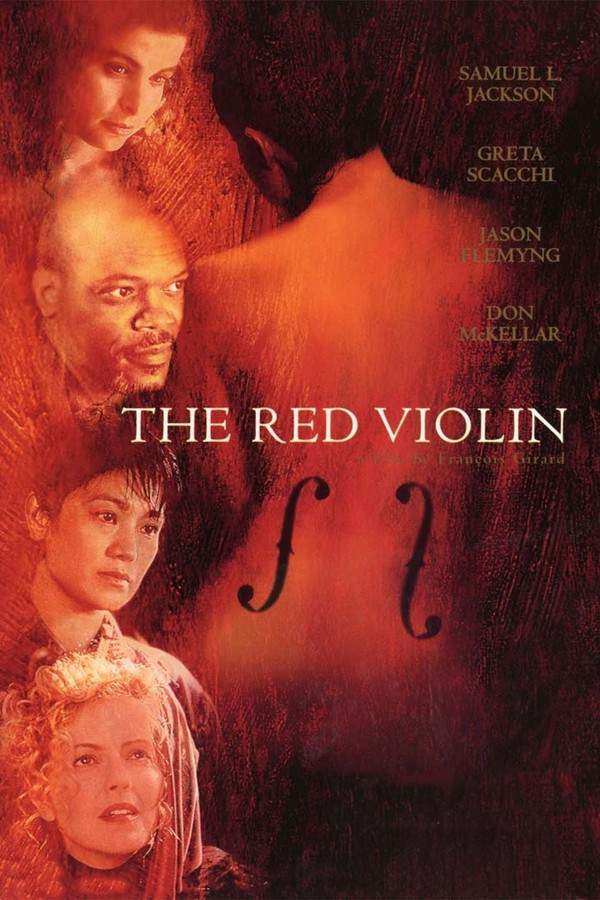
The Red Violin (1999) movie poster

Plot Summary

The Red Violin (1999) Plot Summary Explained

Release, runtime and language
1999 · 131 min · English
JustWatch #12,082 7
Directed by
François Girard
Starring
Carlo Cecchi, Christoph Koncz, Jean-Luc Bideau
Budget
$18M

A gifted craftsman creates a beautiful violin in 17th-century Italy, imbuing it with deep personal significance. The instrument’s history then unfolds across centuries and continents, connecting diverse characters and locations. In modern-day Montreal, an expert appraiser discovers the violin and its captivating story, embarking on a quest to reveal the secrets and passions woven into its creation and the lives it has touched. The journey explores themes of love, loss, and the enduring power of art.

On this page (6)
  1. 1 Where to watch
  2. 2 What happens: full plot
  3. 3 Plot questions answered
  4. 4 Movie threads
  5. 5 Movies like The Red Violin
  6. 6 Every angle

Where to watch

Where to Watch The Red Violin (1999)

Where can you watch The Red Violin? Stream, rent or buy it in the US, including on Tubi TV, YouTube Free and Amazon Video: current JustWatch availability with up-to-date prices.

Streaming availability powered by JustWatch

Full plot summary · contains spoilers

What Happens in The Red Violin: Full Plot Summary

The whole story of The Red Violin (1999) explained, from the opening scene to the final frame: every key event, every twist and what it all adds up to. Read it as a quick recap before the sequel, to check a scene you missed, or to finally understand what really happened.

This captivating film revolves around a remarkable red violin crafted in 1681 by the esteemed Cremonese violinmaker, Nicolo Bussotti, in anticipation of his child's arrival. The story unfolds through a series of episodes intricately tied together by the fortune-telling of a servant woman named Cesca, who reads tarot cards meant for Nicolo's expectant wife, Anna. Surprisingly, the cards do not forecast Anna's destiny but rather the violin's tumultuous journey.

As the narrative progresses, we learn that this violin will become Nicolo's final masterpiece—a beautifully intricate instrument possessing unparalleled resonance across all its sound characteristics. Tragically, after the death of his beloved Anna during childbirth, Nicolo finishes the violin, using secret ingredients that impart its striking red hue.

A pivotal moment in the film is the auction of the Red Violin at the Duval auction house in Canada. From there, we follow the violin's fascinating history as it changes hands repeatedly. Initially, it finds itself in an Austrian monastery, where it is played by young talents, including a gifted six-year-old named Kaspar Weiss, who receives guidance from his mentor, Georges Poussin. Unfortunately, Kaspar's promising life is cut short during an audition for Prince Mansfeld.

The violin, which lies with Kaspar in the grave, is eventually unearthed and comes into the possession of various gypsy owners. One group of gypsies brings it to the English countryside, where the renowned violinist, Lord Frederick Pope, becomes enchanted by the instrument. His infatuation with the violin leads to tragic events—a love triangle that ends with Lord Pope's lover discovering him in bed with the violin and another woman, resulting in her shooting the instrument. Devastated, Lord Pope subsequently takes his own life.

The violin then embarks on a new chapter, transported to China by Pope's former servant, who pawns it with a Shanghai merchant focused solely on the gemstone embedded in the violin's scroll. By 1937, it resides with a bourgeois Chinese family, managing to withstand the onslaught of the Great Proletarian Cultural Revolution, which deemed Western music unacceptable. Following the collector's death, the anonymous violin becomes part of an odd collection of stringed instruments, including a genuine Stradivarius, all "inherited" by the Chinese government.

At the Canadian auction, descendants of the violin's former owners reunite, vying for its ownership, alongside Charles Morritz (played by Samuel L. Jackson), a violin expert tasked with verifying the Stradivarius for customs evaluation. Morritz instinctively senses the truth about the mysterious red instrument nestled among the auction consignment from China. As the film unfolds, viewers witness a series of determined buyers arrive, each with their own aspirations regarding the coveted red violin, weaving a rich tapestry of music, fate, and longing.
Last updated: November 04, 2024 at 01:50

Was this helpful?

Plot questions answered

The Red Violin Plot Explained: Your Questions Answered

The questions people ask most about The Red Violin (1999): what happens in the confusing scenes, why the characters do what they do, the twists, hidden details and what the ending means. Each answer contains spoilers.

Q1

Why did Cesca's tarot reading predict the violin's fate instead of Anna's?

The tarot reading was intentionally mysterious, Cesca read cards meant for Anna, but they instead revealed the red violin's turbulent journey across centuries. This supernatural element suggests the violin's destiny was somehow more significant than the immediate family events, foreshadowing how this instrument would become a vessel for extraordinary stories across different eras.

Foreshadowing: The tarot scene early in the film establishes the violin's central role as the true protagonist of the narrative.

  • tarot cards
  • Cesca
  • fortune telling
  • fate
  • red violin journey
Q2

Why did Nicolo add secret ingredients to create the red violin?

After his wife Anna died during childbirth, Nicolo poured his grief and love into finishing his final masterpiece. The secret ingredients he used gave the violin its striking red hue, commonly interpreted as representing his blood and passion, making the instrument a physical manifestation of his emotional state and a tribute to his lost wife.

Foreshadowing: The violin's creation follows directly from Anna's death, linking the instrument's birth with tragedy.

  • Nicolo Bussotti
  • secret ingredients
  • red color
  • grief
  • Anna
  • death in childbirth
  • final masterpiece
Q3

Why did Kaspar Weiss die during his audition for Prince Mansfeld?

Kaspar was a gifted six-year-old prodigy studying at the Austrian monastery under Georges Poussin. During his audition for Prince Mansfeld, something tragic occurred that ended his promising life, the exact cause is not shown, but his death represents another instance of the violin's association with young lives cut short.

Foreshadowing: The earlier scenes showed Kaspar's exceptional talent and potential, making his sudden death a devastating turning point.

  • Kaspar Weiss
  • Prince Mansfeld
  • audition
  • death
  • Georges Poussin
  • Austrian monastery
  • young prodigy
Q4

Why did Lord Frederick Pope become so obsessed with the red violin?

Lord Frederick Pope was a renowned violinist in the English countryside who became completely captivated by the red violin's extraordinary sound and beauty. His obsession grew into an all-consuming passion that consumed his relationships and eventually led to tragic consequences for everyone involved.

Foreshadowing: The violin had already been associated with intense emotional attachment throughout its history, setting the pattern for Pope's obsession.

  • Lord Frederick Pope
  • obsession
  • violin
  • English countryside
  • musical passion
Q5

Why did Lord Pope's lover shoot the red violin?

A love triangle developed when Lord Pope's lover discovered him in bed with both another woman and the red violin. In a fit of rage and jealousy over his obsession with the instrument, she shot the violin itself, destroying the object that had come between them and symbolizing her fury at being replaced by a musical instrument.

Foreshadowing: Pope's obsessive behavior with the violin had already strained his relationships before this violent confrontation.

  • love triangle
  • shooting violin
  • Lord Pope
  • violent confrontation
  • jealousy
Q6

Why did Lord Frederick Pope take his own life after the violin was shot?

After his lover shot the red violin in a fit of jealousy, Pope was devastated by the destruction of the instrument he loved more than anything. His profound emotional attachment to the violin, perhaps representing his greatest artistic achievement or spiritual connection, led him to commit suicide out of despair.
Foreshadowing: The violin's destruction was the breaking point of the emotional tension built throughout Pope's storyline.

  • suicide
  • Lord Pope
  • despair
  • violin destruction
  • emotional breakdown
Q7

Why did the Shanghai merchant care only about the gemstone in the violin's scroll?

When Pope's former servant brought the red violin to China and pawned it with a Shanghai merchant, the merchant's sole interest was the valuable gemstone embedded in the violin's scroll. He saw the instrument purely as a commodity rather than appreciating its musical or historical significance, reducing the artistry to mere monetary value.

Foreshadowing: This moment marked a shift from appreciating the violin as art to treating it as an object worth only its material components.

  • Shanghai merchant
  • gemstone
  • scroll
  • pawn shop
  • material value
  • Chinese setting
Q8

How did the red violin survive the Great Proletarian Cultural Revolution?

By 1937, the red violin was owned by a bourgeois Chinese family who managed to hide it throughout the Cultural Revolution, when Western music was forbidden. The violin survived because the family protected it, preserving this extraordinary instrument despite the political danger of owning such a symbol of Western culture.

Foreshadowing: The earlier scene established the violin was in China, setting up its survival through this tumultuous period.

  • Cultural Revolution
  • 1937
  • Western music ban
  • China
  • survival
  • preservation
  • bourgeois family
Q9

Why did the Chinese government take possession of the red violin?

After the bourgeois collector who owned the red violin died, the instrument became part of an odd collection of stringed instruments, including a genuine Stradivarius. These valuable instruments were appropriated by the Chinese government, essentially 'inherited' as part of state control over valuable cultural artifacts during the political transition.

Foreshadowing: This follows logically from the violin's survival with the Chinese family and the owner's subsequent death.

  • Chinese government
  • Stradivarius
  • collection
  • appropriation
  • state ownership
  • artifacts
Q10

Why did descendants of the violin's former owners attend the Canadian auction?

At the Duval auction house in Canada, descendants of the red violin's past owners, including those connected to Kaspar Weiss and potentially other figures, reunited to bid on the instrument. Each had their own aspirations and emotional connections to reclaim a piece of their family's history, making the auction a convergence of multiple storylines.

Foreshadowing: The auction was set up as the central gathering point where all the violin's history would come together.

  • auction
  • descendants
  • Duval auction house
  • Canada
  • buyers
  • bidders
  • family history
Q11

Why was Charles Morritz suspicious of the red violin at the auction?

Charles Morritz was a violin expert tasked with verifying a Stradivarius for customs evaluation at the auction. He instinctively sensed that the mysterious red violin among the Chinese consignment was extraordinary, this intuitive recognition suggests he recognized qualities that set it apart from ordinary instruments.

Foreshadowing: The mysterious red instrument was nestled among the auction consignment from China, drawing expert attention.

  • Charles Morritz
  • violin expert
  • suspicion
  • customs evaluation
  • Stradivarius
  • red violin detection
Q12

What made the red violin so special compared to other instruments?

Nicolo Bussotti created the red violin as his final masterpiece, imbuing it with unmatched resonance across all sound characteristics. Combined with its striking red hue from secret ingredients and its extraordinary journey through centuries touching countless lives, the violin became a legendary instrument possessing both unparalleled musical quality and profound historical significance.

Foreshadowing: The film's premise centers on this violin being exceptional from its creation.

  • red violin
  • exceptional
  • resonance
  • masterpiece
  • Nicolo Bussotti
  • secret ingredients
  • legendary instrument

Movie threads

More Movies Like The Red Violin, by Mood & Story

Curated lists built around what makes The Red Violin tick: the same mood, the same kind of story or the same emotional payoff. Each list explains why these movies belong together.

Epic object journeys like The Red Violin

A single, extraordinary item's fateful journey through history, intertwining with human lives. If you liked The Red Violin's story of a violin's centuries-spanning journey, you'll enjoy these movies. Discover films where a single object's history connects diverse characters, exploring themes of fate, art, and legacy through an epic, multi-generational lens.

  • fateful
  • mysterious
  • historical
  • tragic
  • lyrical
  • nostalgic
  • Tone: melancholic, mysterious, fateful
  • Pacing: variable, episodic
Why these movies?

The story pattern: Narratives follow a non-linear, anthology-like structure, with the object as the constant link. Each segment explores a different owner's story, often tinged with tragedy or passion, building a cumulative mystery and emotional weight around the object's origins and ultimate fate.

Why they belong together: These films are grouped by their unique narrative structure, using a central object to explore human connection across time. They share a melancholic, mysterious tone and a thematic focus on how artifacts carry the weight of history and emotion.

Lyrical historical mysteries like The Red Violin

Atmospheric puzzles unraveled through interconnected stories across different eras. For viewers who enjoyed the lyrical mystery of The Red Violin, this collection features movies that unravel secrets across time. Find similar stories with a melancholic tone, where solving a historical puzzle leads to profound emotional discoveries rather than simple answers.

  • mysterious
  • melancholic
  • atmospheric
  • reflective
  • historical
  • passionate
  • Tone: melancholic, reflective, mysterious
  • Pacing: deliberate, atmospheric
Why these movies?

The story pattern: The plot typically uses a frame story in the present to investigate a historical event or artifact. The narrative jumps between time periods, slowly revealing connections and deepening the central enigma. The resolution is often ambiguous, emphasizing the emotional truth over a neat conclusion.

Why they belong together: This thread connects films that prioritize mood and emotion over plot-driven mystery. They share a melancholic, reflective tone, a non-linear structure that builds complexity, and an ending that feels ambiguous and thought-provoking.

If you liked this

Movies Like The Red Violin

Similar movies to The Red Violin: the same genre, themes or kind of story. Each one comes with its own plot summary, timeline and ending explained.

Browse all movie summaries

Every angle

The Red Violin (1999) Explained: Plot, Timeline & Characters

Everything about The Red Violin in one place: what happens in the plot summary, the timeline in chronological order, the characters and meaning and a spoiler-free summary. What's After the Movie adds the cast, box office and post-credit scenes.

Coming soon on iOS and Android

The Plot Explained Movie Summary App

Plot summaries, endings explained and timelines on your phone. Catch up on any movie in minutes, save your favorites and never miss a twist again.

Be the first to know when we launch. Your email stays private, always.

Learn more about the app