








Plot Explained Spoilers guaranteed!
Plot Explained

Browse by genre

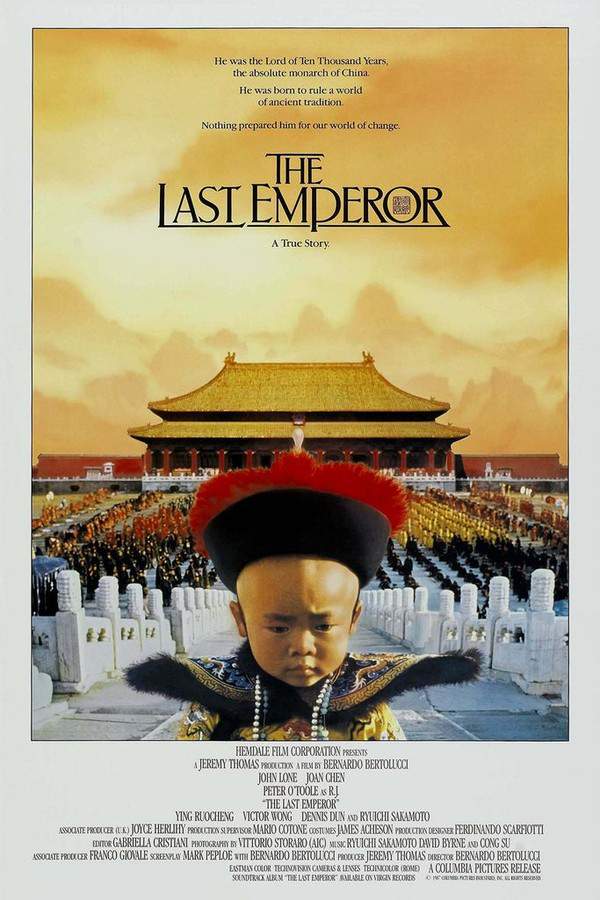
The Last Emperor (1987) movie poster

Characters & Themes

The Last Emperor (1987) Characters, Setting & Themes Explained

Release, runtime and language
1987 · 163 min · English
JustWatch #5,723 9
Directed by
Bernardo Bertolucci
Starring
Peter O'Toole, Joan Chen, John Lone

This epic biographical drama chronicles the life of China's last emperor, Pu Yi, portrayed by John Lone. The film explores his privileged upbringing within the Forbidden City, showcasing the opulence and grandeur of imperial life. It follows his journey through the dramatic changes in China, from the fall of the Qing Dynasty to his imprisonment and subsequent rehabilitation as a war criminal in 1950. Through Pu Yi’s experiences, the film offers a poignant look at the collapse of an empire and the shifting dynamics of power.

On this page (8)
  1. 1 Where to watch
  2. 2 Characters explained (2)
  3. 3 Where & when it takes place
  4. 4 Themes & meaning (3)
  5. 5 Character & meaning questions
  6. 6 Movie threads
  7. 7 Movies like The Last Emperor
  8. 8 Every angle

Where to watch

Where to Watch The Last Emperor (1987)

Where can you watch The Last Emperor? Stream, rent or buy it in the US, including on HBO Max, Amazon Video and Apple TV Store: current JustWatch availability with up-to-date prices.

Streaming availability powered by JustWatch

2 main characters · contains spoilers

The Last Emperor Characters Explained: Who Is Who

The main characters of The Last Emperor (1987), heroes and villains: what drives them, how they change over the course of the story and what each of them reveals about the film's bigger ideas.

  • Pu Yi

    played by John Lone

    Pu Yi, the last emperor of China, grapples with a life filled with isolation and expectations from an early age. His journey is marked by significant emotional turmoil as he navigates the complexities of power and his fading identity. The character is portrayed as sensitive yet detached, constantly seeking the comforts of his lost childhood.

    • 👑 Emperor
    • 😢 Melancholic
    • 🔒 Prisoner
  • Reginald Johnston

    played by Peter O'Toole

    Reginald Johnston serves as Pu Yi's tutor, embodying a paternal figure who seeks to nurture a friendship rather than assert authority. He recognizes the naivety in Pu Yi's royal facade, offering guidance amidst the confines of the Forbidden City. His character represents the bridge between the imperial world and the realities of a changing society.

    • 📚 Tutor
    • 🤝 Friend
    • 🇬🇧 Western Influence

Last updated: October 22, 2024 at 19:23

Was this helpful?

Setting

Where and When Does The Last Emperor Take Place?

The setting of The Last Emperor (1987): the year and time period, the places and locations, and how they shape the characters, the mood and the tension of the story.

Time period

1908, 1919, 1922, 1950, 1959, 1967

The story spans several critical time periods, beginning in 1908 when Pu Yi is thrust into the role of emperor as a child. It traces his journey through the years of political upheaval, including his marriage in 1922 and the emergence of Manchukuo. By 1950, he faces his past in prison, but a path to redemption begins to unfold towards the end of the 1950s.

Location

North China, Forbidden City, Manchukuo

The film traverses significant locations, including North China, where soldiers gather around a train station during the tumultuous post-war era. The Forbidden City stands as a monumental palace known for its beauty and former imperial glory, representing the lost childhood of Pu Yi. Manchukuo, a puppet state, symbolizes Pu Yi's complicated political entanglements and struggles for identity.

  • 🏰 Historical Site
  • 🇨🇳 China
  • 🚂 Train Station

Last updated: October 22, 2024 at 19:23

Was this helpful?

3 major themes

The Last Emperor Meaning: Themes & Message Explained

What is The Last Emperor (1987) really about? The emotional, social and philosophical themes the film keeps returning to, its symbolism and the message beneath the surface.

  • Royalty

    The theme of royalty is central to Pu Yi's identity, as he is depicted as both a powerful emperor and a puppet under manipulation. His childhood experiences reflect the burdens of sovereignty, leading to a tragic existence filled with isolation. The story emphasizes the complexities of power, exploring the juxtaposition between imperial grandeur and personal loss.

  • Redemption

    Redemption emerges as Pu Yi grapples with his past decisions and seeks a new beginning after years of despair. His journey from a confined life to one of genuine smiles as a gardener symbolizes hope and transformation. The film poignantly conveys that true freedom comes from self-acceptance and the release of past burdens.

  • Identity Crisis

    Pu Yi's life encapsulates an identity crisis as he navigates multiple roles—from an emperor to a prisoner. This theme is depicted through his longing for family and normalcy amidst his royal responsibilities. The struggle for personal identity against external expectations invites viewers to reflect on the nature of true selfhood.

Last updated: October 22, 2024 at 19:23

Was this helpful?

Character & theme questions

The Last Emperor Characters & Meaning: Your Questions Answered

The questions people ask about The Last Emperor (1987): who the characters really are, their relationships, what the symbols mean, where it takes place and what the movie is really about. Each answer contains spoilers.

Q1

Where is The Last Emperor set?

The film is set primarily in China, spanning locations like the Forbidden City in Beijing, North China, and Manchukuo, the Japanese puppet state in Manchuria where Pu Yi was installed as emperor.

  • forbidden city
  • beijing
  • china
  • locations
  • manchukuo
Q2

What is the Forbidden City in The Last Emperor?

The Forbidden City is the imperial palace in Beijing where Pu Yi spent his childhood as emperor. In the film, it represents both the opulence of the Qing Dynasty and the isolation of his early years, serving as a symbol of lost childhood and imperial grandeur.

  • forbidden city
  • imperial palace
  • childhood
  • beijing
Q3

What was Manchukuo in the context of the film?

Manchukuo was a Japanese-controlled puppet state established in Manchuria during the 1930s. In the film, it represents Pu Yi's complicated political entanglements and his failed attempt to reclaim power after being forced from the Chinese throne.

  • manchukuo
  • japan
  • puppet state
  • politics
  • emperor
Q4

What time period does The Last Emperor cover?

The film spans over 60 years, beginning in 1908 when Pu Yi becomes emperor as a child, through the fall of the Qing Dynasty, his marriage in 1922, World War II, and his imprisonment in 1950, concluding in the late 1950s.

  • 1908
  • 1922
  • 1950
  • time period
  • qing dynasty
  • history
Q5

What are the main themes of The Last Emperor?

The film explores three central themes: royalty and the burdens of sovereignty, redemption through self-acceptance after years of imprisonment, and identity crisis as Pu Yi struggles to define himself beyond his title.

  • themes
  • royalty
  • redemption
  • identity
  • power
  • meaning
Q6

How does The Last Emperor portray redemption?

Redemption in the film comes through Pu Yi's transformation from a confused puppet emperor to a free man who finds peace as a gardener in his final years. The theme emphasizes that true freedom comes from letting go of past burdens and accepting oneself.

  • redemption
  • freedom
  • peace
  • transformation
  • gardener
Q7

What does The Last Emperor say about identity crisis?

The film depicts Pu Yi's lifelong struggle to find his true self amid changing roles, emperor, puppet ruler, prisoner, and finally ordinary citizen. His longing for family and normalcy contrasts with the expectations placed on him as a monarch, exploring the nature of true selfhood.

  • identity
  • role
  • empperor
  • family
  • selfhood
  • personal identity
Q8

Who is Pu Yi in the film?

Pu Yi was China's last emperor, thrust onto the throne as a toddler in 1908. The film portrays him as a sensitive, isolated figure struggling with the expectations of royalty and the collapse of his world, depicted by John Lone.

  • pu yi
  • emperor
  • last emperor
  • china
  • qing dynasty
Q9

Who is Reginald Johnston in The Last Emperor?

Reginald Johnston is Pu Yi's British tutor, played by Peter O'Toole, who serves as a paternal figure and bridge between the isolated imperial world and modern society. He recognizes Pu Yi's naivety and tries to guide him through the changing realities of China.

  • reginald johnston
  • tutor
  • mentor
  • peter o'toole
  • guide
Q10

What does the film say about power and royalty?

The film presents royalty as both a privilege and a prison. Pu Yi experiences the burdens of sovereignty, isolation, manipulation by others, and the inability to act freely, while also losing his empire and identity when power is stripped away.

  • power
  • royalty
  • sovereignty
  • empperor
  • burden
  • control
Q11

What is the overall tone of The Last Emperor?

The film has a predominantly melancholic tone, defined by loss and reflection on a vanished world. While it deals with heavy themes of imprisonment and betrayal, it avoids being bleak due to its bittersweet ending that offers hope and redemption.

  • tone
  • melancholy
  • emotion
  • bittersweet
  • atmosphere

Movie threads

More Movies Like The Last Emperor, by Mood & Story

Curated lists built around what makes The Last Emperor tick: the same mood, the same kind of story or the same emotional payoff. Each list explains why these movies belong together.

Historical Epics about the Fall of an Empire like The Last Emperor

Epic historical dramas about the personal cost of a dynasty's end. If you were captivated by the grand scale and personal tragedy of The Last Emperor, explore these movies like it. This collection features similar historical dramas and biographical stories about the collapse of empires, the loss of power, and the poignant human stories at the center of world-changing events.

  • epic
  • historical
  • somber
  • reflective
  • opulent
  • tragic
  • Tone: melancholic, somber, reflective
  • Pacing: variable, epic scope
Why these movies?

The story pattern: Stories in this thread typically follow a linear or nonlinear path tracing the zenith and nadir of a powerful figure or institution. The narrative juxtaposes opulent heights with profound loss, often using a character's personal journey to symbolize the fate of an entire nation or era.

Why they belong together: Movies are grouped here for their shared focus on monumental historical change, their epic scope, and their melancholic tone. They all explore the heavy emotional weight of witnessing a world disappear, often through the eyes of someone who once ruled it.

Movies about Imprisonment and Identity like The Last Emperor

Stories of personal transformation and self-discovery through imprisonment. If you liked The Last Emperor's focus on Pu Yi's transformation, discover these movies about imprisonment and identity. This collection features similar stories of characters stripped of power who must rebuild their sense of self, often with a bittersweet ending and a heavy emotional journey.

  • somber
  • reflective
  • lonely
  • hopeful
  • psychological
  • redemptive
  • Tone: somber, reflective, bittersweet
  • Pacing: slow, character-driven
Why these movies?

The story pattern: The narrative arc hinges on a forced isolation that catalyzes a deep identity crisis. The story contrasts a character's life before and during confinement, focusing on their internal struggle and eventual, hard-won acceptance or redefinition of self, rather than a conventional escape.

Why they belong together: These films share a core theme of identity reconstruction amid constraint. They are united by a somber, reflective mood, a focus on internal psychological change over external action, and an ending that acknowledges loss while offering a glimpse of peace or understanding.

If you liked this

Movies Like The Last Emperor

Similar movies to The Last Emperor: the same genre, themes or kind of story. Each one comes with its own plot summary, timeline and ending explained.

Browse all movie summaries

Every angle

The Last Emperor (1987) Explained: Plot, Timeline & Characters

Everything about The Last Emperor in one place: what happens in the plot summary, the timeline in chronological order, the characters and meaning and a spoiler-free summary. What's After the Movie adds the cast, box office and post-credit scenes.

Coming soon on iOS and Android

The Plot Explained Movie Summary App

Plot summaries, endings explained and timelines on your phone. Catch up on any movie in minutes, save your favorites and never miss a twist again.

Be the first to know when we launch. Your email stays private, always.

Learn more about the app