




Plot Explained Spoilers guaranteed!
Plot Explained

Browse by genre

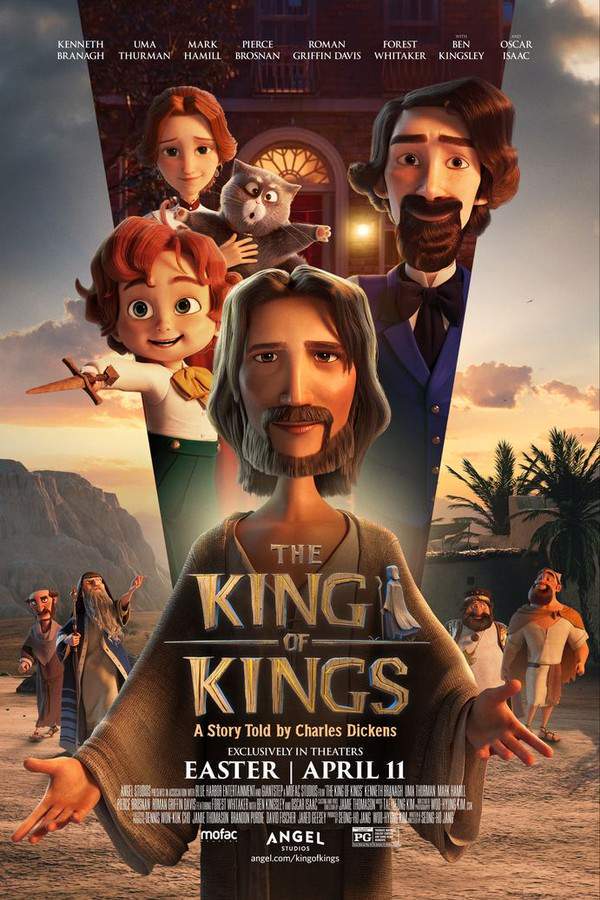
The King of Kings (2025) movie poster

Timeline

The King of Kings (2025) Timeline Explained – Every Event in Order

Release, runtime and language
2025 · 1 h 44 m · English
Echo score 72
JustWatch #3,226 10
Directed by
Seongho Jang
Starring
Mark Hamill, Forest Whitaker, Oscar Isaac, Ben Kingsley, Jim Cummings, Pierce Brosnan
Budget
$25.2M

A father shares the story of Jesus with his son, intending it as a bedtime tale. However, the narrative evolves into a profound and transformative experience as the boy imaginatively joins Jesus, witnessing His miracles and trials. The film explores themes of hope and love through this immersive journey, culminating in an understanding of Jesus's sacrifice.

On this page (7)
  1. 1 Where to watch
  2. 2 Events in order (13)
  3. 3 Timeline questions answered
  4. 4 The book behind the movie
  5. 5 Movie threads
  6. 6 Movies like The King of Kings
  7. 7 Every angle

Where to watch

Where to Watch The King of Kings (2025)

Where can you watch The King of Kings? Stream, rent or buy it in the US, including on Angel Studios, Amazon Video and Apple TV Store: current JustWatch availability with up-to-date prices.

Streaming availability powered by JustWatch

13 events in order · contains spoilers

The King of Kings Timeline: Events in Chronological Order

Every key event of The King of Kings (2025) in order, scene by scene, with when and where it takes place. Use it to untangle flashbacks, time jumps and parallel storylines, to refresh your memory before the sequel or to find the exact scene you are thinking of.

  1. Introduction to Charles Dickens

    Charles Dickens is introduced as a master storyteller whose works have deeply affected many over the years. Despite his prolific talent, his commitment to work often kept him emotionally distant from his family, particularly impacting his relationship with his youngest son, Walter.

  2. Walter's Imaginative World

    Walter, Dickens' five-year-old son, is characterized as a dreamer who spends his time in a rich world of imagination. His inseparable bond with his best friend, Willa the cat, highlights his unique perspective on the world around him.

  3. Disruption at the Reading Performance

    During a reading performance at a London theatre, Walter's mischievous behavior causes a disruption. Despite Dickens’ pleas for his son to enjoy the event, Walter remains disinterested and distracted, emphasizing the disconnect between them.

    Where
    London theatre
  4. The Story of King Arthur

    Walter's obsession with the tales of King Arthur prompts Catherine, Dickens' wife, to encourage Dickens to engage his son with storytelling. This moment illustrates the importance of storytelling in building a bond with Walter.

  5. A Story for the Family

    Determined to connect with his son, Dickens resolves to tell Walter a story not intended for the public, but rather for their family. He chooses to narrate the story of Jesus Christ, a tale he believes holds significant meaning.

  6. The Birth of Christ

    By the fire, Dickens begins narrating the birth of Christ, painting a vivid picture of the old world for Walter. As he speaks, Walter's imagination is sparked, and he begins to visualize the scenes unfolding.

  7. Encounter with King Herod

    Walter is drawn into the narrative as the tyrannical King Herod searches for the newborn King, illustrating the fears and perils faced during that time. This engagement showcases Walter's growing connection to the story being told.

  8. Mary and Joseph's Escape

    The story takes a thrilling turn when Dickens recounts the daring escape of Mary and Joseph to protect Jesus from King Herod. Walter feels the intensity of the moment, fully immersed in the peril surrounding the family.

  9. Understanding the Story's Depth

    As Dickens continues, he describes Christ's path from humble beginnings to becoming a leader with devoted disciples. Walter's imagination fuels his understanding of this significant journey, deepening his appreciation for the story.

  10. The Pain of Persecution

    Walter experiences the pain of Christ’s persecution and crucifixion as Dickens narrates these crucial events. The emotional weight of the story allows Walter to connect with the narrative's depth and the sacrifices made.

  11. Resurrection and Its Meaning

    The story concludes with the resurrection of Jesus, symbolizing hope and new beginnings. Dickens guides Walter through the significance of Christ's resurrection, helping him to comprehend the lessons embedded within the tale.

  12. Strengthened Bond

    As the story wraps up, the bond between Charles and Walter strengthens significantly. Through the narrative, they find a connection filled with love and understanding that had previously eluded them.

  13. The Power of Storytelling

    The movie illustrates the transformative power of storytelling in bridging gaps between loved ones. Charles Dickens’ heartfelt narration not only entertains Walter but also cements their father-son relationship for a lifetime.

Last updated: May 12, 2025 at 07:04

Was this helpful?

Timeline questions answered

The King of Kings Timeline Explained: Your Questions Answered

When does it happen, and why in that order? The questions people ask about the chronology of The King of Kings (2025): time jumps, flashbacks, cause and effect between scenes and the correct order of events, each answered with spoilers.

Q1

Why does Charles Dickens choose to tell Walter about Jesus instead of King Arthur?

Catherine, Dickens' wife, encourages him to share a different kind of story after seeing Walter's obsession with King Arthur. Dickens realizes his son needs a more meaningful narrative that goes beyond adventure tales. He believes the story of Jesus Christ is 'the greatest story ever told' and intends it as a bedtime tale specifically meant for his family, not for public consumption.

  • charles dickens
  • walter
  • king arthur
  • jesus story
  • bedtime story
  • catherine
Q2

How does Walter become part of Jesus's story?

As Charles Dickens narrates the tale by the fire, Walter's imagination transforms him into an active participant within the biblical narrative. The film visualizes him witnessing events like the angel's visit to the shepherds, the flight from King Herod, and Jesus's ministry from within the story itself, rather than merely listening from outside it.

  • walter
  • imagination
  • jesus
  • visualization
  • 参与
Q3

Why does Walter experience such intense emotions during Christ's crucifixion?

Walter becomes fully immersed in the story through his imagination, causing him to feel the emotional weight of Christ's suffering as if he were witnessing it firsthand. Charles helps him process these difficult emotions by explaining that the crucifixion was necessary for the story's conclusion and the salvation it represents.

  • walter
  • crucifixion
  • emotions
  • christ suffering
  • catharsis
Q4

What causes Dickens to shift from performing for audiences to telling a private story for Walter?

The disruption at the London theatre, where Walter's playful antics interrupt Dickens' reading, exposes the growing disconnect between father and son. Catherine's suggestion to try a different kind of story prompts Dickens to abandon his public storytelling persona and instead create an designed specifically to intimate, personal narrative reach his young son.

  • charles dickens
  • london theatre
  • disruption
  • catherine
  • father son bond
Q5

How does telling the story of Jesus help Dickens and Walter bond?

The act of storytelling creates an intimate setting by the fire where father and son share a meaningful experience. As Walter becomes emotionally invested in the narrative, Charles guides him through difficult moments like the crucifixion and helps him understand the resurrection's significance. This shared emotional journey builds the connection they both desperately wanted.

  • father son relationship
  • storytelling
  • bonding
  • jesus story
  • connection
Q6

What does the resurrection signify for Walter in the context of the story?

The resurrection represents hope and new beginnings, which mirrors Walter's own transformative journey through the story. Charles explains the significance of Christ's resurrection to Walter, helping the boy comprehend the lessons of hope, love, and sacrifice embedded within the tale while also reinforcing their newfound emotional connection.

  • resurrection
  • hope
  • walter
  • meaning
  • new beginnings
Q7

Why does the film use Charles Dickens as a framing device for Jesus's story?

The framing device allows the film to present biblical events through a child's imaginative perspective, making the story accessible and emotionally resonant for younger audiences. It also creates a parallel narrative about the power of storytelling to bridge emotional gaps between father and son, adding depth to the simple retelling of Christ's life.

  • framing device
  • charles dickens
  • narrative structure
  • imagination
  • child perspective
Q8

What is Willa the cat's significance in the story?

Willa the cat represents Walter's constant companion and symbolizes his imaginative world. As Walter's inseparable best friend, Willa is part of the emotional context that defines Walter's unique perspective, though the cat does not actively participate in the imaginative journey through Jesus's story.

  • willa
  • cat
  • walter
  • companion
  • imagination
Q9

Why is King Herod's search for the newborn King important to the story?

King Herod's ruthless pursuit creates immediate tension and danger in the narrative, showing Walter the perils faced by Jesus's family. This part of the story captivates Walter with its thrilling escape sequence where Mary and Joseph must hide the child, demonstrating the stakes and setting up the theme of sacrifice that culminates in the crucifixion.

  • king herod
  • newborn king
  • mary joseph
  • escape
  • danger
  • persecution
Q10

How does Charles Dickens explain the crucifixion to a five-year-old?

Charles helps Walter navigate the emotional pain of witnessing Christ's persecution and crucifixion by framing it as necessary for the story's ultimate purpose. He guides his son to understand that the suffering leads to the resurrection and represents the ultimate act of love and sacrifice, transforming a traumatic moment into one of hope.

  • crucifixion
  • explanation
  • necessary
  • sacrifice
  • charles dickens
  • walter

Movie threads

More Movies Like The King of Kings, by Mood & Story

Curated lists built around what makes The King of Kings tick: the same mood, the same kind of story or the same emotional payoff. Each list explains why these movies belong together.

Movies about transformative storytelling like The King of Kings

Immersive tales that change the characters who experience them. If you liked how The King of Kings uses a bedtime story to embark on a profound journey, explore these movies where storytelling becomes an immersive, life-changing experience. Discover similar family-friendly tales that blend imagination with emotional growth and heartwarming connections.

  • heartwarming
  • imaginative
  • transformative
  • hopeful
  • reverent
  • whimsical
  • Tone: hopeful, heartwarming, reverent
  • Pacing: steady, immersive
Why these movies?

The story pattern: These narratives often feature a frame story where a tale is being told, which then comes alive for a character. The listener doesn't just hear the story but actively participates in it, leading to personal growth, strengthened relationships, and a new perspective on life. The journey within the story parallels the character's real-world emotional arc.

Why they belong together: Movies in this thread share a dual narrative structure, a hopeful tone, and a focus on how imagination and narrative can heal, teach, and connect. They balance heavier themes with a gentle, accessible approach, resulting in a heartwarming and transformative viewing experience.

Movies that handle heavy themes gently like The King of Kings

Approaching profound subjects with a soft, accessible, and hopeful touch. Looking for movies like The King of Kings that explore deep themes of sacrifice and belief in a soft, hopeful way? This collection highlights films that balance serious subject matter with a gentle, family-friendly tone, creating an uplifting journey through challenging concepts.

  • sobering
  • hopeful
  • reverent
  • heartwarming
  • transformative
  • whimsical
  • Tone: hopeful, sobering, reverent
  • Pacing: steady, methodical
Why these movies?

The story pattern: These stories use narrative devices like allegory, fantasy, or a child's perspective to soften the edges of difficult themes. The emotional journey acknowledges the weight of the subject matter but consistently guides the viewer toward hope and understanding, often through a lens of love, faith, or imagination.

Why they belong together: They are grouped by their unique tonal balance: the ability to discuss profound sorrow or sacrifice while maintaining an overall atmosphere of hope and warmth. Their steady pacing and straightforward presentation make heavy themes approachable, resulting in a moving but not devastating experience.

If you liked this

Movies Like The King of Kings

Similar movies to The King of Kings: the same genre, themes or kind of story. Each one comes with its own plot summary, timeline and ending explained.

Browse all movie summaries

Every angle

The King of Kings (2025) Explained: Plot, Timeline & Characters

Everything about The King of Kings in one place: what happens in the plot summary, the timeline in chronological order, the characters and meaning and a spoiler-free summary. What's After the Movie adds the cast, box office and post-credit scenes.

Coming soon on iOS and Android

The Plot Explained Movie Summary App

Plot summaries, endings explained and timelines on your phone. Catch up on any movie in minutes, save your favorites and never miss a twist again.

Be the first to know when we launch. Your email stays private, always.

Learn more about the app