Plot Explained Spoilers guaranteed!
Plot Explained

Browse by genre

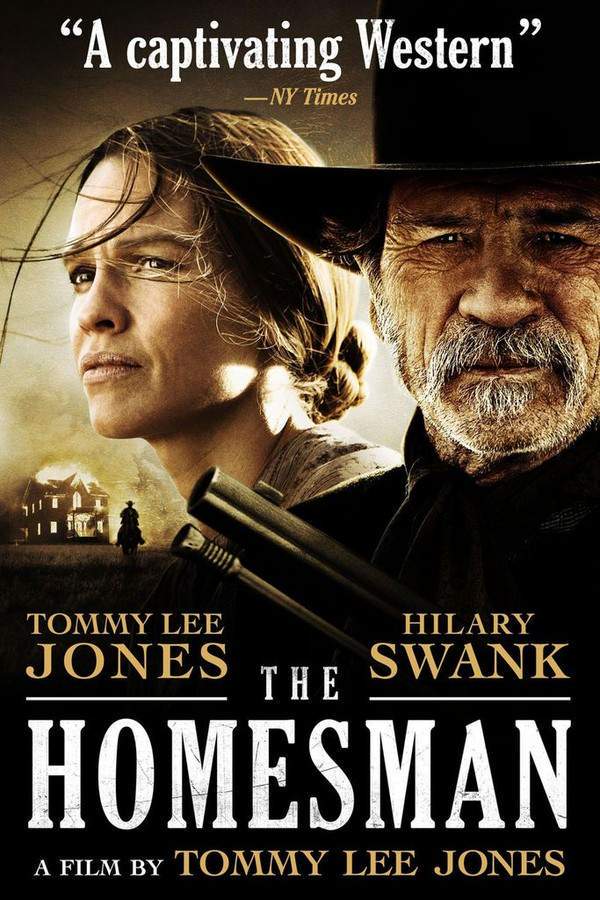
The Homesman (2014) movie poster

Timeline

The Homesman (2014) Timeline Explained – Every Event in Order

Release, runtime and language
2014 · 122 min · English
Loading streaming availability…
Starring
David Dencik, James Spader, Miranda Otto, John Lithgow, Tommy Lee Jones, Tim Blake Nelson

In the Nebraska Territory of the mid-1850s, three women struggling with the hardships of pioneer life are left to face the dangers of the frontier alone. Determined to help, Mary Bee Cuddy volunteers to transport them to Iowa, embarking on a perilous journey across the vast and desolate landscape. She finds an unlikely companion in George Briggs, a taciturn drifter, as they confront not only the physical challenges of the journey, but also the psychological toll of the unforgiving environment and the women’s fragile mental states.

On this page (6)
  1. 1 Where to watch
  2. 2 Events in order (15)
  3. 3 Timeline questions answered
  4. 4 Movie threads
  5. 5 Movies like The Homesman
  6. 6 Every angle
Loading streaming availability…

15 events in order · contains spoilers

The Homesman Timeline: Events in Chronological Order

Every key event of The Homesman (2014) in order, scene by scene, with when and where it takes place. Use it to untangle flashbacks, time jumps and parallel storylines, to refresh your memory before the sequel or to find the exact scene you are thinking of.

  1. Mary Bee Cuddy's Move

    In 1854, Mary Bee Cuddy, a 31-year-old teacher from New York, relocates to the Midwest in search of better opportunities. She settles in Loup, Nebraska Territory, where she owns land and is financially stable but struggles with loneliness and depression.

    When
    1854
    Where
    Loup, Nebraska Territory
  2. Proposal Rejected

    Feeling the weight of her isolation, Cuddy invites her neighbor, Bob Giffen, to dinner and proposes marriage. However, he declines, calling her plain-looking and too commanding, leaving her feelings of rejection to deepen.

  3. Signs of Prairie Madness

    As winter sets in, signs of prairie madness begin to affect three local women. Arabella Sours, Gro Svendsen, and Theoline Belknap each face tragic events that push them further into despair, highlighting the hardships of frontier life.

    When
    Winter
  4. The Women's Desperation

    The situation worsens as Theoline ends her own child's life after a poor harvest. Their distraught husbands enlist Reverend Dowd to take the women to the Lady's Aid Society Methodist Church in Hebron, Iowa, which aids the mentally ill.

    Where
    Hebron, Iowa
  5. Cuddy Takes Charge

    When Theoline's husband refuses to help transport the women, Cuddy steps up and draws the short straw to accompany them. This marks a pivotal moment where she takes on more responsibility amid growing tension.

  6. George Briggs' Introduction

    As Cuddy prepares for the journey, she encounters George Briggs, a claim jumper punished by being left hanging. She helps him in exchange for his assistance, skeptical of his sincerity and reliability throughout their expedition.

  7. Encounter with Pawnee Tribes

    During their journey, they face danger from hostile Pawnee tribes. To prevent conflict, Briggs gives up Cuddy's horse but the situation escalates when Arabella is kidnapped, prompting an urgent rescue operation.

  8. Arabella's Confrontation

    In a dramatic turn, Arabella kills her abductor during the rescue, showcasing both her desperation and bravery. This incident underscores the perils the group faces as they traverse through the dangerous territory.

  9. Restoring a Grave

    After encountering a desecrated grave of a young girl, Cuddy feels compelled to restore it despite Briggs' insistence to keep moving. This choice leads her to fall behind the group, illustrating her strong moral compass amidst chaos.

  10. Cuddy's Suicidal Despair

    After another exhausting night, Cuddy suggests marriage to Briggs, who dismisses her offer. In a tragic twist, she ultimately takes her own life, leaving Briggs devastated and attributing her death to the three women’s struggles.

  11. Briggs' Guilt

    Upon finding Cuddy dead, Briggs feels a mix of grief and anger towards the women, blaming their emotional turmoil for Cuddy's death. He lays her to rest, grappling with the weight of his decisions and feelings.

  12. Abandonment of the Women

    After taking Cuddy's hidden stash of $300, Briggs decides to abandon the women, even as they attempt to follow him on foot. The tragedy deepens with Arabella almost drowning during their pursuit.

  13. Conflict at the Hotel

    When the group arrives at an abandoned hotel, they are refused service by Aloysius Duffy, who fears the tarnished reputation from their arrival. Briggs confronts Duffy, leading to a standoff and eventual violent retribution.

  14. Setting the Hotel Ablaze

    In an act of vengeance against the hotel owner, Briggs stealthily returns to set the establishment on fire, ensuring that Duffy and his guests perish within. He takes valuable supplies for himself and the women.

    Where
    Abandoned Hotel
  15. Briggs' Departure

    Finally arriving in Hebron, Briggs brings the women to Altha Carter's care and informs her of Cuddy's death while withholding the tragic details. Stricken with guilt over his earlier rejection of Cuddy, he crafts a grave marker for her.

    Where
    Hebron, Iowa

Last updated: November 15, 2024 at 18:49

Was this helpful?

Timeline questions answered

The Homesman Timeline Explained: Your Questions Answered

When does it happen, and why in that order? The questions people ask about the chronology of The Homesman (2014): time jumps, flashbacks, cause and effect between scenes and the correct order of events, each answered with spoilers.

Q1

Why does Mary Bee Cuddy propose to George Briggs?

After another exhausting night of riding in circles, a desperate and emotionally fragile Cuddy impulsively proposes to Briggs. Her proposal comes after she has fallen behind the group twice, once while restoring a grave and once from aimless wandering. She is emotionally broken from the journey's hardships and her deep loneliness, which has been compounded by her earlier rejection from Bob Giffen. Briggs refuses her, saying he "ain't no farmer," which appears to be the final emotional blow that leads to her suicide.

Foreshadowing: Earlier in the film, Cuddy's proposal to Bob Gifford establishes her desperation for companionship and her vulnerability to rejection.

  • mary bee cuddy
  • proposal
  • george briggs
  • rejection
  • loneliness
  • prairie madness
Q2

Why does Mary Bee Cuddy take her own life?

Cuddy commits suicide after Briggs rejects her marriage proposal. However, her death is not solely caused by this single rejection, it is the culmination of accumulated psychological trauma. She has been struggling with isolation and depression since moving to Nebraska, was publicly rejected by Bob Giffen, has witnessed the devastating effects of prairie madness on three women, endured a perilous journey, and just experienced the humiliation of having her proposal spurned. The harsh frontier environment and her emotional exhaustion leave her with no will to continue.

Foreshadowing: The signs of prairie madness affecting the three women foreshadow the psychological toll the frontier takes on settlers, particularly women.

  • mary bee cuddy
  • suicide
  • death
  • prairie madness
  • depression
  • emotional breakdown
Q3

Why does George Briggs abandon the three women?

After discovering Cuddy's body, Briggs is consumed by grief and anger. He blames the three women for Cuddy's death, viewing their mental struggles as the reason Cuddy took on this burden and ultimately broke down. He takes Cuddy's hidden stash of $300 and abandons them, riding away on horseback. However, the women follow him on foot, demonstrating their desperation and determination to reach Hebron.

Foreshadowing: Briggs' earlier threat that he can abandon Cuddy at any time establishes his tendency to prioritize his own survival.

  • george briggs
  • abandonment
  • three women
  • money
  • death
Q4

Why does George Briggs burn down the hotel?

When the group arrives at an abandoned hotel, proprietor Aloysius Duffy refuses them service, claiming the imminent arrival of sixteen investors would be tarnished by the women's presence. Enraged by this cold rejection, Briggs confronts Duffy with guns drawn and leaves. That night, he returns stealthily and sets the hotel on fire, ensuring everyone inside, including Duffy and the arriving investors, perishes. He then takes supplies for himself and the three women. This act represents Briggs' nihilistic revenge against a society that has consistently rejected him and those he travels with.

Foreshadowing: Earlier, Briggs freely gave up Cuddy's horse to bribe the Pawnee, showing his willingness to make brutal practical decisions.

  • hotel fire
  • briggs
  • revenge
  • aloysius duffy
  • murder
Q5

What happens to Mary Bee Cuddy's body?

After discovering Cuddy's lifeless body, Briggs buries her on the prairie. Later, consumed by guilt over having rejected her proposal, he commissions a wooden grave marker for her. When he finally reaches Hebron, he has the marker installed at her grave. However, as he leaves on the river ferry heading back west, one of the bargemen accidentally knocks the marker off the deck, and it floats away into the river, symbolizing how quickly her memory and legacy are lost.

Foreshadowing: The film establishes Cuddy's desire to restore the desecrated grave of the young girl, showing her concern for proper burial and memorial.

  • grave marker
  • burial
  • river
  • memorial
Q6

Why is Arabella kidnapped by the Pawnee?

During the journey, the group encounters hostile Pawnee tribes. Briggs attempts to avoid conflict by bribing them with Cuddy's horse, but the situation escalates and Arabella is kidnapped by a Pawnee warrior. Briggs then chases down the captor, and in the ensuing confrontation, Arabella kills her abductor, showing both her desperation and her capacity for violence when cornered.

Foreshadowing: The earlier encounter with the desecrated grave of an eleven-year-old girl establishes the violent reality of Native American encounters on the frontier.

  • arabella
  • kidnap
  • pawnee
  • rescue
  • killing
Q7

Why does Bob Giffen reject Mary Bee Cuddy's marriage proposal?

Bob Giffen rejects Cuddy's marriage proposal because he finds her "plain-looking and too commanding." He tells her he would rather seek a partner back east. This rejection deeply wounds Cuddy and contributes to her emotional vulnerability throughout the film. The rejection highlights the societal constraints on women during this era, Cuddy is financially successful and independent but still judged and rejected based on appearance and demeanor.

Foreshadowing: This rejection establishes Cuddy's loneliness and desperation for companionship, which later leads to her proposal to Briggs.

  • bob giffen
  • rejection
  • marriage
  • plain
  • commanding
Q8

What is prairie madness in the film?

Prairie madness refers to the psychological breakdown that afflicts settlers, particularly women, living on the harsh frontier. In the film, three women succumb to it: Arabella Sours loses three children to diphtheria, Gro Svendsen collapses after her mother dies, and Theoline Belknap kills her own child following a poor harvest. The extreme isolation, grief, and harsh conditions of pioneer life drive these women to mental instability, demonstrating one of the film's central themes about the psychological toll of the frontier.

Foreshadowing: Cuddy's own struggles with isolation and depression from the beginning of the film hint at her susceptibility to similar psychological breakdown.

  • prairie madness
  • mental breakdown
  • isolation
  • hardship
  • frontier
Q9

Why does George Briggs take Mary Bee Cuddy's $300?

After Cuddy's death, Briggs discovers she had secretly kept the $300 she promised him for his services. He takes the money and uses it initially to abandon the women and travel alone. Later, when he learns the Bank of Loup has failed, the money becomes worthless. He then gives a pair of shoes to Tabitha Hutchinson, a hotel maid, and proposes to her, seemingly as a redemptive act after his journey of guilt and loss.

Foreshadowing: Cuddy's promise of $300 is what initially convinces Briggs to help her, establishing money as his primary motivation.

  • money
  • 300 dollars
  • bank failure
  • briggs
  • tabitha hutchinson
Q10

Why does Mary Bee Cuddy fall behind the group?

Cuddy falls behind the group twice during the journey. The first time occurs after they encounter the desecrated grave of an eleven-year-old girl. Despite Briggs urging her to continue, Cuddy feels compelled to restore the grave properly, which causes her to fall behind. The second time happens when she realizes she has been riding in circles all night, having become disoriented. Both incidents demonstrate her moral compass and physical exhaustion, but they also show her growing inability to cope with the journey's demands.

Foreshadowing: Cuddy's compassionate nature is established early when she volunteers to help the three women in the first place.

  • fall behind
  • grave
  • disoriented
  • exhaustion
  • journey
Q11

What happens to the three women at the end of the film?

Briggs successfully delivers the three women, Arabella Sours, Gro Svendsen, and Theoline Belknap, to Altha Carter, the reverend's wife, at the Lady's Aid Society Methodist Church in Hebron, Iowa. While the mission is technically accomplished, the cost is enormous: Cuddy is dead, Briggs has descended into nihilistic violence, and the women's futures remain uncertain. The ending is bittersweet, with the women's survival overshadowed by tragedy.

Foreshadowing: The journey's purpose from the beginning was to deliver the women to the care of the Lady's Aid Society.

  • arabella
  • gro svendsen
  • theoline belknap
  • hebron
  • iowa
  • altha carter
Q12

Why does George Briggs propose to Tabitha Hutchinson?

After learning his $300 is worthless due to the bank failure and commissioning a grave marker for Cuddy, Briggs encounters Tabitha Hutchinson, a maid at his hotel. He gives her a pair of shoes as a gift and proposes to her, warning her against marrying a young man heading west and suggesting she stay put. This proposal appears to be Briggs attempting to find redemptive connection and purpose after the traumatic journey, though Tabitha simply responds, "Maybe," leaving his future uncertain.

Foreshadowing: Briggs' rejection of Cuddy's earlier proposal creates ironic resonance with his own proposal to Tabitha.

  • tabitha hutchinson
  • proposal
  • shoes
  • marriage
  • redemption

Movie threads

More Movies Like The Homesman, by Mood & Story

Curated lists built around what makes The Homesman tick: the same mood, the same kind of story or the same emotional payoff. Each list explains why these movies belong together.

Desolate frontier journeys like in The Homesman

Perilous treks across harsh landscapes that test the human psyche. If you liked the harsh trek and psychological strain in The Homesman, these movies feature similar perilous journeys across bleak landscapes. Discover films that explore survival, mental fortitude, and the crushing weight of isolation, perfect for fans of heavy, atmospheric Westerns and dramas.

  • desolate
  • oppressive
  • psychological
  • harsh
  • lonely
  • grieving
  • Tone: bleak, melancholic
  • Pacing: steady, journey-driven
Why these movies?

The story pattern: These stories typically follow a linear journey structure, using the physical voyage as a framework to explore internal collapse. The conflict is as much environmental and internal as it is interpersonal, with characters facing despair, trauma, and the slow erosion of their sanity amidst an indifferent world.

Why they belong together: They are grouped by their shared atmosphere of oppressive solitude, a high emotional weight centered on psychological trauma, and a steady, deliberate pacing that allows the bleak setting to deeply affect both characters and viewers.

Bleak missions with reluctant companions like in The Homesman

An unlikely pair is forced together on a grim, emotionally taxing task. Movies like The Homesman often feature an unlikely duo bound by a grim duty. This collection highlights films where a pragmatic partnership forms around a heavy mission, leading to stories with complex dynamics, emotional sacrifice, and often bittersweet conclusions.

  • tense
  • melancholic
  • unlikely pair
  • grim duty
  • emotional sacrifice
  • pragmatic
  • Tone: bleak, tense
  • Pacing: steady, character-driven
Why these movies?

The story pattern: The narrative revolves around a central, morally weighty task that forces a pragmatic alliance between two contrasting characters. Their journey is marked by tension, quiet respect, and shared hardship, but rarely deep affection. The mission's success is often overshadowed by personal cost, leaving a sense of futility or unresolved grief.

Why they belong together: They share a specific dynamic: a focus on an emotionally heavy mission, the development of a taciturn and reluctant partnership, a consistently bleak tone, and an ending that feels more like sobering survival than triumph.

If you liked this

Movies Like The Homesman

Similar movies to The Homesman: the same genre, themes or kind of story. Each one comes with its own plot summary, timeline and ending explained.

Browse all movie summaries

Every angle

The Homesman (2014) Explained: Plot, Timeline & Characters

Everything about The Homesman in one place: what happens in the plot summary, the timeline in chronological order, the characters and meaning and a spoiler-free summary. What's After the Movie adds the cast, box office and post-credit scenes.

Coming soon on iOS and Android

The Plot Explained Movie Summary App

Plot summaries, endings explained and timelines on your phone. Catch up on any movie in minutes, save your favorites and never miss a twist again.

Be the first to know when we launch. Your email stays private, always.

Learn more about the app