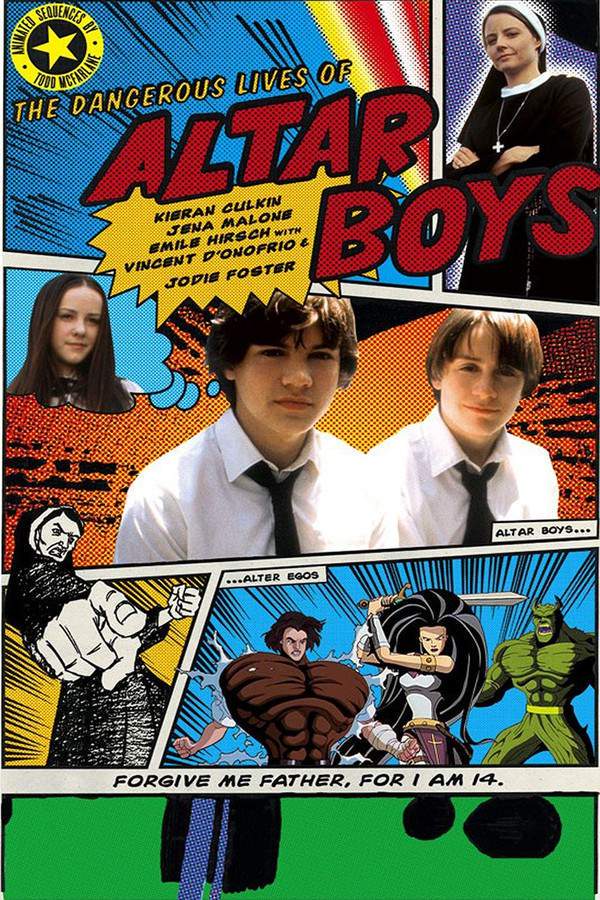
At a small parish school, four altar boys challenge the rigid rules of Sister Assumpta, their stern and disapproving teacher. After their artwork is seized, the boys set out on a quest to reclaim their creative freedom. Their rebellious actions lead to a journey of self-discovery and unexpected consequences, forever altering their perspectives and relationships.
Find where to stream, rent, or buy The Dangerous Lives of Altar Boys (2002) in the US with current JustWatch availability, up-to-date pricing, and platform listings for subscription, rental, and digital purchase options.
Warning: spoilers below!
Haven’t seen The Dangerous Lives of Altar Boys yet? This summary contains major spoilers. Bookmark the page, watch the movie, and come back for the full breakdown. If you're ready, scroll on and relive the story!
Trace every key event in The Dangerous Lives of Altar Boys (2002) with our detailed, chronological timeline. Perfect for unpacking nonlinear stories, spotting hidden connections, and understanding how each scene builds toward the film’s climax. Whether you're revisiting or decoding for the first time, this timeline gives you the full picture.
Last updated: November 21, 2024 at 15:01
Find frequently asked questions about the The Dangerous Lives of Altar Boys (2002) timeline, including chronological order, nonlinear jumps, cause-and-effect links, and scene sequence clarifications. This timeline FAQ helps explain when key events happen, how moments connect, and why the story unfolds in that specific order.
The boys steal the St. Agatha statue as a direct act of rebellion against the rigid, oppressive rules of St. Agatha's Catholic School. The statue, hidden in their makeshift clubhouse, becomes a symbol of their resistance to authority and their rejection of the suffocating religious environment. This prank represents their broader quest to reclaim creative freedom and assert their individuality against Sister Assumpta's stern discipline.
Earlier scenes establish the boys' general discontent with the drudgery of Catholic school life, making the statue theft a natural escalation of their rebellious behavior.
Margie enters the boys' circle when a love note written by Tim Sullivan is misinterpreted by Francis Doyle as a genuine romantic gesture rather than a joke. This misunderstanding serves as the catalyst for Margie's arrival, and her subsequent inclusion creates tension within the group as Francis develops genuine feelings for her, pulling him between his loyalty to his friends and his burgeoning relationship.
The love note incident occurs early in the film, immediately after Margie's arrival at school, establishing the romantic tension that will gradually fracture the group.
The Atomic Trinity is the boys' original comic book, created as an imaginative escape from their troubled reality. It features original characters like Brakken, Captain Asskicker, and Major Screw, representing their dreams and fears. The comic also contains Nunzilla, a satirical depiction of Sister Assumpta, and Sorcerella, a character inspired by Margie. When Donny Flynn discovers the comic and shows it to Sister Assumpta, its violent and blasphemous imagery nearly results in Tim and Francis being expelled, driving the plot toward its tragic climax.
The comic serves as a thematic parallel to the boys' real lives, with its violent and rebellious content foreshadowing the actual tragedy that unfolds.
During a school trip to the zoo, Tim and Francis devise a plan to drug a cougar and deliver it to Sister Assumpta's office as a prank. However, the scheme spirals completely out of control, triggering the unraveling of their once-tight friendship. This event marks the turning point where their harmless mischief escalates into dangerous territory, reducing their group to just Margie, Tim, and Francis.
The zoo trip follows directly after the boys learn about Margie's traumatic past involving her brother Donny, adding emotional volatility to their already risky plan.
In a desperate attempt to fix the chaos they've created, the boys plot to steal a cougar from the zoo under cover of night. They successfully tranquilize the beast with a makeshift sedative. However, driven by reckless bravado, Tim foolishly climbs over the fence into the cougar's enclosure, where he is attacked and killed by the animal. His unnecessary, impulsive decision to enter the enclosure directly causes his own death, making the tragedy even more senseless.
Tim's pattern of reckless behavior throughout the film, combined with the escalating nature of their pranks, foreshadows this fatal moment of poor judgment.
Donny Flynn is Margie's brother, and his violent outburst against Tim Sullivan is a pivotal event that deepens the group's tension. After Donny attacks Tim, both Tim and Francis are suspended from school. The incident also leads to Donny seizing The Atomic Trinity comic book and showing it to Sister Assumpta, which nearly results in Tim and Francis being expelled. Donny's actions serve as the chain of events that propels the boys toward their most desperate and ultimately fatal scheme.
Donny is introduced through Margie's traumatic backstory, hinting at the volatility he brings to the story and his role in escalating the conflict.
Francis delivers a eulogy at Tim's funeral using verses from William Blake's "The Tyger," a poem that Sister Assumpta had previously condemned as inappropriate. This choice is deeply significant, the poem explores themes of creation, innocence, danger, and the harsh realities of life, all of which resonate with the boys' lost innocence and Tim's senseless death. By quoting a poem that authority dismissed, Francis honors Tim in a way that defies the very rules that constrained their youth.
Sister Assumpta's earlier condemnation of the poem establishes its forbidden status, making Francis's use of it at the funeral an act of quiet rebellion.
After Tim's death, Francis leaves the anthology of poems at the exact spot where the boys originally stole the St. Agatha statue, their cherished sanctuary. This act serves as a melancholic tribute to Tim and their carefree days of youth rebellion. The location represents everything they shared: their secret hideaway, their artistic Expression, and the end of their innocence. By leaving the poems there, Francis creates a physical memorial to both his friend and the chapter of their lives that has closed forever.
The stolen statue site was established early as the boys' special meeting place, making it the natural location for Francis to honor their shared history.
After Tim's death, Francis begins creating an entirely new comic series dedicated to his fallen friend, naming the protagonist Skeleton Boy. This project represents Francis's way of coping with trauma through art, transforming his grief into a lasting legacy that immortalizes Tim. The comic becomes a bittersweet conclusion to the film, Francis has found a way to memorialize his friend through their shared passion for creative expression, but this creative act is forever colored by the devastating, senseless nature of Tim's death.
The original Atomic Trinity comic was established as the boys' primary creative outlet, making Francis's transition to Skeleton Boy a natural evolution of his artistic journey.
Discover curated groups of movies connected by mood, themes, and story style. Browse collections built around emotion, atmosphere, and narrative focus to easily find films that match what you feel like watching right now.
Nostalgic youth adventures that culminate in a profound, life-altering tragedy.If you were moved by the tragic turn in The Dangerous Lives of Altar Boys, this collection features movies like it that blend youthful nostalgia with profound loss. These similar dramas focus on teenage friendships and first love, only to be overshadowed by a devastating event that changes everything.
Stories in this thread often follow a group of friends or a young protagonist through a period of youthful rebellion and discovery. The narrative builds a sense of nostalgia and freedom, which is intentionally contrasted and ultimately dismantled by a central tragic incident, forcing a premature confrontation with mortality and grief.
Movies are grouped here for their shared emotional trajectory: they begin with a lighthearted or rebellious tone associated with youth, then pivot sharply into heaviness after a tragic loss. The unifying experience is the bittersweet mix of fondly remembering innocence while grappling with its violent end.
Young outsiders challenge authority through elaborate fantasies and daring pranks.For viewers who enjoyed the creative rebellion in The Dangerous Lives of Altar Boys, this list features similar movies about teenagers using imagination to escape strict environments. These films often involve Catholic schools or authoritative figures, with stories that weave together real-life antics and fantastical daydreams.
The narrative pattern involves young characters living under strict rules (often in school or family settings) who rebel through both real-world actions and an internal, imagined world. The film often cuts between these two realities, using the fantasy sequences to highlight the characters' inner conflicts, fears, and aspirations.
These movies are united by their focus on the power of adolescent creativity as a tool for both rebellion and coping. They share a specific mood that balances the excitement of defiance with the melancholy of feeling trapped, often set against institutional backdrops that stifle individuality.
Don't stop at just watching - explore The Dangerous Lives of Altar Boys in full detail. From the complete plot summary and scene-by-scene timeline to character breakdowns, thematic analysis, and a deep dive into the ending - every page helps you truly understand what The Dangerous Lives of Altar Boys is all about. Plus, discover what's next after the movie.
Read a complete plot summary of The Dangerous Lives of Altar Boys, including all key story points, character arcs, and turning points. This in-depth recap is ideal for understanding the narrative structure or reviewing what happened in the movie.
Discover the characters, locations, and core themes that shape The Dangerous Lives of Altar Boys. Get insights into symbolic elements, setting significance, and deeper narrative meaning - ideal for thematic analysis and movie breakdowns.
Discover movies like The Dangerous Lives of Altar Boys that share similar genres, themes, and storytelling elements. Whether you’re drawn to the atmosphere, character arcs, or plot structure, these curated recommendations will help you explore more films you’ll love.
The Dangerous Lives of Altar Boys (2002) Plot Summary & Movie Recap
The Dangerous Lives of Altar Boys (2002) Scene-by-Scene Movie Timeline
The Dangerous Lives of Altar Boys (2002) Spoiler-Free Summary & Key Flow
Movies Like The Dangerous Lives of Altar Boys – Similar Titles You’ll Enjoy
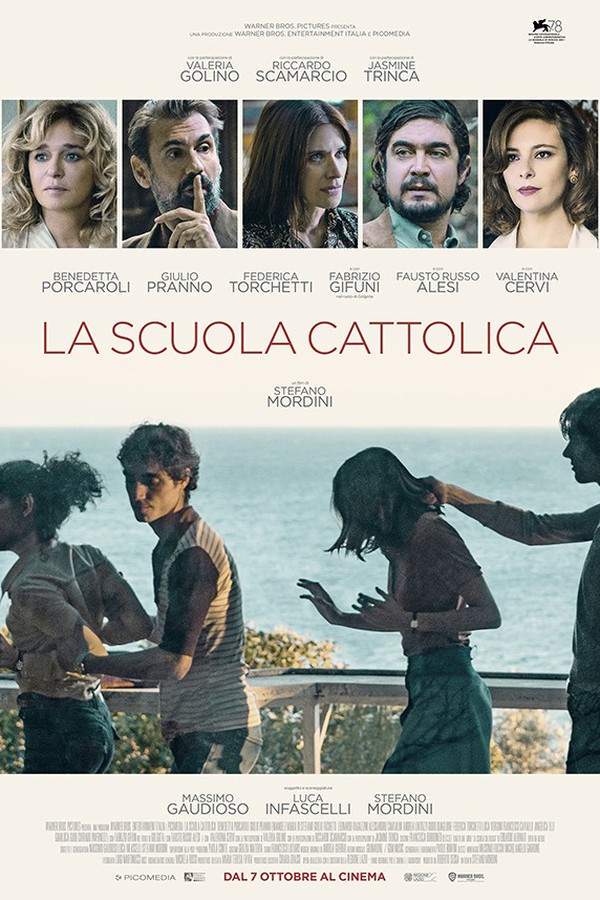
The Catholic School (2022) Spoiler-Packed Plot Recap
Buddy Boy (2000) Full Summary & Key Details
Funeral Kings (2012) Film Overview & Timeline
The Flock (2017) Story Summary & Characters
The Exploding Boy (2023) Film Overview & Timeline
The Godless Girl (1928) Story Summary & Characters
if… (1968) Ending Explained & Film Insights
The Trouble with Angels (1966) Ending Explained & Film Insights
The Priest (1978) Story Summary & Characters
Where Angels Go, Trouble Follows (1968) Detailed Story Recap
The Devil’s Playground (1976) Film Overview & Timeline
The Fire That Burns (1997) Full Summary & Key Details
The Boys of St. Vincent (1992) Ending Explained & Film Insights
The Boys of Paul Street (1969) Detailed Story Recap
The Butcher Boy (1997) Complete Plot Breakdown